
How to Organize a Small Bedroom Without Overcrowding
This post may contain affiliate links, which means we may earn a small commission at no extra cost to you. We may also display third-party ads and include links to partner brands or shops. Some images may be created or enhanced using AI or sourced from licensed platforms. All opinions are our own.
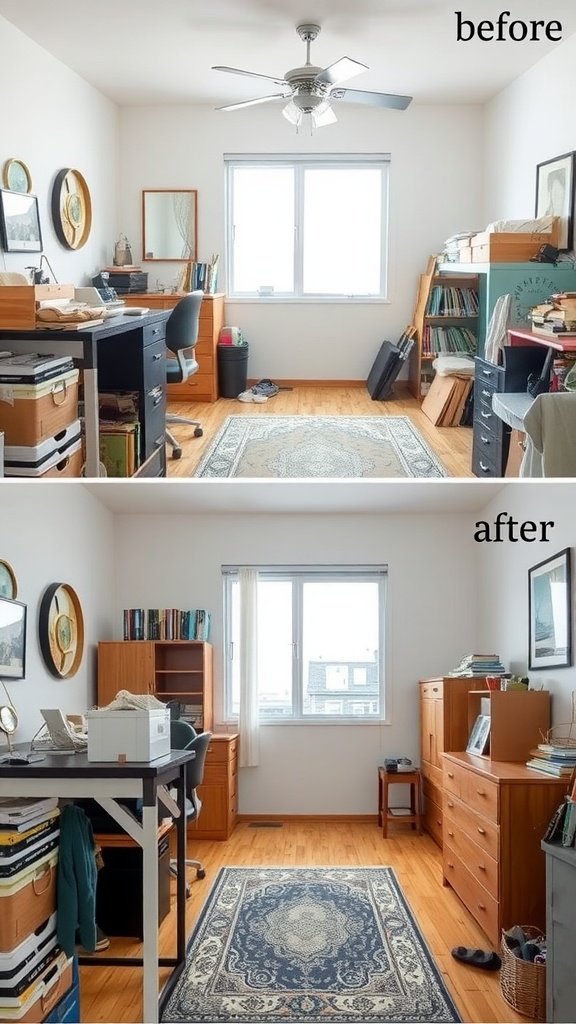
A small bedroom can feel cozy and comforting, until it starts to feel crowded.
A chair becomes a place for clothes. The nightstand collects books, chargers, and small items. Drawers fill quietly over time. Nothing feels dramatically messy, yet the room feels tight and slightly overwhelming.
In a small space, even a little excess can change the atmosphere.
Organizing a small bedroom is not about removing everything. It is about creating breathing room so the space feels calm, restful, and truly yours.
Why Organization Changes the Feeling of a Room
A bedroom should feel like an exhale at the end of the day.
When surfaces are crowded and storage feels chaotic, the mind stays slightly alert. Visual clutter competes for attention, even when you are trying to rest.
Organization softens the room.
Clear nightstands reflect light better. Folded textiles look inviting rather than chaotic. Thoughtfully placed baskets feel intentional instead of random.
The goal is not emptiness. It is ease.
When everything has a gentle place to land, the bedroom becomes quieter in both appearance and feeling.
Use Under-Bed Storage Thoughtfully

The space under the bed is valuable in a small room.
Use low-profile storage boxes or soft fabric bins to hold out-of-season clothing, spare linens, or rarely used items.
Choose containers in neutral tones so they blend with the room. Clear bins can be practical, but fabric-covered options feel softer.
Keep the area organized inside the bins as well. Fold items neatly and avoid overfilling.
When the bed frame sits slightly higher and the storage is tidy, the room feels efficient without looking cluttered.
Simplify the Nightstand Surface

Nightstands easily become crowded.
Limit what stays on top to a lamp, one or two meaningful items, and perhaps a small dish for jewelry.
Store smaller essentials inside a drawer or in a woven basket beneath the table.
Use a small tray on the surface to group items. This creates visual structure and prevents objects from spreading out.
A simplified nightstand allows light from the lamp to glow softly across a clear surface.
The space immediately feels calmer.
Choose Dual-Purpose Furniture

In a small bedroom, furniture should work gently but efficiently.
A bench at the foot of the bed can hold extra blankets inside. A bedside table with drawers provides hidden storage. A slim dresser can double as a vanity.
Look for pieces with clean lines and warm textures like light wood or soft upholstery.
Dual-purpose furniture reduces the need for additional pieces, preventing overcrowding.
The room feels balanced when every item has intention.
Use Vertical Space Without Overfilling

When floor space is limited, look upward.
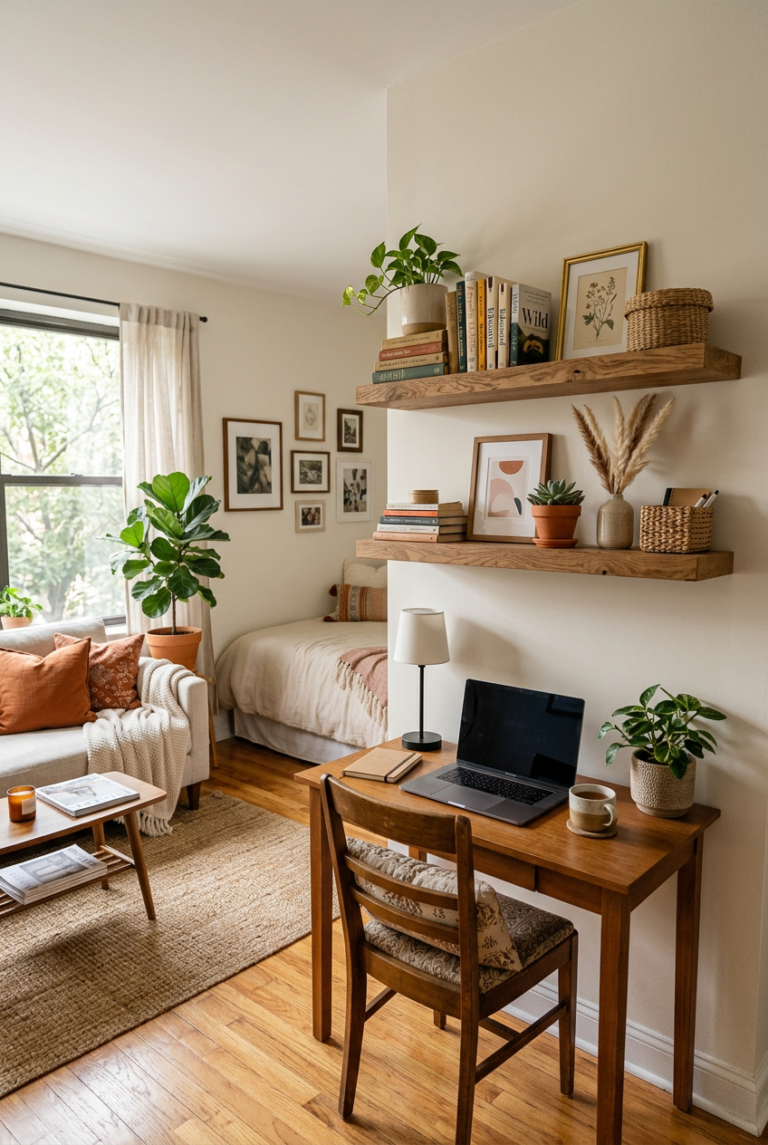
Install one or two simple floating shelves above a dresser or desk. Keep them lightly styled with folded linens, a small plant, or neatly stacked books.
Avoid filling shelves edge-to-edge. Leave visible gaps between items.
Vertical storage adds function without shrinking the room’s footprint.
When styled thoughtfully, it draws the eye upward and makes the room feel taller and lighter.
Contain Small Items in Soft Baskets

Small items scattered across a room create visual noise.
Use woven baskets, fabric bins, or lidded boxes to contain accessories, scarves, or everyday essentials.
Choose textures that complement the room’s softness. Natural fibers feel warmer than plastic containers.
Place baskets inside closets, under benches, or on lower shelves.
When small items are gathered neatly, the entire space feels more cohesive.
Edit the Closet With Care

Closets in small bedrooms often carry hidden clutter.
Instead of drastic decluttering, focus on spacing. Allow small gaps between hangers so clothing can breathe.
Use matching hangers to create visual consistency.
Add one or two small shelf dividers to keep folded stacks from toppling over.
Place a soft basket on a closet shelf for items that do not fold easily.
An organized closet reduces overflow into the bedroom itself.
When the closet feels calm, the room feels lighter.
Keep Wall Decor Minimal and Intentional

Too many framed pieces can make a small bedroom feel busy.
Choose one larger artwork above the bed or a simple pair of smaller frames arranged evenly.
Keep frames in similar tones to maintain cohesion.
Allow some wall space to remain blank.
Negative space is not emptiness. It is balance.
When walls feel open, the room breathes more easily.
What to Avoid
Avoid adding too many small storage pieces.
Multiple tiny organizers can make a room feel crowded instead of organized.
Avoid over-labeling visible containers.
Labels are helpful inside closets or drawers, but too many visible labels can make the room feel clinical.
Avoid pushing all furniture against walls if it makes the center of the room feel awkward.
Sometimes pulling a piece slightly inward creates better flow.
Avoid chasing perfection.
A small bedroom should feel lived in, not staged.
Keeping It Sustainable
Organization works best when it becomes part of daily rhythm.
Take two minutes each evening to return items to their places.
Fold one blanket. Clear one surface. Close one drawer fully.
Once a week, lightly reset the closet shelf or under-bed bin if needed.
Small, consistent attention prevents buildup.
The goal is maintenance, not constant rearranging.
A sustainable rhythm keeps the room supportive rather than demanding.
A Bedroom That Feels Light and Restful
A small bedroom can feel deeply cozy when thoughtfully organized.
Hidden storage, clear surfaces, and gentle structure create space to move and breathe.
Organization does not remove warmth. It allows warmth to stand out.
When everything has a soft place to belong, the room feels calmer at night and brighter in the morning.
And in a space designed for rest, that quiet clarity makes all the difference.

Hi, I’m Livia. A mom who believes that a house becomes a home through the little things.
Over time, I started to understand what truly makes a space feel cozy, comfortable, and safe. Little by little, I transformed my own home into a place where my family and I genuinely love to be, a space that feels calm, warm, and ours.
Here, I share simple ideas and thoughtful inspiration to help you turn your home into your favorite place in the world too.