
How to Organize a Home Office Without Losing Personality
This post may contain affiliate links, which means we may earn a small commission at no extra cost to you. We may also display third-party ads and include links to partner brands or shops. Some images may be created or enhanced using AI or sourced from licensed platforms. All opinions are our own.
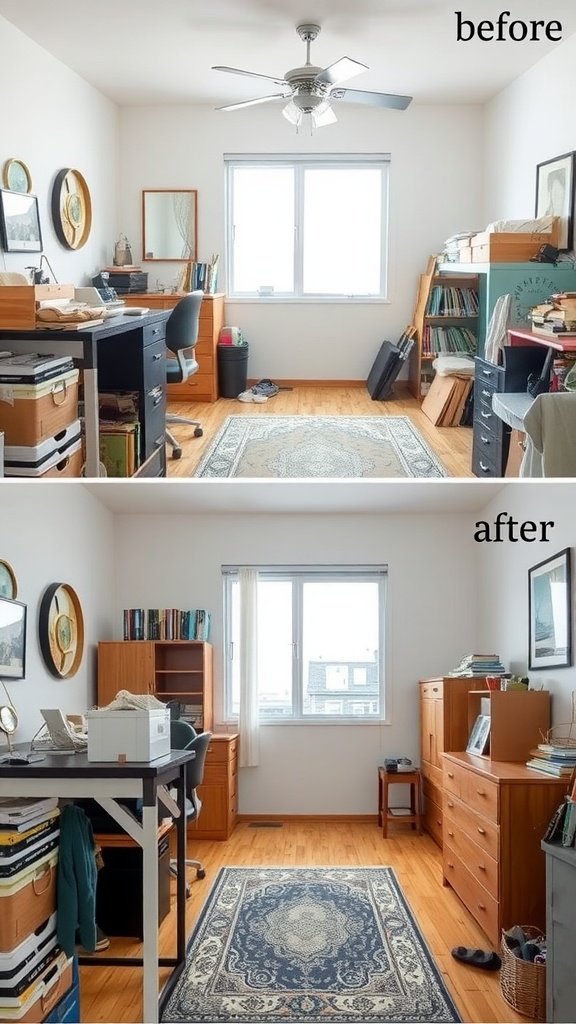
A home office often begins with good intentions.
A clean desk. A fresh notebook. A small lamp by the corner. But over time, papers stack up. Cables tangle quietly. Pens collect in random mugs. The space starts to feel crowded, even if it is not large.
You may feel torn between wanting order and wanting the room to still feel like you.
An office that is too cluttered feels distracting. An office that is too minimal can feel cold.
The goal is balance. Organized, but still personal. Structured, but still warm.
Why Organization Changes the Feeling of a Room
When your desk is crowded, your mind tends to feel the same.
Visual clutter pulls attention in multiple directions. Even small piles can create subtle stress.
When surfaces are clear and items have a place, the room feels calmer.
Light reflects more softly across a tidy desk. Shelves feel intentional rather than busy. The space begins to support focus instead of interrupting it.
Organization is not about removing personality. It is about giving it room to breathe.
Define Clear Work Zones

Start by dividing the room into simple zones.
A desk area for daily tasks. A shelf for reference books. A small cabinet or drawer for supplies.
Even in a small office, zones can be created visually.
Place a woven basket under the desk for paperwork. Use a tray on the desk for frequently used tools. Keep decorative objects on a specific shelf rather than scattered across surfaces.
Zoning prevents items from drifting around the room.
It also makes the space feel more intentional and balanced.
Use Beautiful Storage for Everyday Items

Storage does not have to feel clinical.
Instead of plastic bins, choose baskets made of rattan, fabric, or canvas. Use ceramic or metal containers for pens and scissors.
File folders can be stored inside a simple linen-covered box. Notebooks can be stacked neatly on a wooden tray.
When storage is visually warm, organization blends seamlessly with decor.
The office feels curated rather than controlled.
Keep the Desk Surface Light and Layered

Your desk is the visual anchor of the room.
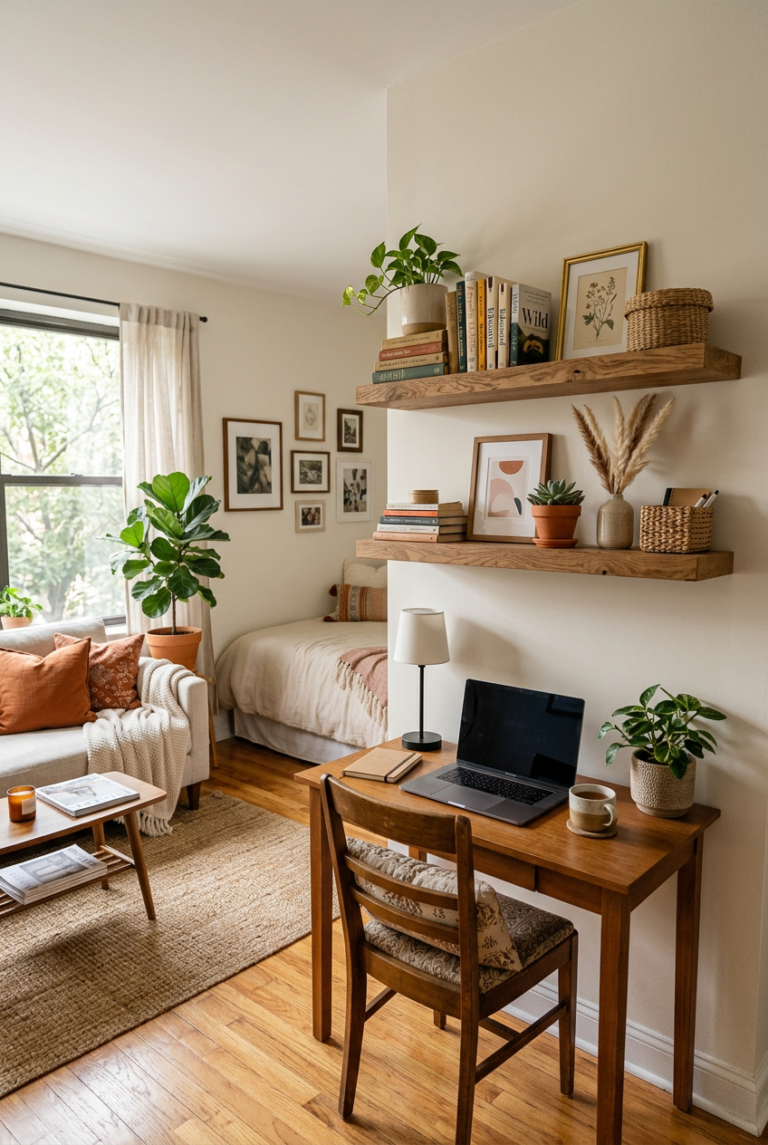
Limit what stays on top to what you use daily. A lamp, a notebook, one pen holder, and perhaps one personal object.
Leave at least one third of the desk surface clear.
This open space allows natural light to move across the wood or painted finish.
A lightly layered desk feels ready for work without feeling sterile.
Curate, Don’t Eliminate, Personal Items

Personality belongs in a home office.
Instead of removing personal objects, curate them.
Choose one or two framed photos. A favorite book. A small plant. A piece of art that makes you smile.
Place them intentionally rather than spreading them throughout the room.
When personal items are thoughtfully displayed, they add warmth without creating visual clutter.
They remind you that this is your space, not just a workstation.
Organize Cables Quietly

Cables are often the most distracting element in a home office.
Use simple cord clips along the back of the desk. Store power strips inside a small basket or box with ventilation.
Bundle excess cords neatly with fabric ties instead of leaving them loose.
When cables are contained, the room instantly looks calmer.
The eye no longer jumps to tangled lines on the floor.
Add Vertical Storage Without Overcrowding

Shelves are helpful, but they can easily feel busy.
Keep shelves balanced by mixing practical items with open space.
For example, place books vertically on one side, a small basket on the other, and leave a small gap between groupings.
Avoid filling every inch.
Negative space on shelves allows decorative pieces to stand out gently.
The office feels airy instead of packed.
Use Soft Lighting to Warm the Structure

An organized space can feel rigid under harsh lighting.
Choose a warm desk lamp with a fabric shade. Add a floor lamp in the corner if the room feels dim.
Warm light softens straight lines and structured storage.
In the evening, turn off overhead lights and rely on lamps.
The office transforms from task-driven to cozy and personal.
What to Avoid
Avoid buying too many matching containers at once.
Over-coordination can make the office feel impersonal.
Avoid labeling every visible item.
Labels are helpful inside drawers, but too many visible ones can create a rigid look.
Avoid stripping the room of meaningful objects in the name of organization.
A home office should reflect who you are.
Avoid leaving everything out “for convenience.”
Even small items deserve a home.
Keeping It Sustainable
Organization works best when maintained gently.
At the end of each workday, take five minutes to reset the desk. Stack papers neatly. Return pens to their holder. Close drawers.
Once a week, review one small area, such as a drawer or shelf.
Seasonally, reassess what you truly use and adjust storage if needed.
Small, consistent resets prevent overwhelm.
The office stays supportive without becoming another task to manage.
A Workspace That Feels Both Calm and Personal
A well-organized home office does not feel empty.
It feels clear.
There is room to think. Room to move. Room for creativity.
Baskets hold what needs containing. Shelves breathe. The desk feels open and ready.
At the same time, a favorite photo rests in the corner. A plant leans toward the light. A soft lamp glows in the afternoon.
Organization, when done gently, enhances personality instead of removing it.
And in that balance, your workspace becomes a place where focus and comfort live side by side.

Hi, I’m Livia. A mom who believes that a house becomes a home through the little things.
Over time, I started to understand what truly makes a space feel cozy, comfortable, and safe. Little by little, I transformed my own home into a place where my family and I genuinely love to be, a space that feels calm, warm, and ours.
Here, I share simple ideas and thoughtful inspiration to help you turn your home into your favorite place in the world too.