
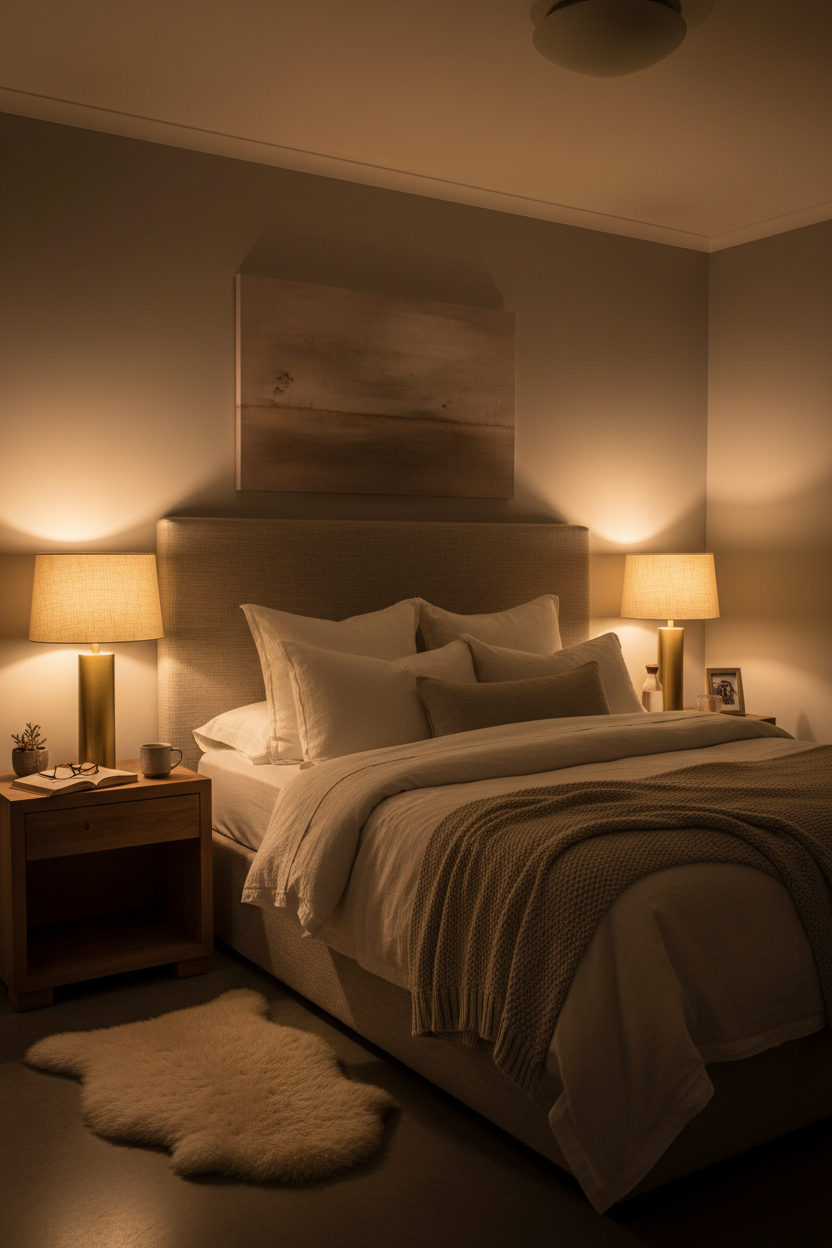
How to Make Your Bedroom a True Resting Space
This post may contain affiliate links, which means we may earn a small commission at no extra cost to you. We may also display third-party ads and include links to partner brands or shops. Some images may be created or enhanced using AI or sourced from licensed platforms. All opinions are our own.
There is a moment at night when you finally step into your bedroom, ready to rest.
The day has been full. Conversations, notifications, responsibilities. You close the door and expect relief.
But the room feels slightly restless. A chair holds unfolded laundry. The bedside table is crowded with chargers and papers. The overhead light is too bright.
Instead of exhaling, you remain alert.
A true resting space does not require new furniture or a complete redesign. It requires small shifts in how the room is used and cared for each day.
Why This Matters
Many bedrooms slowly become extensions of busy life.
Work laptops sit on dressers. Laundry baskets stay in corners. Phones are checked under bright light just before sleep.
When the room holds too many active elements, the body does not fully relax.
Rest is not only physical. It is environmental.
When lighting softens, surfaces clear, and textures feel intentional, the bedroom supports sleep rather than competing with it.
Slowing the space down helps you slow down with it.
Soften the Lighting at Night
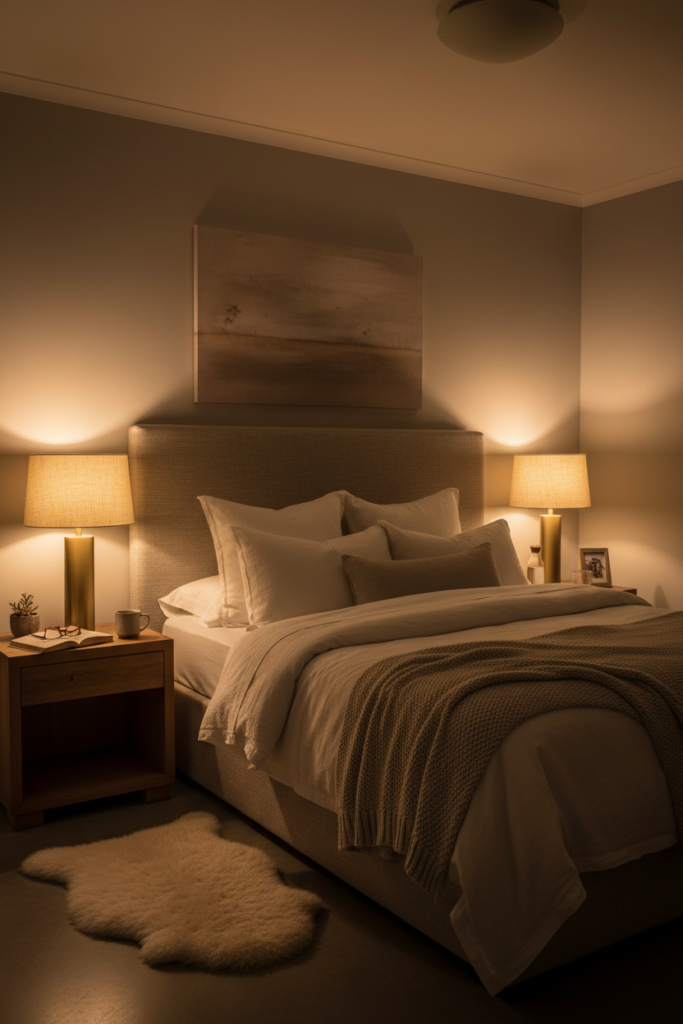
Overhead lighting can feel harsh after sunset.
Switch to bedside lamps with warm bulbs between 2700K and 3000K. Use soft shades that diffuse light gently across the room.
Turn off the main light at least an hour before bed.
Warm, low lighting signals to your body that the day is ending.
The room begins to feel calm instead of functional.
Clear the Bedside Surface
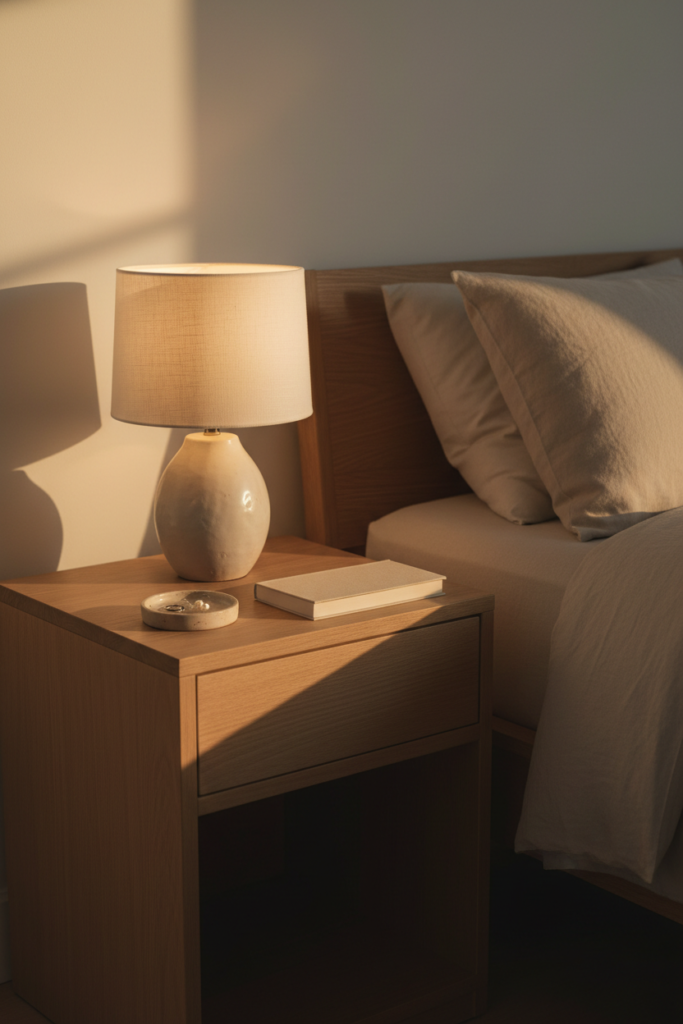
The bedside table sets the tone for the entire room.
Limit it to a lamp, one book, and perhaps a small dish for jewelry.
Remove stacks of mail, extra cables, and unrelated items.
A clear surface reflects light softly and reduces visual noise.
When you wake up and see a calm bedside table, the morning begins more gently.
Create a Small Evening Reset
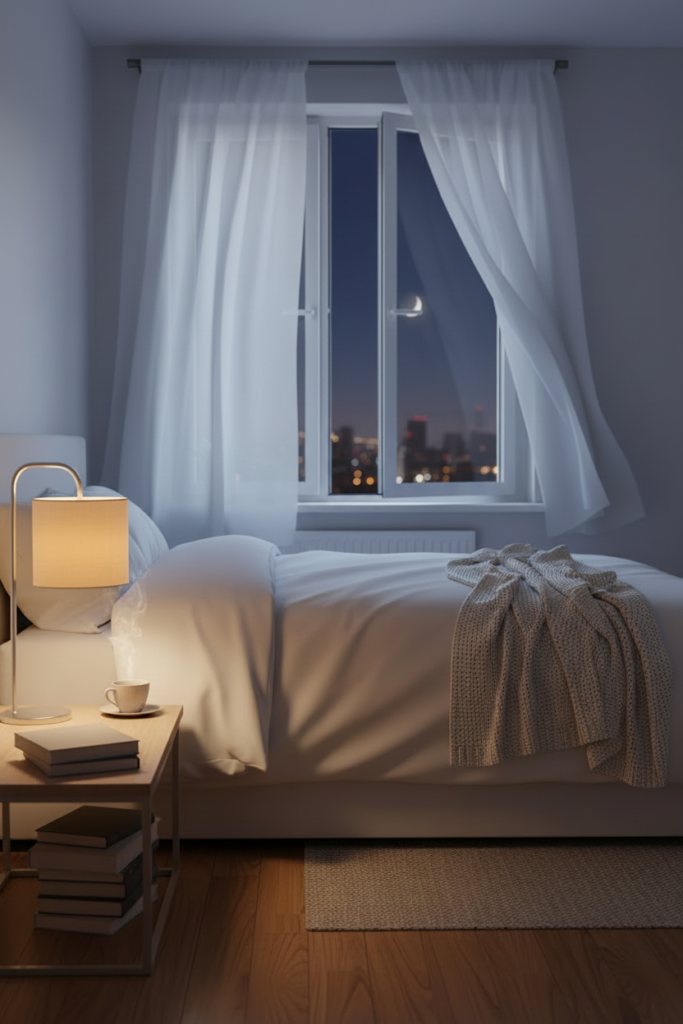
Spend five minutes each evening preparing the room for rest.
Fold the throw blanket. Smooth the duvet. Place clothing back in the closet or hamper.
Crack a window slightly if the air outside is fresh.
These small gestures tell your mind that the room is ready for sleep.
Walking into a lightly reset bedroom feels different than entering a space left in mid-motion.
Layer Soft Textures

Rest is connected to touch.
Choose bedding that feels comfortable against your skin. Cotton, linen, or soft woven fabrics add warmth without heaviness.
Add one extra layer, such as a lightweight quilt or knit throw, at the foot of the bed.
Even the act of pulling a blanket over your shoulders creates a physical cue of comfort.
Texture makes the room feel inviting rather than purely decorative.
Minimize Active Technology
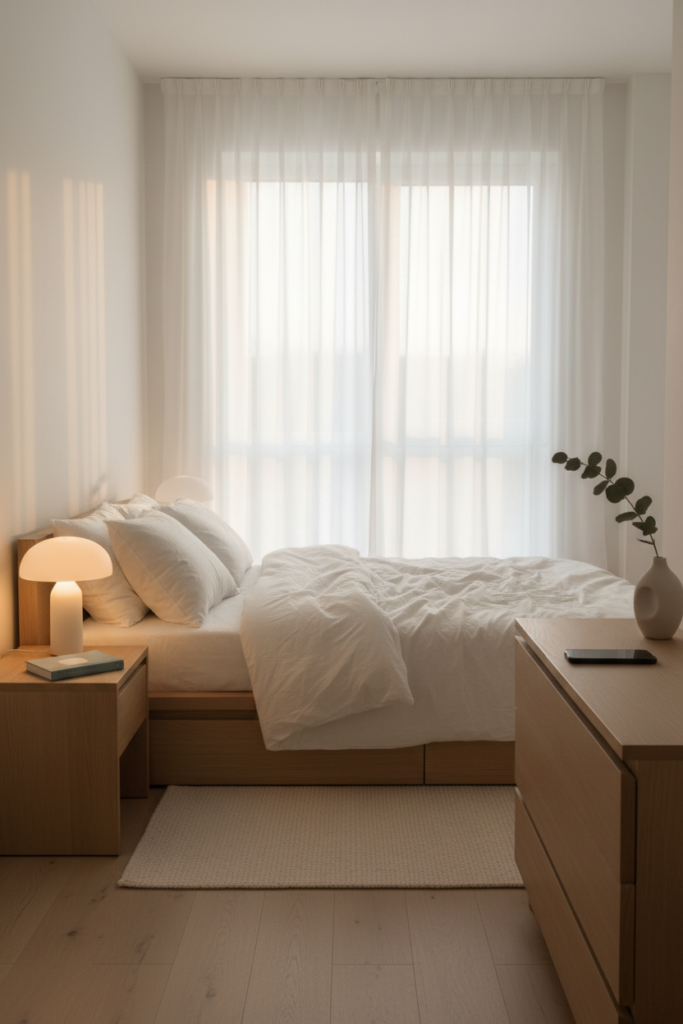
Phones, laptops, and glowing screens keep the mind alert.
If possible, charge devices away from the bed. Place them on a dresser instead of the nightstand.
Replace late-night scrolling with a small ritual, such as reading a few pages of a book under soft light.
The absence of blue light changes the atmosphere immediately.
The room feels quieter when screens are not dominating the space.
Introduce a Gentle Scent
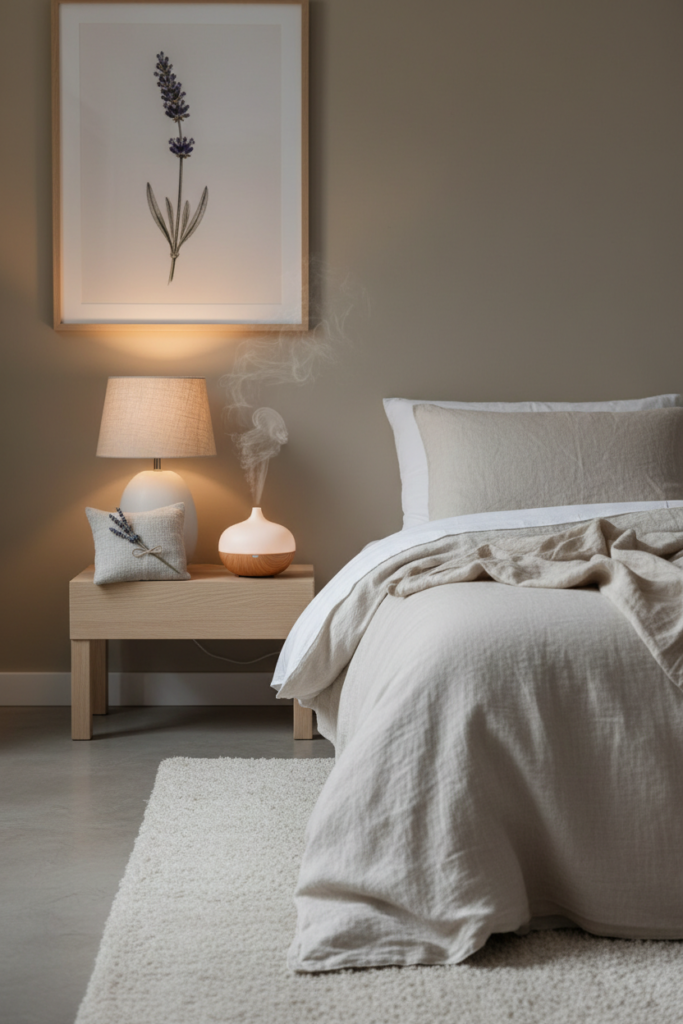
Scent shapes memory and mood.
Use a subtle linen spray, a lavender sachet inside a drawer, or a small diffuser with calming oils.
Keep the fragrance light. It should barely linger in the air.
When you enter the room and notice a soft scent, your body associates it with rest.
Over time, this sensory cue becomes part of your evening rhythm.
Protect One Corner for Stillness
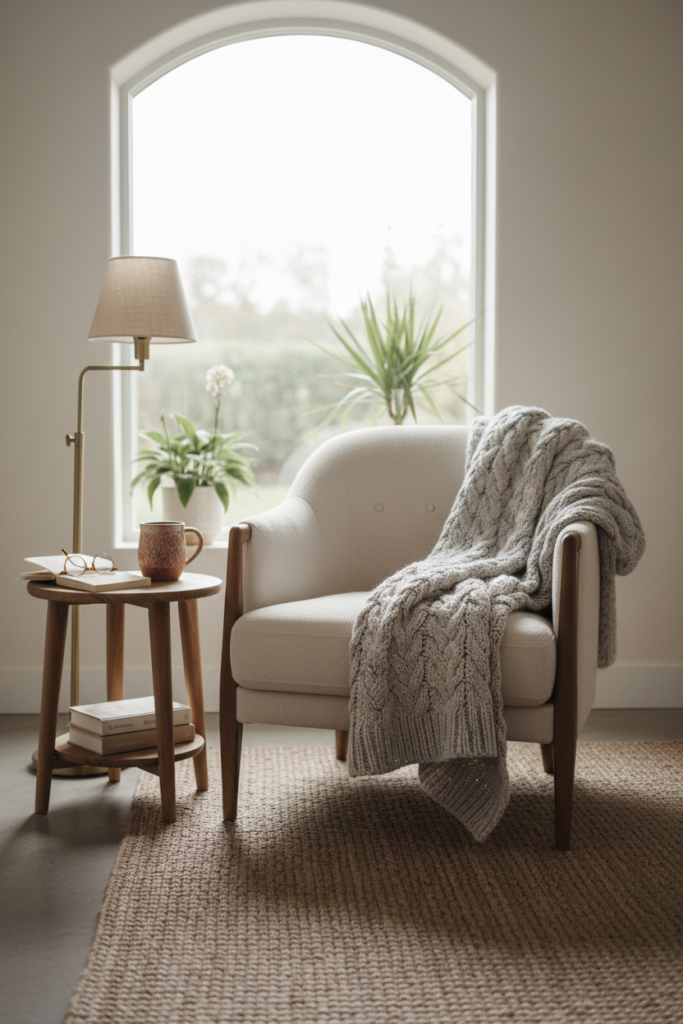
Even in a small bedroom, you can create a quiet corner.
Place a simple chair near a window. Add a small lamp and a folded blanket.
This corner is not for work or storage.
It is for sitting with a cup of tea or reading before bed.
When a bedroom includes a designated calm spot, it becomes more than a place to collapse at night.
It becomes a space to land gently.
How to Make It Work in a Busy Life
You do not need to transform the entire room at once.
Start with lighting. Replace harsh bulbs with warmer ones.
Next, clear one surface. Then add a small evening reset.
Choose one habit per week and build slowly.
If your schedule is full, focus on five intentional minutes before bed.
Even small changes shift the feeling of the room over time.
Consistency matters more than intensity.
A Bedroom That Truly Supports Rest
A true resting space is not perfectly styled.
It is intentional.
Soft light instead of glare. Clear surfaces instead of piles. Textures that invite you to slow down.
When the bedroom supports calm routines, sleep feels easier. Mornings feel softer.
The room becomes a quiet companion at the end of each day.
Not just a place to sleep, but a space that gently holds you while you rest.

Hi, I’m Livia. A mom who believes that a house becomes a home through the little things.
Over time, I started to understand what truly makes a space feel cozy, comfortable, and safe. Little by little, I transformed my own home into a place where my family and I genuinely love to be, a space that feels calm, warm, and ours.
Here, I share simple ideas and thoughtful inspiration to help you turn your home into your favorite place in the world too.