How to Keep Your Living Room Clutter-Free
This post may contain affiliate links, which means we may earn a small commission at no extra cost to you. We may also display third-party ads and include links to partner brands or shops. Some images may be created or enhanced using AI or sourced from licensed platforms. All opinions are our own.
The living room is often the most used space in the home.
It is where blankets gather after movie nights, books are left open on the coffee table, and small everyday items slowly collect on shelves.
None of it feels like a big problem at first.
But over time, the room can begin to feel crowded. The surfaces feel busy. It becomes harder to fully relax in the space.
Keeping a living room clutter-free does not mean removing everything you love. It simply means giving the room a calm structure so that comfort and daily life can coexist.
Why Organization Changes the Feeling of a Room
Clutter affects how a room feels long before we consciously notice it.
When objects are scattered across surfaces, the eye keeps moving from one thing to another. The space feels restless even when you are trying to relax.
When items have a clear place, the room becomes visually quiet.
Light reflects better on clear surfaces. Textures like wood, fabric, and woven baskets become more noticeable. The room begins to feel calmer and more inviting.
Organization does not remove personality from a living room.
It allows the things you love to stand out more clearly.
Define Purpose for Every Surface
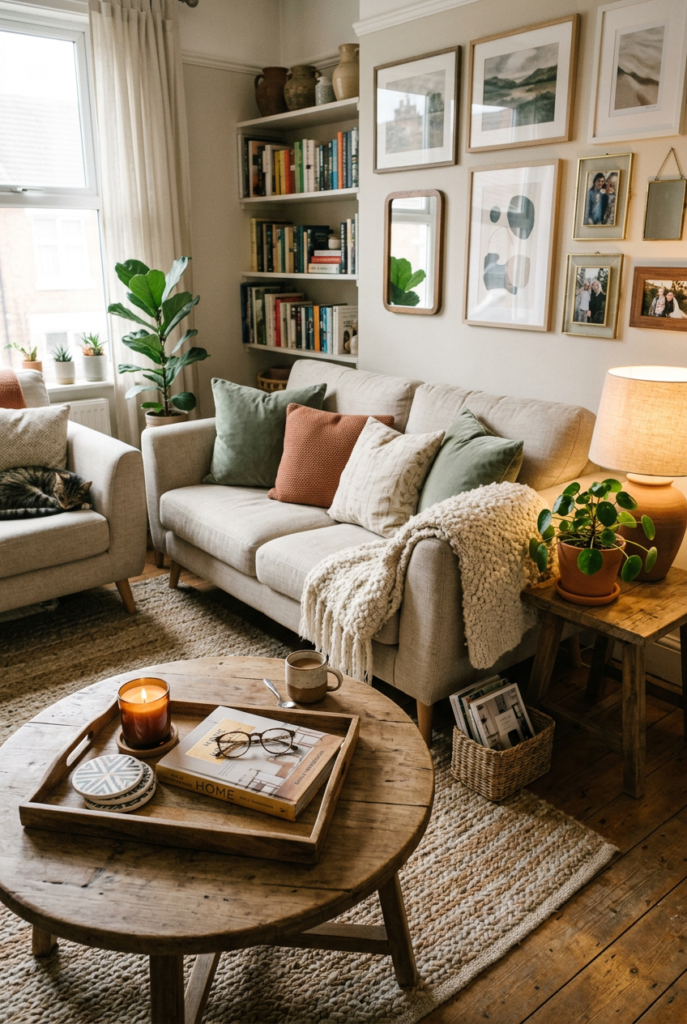
Start by assigning a purpose to the main surfaces in the room.
The coffee table might hold a tray with a candle and a book. A side table may hold a lamp and a small plant.
Avoid letting every surface become a catch-all for daily items.
When each surface has a clear role, objects stop spreading across the room.
This also helps you notice quickly when something does not belong there.
Use Baskets for Everyday Storage
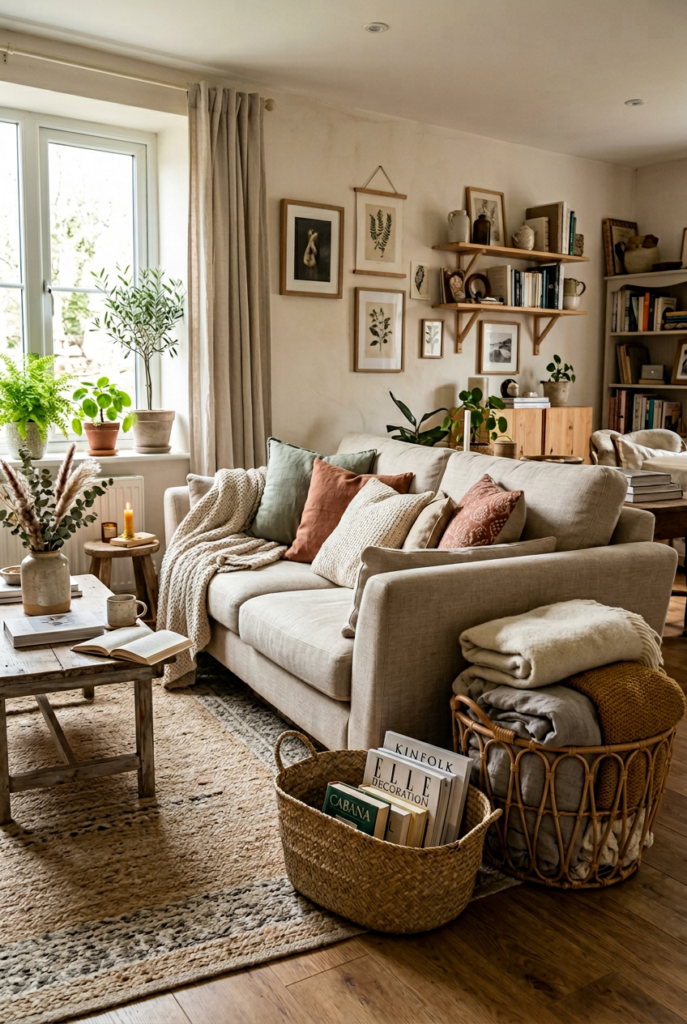
Baskets are one of the easiest ways to keep a living room tidy without making it feel overly organized.
Place a woven basket beside the sofa for throw blankets. Use a larger floor basket for magazines or knitting supplies.
Natural textures like rattan, seagrass, or cotton rope add warmth.
Instead of hiding items away completely, baskets gather them in one place while still feeling decorative.
The room stays practical and relaxed.
Contain Small Items on Trays
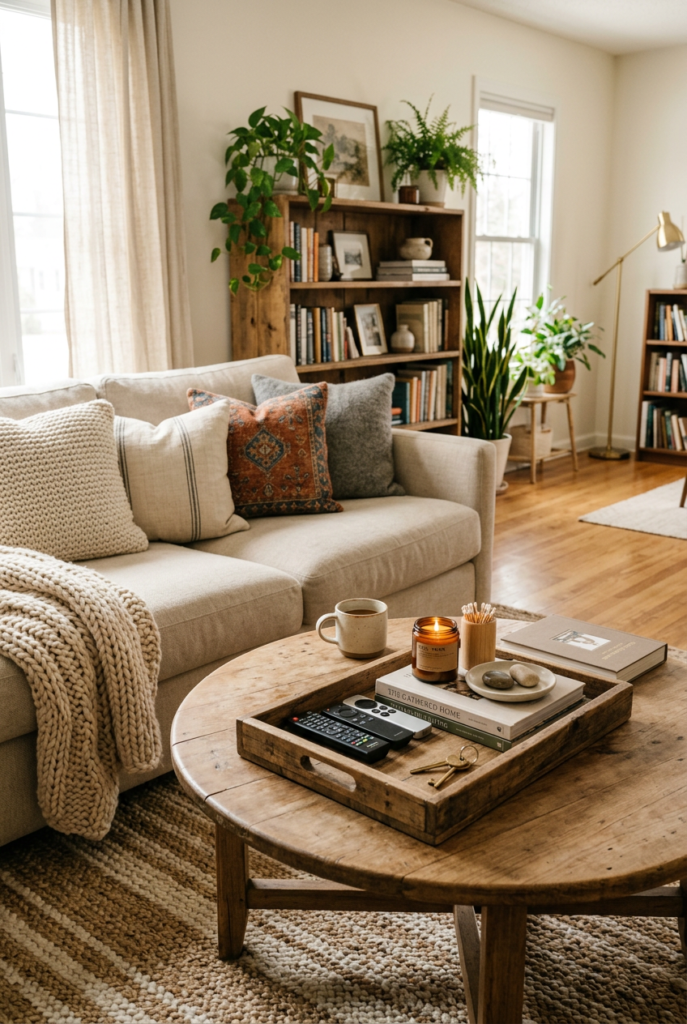
Small objects tend to create visual clutter quickly.
Remote controls, candles, coasters, and small decor pieces can easily scatter across tables.
Use a wooden, marble, or woven tray to group them together.
The tray creates a boundary that keeps everything contained.
Even if the items remain the same, the surface immediately feels more intentional and calm.
Balance Open Shelves Carefully
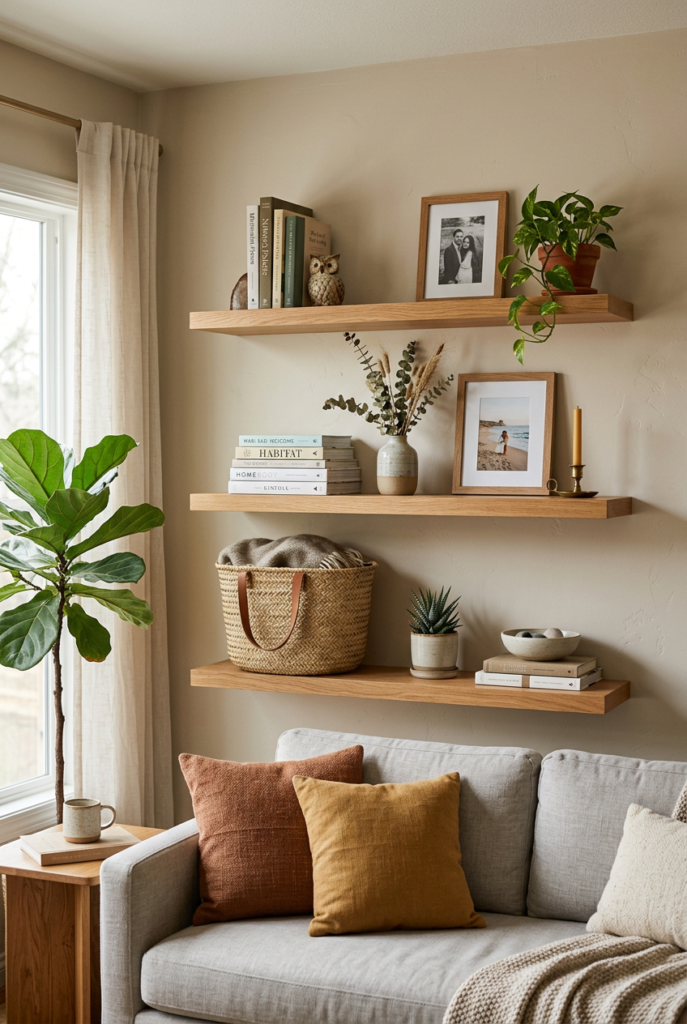
Open shelving can be beautiful but easily overcrowded.
Instead of filling every shelf, mix decorative items with empty space.
For example, stack a few books on one side, place a small plant nearby, and leave a gap between objects.
Include a few baskets or boxes to store less attractive items like cables or papers.
Balanced shelves allow the eye to rest and prevent the room from feeling visually heavy.
Choose Furniture with Hidden Storage
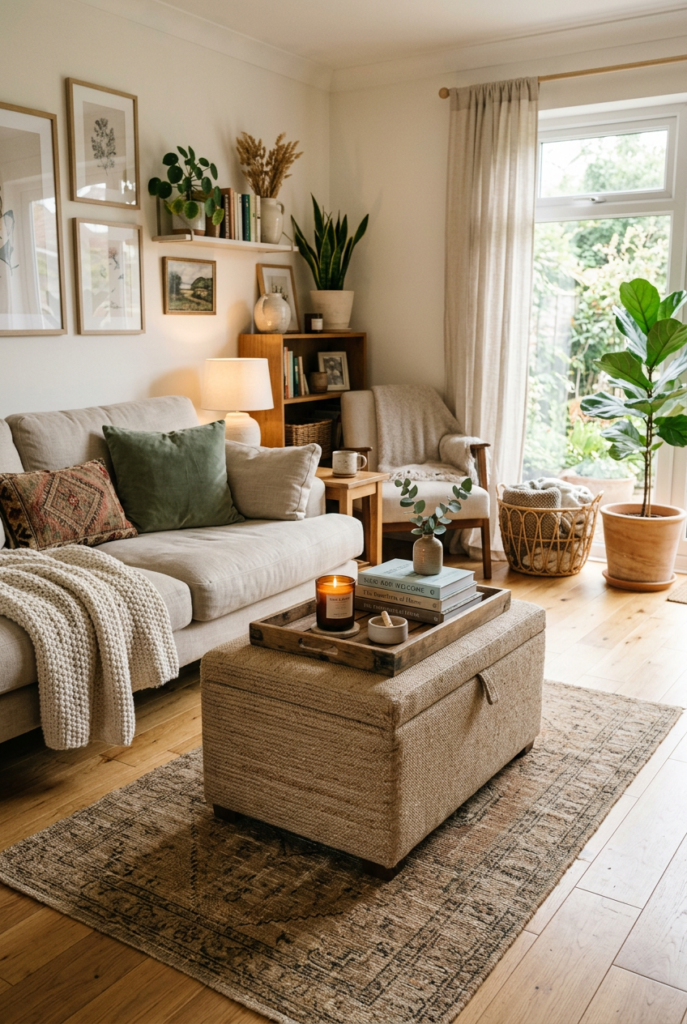
Some of the most helpful living room furniture quietly doubles as storage.
Storage ottomans can hold blankets or games. Coffee tables with drawers can hide remote controls or small electronics.
Even a bench under a window can store extra pillows inside.
Hidden storage reduces visible clutter while keeping everyday items within reach.
The room feels cleaner without losing comfort.
Keep the Entry Point Organized
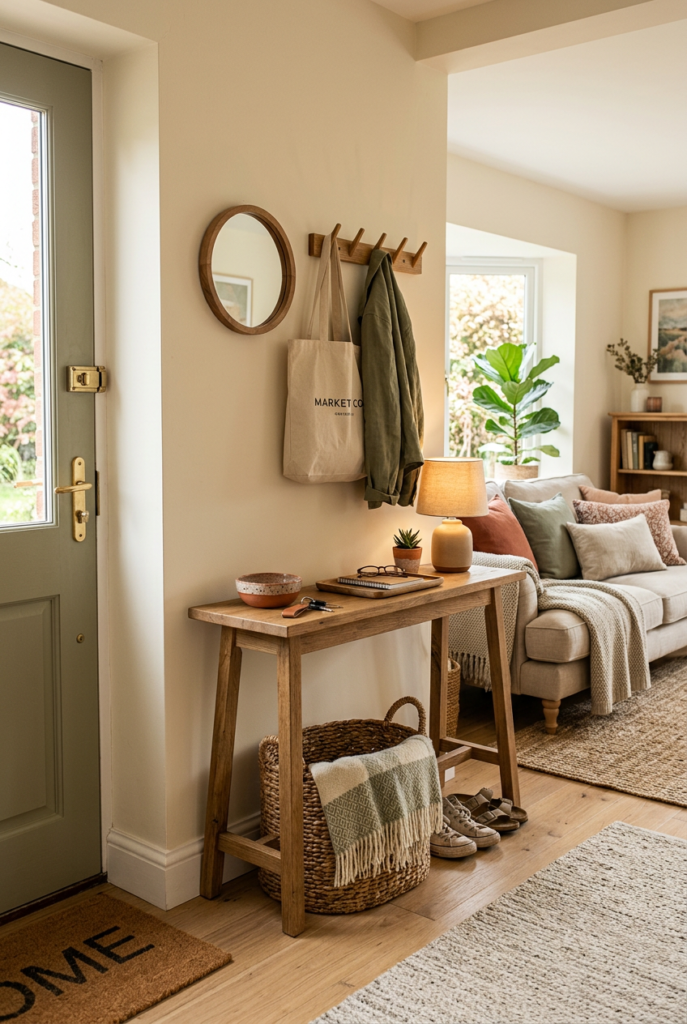
Many living rooms sit close to the main entry of the home.
Keys, bags, and small daily items often end up on nearby surfaces.
Create a small landing spot with a tray or bowl for keys and a hook for bags.
A narrow console table with a basket underneath works well for this purpose.
When the entry area is organized, the rest of the living room stays calmer.
Use Lighting to Emphasize Calm
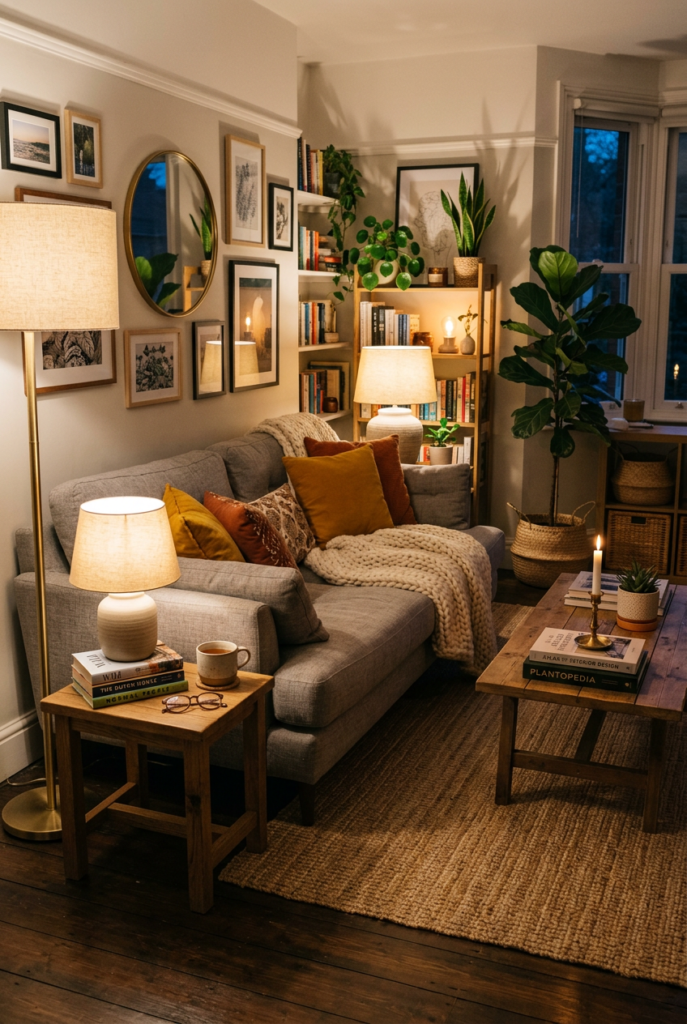
Lighting affects how clutter appears in a room.
Soft, warm lighting tends to highlight textures rather than small objects.
Place a floor lamp near the sofa and a table lamp on a side table instead of relying only on overhead lighting.
When the room is softly lit, the overall atmosphere feels gentler and more cohesive.
Clear surfaces reflect that warm light beautifully.
What to Avoid
Avoid trying to store everything in plain sight.
Too many decorative containers can make the room feel crowded rather than organized.
Avoid matching every storage container perfectly.
A small mix of textures like woven baskets, wood trays, and fabric boxes feels warmer and more natural.
Avoid removing every personal item in the name of organization.
Family photos, books, and meaningful objects give the living room personality.
The goal is balance, not emptiness.
Keeping It Sustainable
The easiest way to maintain a clutter-free living room is through small daily resets.
At the end of the evening, spend a few minutes returning items to their place.
Fold the throw blanket. Put remotes back on the tray. Return books to the shelf.
Once a week, lightly tidy shelves or baskets if they begin to fill up.
These small habits keep clutter from building without turning organization into a large task.
Consistency is far more helpful than occasional deep cleanups.
A Living Room That Feels Calm and Welcoming
A clutter-free living room is not perfectly styled all the time.
It is simply a space where things have a natural place to land.
Baskets hold blankets, trays gather small items, and shelves feel balanced instead of crowded.
When the room feels organized, it becomes easier to enjoy the moments that happen there.
You sit down on the sofa, look around, and the space feels calm.
And that quiet comfort is what truly makes a living room feel like home.