

Creating a Peaceful Wind-Down Routine
This post may contain affiliate links, which means we may earn a small commission at no extra cost to you. We may also display third-party ads and include links to partner brands or shops. Some images may be created or enhanced using AI or sourced from licensed platforms. All opinions are our own.
The day often ends the way it was lived — quickly.
You finish dinner, tidy a few things, scroll through your phone on the sofa, and suddenly it is late. The lights are still bright. The television hums in the background. Dishes wait in the sink.
When you finally head to bed, your body is tired but your mind is still moving.
A peaceful wind-down routine is not about adding more tasks. It is about changing the atmosphere of your home in the final hour of the day so that it gently carries you toward rest.
Why This Matters
Evenings often become an extension of daytime urgency.
Screens stay bright. Overhead lights remain on. We move from task to task without transition.
When there is no shift between active hours and rest, the home never truly settles.
A wind-down routine creates a soft boundary.
By dimming lights, clearing small surfaces, and slowing your movements, you signal to your body that the day is closing. The house begins to feel quieter. Your mind follows.
Dim the Lights Gradually
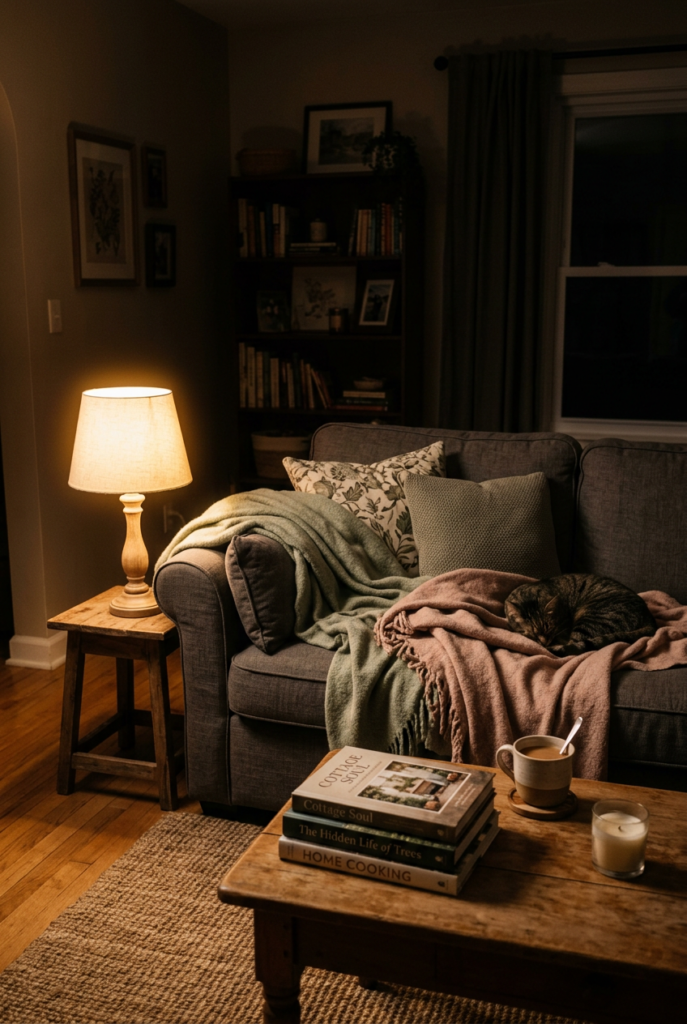
Light shapes mood more than we realize.
About an hour before bed, turn off overhead lights. Switch to table lamps and floor lamps with warm bulbs.
The softer glow changes the room immediately. Shadows deepen. Corners feel calm rather than stark.
In the living room, a single lamp beside the sofa is often enough.
As the light lowers, conversation softens. The pace of the evening shifts without effort.
Reset One Main Surface

Choose one surface to clear each night.
It might be the kitchen counter, the coffee table, or the bedside table.
Wipe it gently with a warm, damp cloth. Return items to their place.
When that surface is clear, the room feels finished.
You wake up to calm rather than clutter. The simple act of resetting creates visual quiet.
Prepare the Bedroom Early
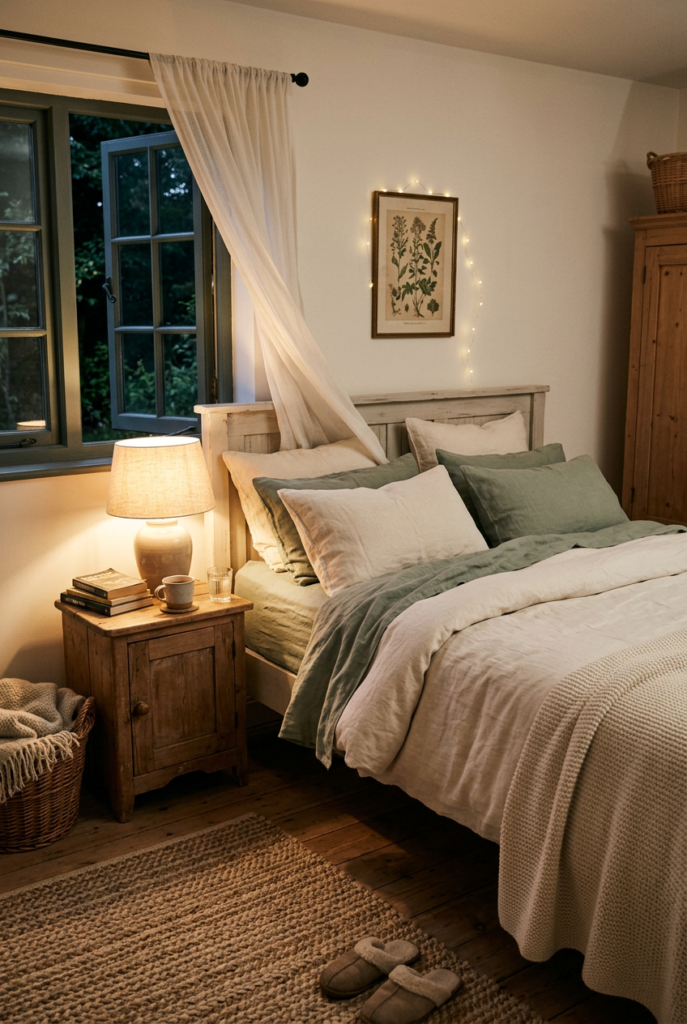
Instead of walking into the bedroom only when you are exhausted, prepare it in advance.
Turn down the bed. Smooth the duvet. Place a book on the nightstand. Turn on a bedside lamp.
If possible, open a window for a few minutes to let fresh air circulate.
When you enter later, the room feels ready for you.
The soft lighting and cool air invite rest rather than demanding it.
Create a Small Evening Drink Ritual

A warm drink signals transition.
Prepare herbal tea, warm milk, or lemon water. Use a ceramic mug that feels comfortable in your hands.
Sit at the table or on the sofa rather than walking around with it.
Notice the steam rising. The warmth in your palms. The quiet clink of the spoon.
This small ritual replaces late-night snacking or screen time with something grounding.
Lower the Volume of the Home
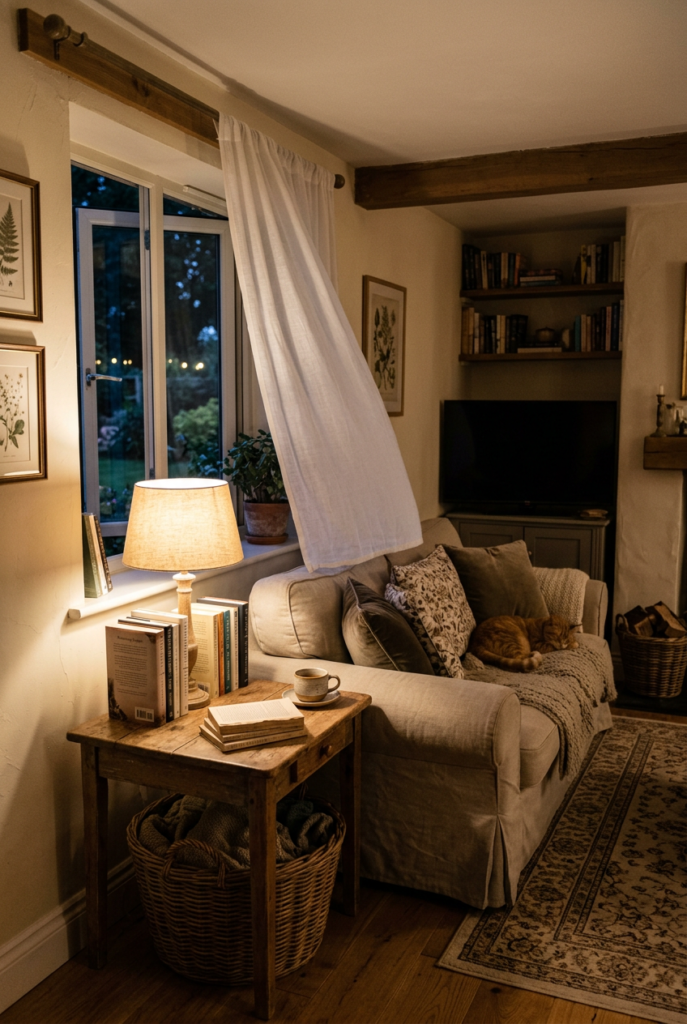
As evening deepens, reduce background noise.
Turn off the television earlier. Lower music to a softer level. Close unnecessary tabs and notifications.
Open a window slightly if the night air is cool.
The sound of a breeze or distant nighttime noise feels calmer than constant digital hum.
The quieter the house becomes, the easier it is to feel settled inside it.
Tidy Soft Textiles

Before heading to bed, gently arrange the living room.
Fold throw blankets neatly. Plump sofa cushions. Straighten the rug if needed.
These small adjustments take only minutes but shift the feeling of the space.
The room looks restful rather than paused mid-activity.
You end the day in a home that feels cared for.
Introduce a Gentle Scent
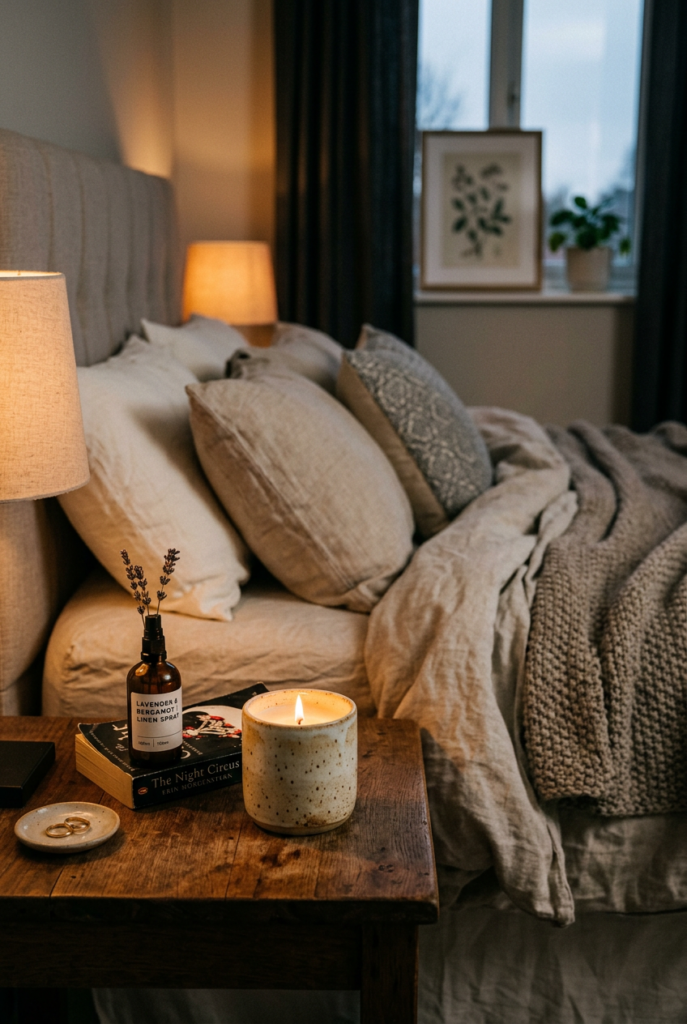
Scent can become a signal for rest.
Light a subtle candle in the evening or use a linen spray on your pillows.
Lavender, soft vanilla, or clean cotton scents are calming without being overwhelming.
When the same scent appears each night, your body begins to associate it with sleep.
The atmosphere becomes familiar and soothing.
How to Make It Work in a Busy Life
A wind-down routine does not need to be long.
Choose two or three elements that feel manageable.
Dim the lights and reset one surface. Prepare tea and turn down the bed.
Consistency matters more than complexity.
Even ten intentional minutes can change the tone of the evening.
If your schedule varies, anchor your routine to one action, such as brushing your teeth or finishing dinner.
Let the routine grow naturally rather than forcing it.
A Home That Gently Closes the Day
A peaceful wind-down routine is not dramatic.
It is the quiet shift from brightness to softness. From noise to calm.
When the lights lower, the counters are clear, and the bedroom feels ready, your home begins to feel supportive.
You are no longer ending the day abruptly.
You are easing into it.
And in that gentle transition, rest feels more natural, more welcome, and more deeply yours.