Slow Decorating Habits for a More Intentional Home
This post may contain affiliate links, which means we may earn a small commission at no extra cost to you. We may also display third-party ads and include links to partner brands or shops. Some images may be created or enhanced using AI or sourced from licensed platforms. All opinions are our own.
Sometimes a home begins to feel slightly crowded without us noticing.
A new pillow appears on the sofa. A small decor piece is added to a shelf. Another framed print leans against the wall.
None of it is wrong. Each piece might even be beautiful on its own.
But over time the room feels busier. The quiet corners disappear. The space no longer feels as calm as it once did.
Slow decorating invites a different approach. Instead of constantly adding or changing things, it encourages small, thoughtful adjustments that allow the home to evolve naturally.
Why This Matters
Decorating has become fast.
New trends appear constantly. Social media shows perfectly styled rooms that seem to update overnight. It becomes easy to feel like your home always needs something new.
But when decorating happens too quickly, the home can lose its sense of calm.
Slowing down helps you notice what already works. It allows textures, materials, and light to guide your choices.
A slower pace creates a home that feels lived in rather than assembled.
It becomes a space that reflects daily life instead of trends.
Pause Before Adding Something New
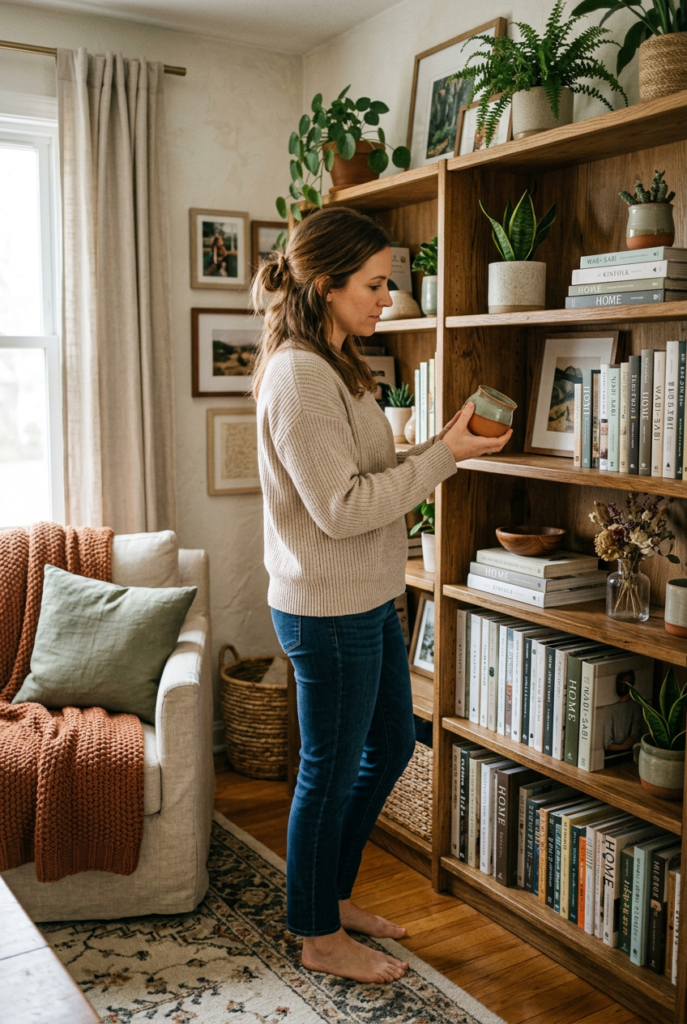
One of the simplest slow decorating habits is learning to pause.
When you see a new decor piece you like, wait before bringing it home. Give yourself time to imagine where it would live and how it would interact with the rest of the room.
Look around the space at different times of day.
Notice how the light moves across surfaces and how existing objects sit together.
This pause often reveals that the room already has what it needs.
And when you do add something new, it feels more intentional.
Rearrange Instead of Replacing
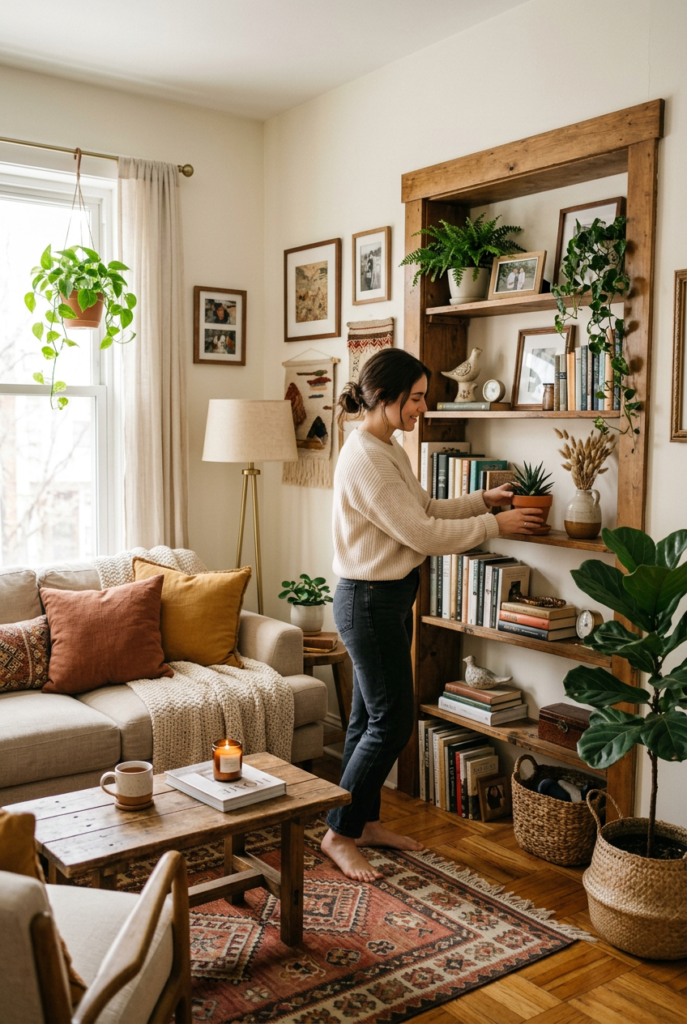
Sometimes the room needs a shift rather than something new.
Move a chair closer to a window. Slide a small table beside the sofa. Rearrange books on a shelf.
Even adjusting the position of a lamp can change how light falls across the room.
Rearranging allows you to rediscover pieces you already own.
It creates subtle freshness without introducing more objects.
Often the space simply needs breathing room.
Let Light Guide Your Choices
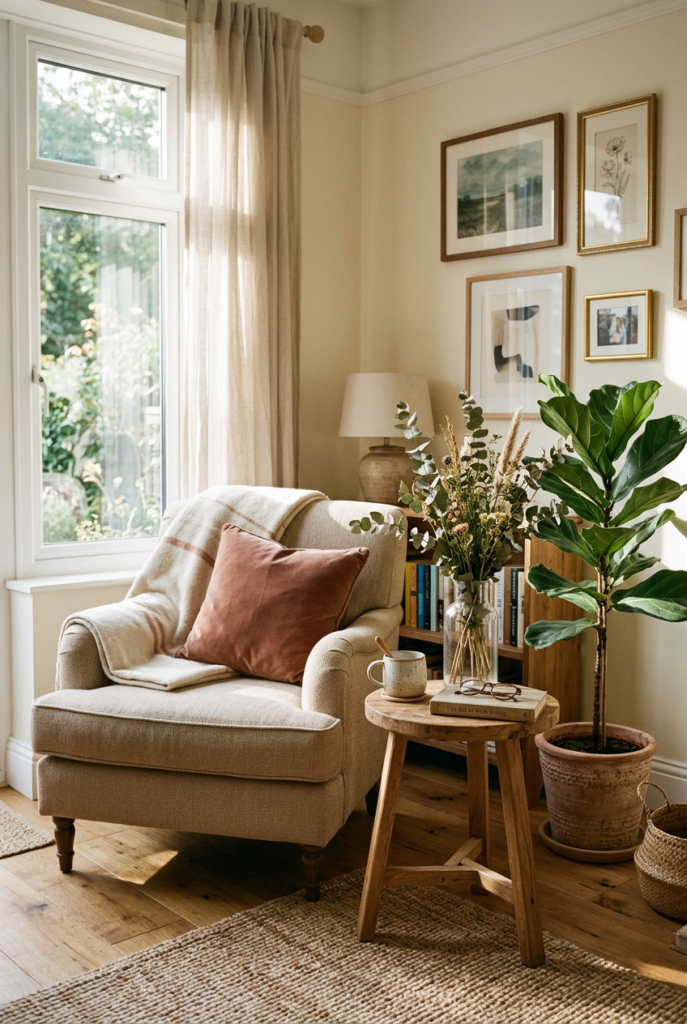
Natural light changes throughout the day.
Morning light may highlight one corner of the room, while evening light warms another.
Spend time noticing where the sunlight rests.
Place reflective objects like mirrors or glass near those areas. Position plants where light naturally touches them.
When decor works with the movement of light, the room feels softer and more alive.
The atmosphere shifts gently from morning brightness to evening warmth.
Add Texture Slowly
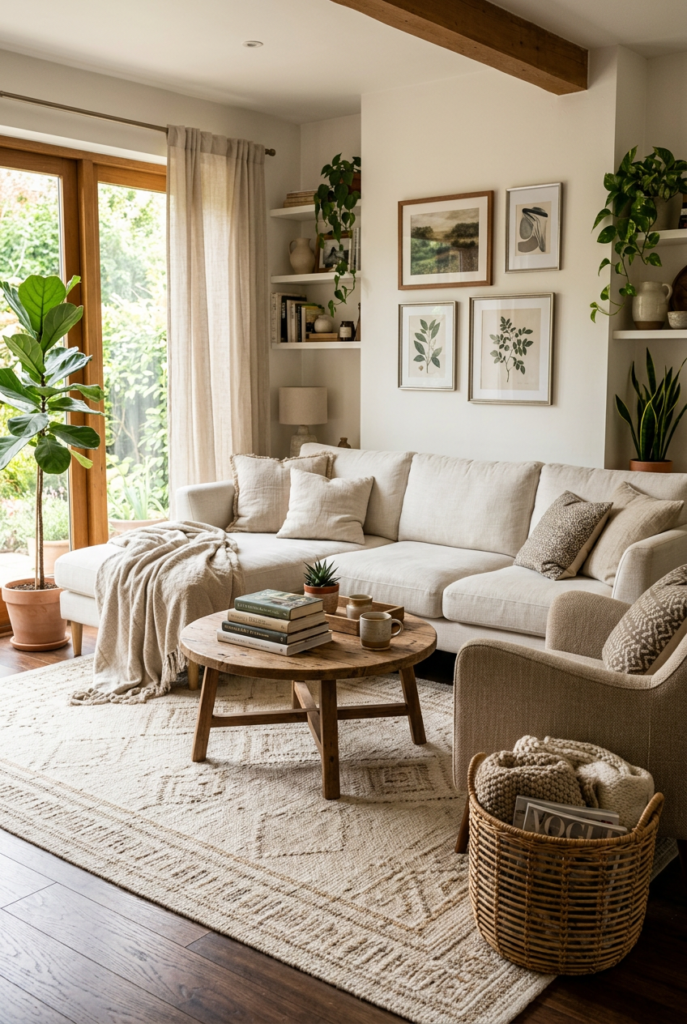
Texture brings depth to a room.
Instead of introducing many new objects at once, add one layer at a time. A linen throw on the sofa. A woven basket beside a chair. A cotton rug beneath the coffee table.
Notice how each texture interacts with the others.
The contrast between smooth wood, soft fabric, and natural fibers creates visual warmth.
Layering slowly allows the room to feel balanced rather than crowded.
Create One Calm Corner
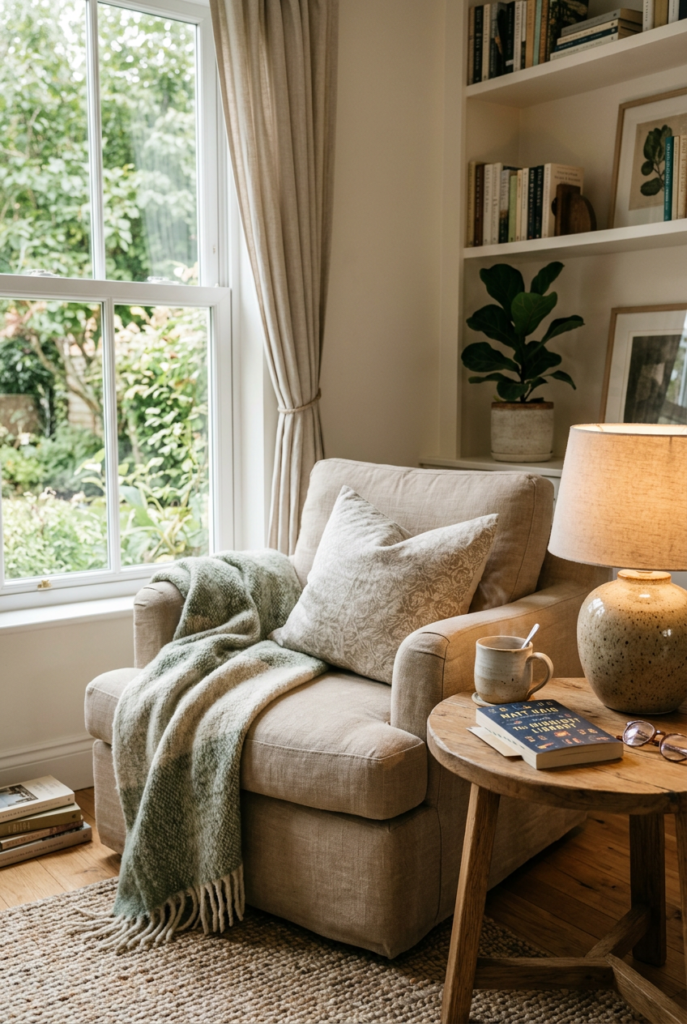
Every home benefits from a quiet corner.
Choose a small space near a window, beside a bookshelf, or at the edge of the living room.
Add a comfortable chair, a lamp with warm light, and perhaps a small side table.
Keep this area simple.
The corner becomes a place to read, sip tea, or pause for a moment.
When a home includes spaces designed for calm, decorating naturally becomes more intentional.
Rotate Decor Instead of Collecting More
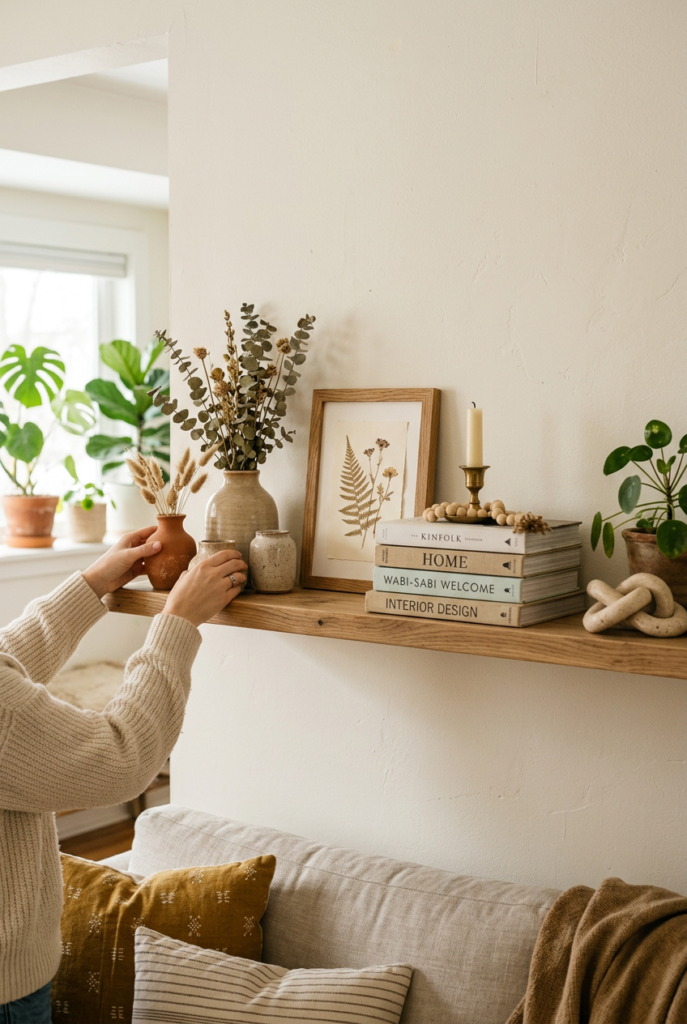
It is easy for shelves and surfaces to fill over time.
Instead of adding more decor, rotate what you already have.
Store a few pieces in a basket or cabinet and bring them out seasonally.
A ceramic vase may feel fresh again when placed in a new spot. A framed print might look different when moved from the hallway to the living room.
Rotation keeps the home evolving without constant accumulation.
Notice the Small Details
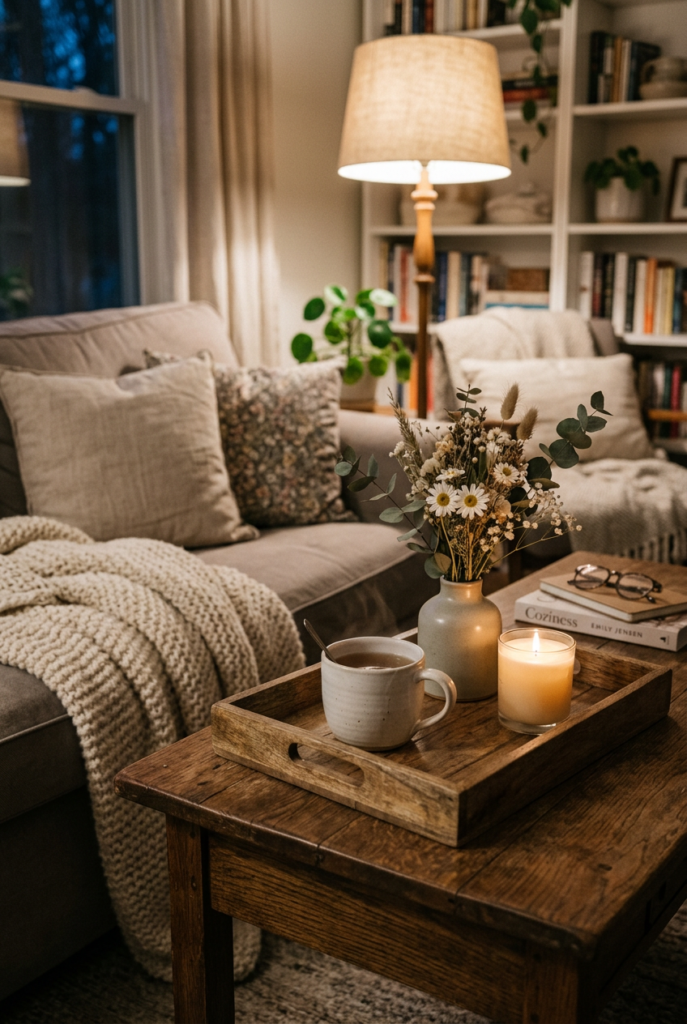
Slow decorating often happens through small adjustments.
A candle placed on a wooden tray. Fresh flowers on the table. A folded throw over the arm of a chair.
Pay attention to materials that feel good to touch.
The warmth of wood, the softness of linen, the gentle sound of a ceramic mug placed on a table.
These quiet details shape the atmosphere of the home more than large decorative changes.
How to Make It Work in a Busy Life
Slow decorating does not require extra time.
It simply asks you to be more present when you interact with your home.
Take a few minutes occasionally to look at a room with fresh eyes.
Move one object. Remove something that no longer feels right. Adjust lighting for the evening.
Decorating becomes part of everyday living rather than a separate project.
Small changes over time create a home that grows naturally.
A Home That Evolves Gently
A slow decorating approach allows a home to settle into itself.
Instead of constant change, the space evolves through small thoughtful adjustments.
Light shifts across the room. Textures gather gradually. Corners develop their own quiet purpose.
The result is not a perfectly styled interior.
It is a home that feels calm, comfortable, and deeply personal.
And that sense of intention is what makes a space truly welcoming.

Hi, I’m Livia. A mom who believes that a house becomes a home through the little things.
Over time, I started to understand what truly makes a space feel cozy, comfortable, and safe. Little by little, I transformed my own home into a place where my family and I genuinely love to be, a space that feels calm, warm, and ours.
Here, I share simple ideas and thoughtful inspiration to help you turn your home into your favorite place in the world too.