Small Backyard Ideas for Kids That Feel Fun, Safe, and Beautiful
This post may contain affiliate links, which means we may earn a small commission at no extra cost to you. We may also display third-party ads and include links to partner brands or shops. Some images may be created or enhanced using AI or sourced from licensed platforms. All opinions are our own.
For a long time, my backyard looked like it should work perfectly for my child.
There was space to run, fresh air, and nothing technically wrong with it. But every time we went outside, the same thing happened. He would walk around for a few minutes, lose interest, and ask to go back inside.
That’s when I realized something important.
An empty backyard is not the same as an inviting one.
Kids do not just need space. They need places to climb, dig, explore, and imagine. They need small details that spark curiosity and keep them engaged.
Once I started adding simple, intentional elements, everything changed. The same backyard became a place where he wanted to stay longer, move more, and come back to every day.
If your backyard feels underused or uninspiring, you are not alone.
This guide will show you practical, realistic ideas to turn even a small backyard into a space that feels fun, safe, and beautiful for your child and for you.
The Foundation: What a Kid-Friendly Backyard Actually Needs
Before adding anything new to your backyard, it helps to pause and think about what actually makes a space work for kids.
I learned this the hard way. At first, I thought I just needed to add a few toys. But the problem was not the lack of things. It was the lack of intention behind them.
Once I started focusing on how the space felt and how my child interacted with it, everything became clearer.
A kid-friendly backyard is not about having more. It is about having the right elements working together.
Movement
Children are naturally drawn to movement.
Running across a flat yard only holds their attention for so long. What keeps them engaged is the ability to move in different ways. Climbing, balancing, jumping, and sliding all create variety.
Look at your space and ask yourself a simple question. Where can my child go up, not just forward?
Even one small climbing element or a low balance feature can completely change how the space is used. Movement creates challenge, and challenge keeps kids coming back.
Sensory Play
This is often the missing piece.
Kids want to touch, dig, pour, and explore with their hands. Grass alone does not offer enough variety to hold their attention.
Think about adding simple sensory experiences. Water in a bucket. A small area for digging. Different textures like wood, stone, or soil.
You do not need a complex setup. In fact, the simpler it is, the better.
When children can interact with the environment, the space becomes much more engaging.
Defined Zones
One big open space can feel confusing to a child.
Without clear areas, play becomes scattered and short-lived. But when the backyard has small zones, everything changes.
A corner for digging. A spot for sitting. A place to climb.
These do not need walls or large structures. Even subtle changes like placing items in certain areas or using natural boundaries can create definition.
Zones give the backyard a sense of purpose.
Comfort and Safety
If a space does not feel comfortable, it will not be used for long.
Shade is essential. Without it, playtime gets cut short quickly. A simple umbrella or fabric cover can make a big difference.
The ground also matters more than we often think.
Children notice how it feels under their feet. Is it too hot, too rough, or too hard? A natural, slightly soft surface invites them to stay longer and move freely.
Safety does not mean removing all risk. It means creating an environment where they can explore with confidence.
Flexibility
Children grow quickly, and their interests change just as fast.
A backyard that only works for one stage will need constant updates. Instead, focus on elements that can adapt.
A table can be used for snacks, crafts, or play. Open space can become a game area, a building zone, or a place to relax.
Avoid overfilling the yard with fixed structures.
Leave room for the space to evolve naturally over time.
22 Small Backyard Ideas for Kids
Once you start thinking in terms of movement, texture, and small experiences, the backyard begins to open up in a completely different way.
You do not need a full renovation. Most of these ideas are simple shifts that make the space more engaging, without making it feel crowded or overwhelming.
These are the kinds of changes that made the biggest difference for us.
1. A Small Climbing Structure
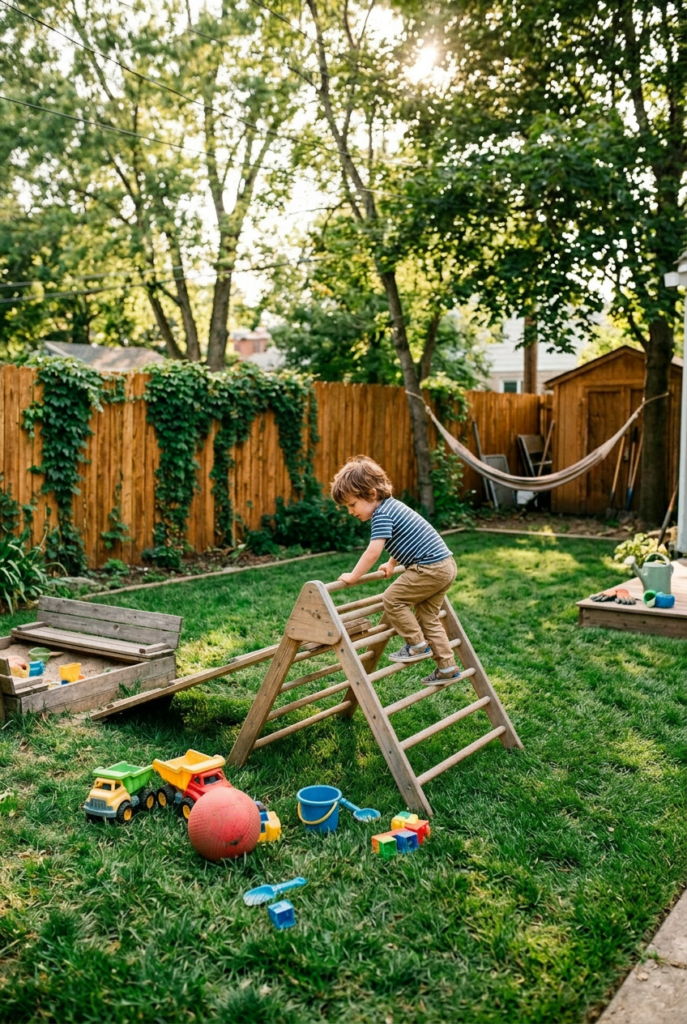
The moment we added something to climb, everything changed.
Even a compact climbing triangle or a low wall creates a sense of challenge. It gives kids a reason to stay and try again.
If your yard feels too flat, this is often the first thing to add.
2. A Simple Mud Kitchen
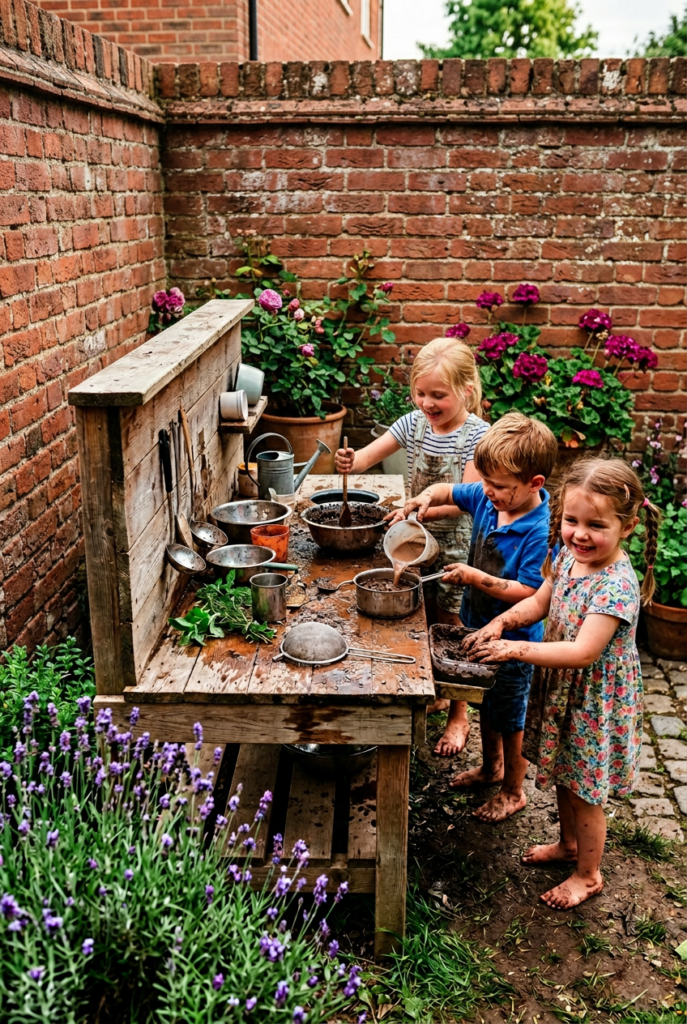
This quickly became one of the most used areas.
A small table, a few containers, and access to water are enough. Kids will mix, pour, and pretend for long stretches of time.
It may look messy, but it is focused and meaningful play.
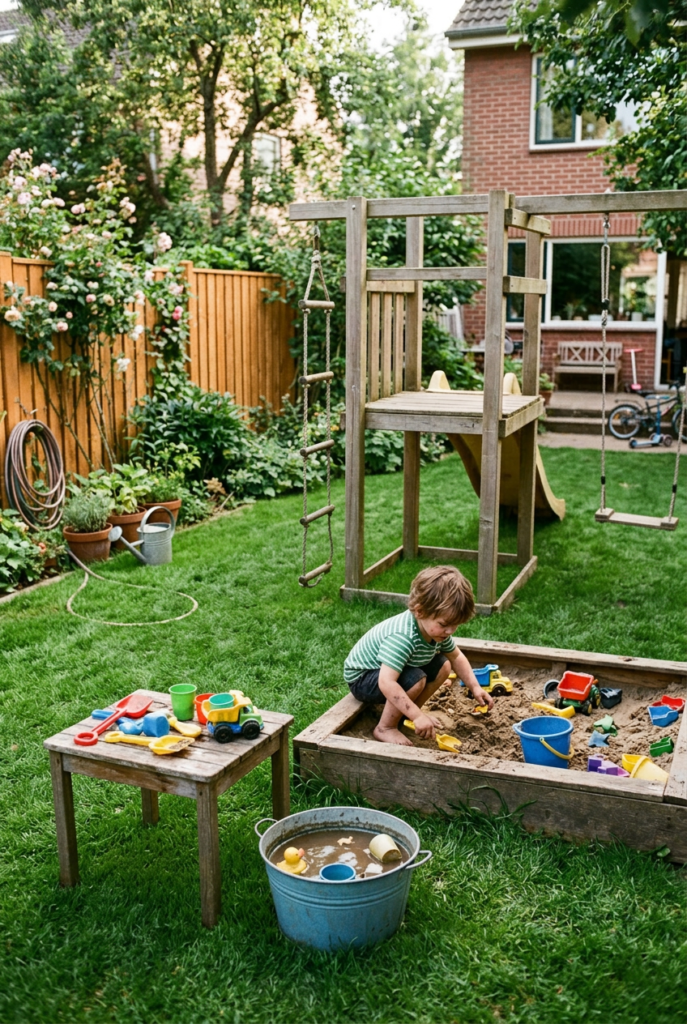
3. A Digging Area with Clear Boundaries
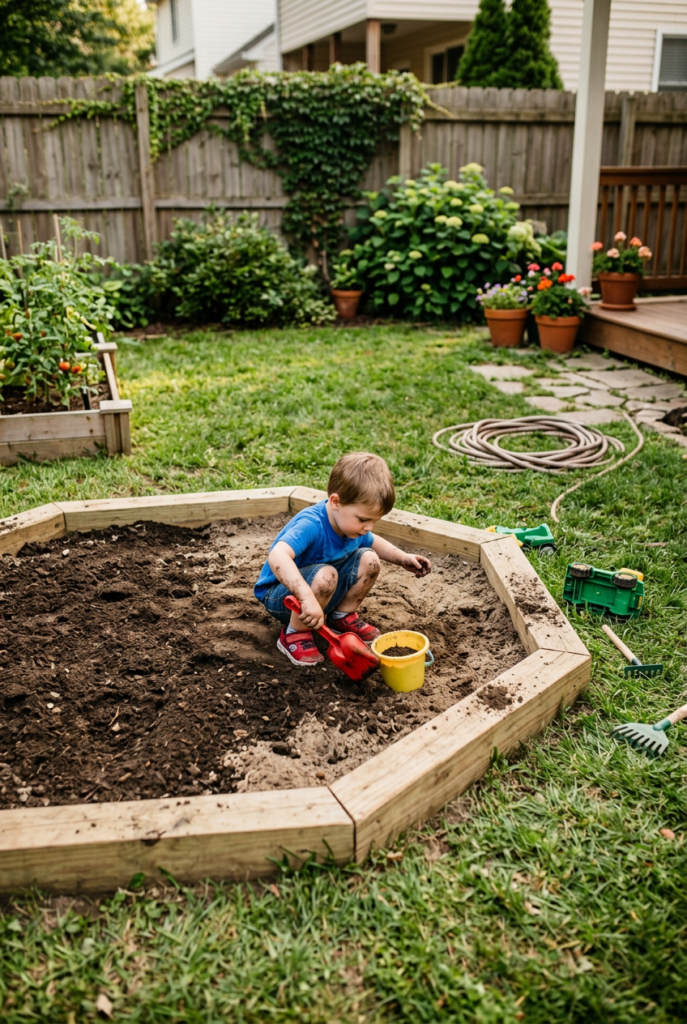
Instead of stopping the digging, give it a place.
A small section of soil or sand with defined edges keeps the rest of the yard intact while allowing freedom.
It also creates a space kids instinctively return to.
4. Natural Ground That Feels Good to Walk On
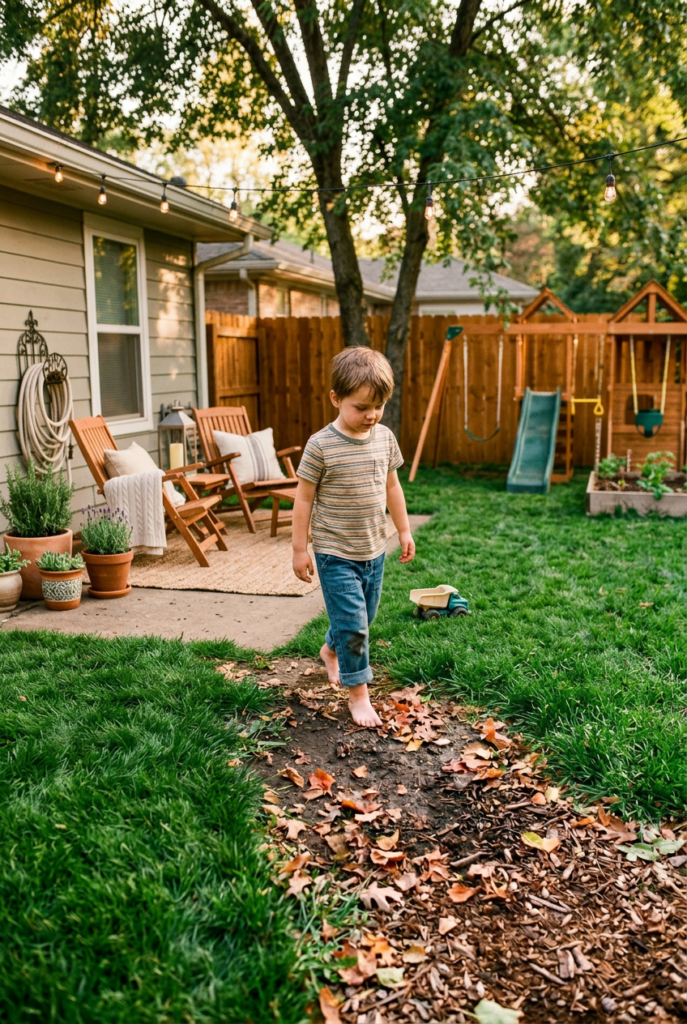
This was a big mindset shift for me.
Instead of covering everything, I started paying attention to how the ground felt. Soft grass, a bit of loose soil, even scattered leaves.
Kids want to feel the space, not just look at it.
Barefoot-friendly areas make a big difference.
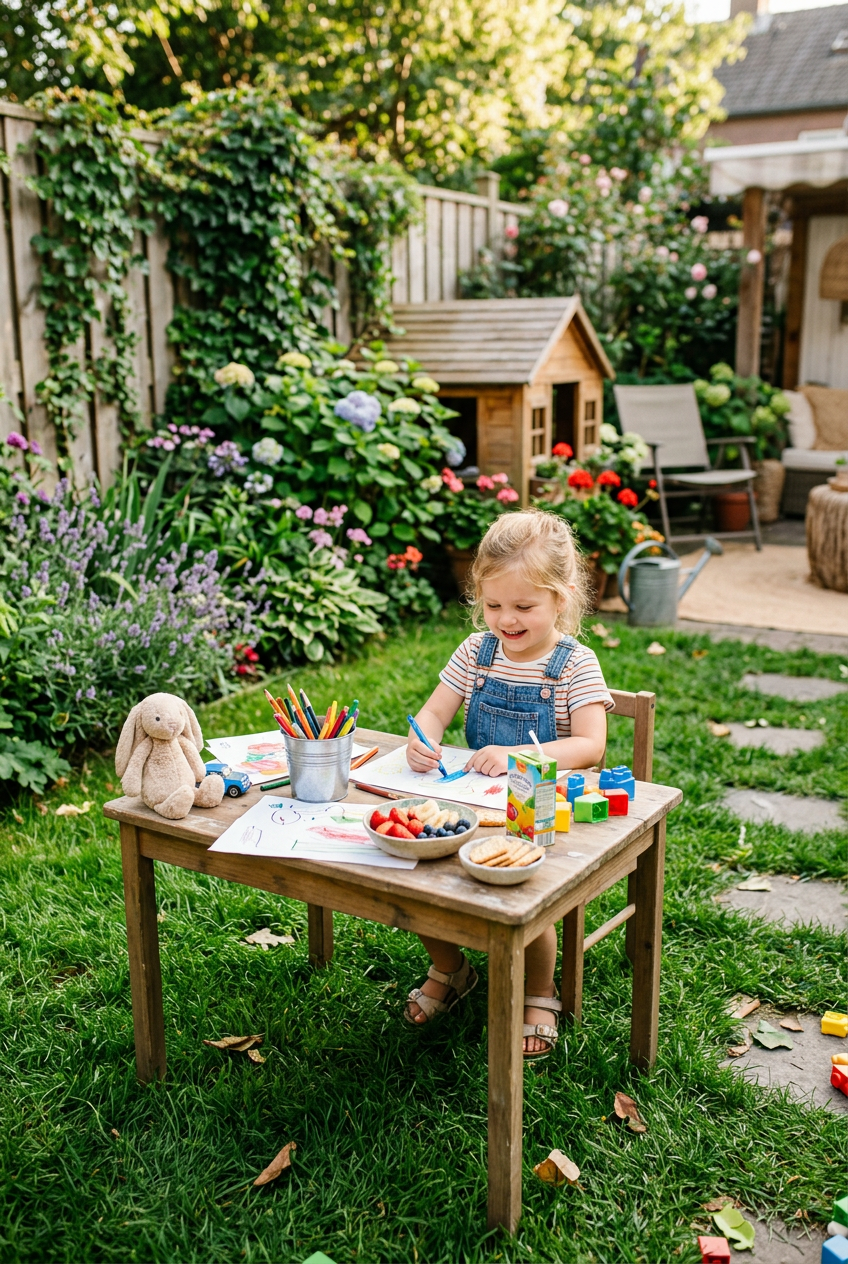
5. A Low Outdoor Activity Table
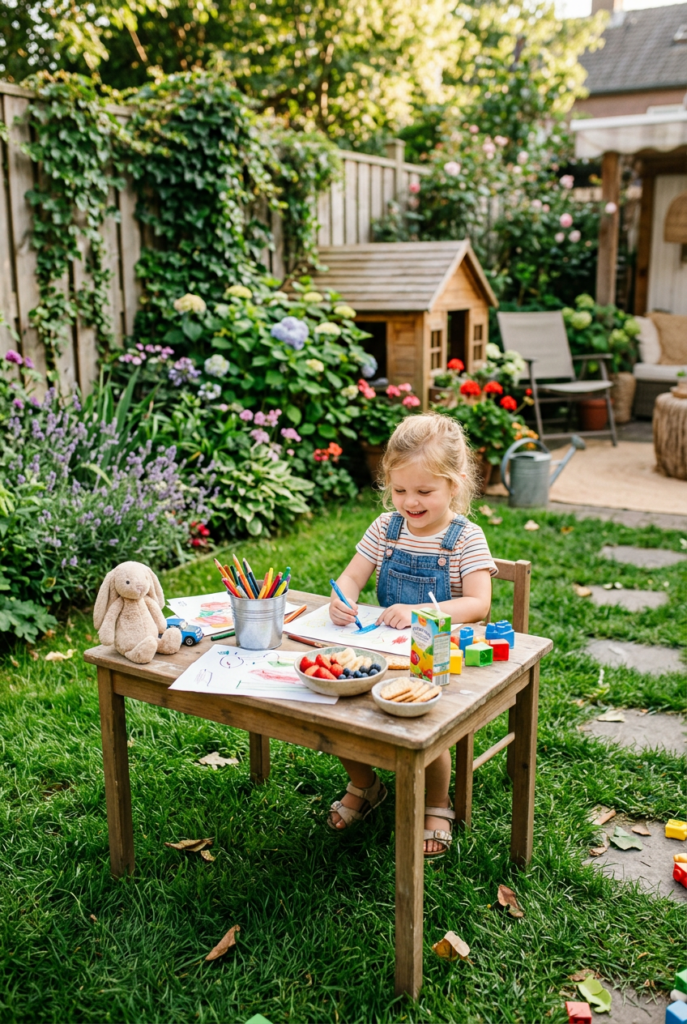
This became our daily anchor.
It is where snacks happen, but also drawing, small games, and quiet play. It naturally pulls kids into the space.
Place it somewhere with light shade for longer use.
6. A Small Outdoor Reading Spot
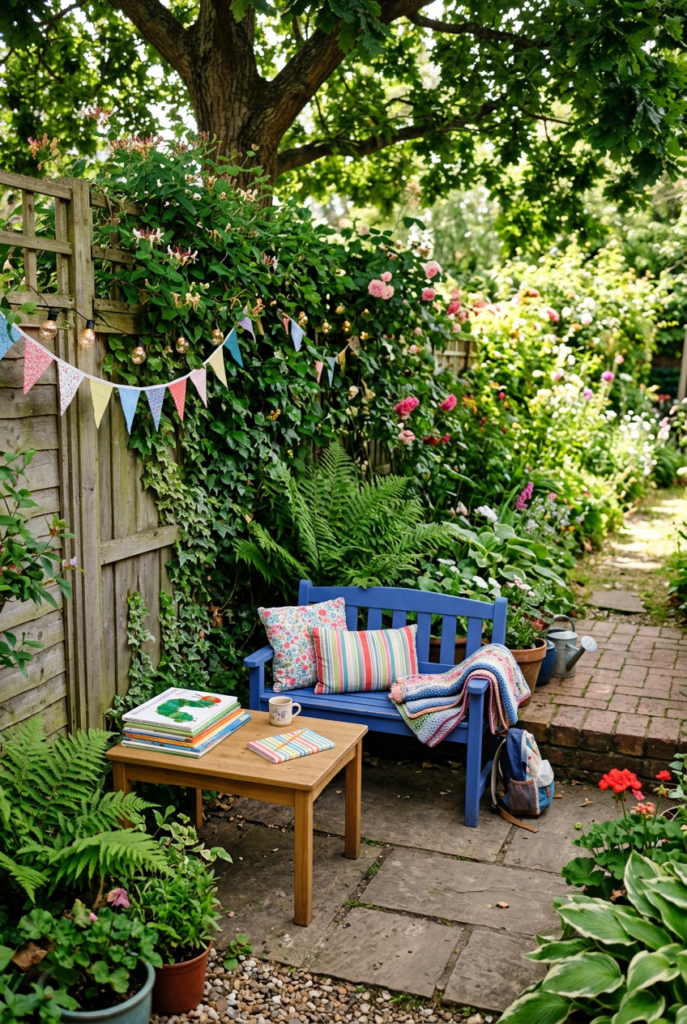
Not every moment needs to be active.
A few cushions or a bench in a quieter corner creates a place to pause. Add a small basket of books.
Sometimes, this becomes the most used part of the yard.
7. Soft Color Through Textiles
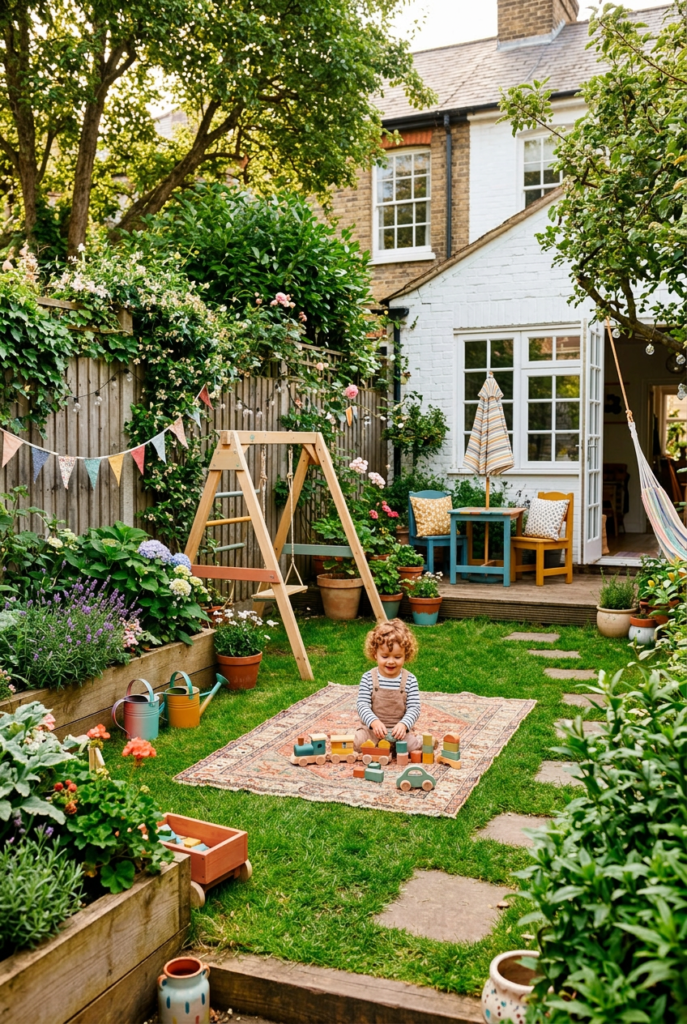
If the backyard feels flat, try adding color in a softer way.
Cushions, small blankets, or painted wood elements in muted tones can bring warmth without overwhelming the space.
You do not need bright plastic to make it feel playful.
8. A Simple Water Play Setup
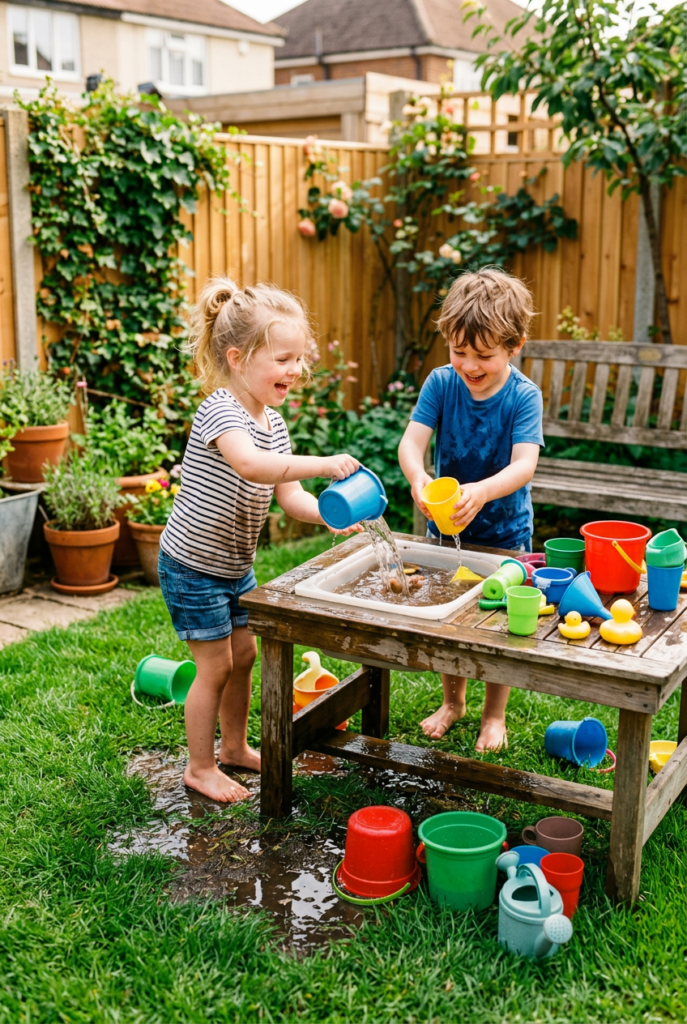
Water always brings kids back.
It can be as simple as a bucket and cups. What matters is access and freedom to use it.
Place it where spills are easy to manage and let the play happen naturally.
9. A Path to Create Movement
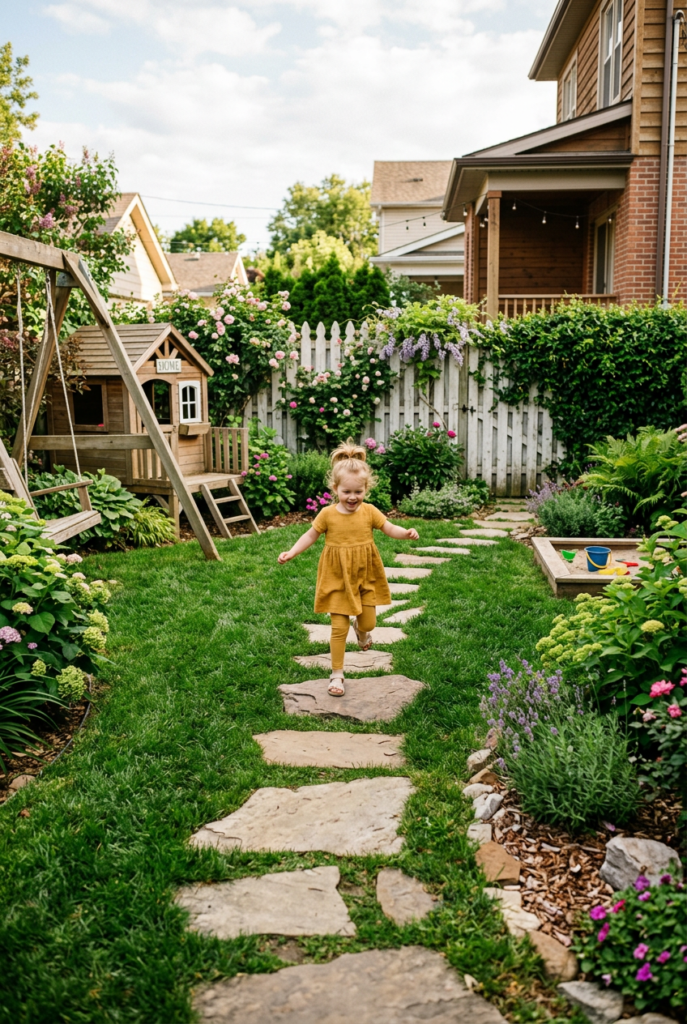
A simple path changes how kids move through the space.
Stepping stones, wood pieces, or even visual markers can guide movement from one area to another.
It gives the backyard a sense of direction.
10. A Compact Slide
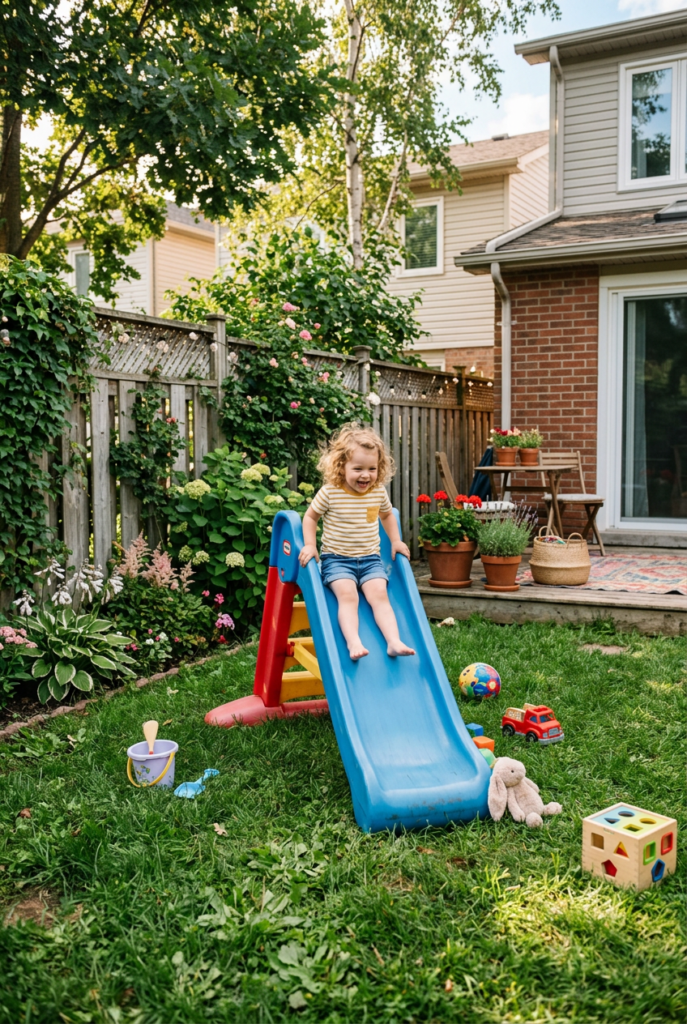
You do not need a large play structure.
A small slide adds movement and repetition. Kids will use it over and over.
Just make sure it fits comfortably within the space.
11. A Storage Bench That Stays Accessible
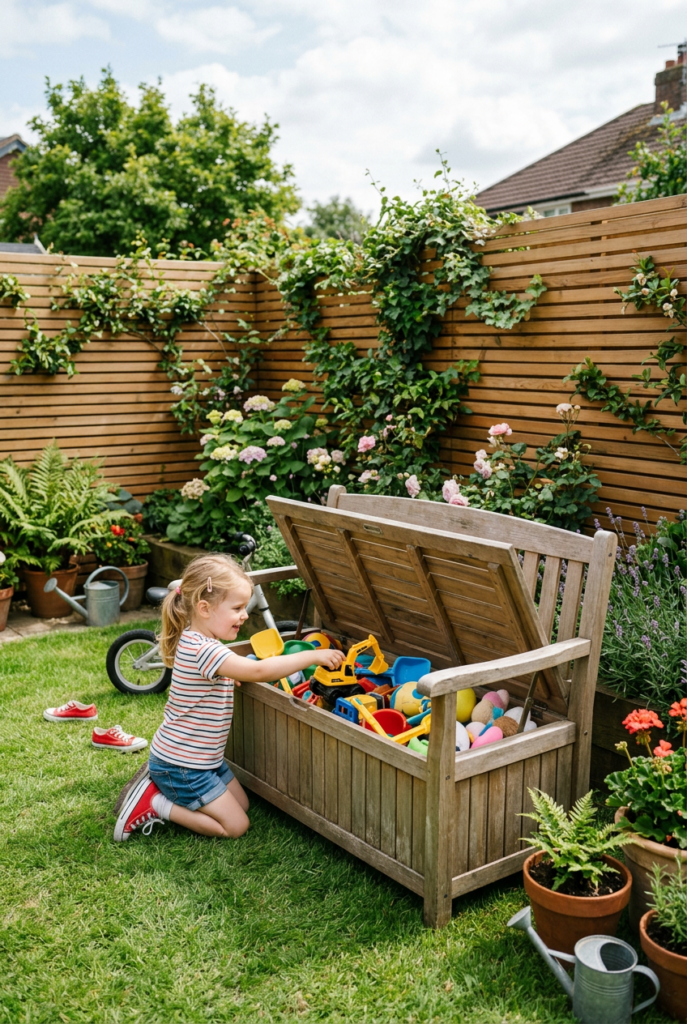
Storage matters more than we think.
A bench that holds toys keeps the space organized and easy to reset. It also doubles as seating.
When kids can access and return items themselves, everything works better.
12. A Shaded Corner That Feels Protected
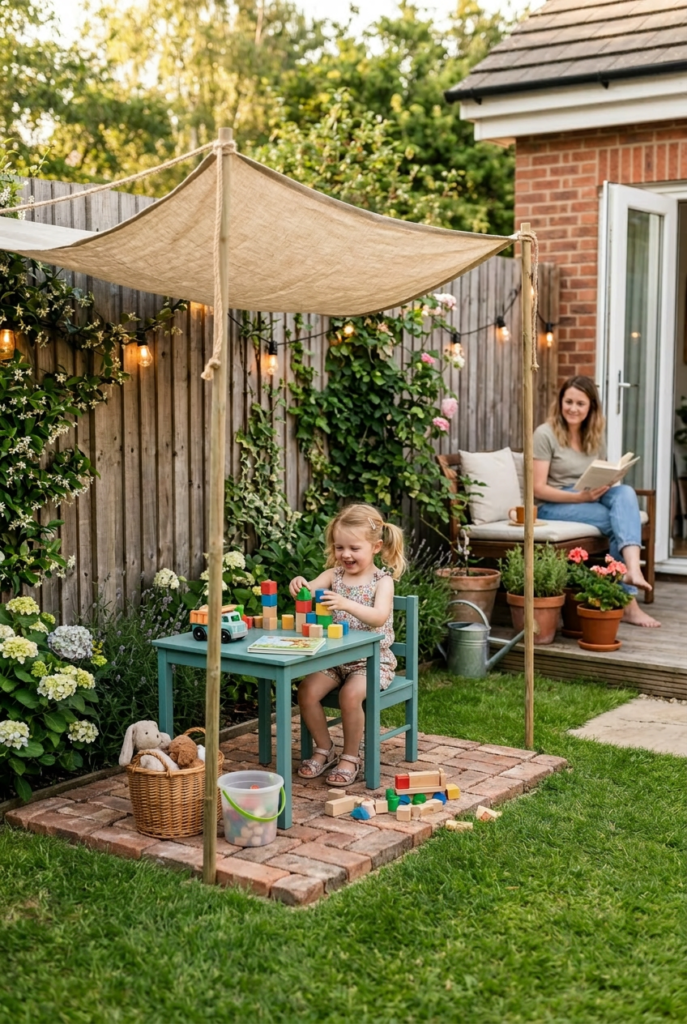
Shade extends playtime.
But more than that, it creates a sense of comfort. A slightly enclosed area feels more inviting than open sun.
Even a simple fabric cover can transform a space.
13. A Swing or Hanging Element
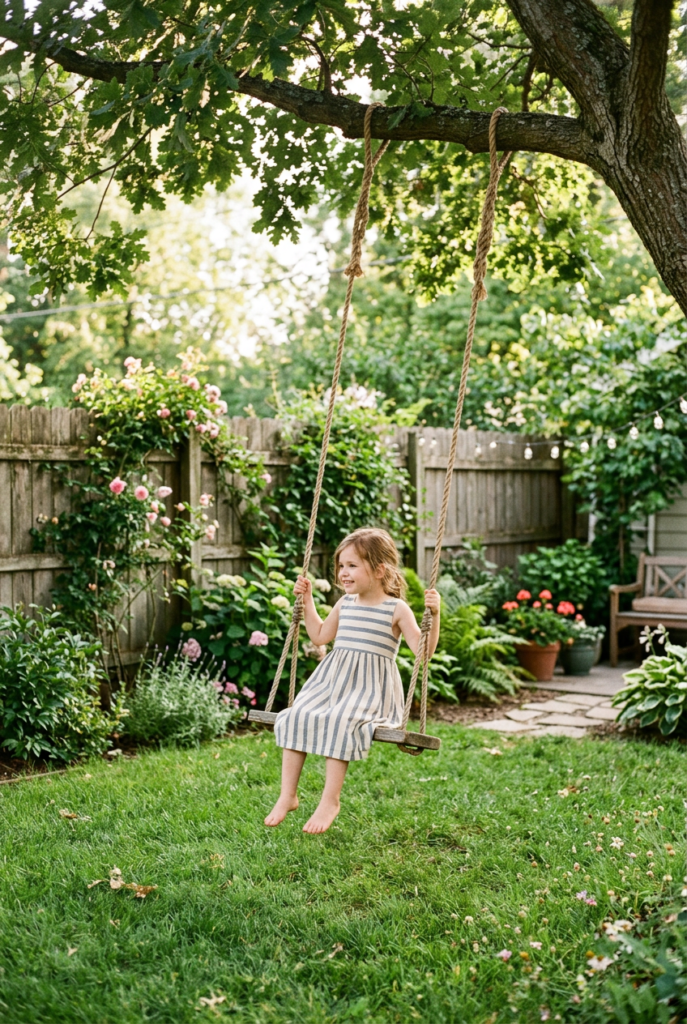
Movement does not need to be complex.
A simple swing adds rhythm and calm. It becomes a place kids return to without needing direction.
It works especially well in smaller spaces.
14. A Sensory Area with Mixed Materials
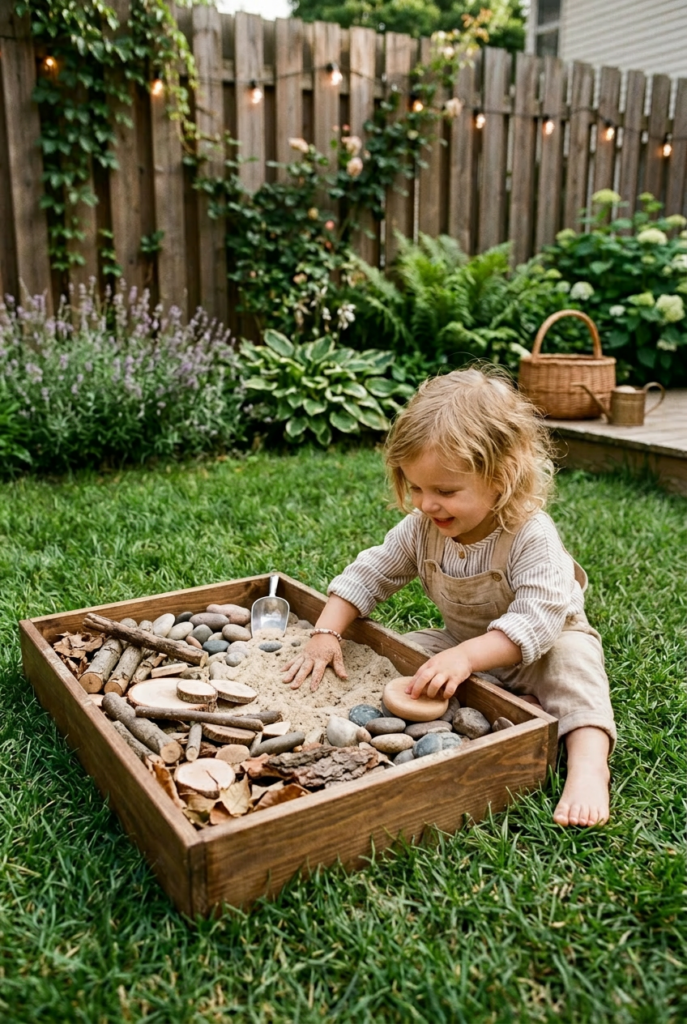
Think about what your child can touch.
A mix of textures like wood, stone, sand, and plants creates a richer environment.
It does not need to be a formal setup. Just intentional variation.
15. A Small Garden to Care For
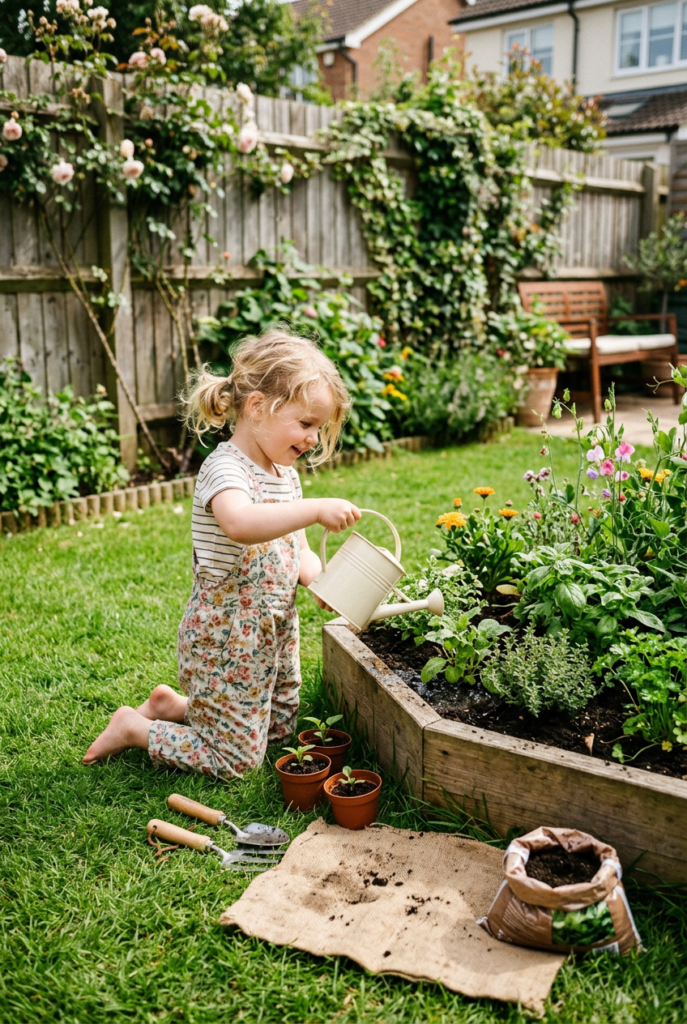
This adds a completely different type of engagement.
A few plants to water and observe create routine and connection. It slows things down in a good way.
Even a couple of pots can work.
16. A Chalk Drawing Surface
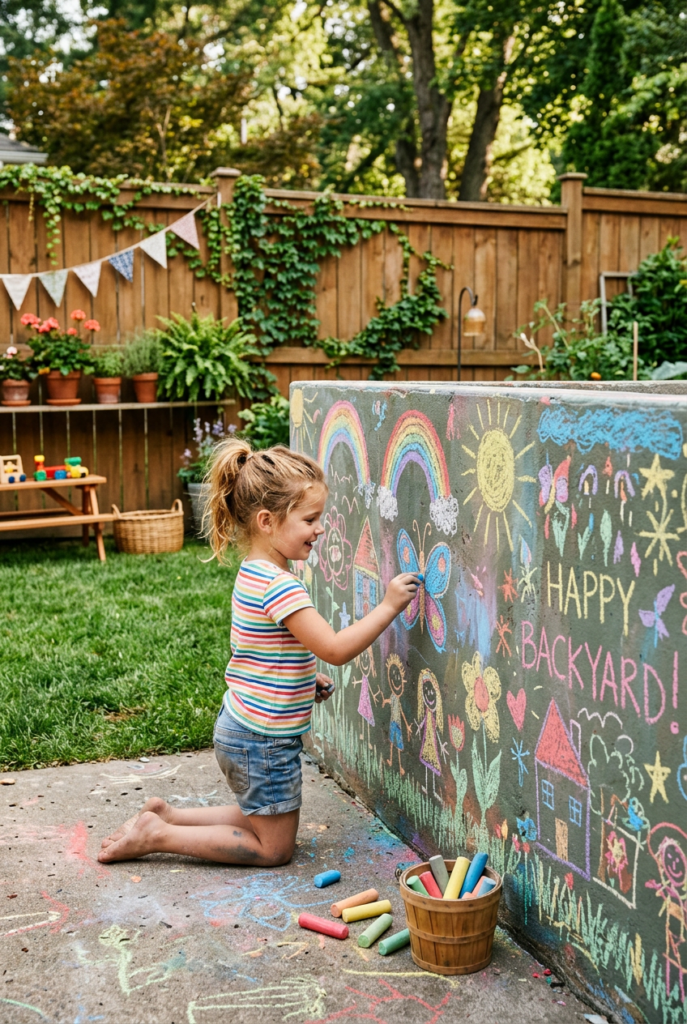
Outdoor drawing feels freer.
A wall, board, or flat surface where kids can draw and erase creates endless possibilities.
It is simple, but surprisingly engaging.
17. A Soft Corner for Rest
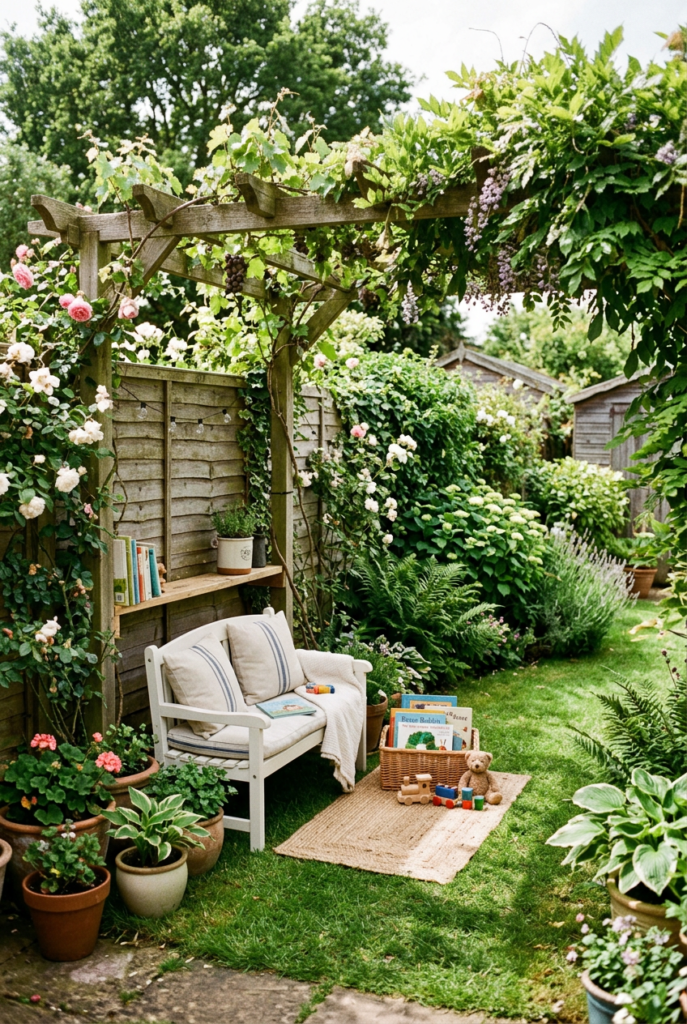
After active play, kids need a place to land.
A few cushions or a blanket in a quiet corner create a space for rest or imaginative play.
This balance makes the yard feel complete.
18. A Small Playhouse or Defined Space
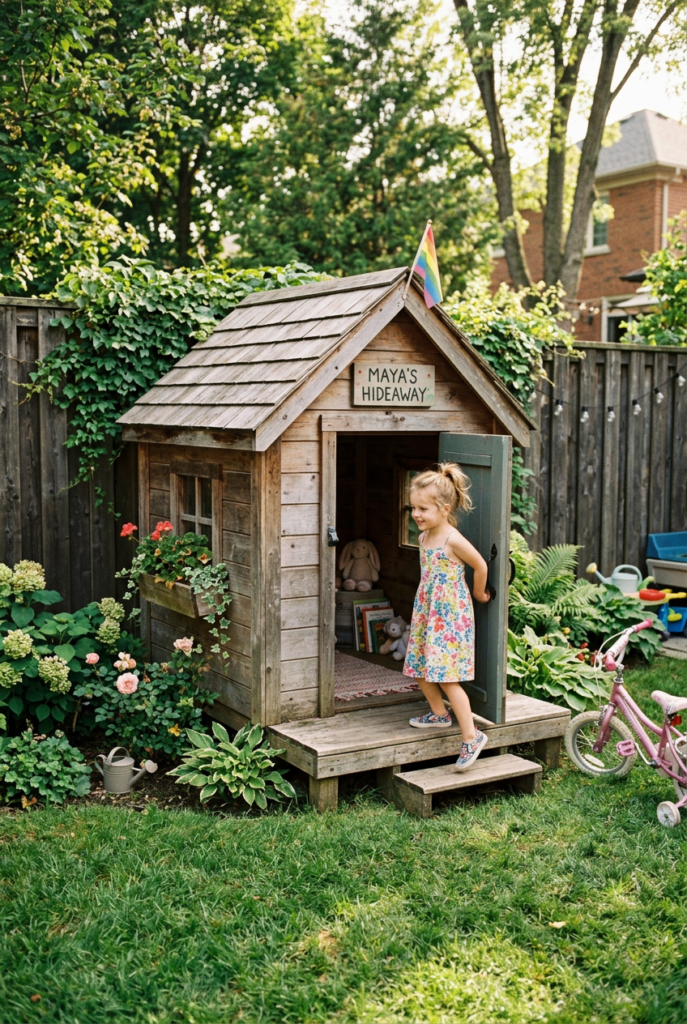
Children love having a place that feels like theirs.
It does not need to be big. A small structure or even a defined corner can create that feeling.
Ownership changes how they use the space.
19. A Balance Feature
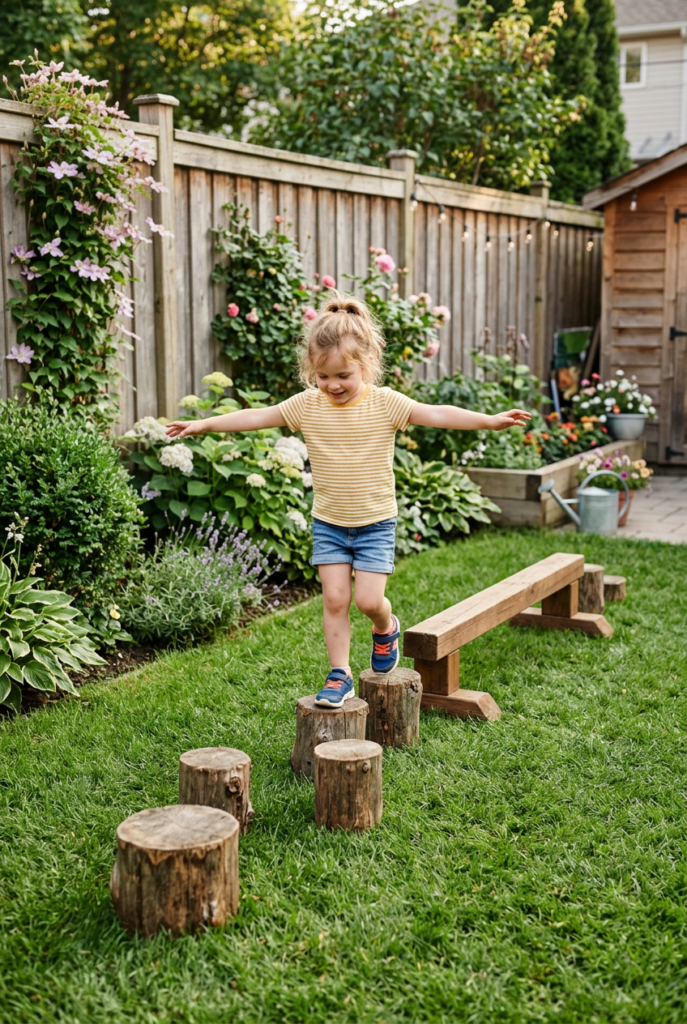
Balancing is simple but powerful.
A low beam or stepping elements add challenge without taking up space.
These small features often get used more than expected.
20. Rotating Toys Instead of Adding More
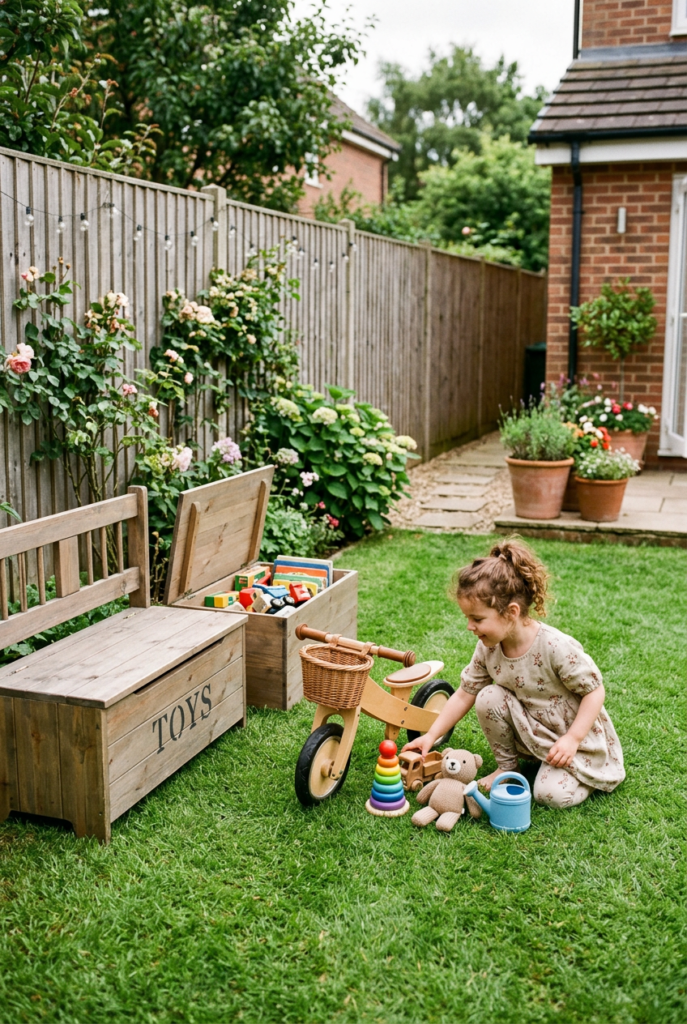
This made a big difference for us.
Instead of adding new items, I started rotating what was already there.
It kept the space fresh without increasing clutter.
21. Soft Lighting for Evenings
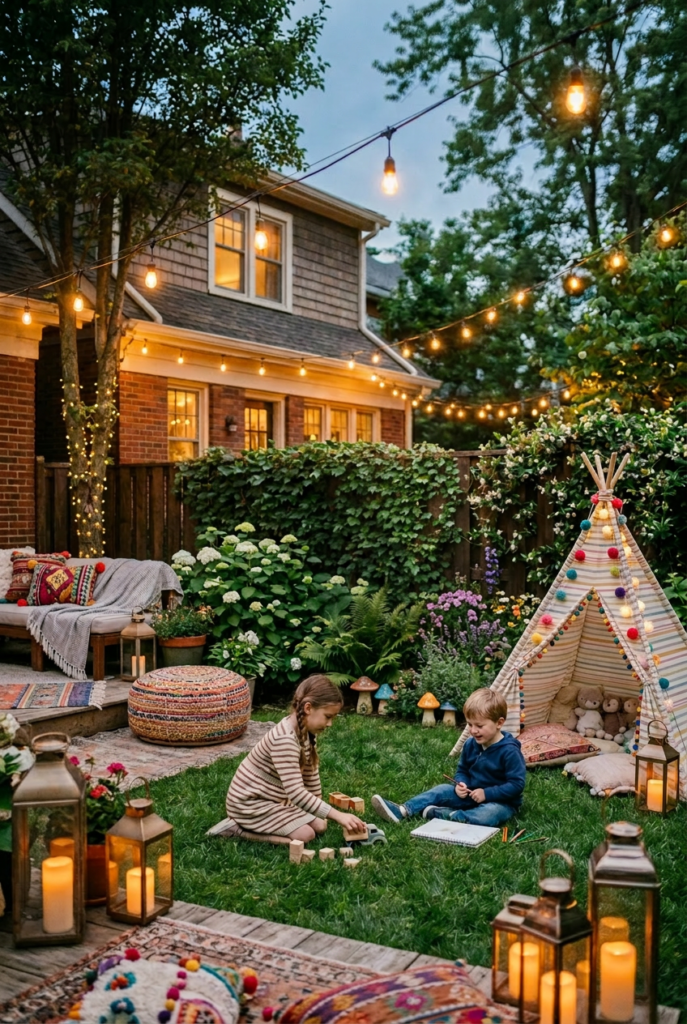
A little lighting changes how the space feels.
Warm string lights or small lamps make the backyard usable even as the day winds down.
It creates a calmer atmosphere.
22. Creating Small Experiences Instead of Filling Space
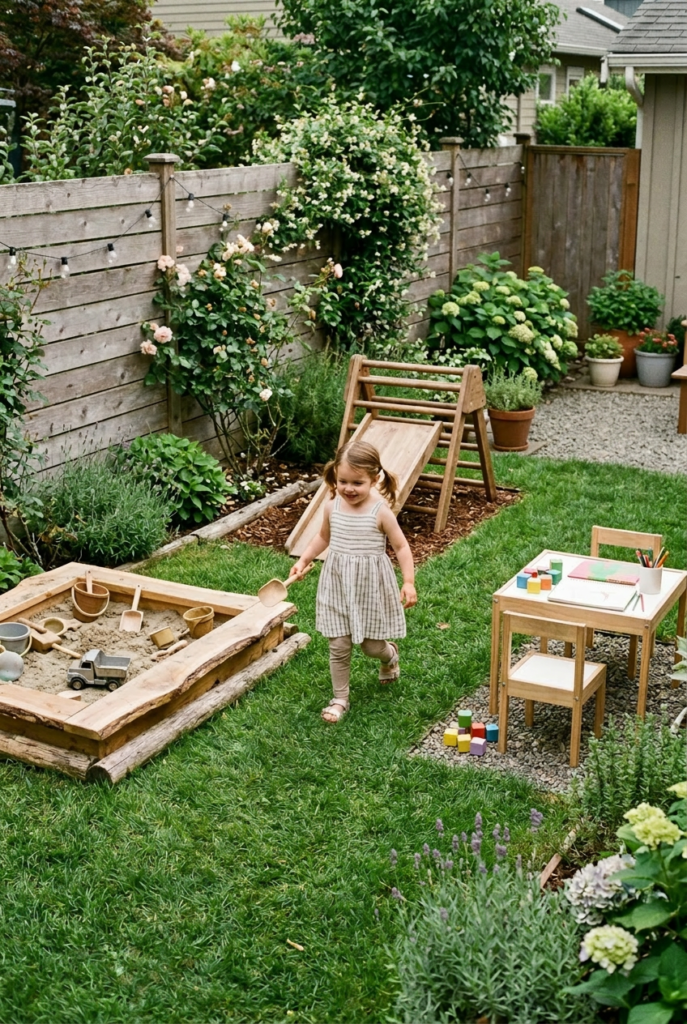
This was the biggest shift.
Instead of filling the backyard, I started thinking in small moments.
A place to dig. A place to sit. A place to climb.
When each area has a purpose, the whole space starts to feel alive.
How to Design Your Backyard Step by Step
When I first tried to improve our backyard, I made the mistake of thinking I needed to change everything at once.
I added a few things quickly, but nothing really worked together. The space still felt disconnected, and my child still wasn’t fully engaged.
What actually worked came later, when I slowed down and approached it step by step.
If you are starting from a backyard that feels empty or underused, this process makes everything much easier and more intentional.
1. Observe How Your Child Uses the Space
Before adding anything new, spend a few days just watching.
Where does your child naturally go? Do they stay near the door, stick to one corner, or avoid the space altogether?
Notice what they try to do.
Are they picking up sticks, trying to climb something, digging in random spots?
These small behaviors are clues.
They show you what the space is missing without you having to guess.
2. Identify What’s Missing
Once you observe, patterns start to appear.
Maybe there is no place to climb. Maybe there is nothing to dig or touch. Maybe the space feels too open and undefined.
Ask yourself simple questions.
Is there movement? Is there sensory play? Is there a place to sit and rest?
You don’t need everything at once. You just need to understand what is currently absent.
3. Start with One or Two Changes
This is where most people go wrong.
It is tempting to add multiple elements at once, but that often leads to clutter and confusion.
Instead, choose one or two additions that solve the biggest gap.
For us, it was a digging area and something to climb.
That alone changed how the backyard was used.
Start small, then watch what happens.
4. Place Things with Intention
Where you place something matters as much as what you add.
Try to create small zones instead of spreading items randomly.
Keep active elements slightly separated from calm areas. Place messy play like water or dirt where it is easy to clean.
And always leave some open space between areas.
That breathing room makes everything feel more usable.
5. Layer Slowly Over Time
Once the first changes are working, you can build from there.
Add a table, a shaded spot, or a small seating area. Each new element should respond to how the space is already being used.
This keeps the backyard feeling natural instead of forced.
It also prevents you from spending money on things that won’t actually get used.
6. Keep the Visual Feeling Calm
Even in a playful space, the overall look matters.
Try to keep a soft, cohesive palette using natural materials and a few gentle colors.
Too many bright or mismatched elements can make the backyard feel chaotic.
When the space looks calm, it feels more inviting for both kids and adults.
7. Adjust as Your Child Grows
This is not a one-time project.
As your child grows, their needs will change. What worked a few months ago might not hold their attention anymore.
The advantage of a simple, flexible setup is that it can evolve easily.
You can remove, replace, or rearrange elements without starting from scratch.
Safety Tips for Small Backyard Design
When I started making changes to our backyard, safety was always in the back of my mind.
Not in a restrictive way, but in a quiet, constant way. I wanted my child to explore freely, climb, get messy, and move without me feeling like I had to say “be careful” every few minutes.
The goal is not to remove all risk. It is to create a space where exploration feels natural and supported.
These are the safety details that made the biggest difference for us.
Keep Surfaces Soft Where It Matters
Falls will happen. That is part of play.
What matters is where they land.
Under climbing areas, slides, or balance features, make sure the ground is forgiving. Grass, sand, or loose soil works well.
You do not need to cover the entire yard, just focus on the areas where movement happens.
This small adjustment allows kids to play more freely.
Maintain Clear Visibility
One thing I quickly realized was how important it is to see the entire space easily.
Avoid creating hidden corners or blocked views, especially near active play areas.
Try to position key elements where you can see them from where you naturally sit or stand.
This allows you to supervise without hovering.
It also helps you relax while your child plays.
Avoid Overcrowding the Space
It is easy to keep adding things.
But too many elements placed too close together can create more risk, not less.
Kids need room to move, turn, and run without constantly bumping into something.
Leave space between areas.
That openness makes movement safer and the space easier to navigate.
Secure Structures Properly
Anything that involves climbing or movement needs to feel stable.
Check that climbing elements, swings, or play structures are firmly installed and do not wobble.
Even small items should feel solid when used.
If something shifts or feels unstable, kids will either avoid it or use it in unsafe ways.
A stable structure builds confidence.
Choose Materials That Feel Safe to Touch
Children interact with everything using their hands.
Surfaces should feel smooth, not sharp or rough.
Check for splinters in wood, sharp edges on metal, or materials that get too hot in the sun.
Natural materials are a great choice, but they still need to be well-finished.
If it feels comfortable to you, it will likely feel safe to your child.
Be Mindful of Sun and Heat
Safety is not just about physical structures.
Heat and sun exposure can make a backyard uncomfortable quickly.
Make sure there is at least one shaded area where your child can rest.
Also check surfaces like metal, plastic, or stone during hot days.
If something feels too hot to touch, it needs to be moved or shaded.
Keep Tools and Small Items Organized
Backyards often include tools, gardening supplies, or small objects that can become hazards.
Keep these stored in a closed box, bench, or designated area.
When everything has a place, the play area stays clear.
This also makes cleanup easier and faster at the end of the day.
Create Safe Boundaries Without Restricting Play
Boundaries help guide movement.
Use subtle cues like edges, planters, or layout changes to define areas without blocking them completely.
For example, a digging zone can have a clear border, or a path can guide movement through the yard.
These visual boundaries help children understand where different types of play happen.
And that makes the space feel both safe and intuitive.
A Backyard They Actually Want to Stay In
At the beginning, I thought the problem was space.
But it was never about having more room. It was about creating reasons to stay.
Once I shifted my focus from filling the backyard to shaping small experiences, everything changed. A place to dig. A place to climb. A place to sit. Each detail gave the space meaning.
And slowly, the backyard stopped being something we “tried to use” and became part of our daily rhythm.
If you are starting with a space that feels empty or underwhelming, you do not need to fix everything at once.
Start small. Observe what your child is drawn to. Add one meaningful element and see how it changes the way the space is used.
The goal is not perfection.
It is creating a backyard that feels alive, where your child can explore, stay longer, and return again and again without being asked.
Because when that happens, you know the space is finally working.

Hi, I’m Livia. A mom who believes that a house becomes a home through the little things.
Over time, I started to understand what truly makes a space feel cozy, comfortable, and safe. Little by little, I transformed my own home into a place where my family and I genuinely love to be, a space that feels calm, warm, and ours.
Here, I share simple ideas and thoughtful inspiration to help you turn your home into your favorite place in the world too.