Rug Size Guide for Small Living Rooms
This post may contain affiliate links, which means we may earn a small commission at no extra cost to you. We may also display third-party ads and include links to partner brands or shops. Some images may be created or enhanced using AI or sourced from licensed platforms. All opinions are our own.
Choosing the right rug size can completely change a small living room.
Too small, and the room feels disconnected and cluttered. Too large, and it overwhelms the space. Many small living rooms feel cramped not because of furniture, but because the rug proportions are off.
This guide will help you choose the right rug size using clear measurements, layout rules, and simple formulas. No guesswork. No vague advice.
Let’s make your living room feel larger, softer, and more cohesive.
Rule 1: The Rug Should Anchor the Main Furniture
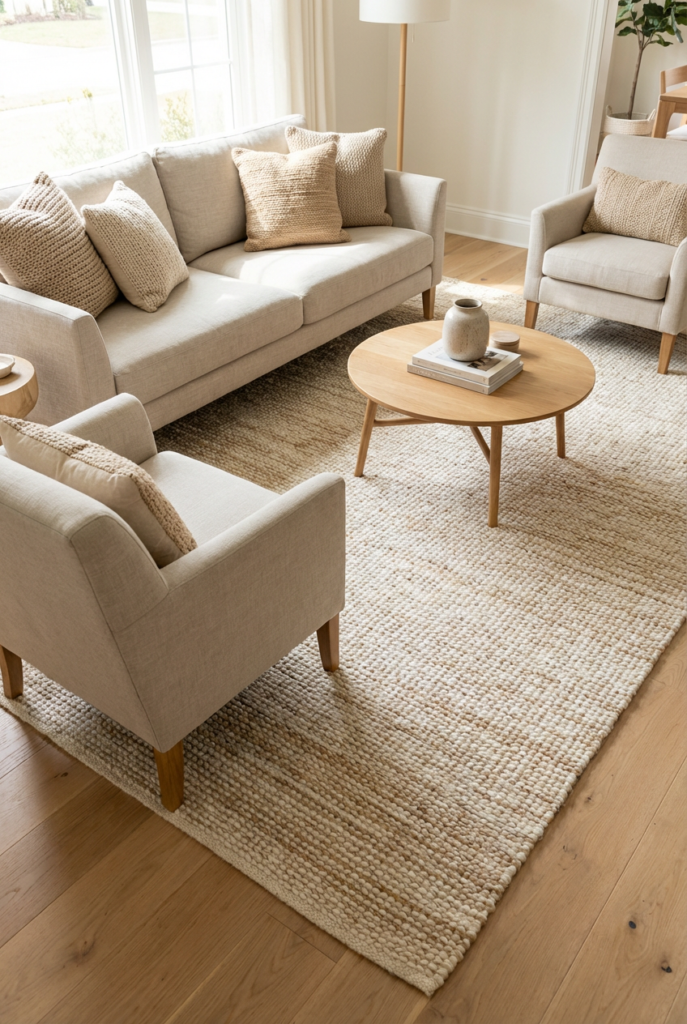
In a small living room, the rug must connect the seating area.
At minimum, the front legs of your sofa and chairs should sit on the rug. Ideally, all front legs rest comfortably on it.
If none of the furniture touches the rug, the room feels visually fragmented.
Here’s the basic formula:
Measure your sofa length.
Add 12 to 18 inches total (6–9 inches on each side).
That number is your minimum rug width.
For example:
If your sofa is 72 inches long, your rug should be at least 84–90 inches wide.
This ensures the rug extends beyond the sofa and frames the seating area properly.
Standard Rug Sizes That Work in Small Living Rooms
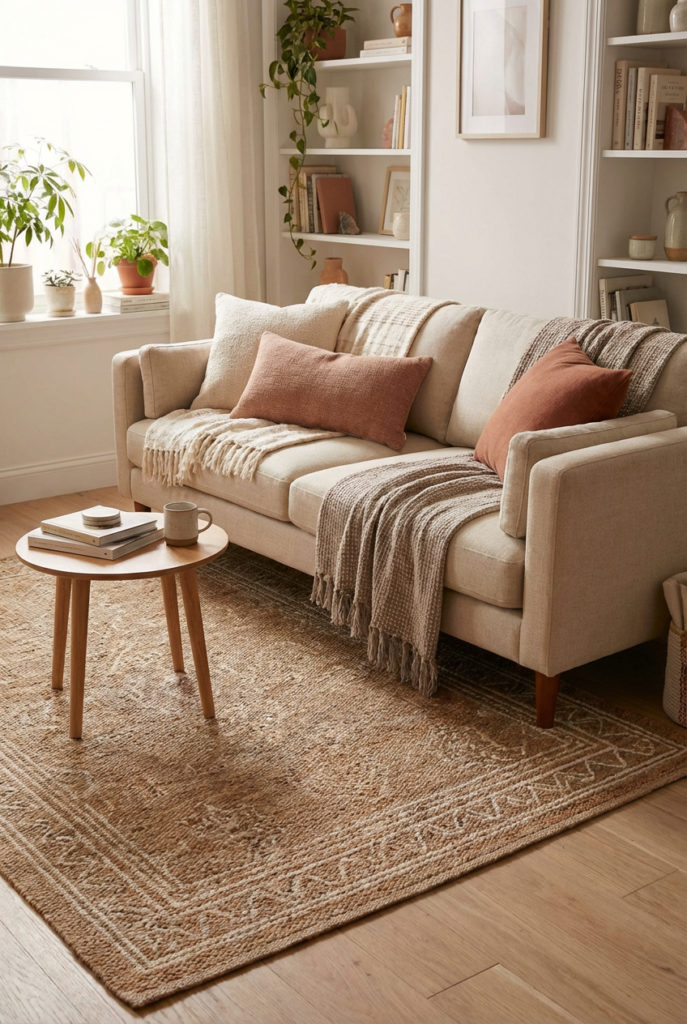
Most small living rooms fall between 8×10 feet and 12×14 feet in total room size.
Here are the rug sizes that typically work best:
5×7 feet
Works only in very tight layouts. Use when space is limited, and place just the front legs of the sofa on the rug. Avoid if your room is larger than 10×10 feet.
6×9 feet
A strong option for apartments and compact rooms. Fits under the front legs of a standard 72–84 inch sofa and a small coffee table.
8×10 feet
The most versatile choice. Allows all front legs of furniture to sit comfortably on the rug. Creates a unified seating zone.
If your room is 10×12 feet or larger, 8×10 is usually ideal.
Avoid 4×6 rugs in living rooms. They almost always look too small unless the space is extremely compact.
Rule 2: Leave Breathing Room Around the Edges
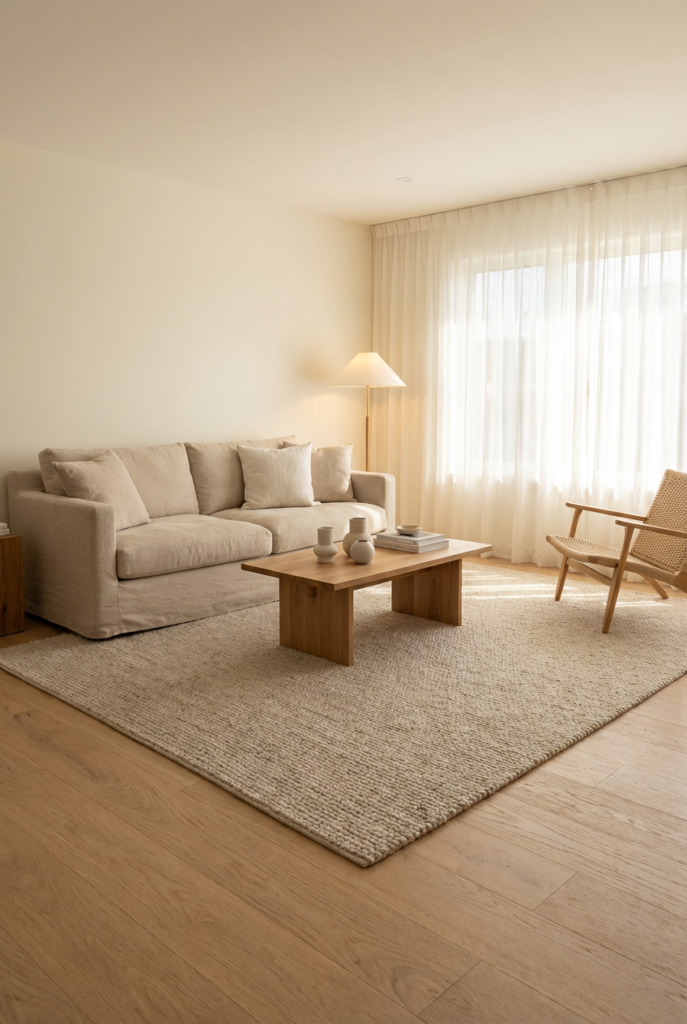
A rug should not touch every wall.
Leave 6 to 12 inches of visible floor between the rug and the walls in small rooms. This creates a border that visually expands the space.
For example:
In a 10×12 foot room, an 8×10 rug leaves about 12 inches of floor on the long sides and 12 inches on the short sides.
That border frames the rug like artwork and prevents the room from feeling crowded.
If your room is under 9 feet wide, aim for 6–8 inches of floor border.
Rule 3: Match Rug Shape to Layout
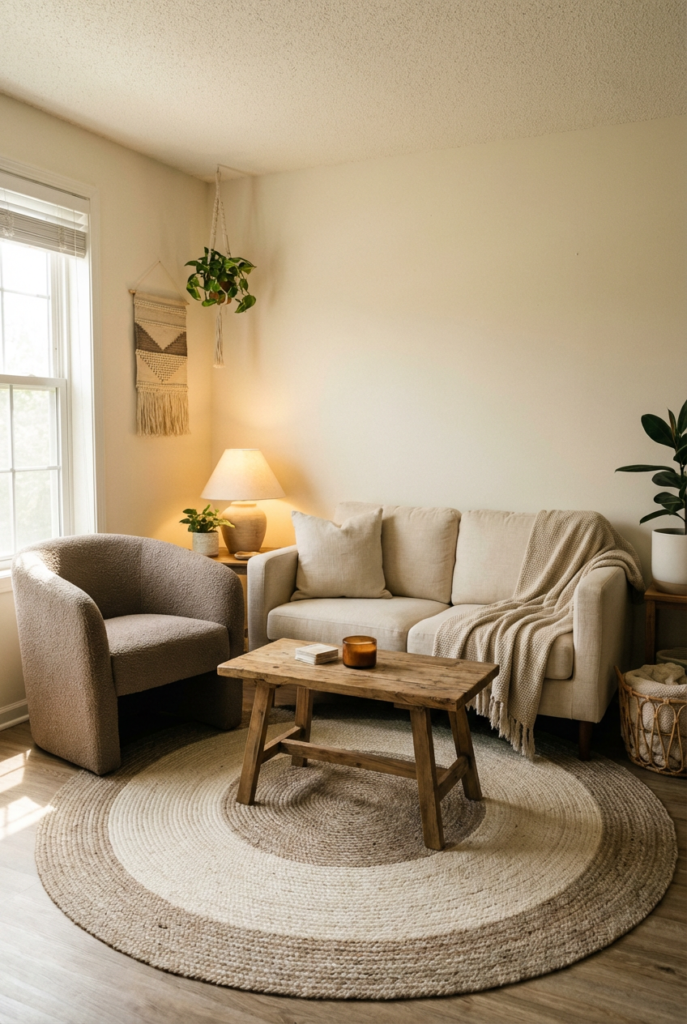
Rectangular rugs work best for most small living rooms.
But if your room layout is square and compact, a square rug (6×6 or 8×8) can sometimes balance proportions better.
Round rugs work well in tight seating arrangements or rooms with curved furniture. Keep the diameter at least 2 feet smaller than the smallest room dimension.
For example:
If the narrowest side of your room is 9 feet, choose a round rug no larger than 7 feet in diameter.
This prevents the rug from overwhelming the space.
Rule 4: Coffee Table Placement Matters
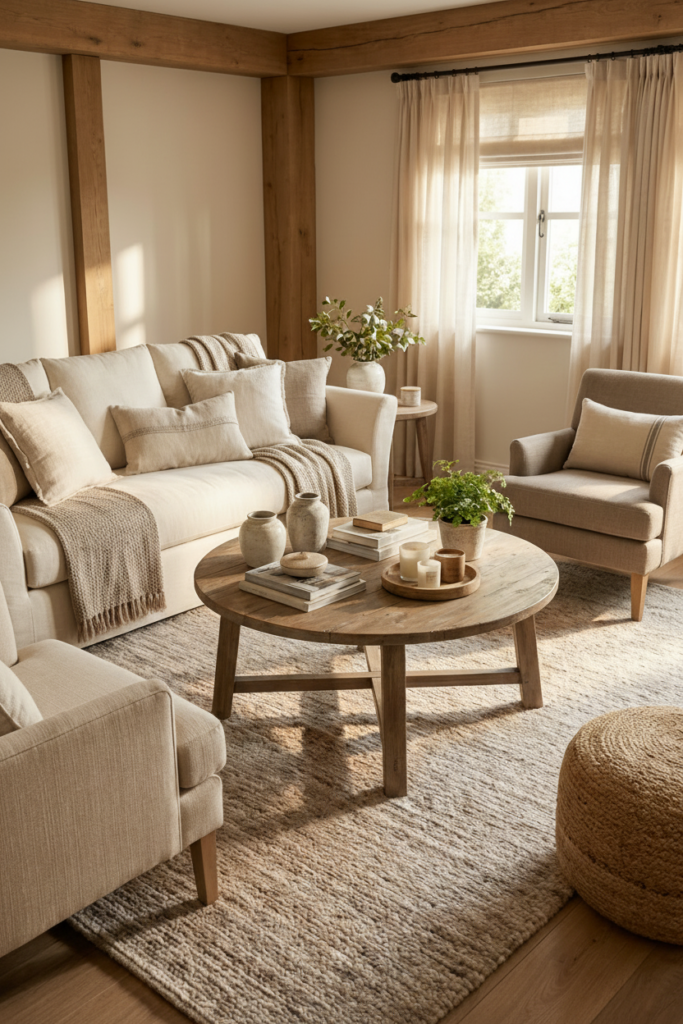
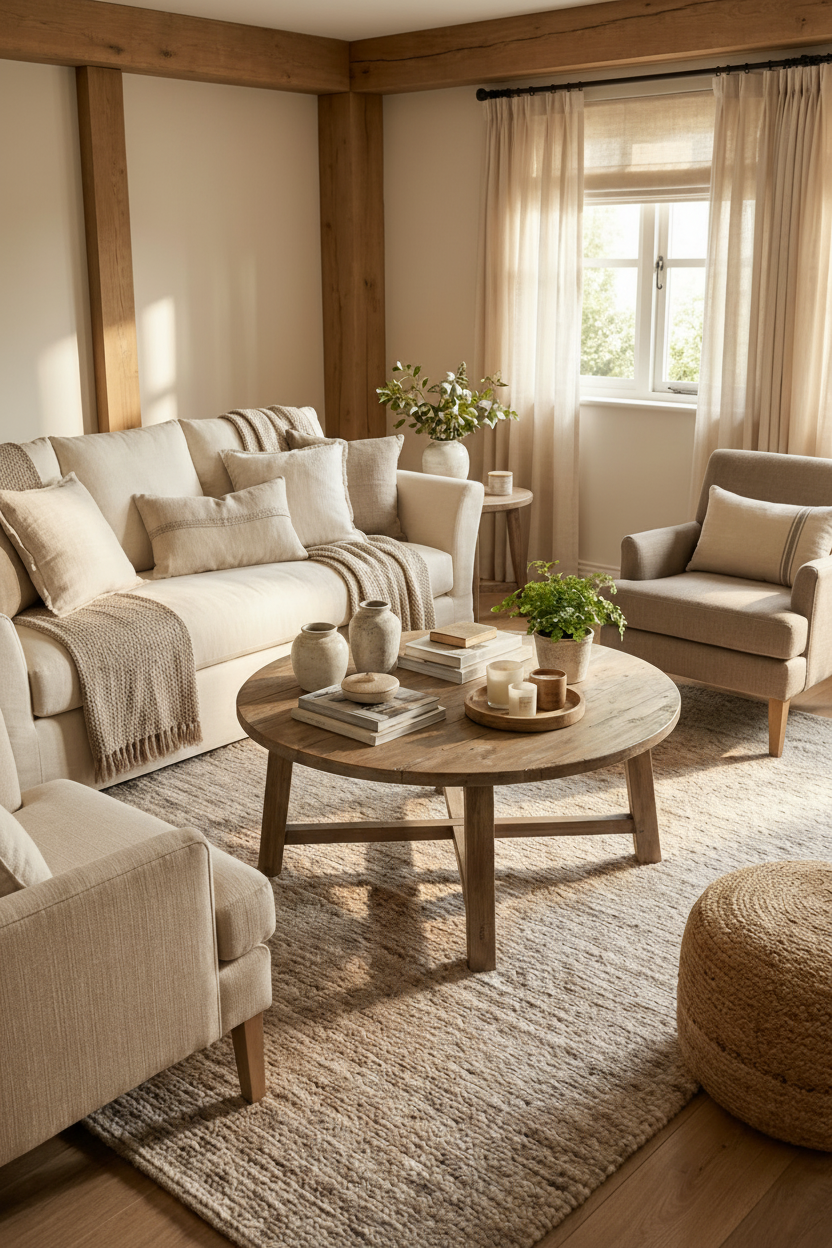
Your coffee table should sit fully on the rug.
Leave 12–18 inches between the sofa edge and the coffee table. This allows comfortable legroom while keeping everything connected.
If your rug barely fits under the coffee table and nothing else, it is too small.
A properly sized rug will extend at least 8–12 inches beyond each side of the coffee table.
This creates visual balance and prevents the table from floating awkwardly.
Rule 5: Consider Visual Weight
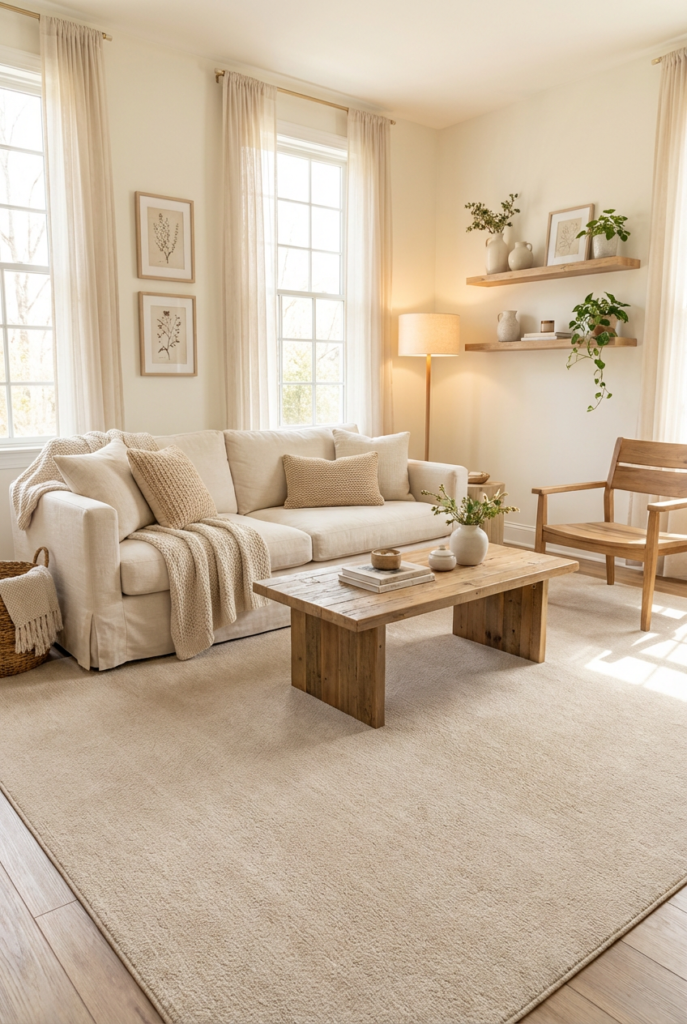
In small living rooms, darker rugs feel heavier.
If you choose a deep charcoal, navy, or patterned rug, consider sizing up slightly to avoid a “heavy island” effect.
Lighter neutral rugs reflect more light and visually expand the floor area.
If your room lacks natural light, a warm beige, soft taupe, or subtle cream rug will make the entire space feel brighter and more open.
Texture also matters.
A low-pile or flatweave rug keeps the room feeling airy. Thick shag rugs can work, but in very small rooms they may visually compress the space.
Layout Scenarios
Here are three common small living room layouts and what to choose.
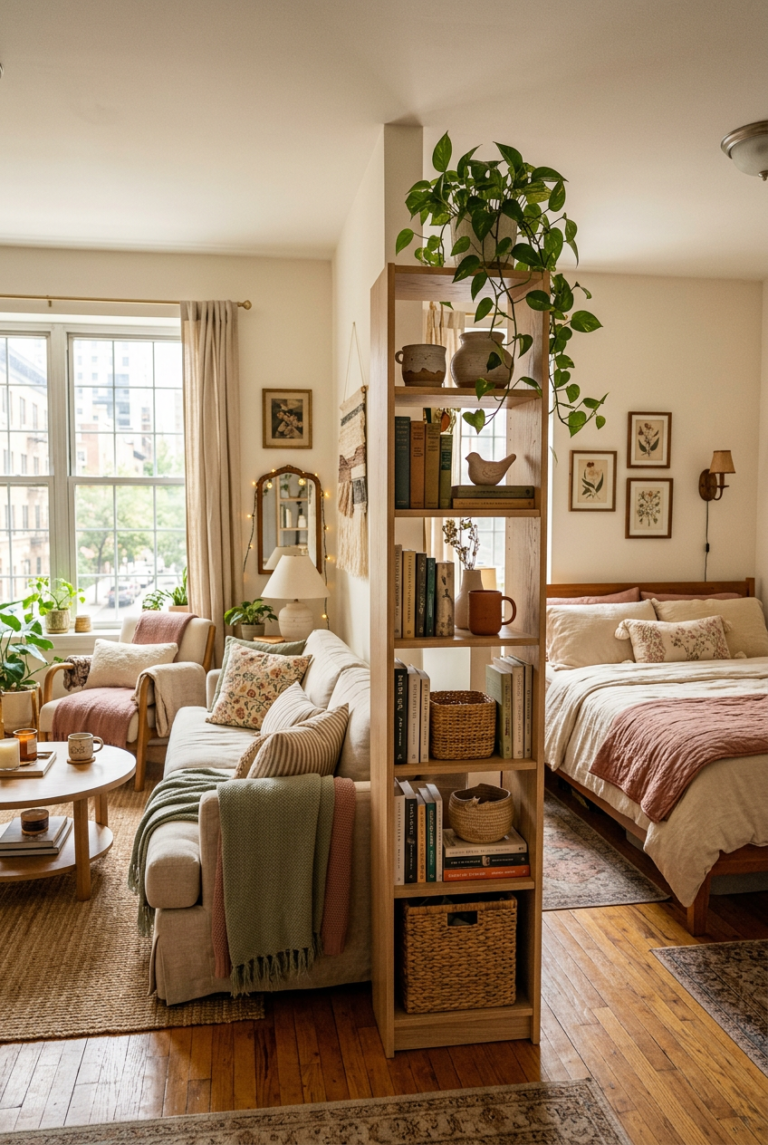
Apartment with wall-to-wall sofa layout
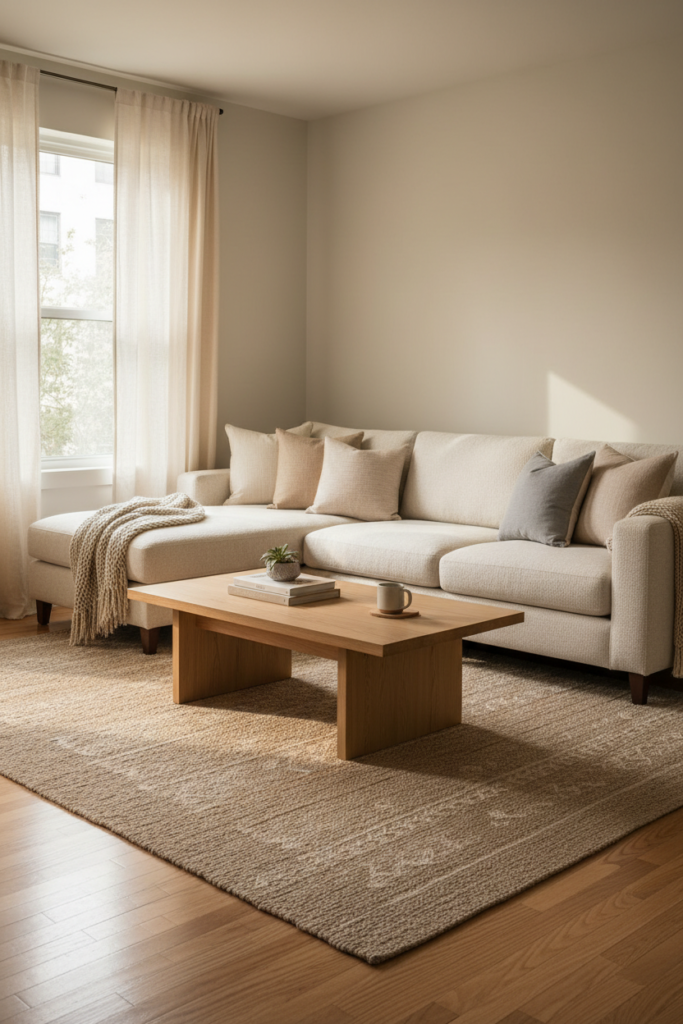
Use a 6×9 or 8×10 rug. Place the front legs of the sofa and any accent chairs on the rug. Center the coffee table.
Compact square room with loveseat and one chair
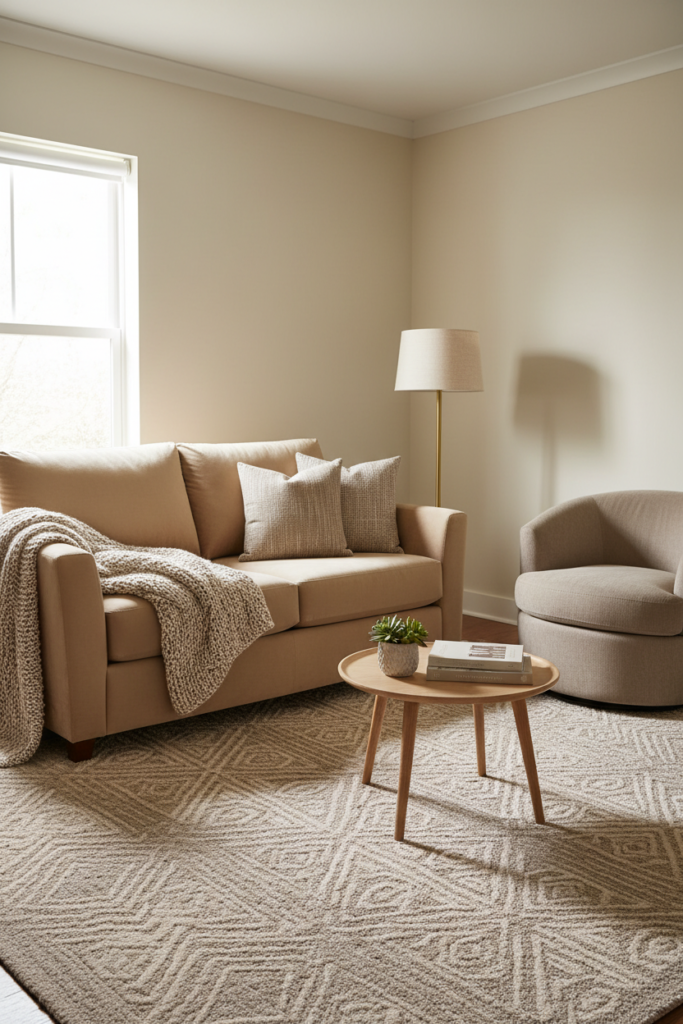
Use a 6×9 rug. Keep all front legs on the rug. Make sure the rug extends beyond the loveseat edges.
Narrow living room
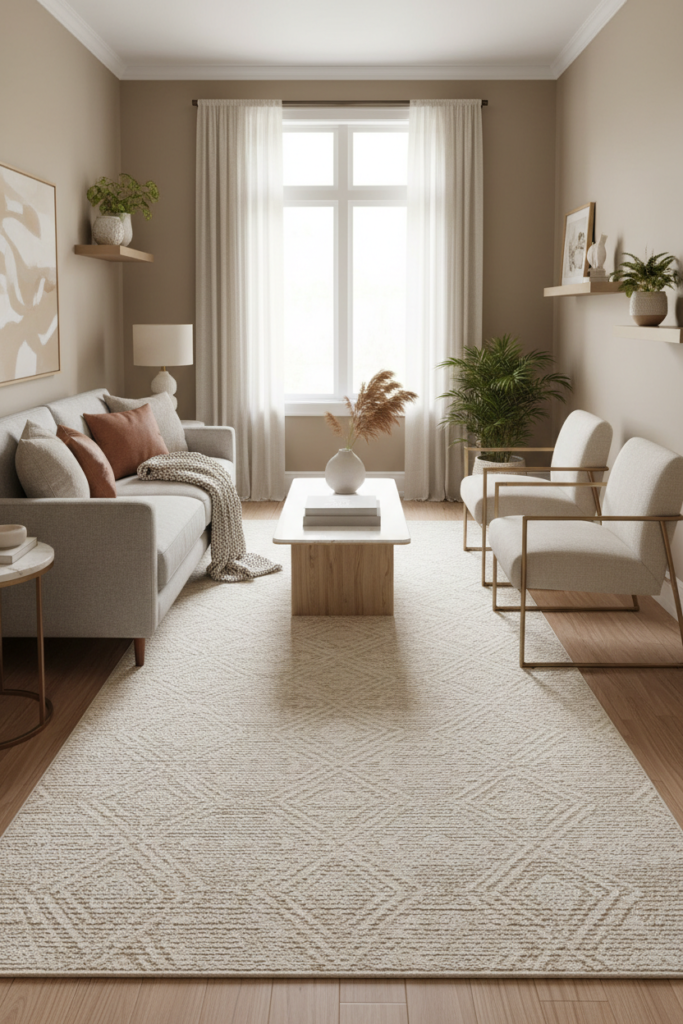
Use an 8×10 rug placed lengthwise. Avoid turning it sideways. Align it with the room’s longest dimension to elongate the space visually.
Measuring Before Buying
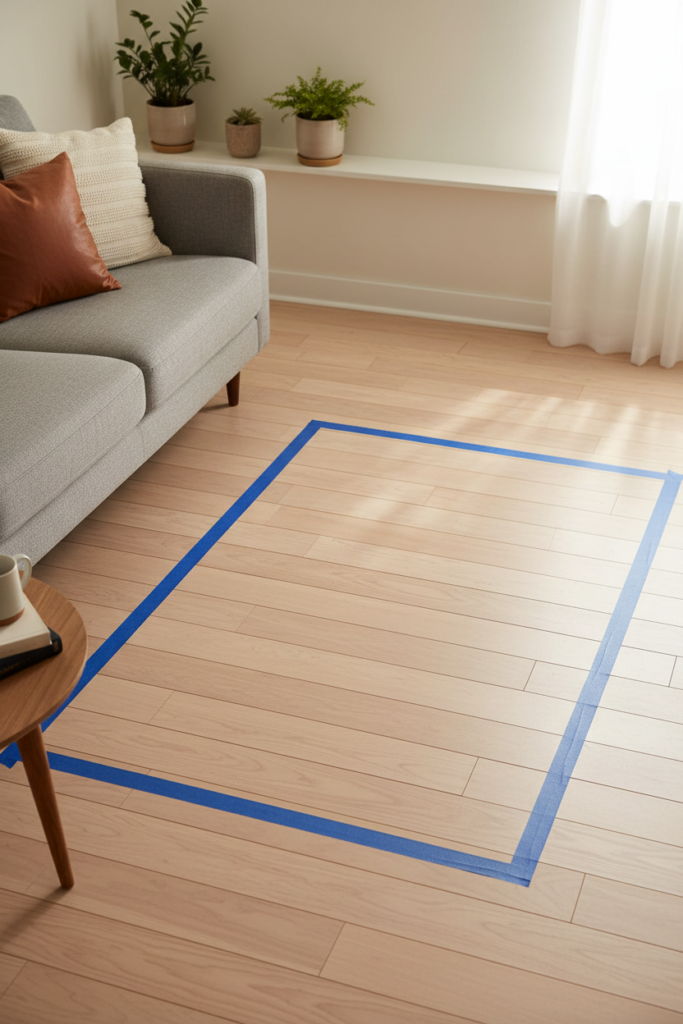
Always measure with painter’s tape.
Tape the outline of the rug size directly onto your floor. Step back. Walk around it.
Does it feel proportional?
Are furniture legs landing comfortably inside the lines?
This simple step prevents costly mistakes.
Common Mistakes
Choosing a rug that’s too small
This is the most common issue. A small rug makes the entire room look smaller.
Pushing all furniture against the walls
Floating furniture slightly onto the rug creates cohesion and warmth.
Letting the rug touch every wall
Wall-to-wall placement in small rooms often feels cramped unless the rug is installed like carpet.
Ignoring traffic flow
Make sure walkways around the seating area remain clear. Leave at least 24–30 inches for walking paths.
Overlooking thickness
Very thick rugs under low-profile sofas can look bulky. Match rug thickness to furniture scale.
Pro Tip for a Cozier Look
Layer slightly larger rather than smaller.
If you’re between two sizes, choose the larger one.
A slightly oversized rug makes the room feel intentional and expansive. A slightly undersized rug feels accidental.
You can also add warmth through subtle texture.
Look for rugs with gentle tonal variation rather than high-contrast patterns. The soft shifts in color create depth without visual noise.
When evening light hits a textured neutral rug, it adds quiet dimension to the entire room.
That’s where coziness begins.
Final Thoughts
The right rug size anchors your furniture, defines the seating area, and makes a small living room feel complete.
Use these principles:
Anchor the furniture.
Leave a floor border.
Match rug shape to layout.
Size up when in doubt.
With accurate measurements and intentional placement, your rug will make the room feel larger, softer, and more cohesive.
And once the proportions are right, everything else in the space falls into place.

Hi, I’m Livia. A mom who believes that a house becomes a home through the little things.
Over time, I started to understand what truly makes a space feel cozy, comfortable, and safe. Little by little, I transformed my own home into a place where my family and I genuinely love to be, a space that feels calm, warm, and ours.
Here, I share simple ideas and thoughtful inspiration to help you turn your home into your favorite place in the world too.