Neutral Living Room Ideas with Texture and Depth
This post may contain affiliate links, which means we may earn a small commission at no extra cost to you. We may also display third-party ads and include links to partner brands or shops. Some images may be created or enhanced using AI or sourced from licensed platforms. All opinions are our own.
Neutral living rooms are timeless for a reason.
Soft creams, warm beiges, and layered whites create a calm foundation. But without texture and contrast, a neutral space can feel flat.
The secret is depth. Subtle tonal shifts. Natural materials. Light that moves across woven surfaces and matte finishes.
If you love a warm, cozy look but want more dimension, these ideas will help you build a neutral living room that feels layered and inviting.
Here are 10 neutral living room ideas filled with texture and depth.
1. Layered Cream on Cream
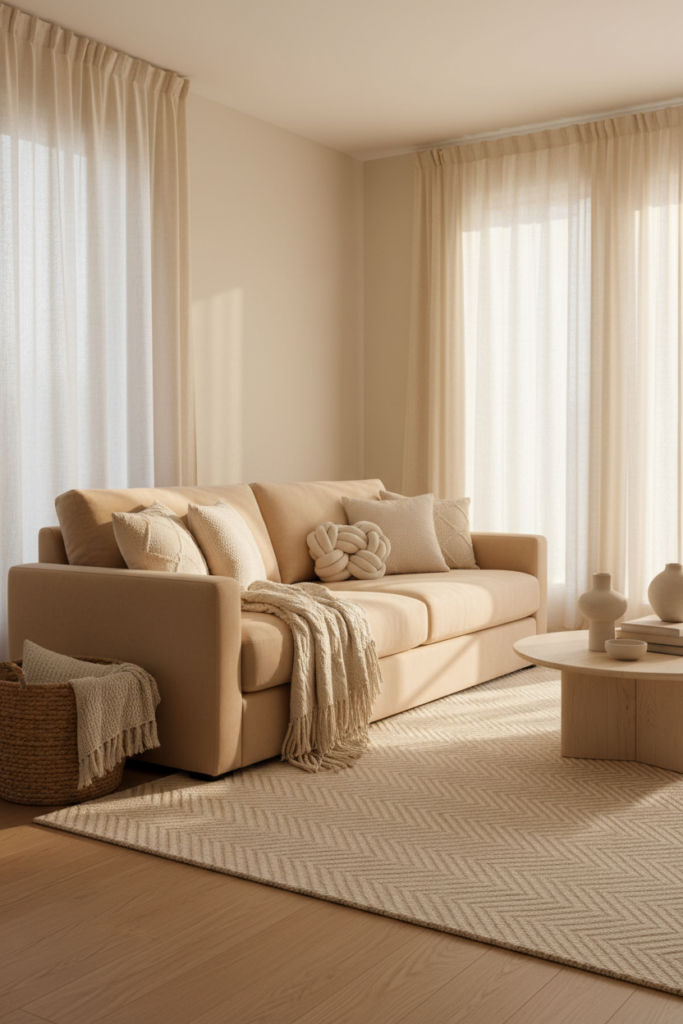
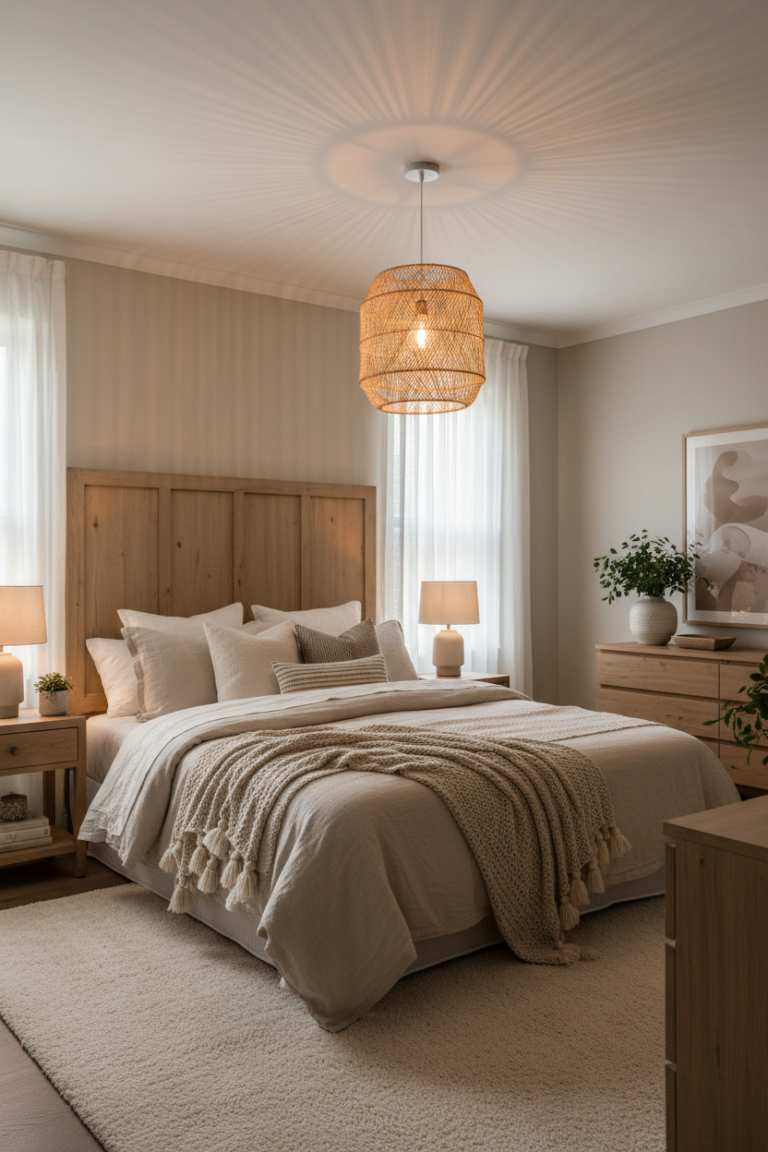
Start with warm cream walls and a slightly deeper cream sofa.
Add ivory linen curtains and a light oatmeal rug. Keep the tones close but not identical. The variation creates quiet movement across the room.
Bring in texture through boucle pillows, a knit throw, and a woven basket near the sofa. In evening light, the subtle differences in tone create soft shadows that add warmth.
2. Beige and Warm Wood Contrast
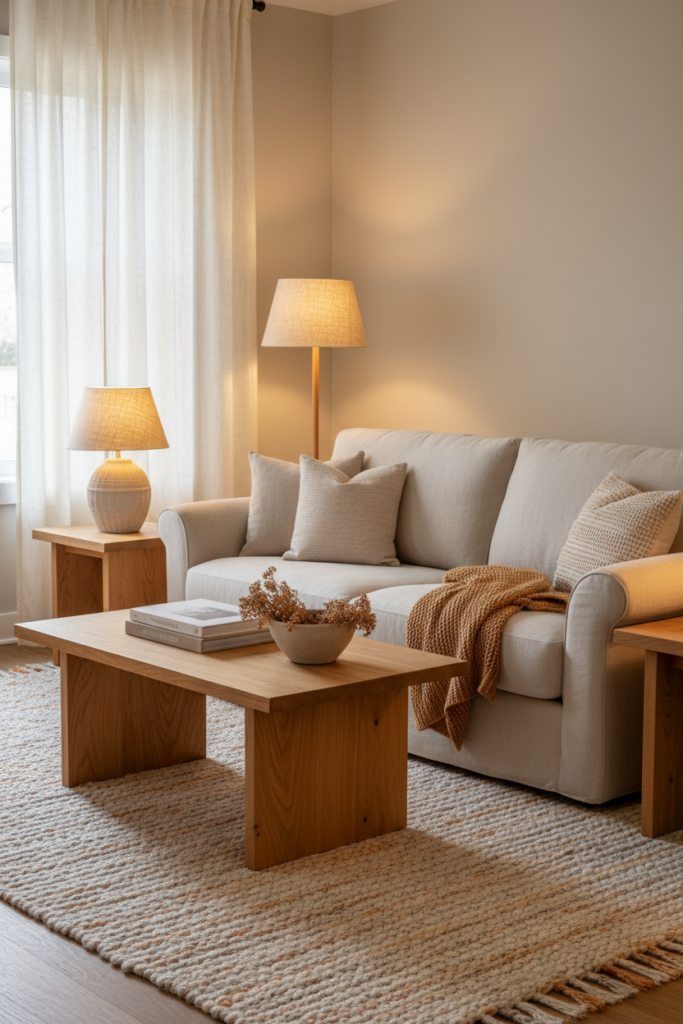
Pair a beige sofa with medium-toned wood furniture.
A warm oak coffee table and matching side tables ground the space and prevent it from feeling washed out. Add a jute or wool-blend rug underneath to anchor everything.
Keep the palette simple: beige, sand, caramel, and cream. Use table lamps with warm bulbs to highlight the grain of the wood and create a gentle glow at eye level.
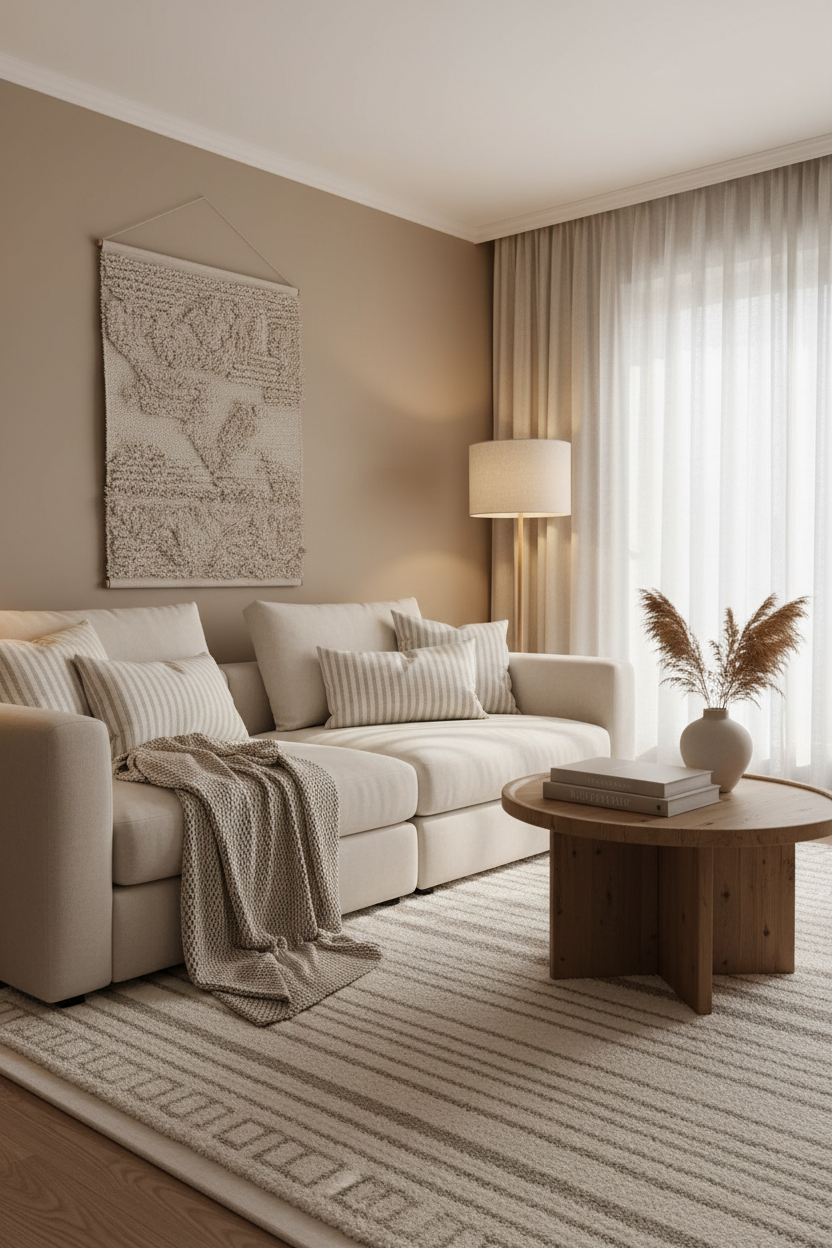
3. Soft Greige with Linen Layers
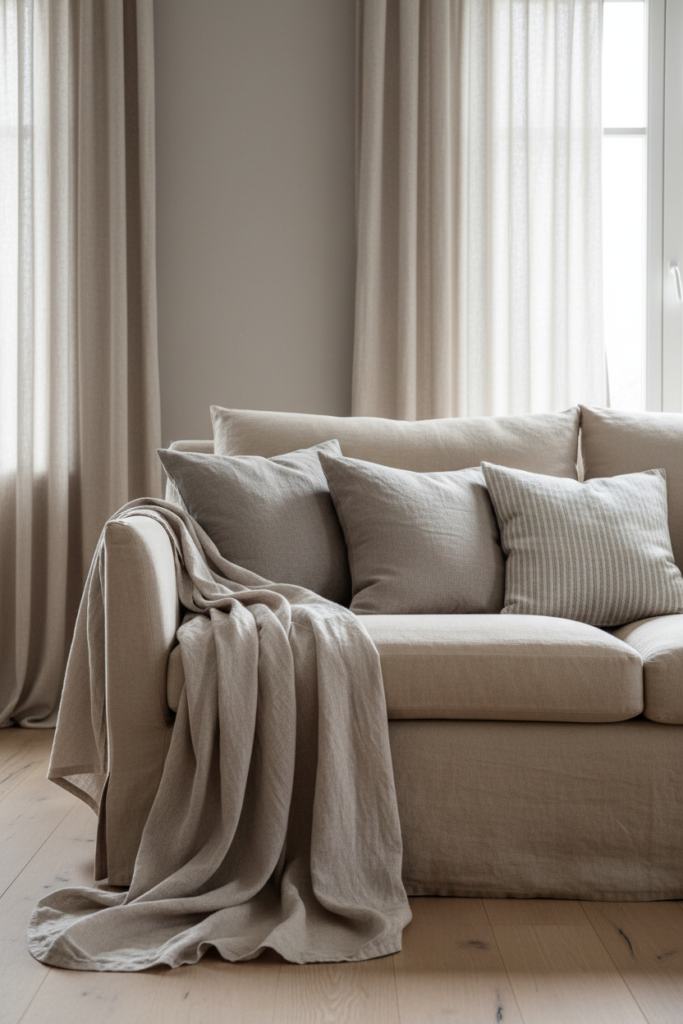
Greige walls offer a slightly deeper base than white but still feel light.
Layer in a linen slipcovered sofa and textured neutral pillows in stone and taupe. Keep patterns subtle, like thin stripes or tiny checks.
Add floor-length linen curtains that pool slightly at the bottom. The relaxed drape softens the structure of the room and makes it feel lived in.
4. Textured Wall Treatments
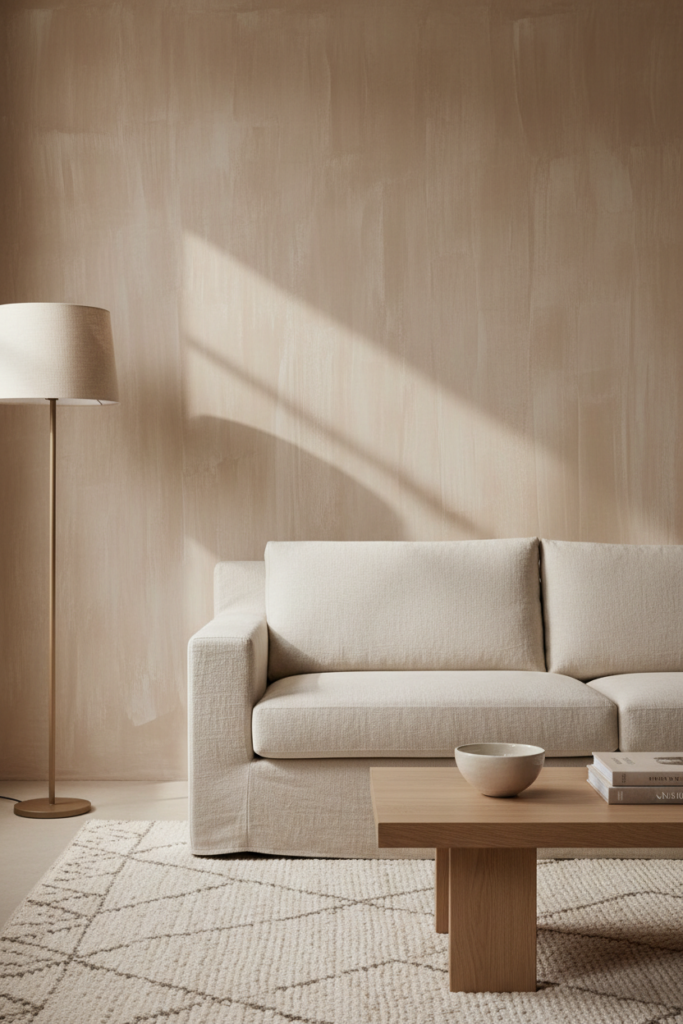
Add depth directly to the walls.
Try limewash paint, vertical paneling, or subtle textured wallpaper in a warm neutral tone. These finishes catch the light and create dimension without bold color.
Keep furniture simple to let the wall texture stand out. A neutral sofa and low wood table allow the background to become part of the atmosphere.
5. A Chunky Knit and Soft Wool Mix
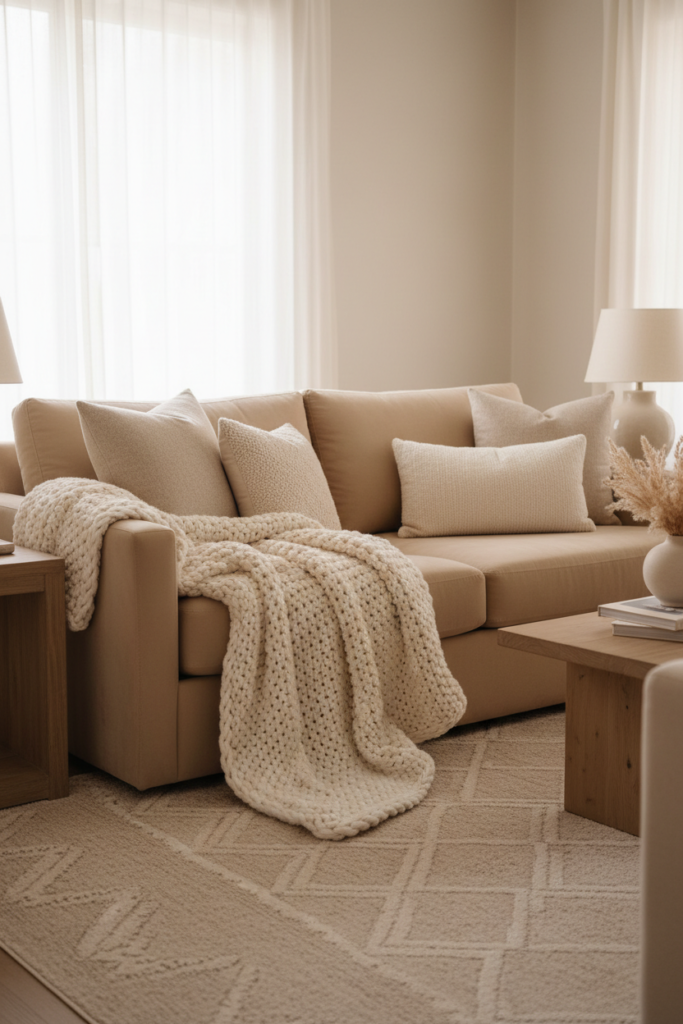
In a neutral room, textiles carry the mood.
Layer a chunky knit throw over a structured sofa. Add wool or boucle pillows in varying sizes. Choose a rug with a slightly raised pattern for added depth.
Stick to one color family, like warm beige and cream, but vary the textures significantly. This contrast keeps the palette calm but visually interesting.
6. Neutral with Black Accents for Definition
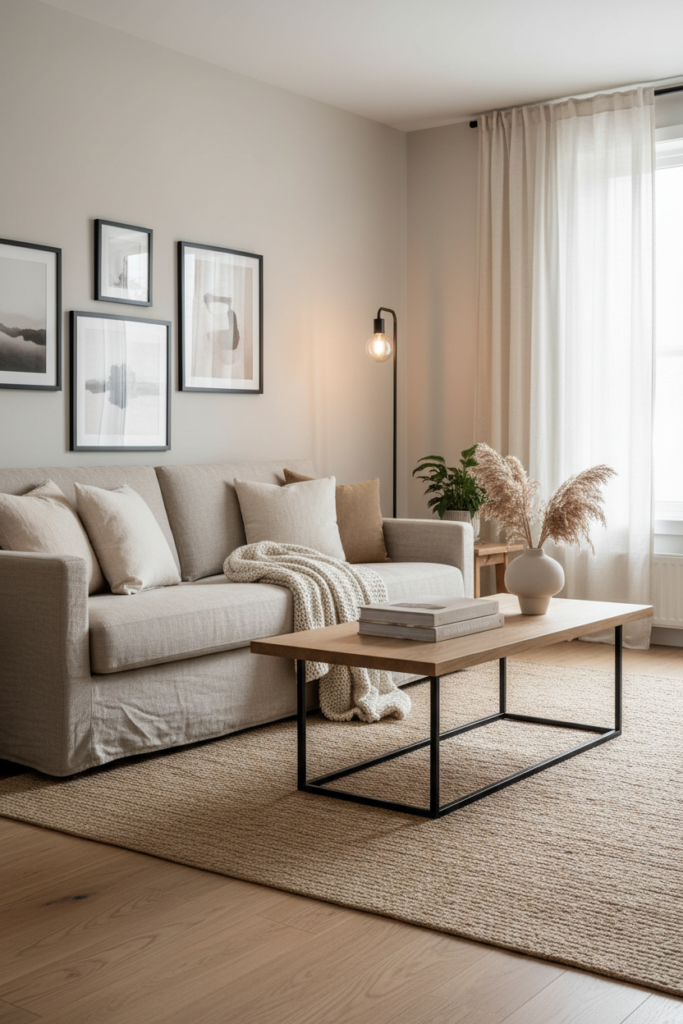
A small amount of contrast sharpens a neutral space.
Add matte black picture frames, a slim floor lamp, or a narrow metal coffee table base. Keep these accents minimal so they define rather than dominate.
Balance the darker elements with soft textiles and warm wood. The combination creates depth without sacrificing coziness.
7. Stone, Ceramic, and Natural Clay
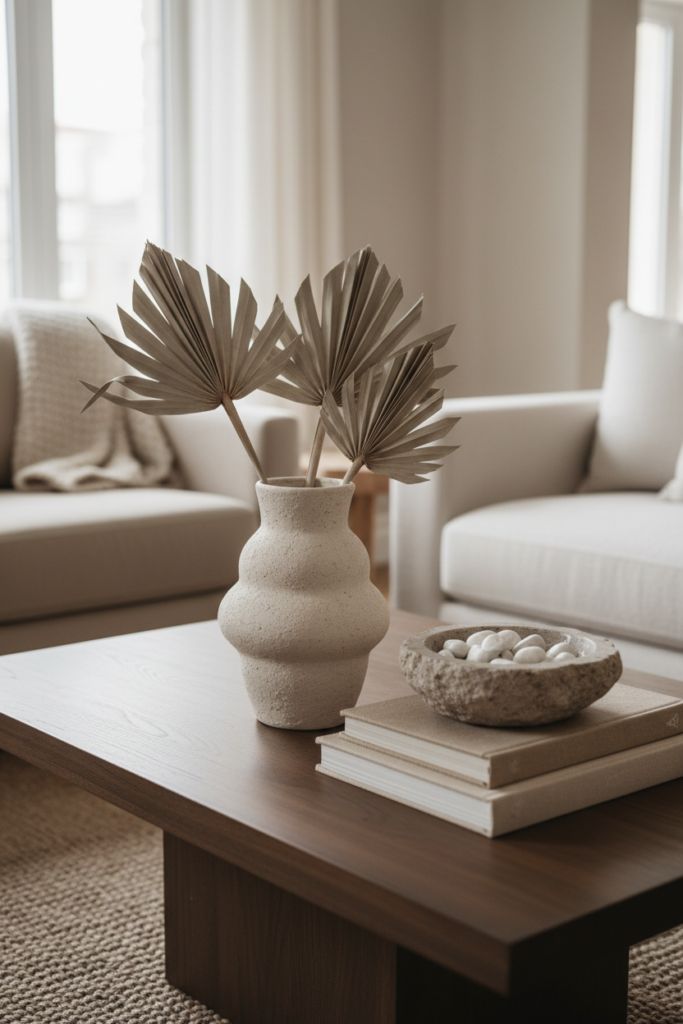
Bring in organic materials for subtle texture.
Style a coffee table with a matte ceramic vase, a stone bowl, and a stack of neutral books. Use imperfect finishes rather than glossy surfaces.
The slight irregularities in ceramic and stone create natural depth. Place these items where light can hit them and cast gentle shadows.
8. Low-Contrast Pattern Play
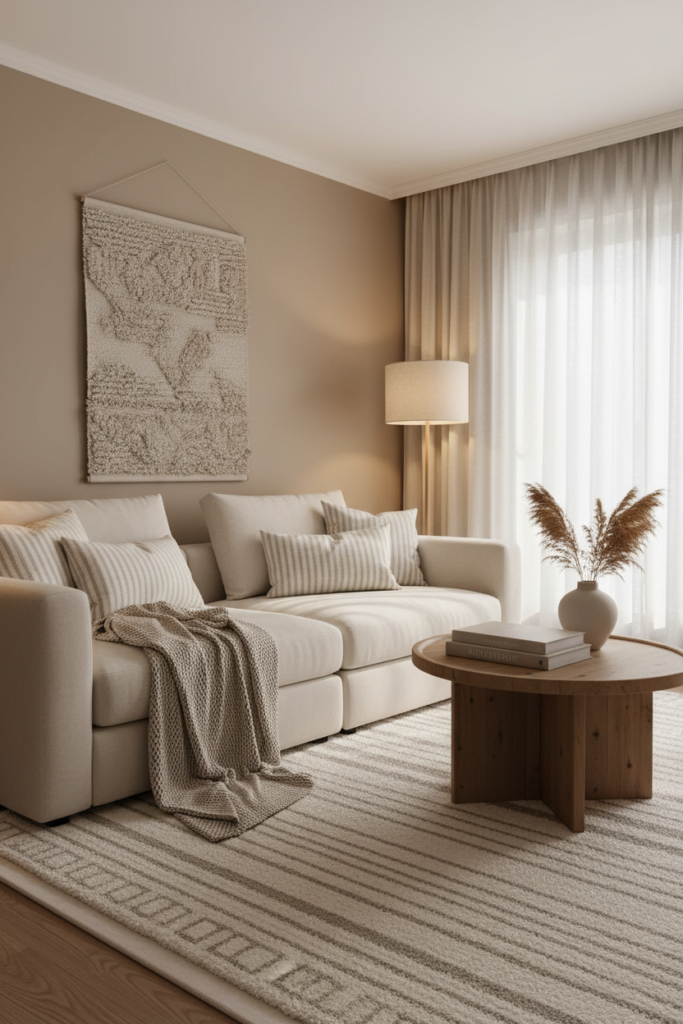
Pattern does not have to mean bold.
Choose rugs or pillows with tonal patterns, such as cream-on-beige stripes or subtle geometric designs in the same color family.
Keep the contrast low so the pattern adds movement without breaking the calm. This works especially well in smaller living rooms where heavy contrast can feel busy.
9. Soft Layered Lighting
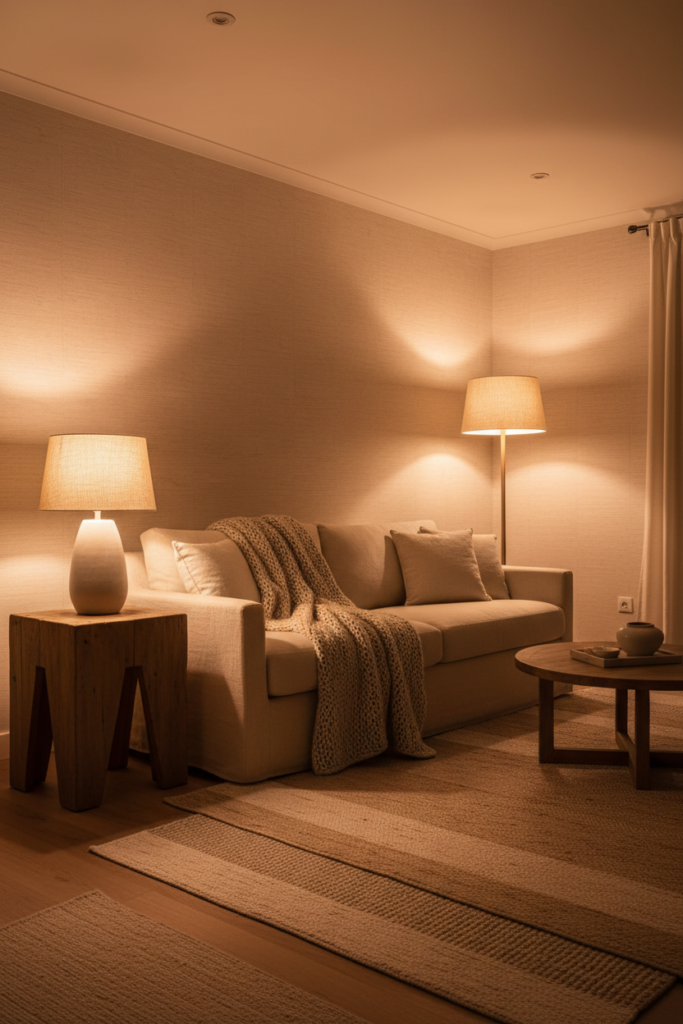
Lighting adds depth more than color ever could.
Use three light sources in the room: a floor lamp, a table lamp, and overhead lighting on dimmers. Choose warm bulbs around 2700K for a cozy glow.
Fabric lampshades diffuse light softly across textured walls and woven fabrics. In the evening, the layered lighting makes neutral tones feel rich and warm.
10. Natural Fibers from Floor to Ceiling
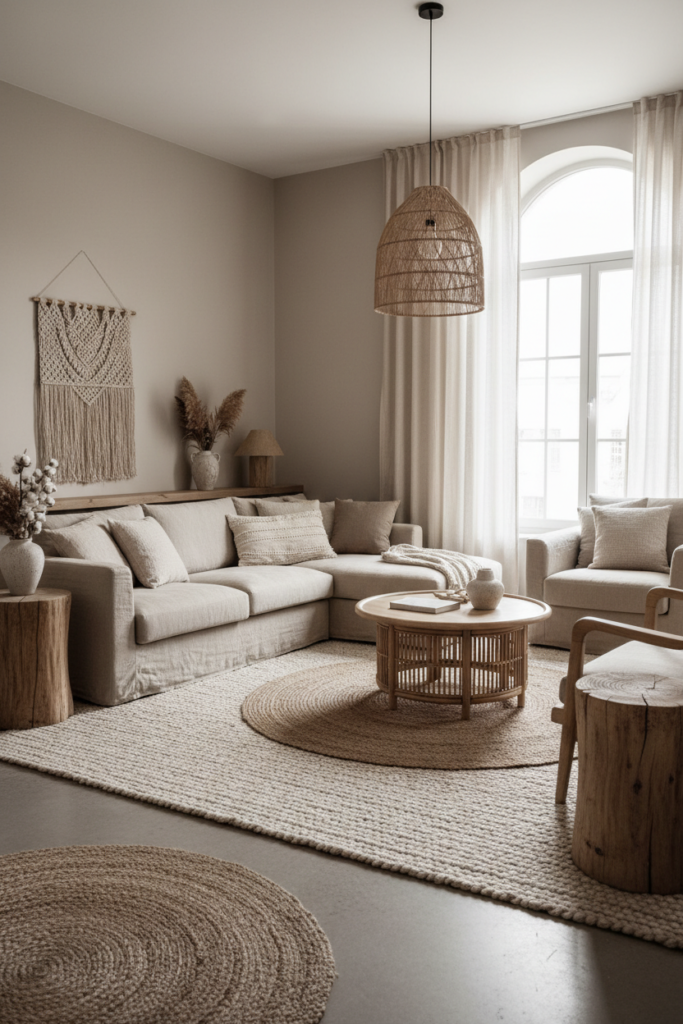
Use natural materials at every level of the room.
A jute or wool rug on the floor. Linen upholstery at seating level. Cotton or linen curtains near the ceiling. Wood or rattan accents throughout.
Keep the color palette within warm neutral tones, but let the materials create the variation. When everything is rooted in natural fibers, the room feels grounded and cohesive.
How to Make It Work in Your Space
Start with one dominant neutral and build from there.
Choose a base color for walls and large furniture. Then add two or three complementary tones within the same family. Keep undertones consistent so the room feels harmonious.
Introduce at least three different textures. For example, smooth linen, woven fiber, and matte ceramic. Spread them throughout the room so no corner feels flat.
Balance soft and structured elements. If your sofa is sleek, add a textured throw. If your coffee table is heavy wood, soften it with fabric or ceramic decor.
Finally, pay attention to light. Neutral rooms depend on warm lighting to avoid feeling cold. Replace cool-toned bulbs and add lamps at eye level.
Depth is created through layering, not through adding more color.
A Cozy Neutral Room Feels Intentional
Neutral living rooms are not about simplicity alone.
They are about subtle variation, warm undertones, and thoughtful texture. When layered well, beige, cream, and greige feel rich instead of plain.
Start small. Add one textured pillow. Swap a glossy vase for a matte ceramic one. Introduce a warmer lamp bulb.
With each layer, your neutral living room will feel softer, deeper, and more inviting.
And that quiet, cozy atmosphere is what makes it truly beautiful.

Hi, I’m Livia. A mom who believes that a house becomes a home through the little things.
Over time, I started to understand what truly makes a space feel cozy, comfortable, and safe. Little by little, I transformed my own home into a place where my family and I genuinely love to be, a space that feels calm, warm, and ours.
Here, I share simple ideas and thoughtful inspiration to help you turn your home into your favorite place in the world too.