Living Room Layout Guide for Apartments
This post may contain affiliate links, which means we may earn a small commission at no extra cost to you. We may also display third-party ads and include links to partner brands or shops. Some images may be created or enhanced using AI or sourced from licensed platforms. All opinions are our own.
Apartment living rooms come with unique challenges.
Limited square footage. Awkward corners. Open-concept layouts that blend into dining areas. Sometimes a single wall has to hold the TV, storage, and style all at once.
The right layout makes a small apartment feel spacious, functional, and welcoming. The wrong layout makes it feel cramped, disconnected, or chaotic.
This guide will give you clear layout formulas, spacing rules, and practical measurements you can apply immediately.
No overthinking. Just smart placement.
Step 1: Start With the Focal Point
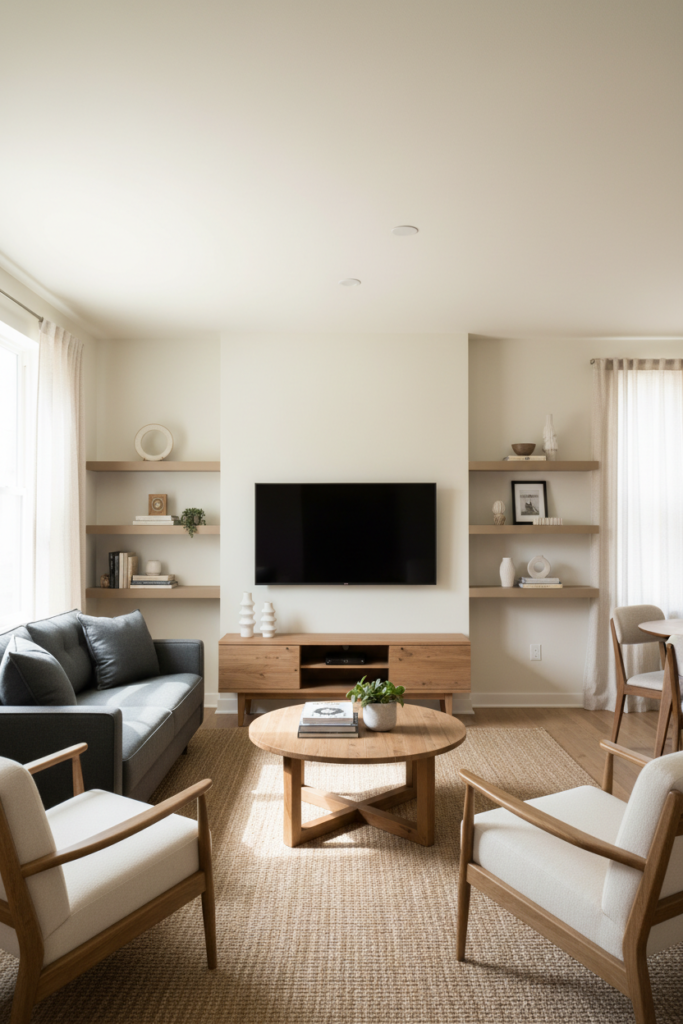
Every living room needs a visual anchor.
In most apartments, the focal point is either:
The TV wall
A large window
A fireplace
Or a blank wall that can hold artwork
Choose one primary focal point and build the seating around it.
Here’s the rule:
Your main sofa should face the focal point directly or at no more than a 30-degree angle.
Avoid floating the sofa in a direction that competes with the TV or window. Competing angles create tension.
If your apartment is open concept, use the sofa back to subtly define the living area.
Step 2: Float Furniture When Possible
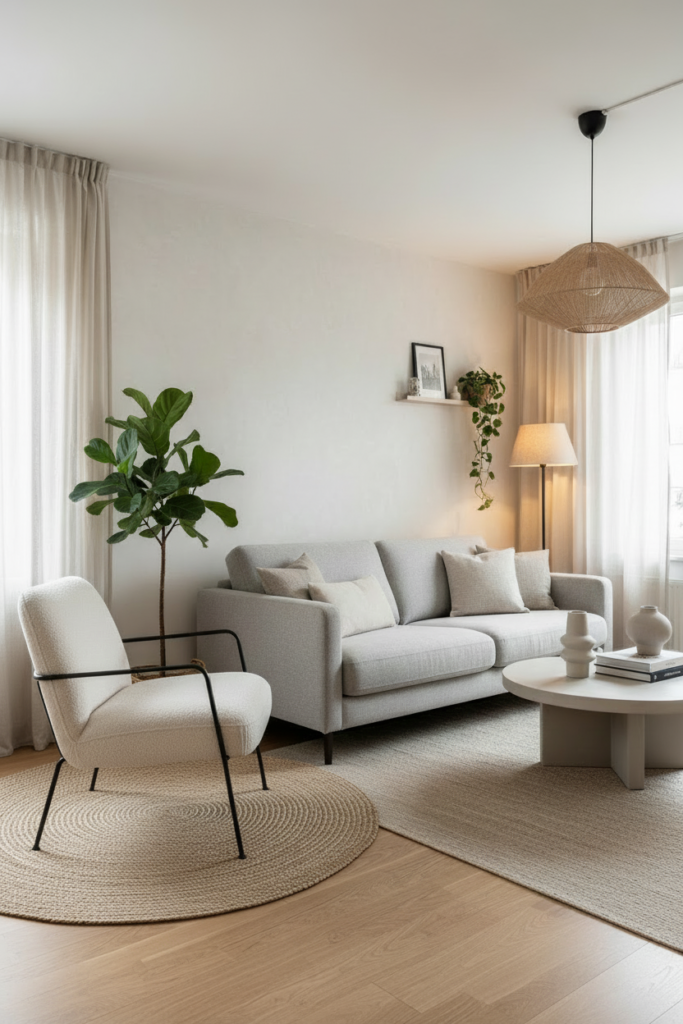
Many apartment layouts push all furniture against the walls.
This often makes the room feel smaller.
Instead, try floating the sofa 3 to 6 inches away from the wall. In larger apartment living rooms, you can float it 12 to 18 inches away if space allows.
Why this works:
Even a small gap creates depth and airflow. The room feels intentional instead of squeezed.
If space is tight, float only one main piece and keep secondary furniture closer to the perimeter.
Step 3: Follow the Seating Distance Formula
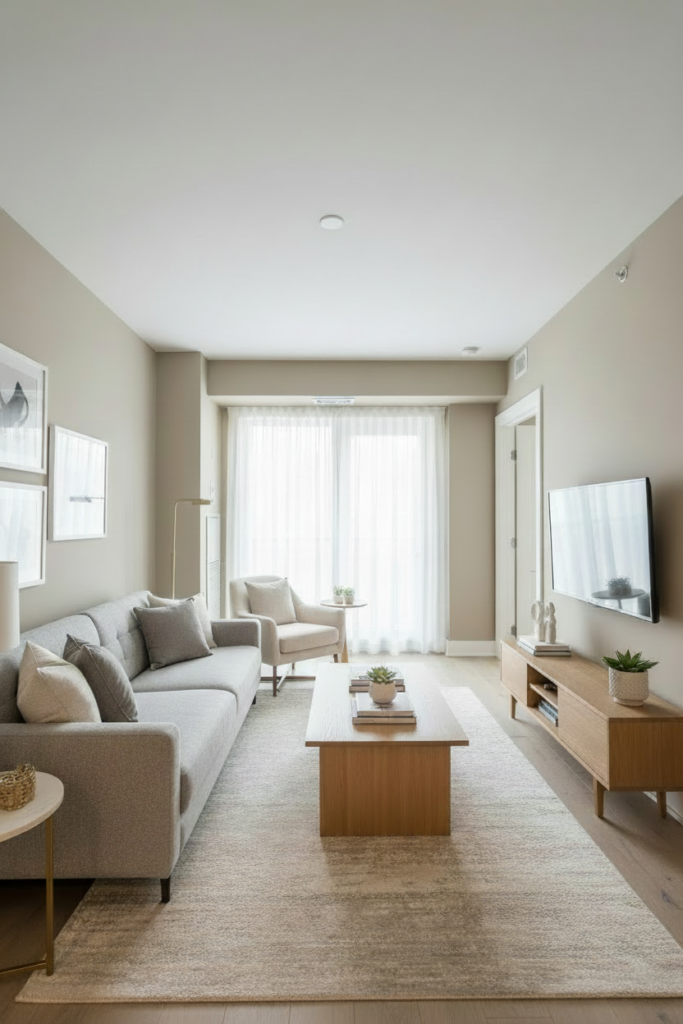
Comfortable conversation and TV viewing depend on correct spacing.
Use these measurements:
Distance between sofa and coffee table: 12 to 18 inches
Walkway clearance behind seating: minimum 24 inches
Walkway clearance for main traffic paths: 30 to 36 inches
For TV placement:
Viewing distance should be about 1.5 to 2.5 times the TV screen size.
For example:
A 55-inch TV works best when the sofa is 7 to 11 feet away.
Too close feels cramped. Too far disconnects the layout.
Measure before you move furniture.
Step 4: Choose the Right Rug Size
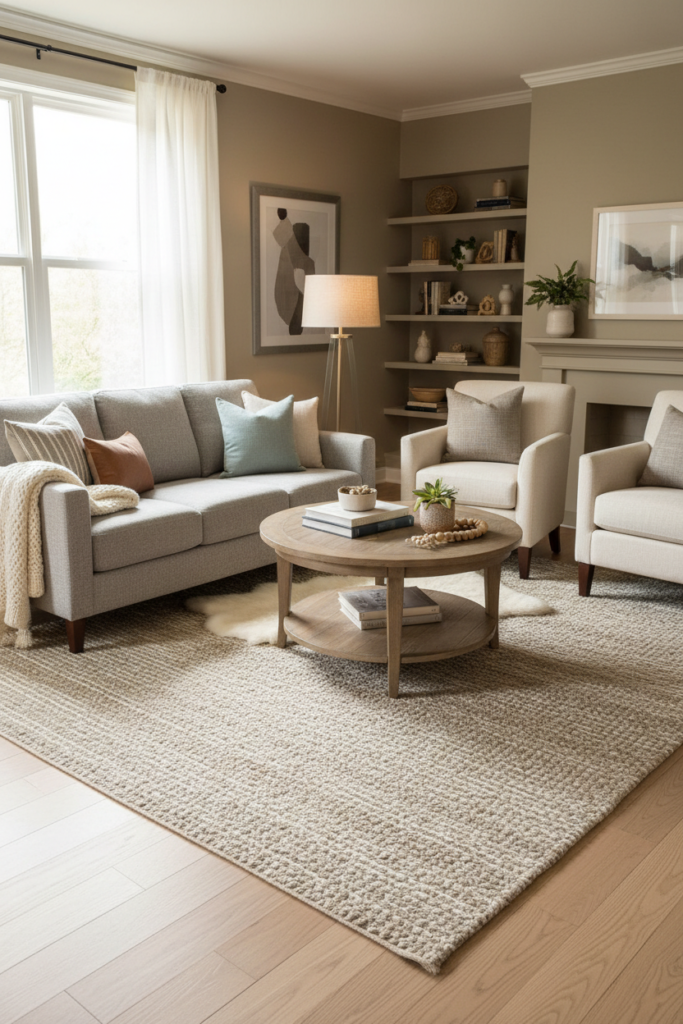
A rug defines the seating zone, especially in open apartments.
The rug should anchor at least the front legs of the sofa and chairs.
Minimum size guidelines:
For small apartment living rooms under 10×12 feet, use a 6×9 rug.
For slightly larger rooms, use an 8×10 rug.
Avoid 4×6 rugs in living rooms. They almost always look undersized.
Leave 6 to 12 inches of visible floor between the rug and the walls. This border helps the room feel larger.
If you are unsure between two sizes, choose the larger one.
Step 5: Use the “Zone” Method for Open Layouts
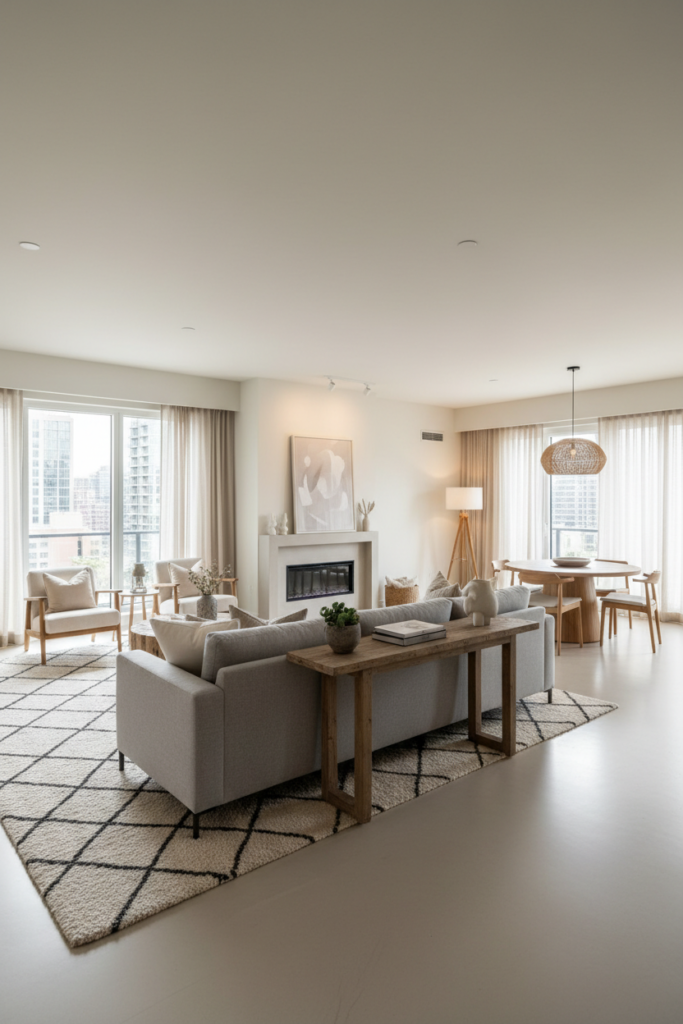
In studio or open-concept apartments, define zones clearly.
Use rugs, lighting, and furniture placement to separate the living area from dining or kitchen areas.
For example:
Place the sofa so its back creates a natural boundary.
Position a console table behind the sofa if space allows.
Use a rug that sits entirely within the living zone.
Avoid overlapping rugs between dining and living areas.
Clear zone boundaries prevent the apartment from feeling like one undefined space.
Step 6: Scale Furniture to the Room
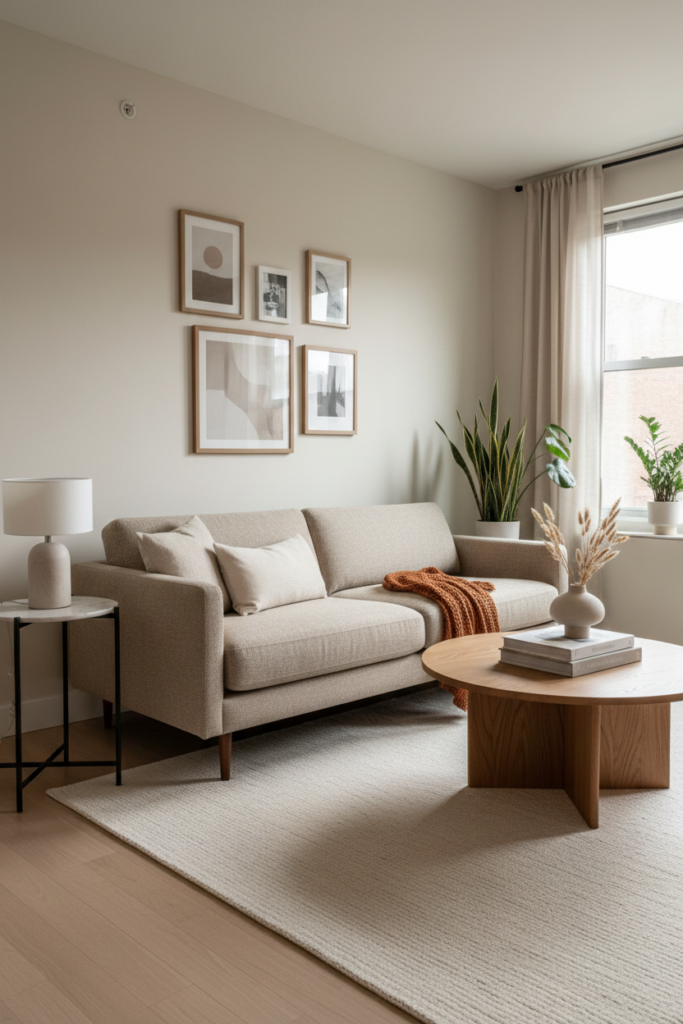
Oversized furniture overwhelms apartment layouts.
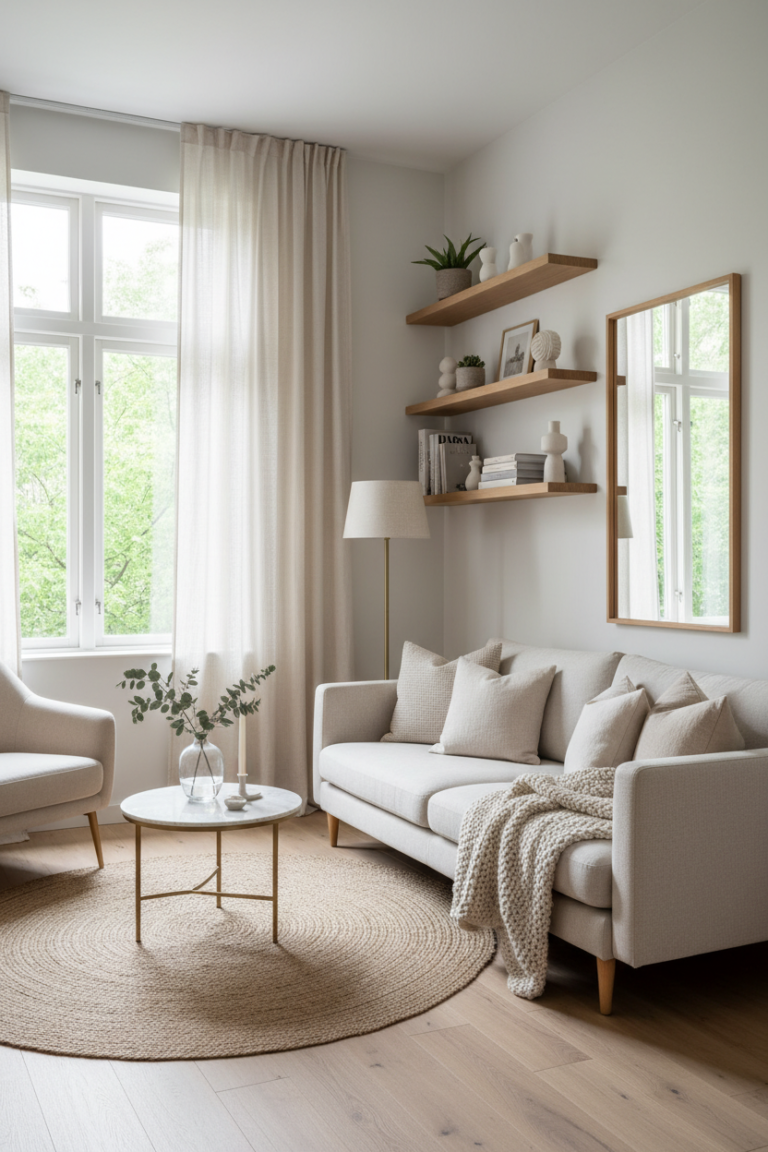
Choose sofas between 72 and 90 inches long for most apartment living rooms. Anything longer than 96 inches often dominates small spaces.
Look for:
Slim arms
Exposed legs
Lower backs
These features reduce visual weight.
For coffee tables:
Length should be about two-thirds the length of the sofa.
Height should be within 1 to 2 inches of the sofa seat height.
If space is tight, use a round coffee table 30 to 36 inches in diameter. It improves traffic flow.
Step 7: Balance the Visual Weight
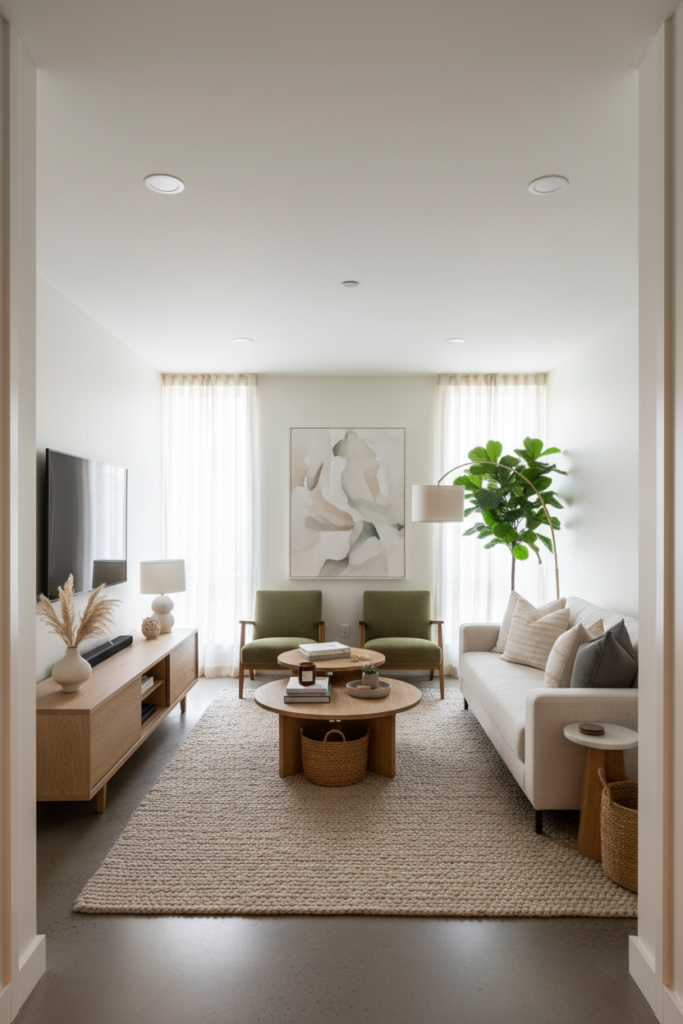
Apartments often have one long blank wall and one busy wall.
Balance visual weight across the room.
If the TV and media console are heavy on one side, add height or art on the opposite side. A tall plant, floor lamp, or vertical artwork works well.
Avoid concentrating all tall items in one corner.
Stand in the doorway and assess. The room should feel evenly distributed, not lopsided.
Layout Solutions for Common Apartment Shapes
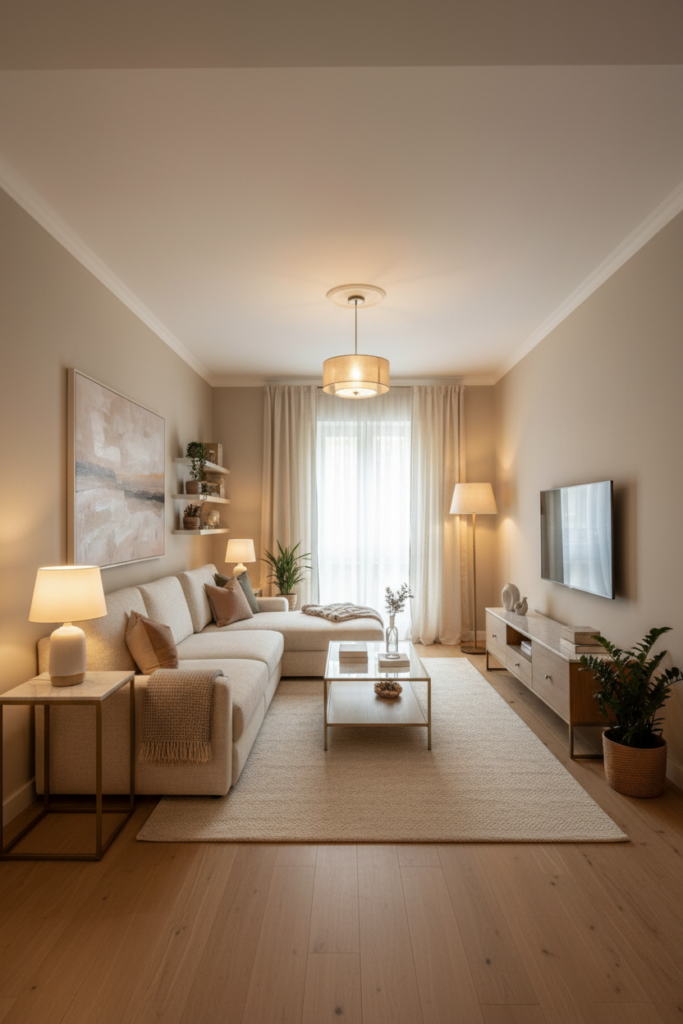
Long and narrow living room
Place the sofa along the longest wall. Use a narrow coffee table and keep side tables slim. Avoid blocking the center walkway.
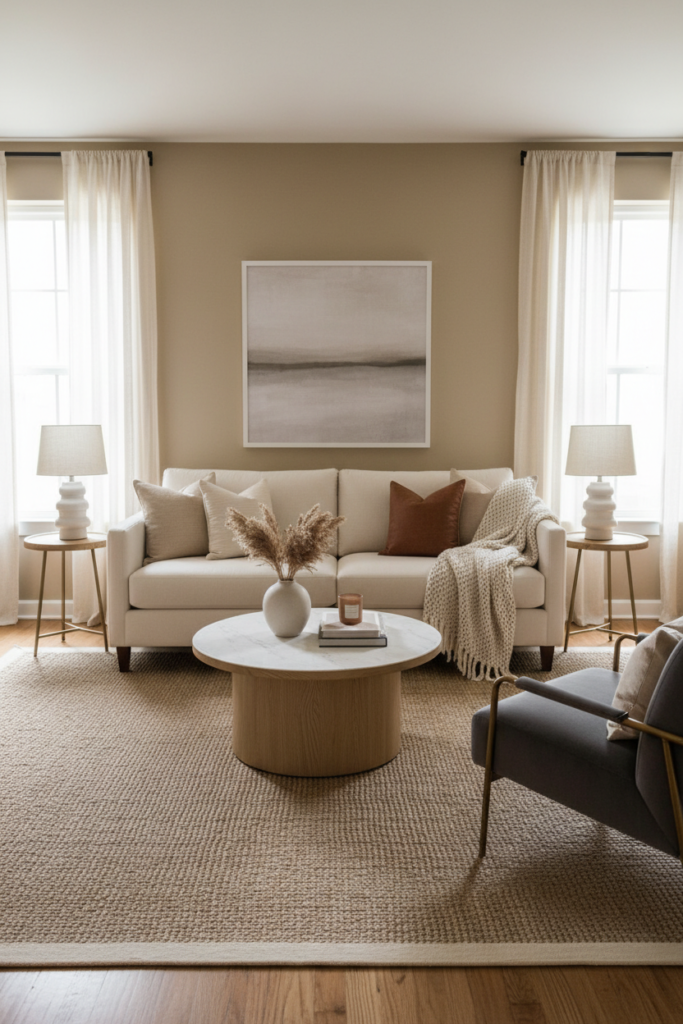
Square living room
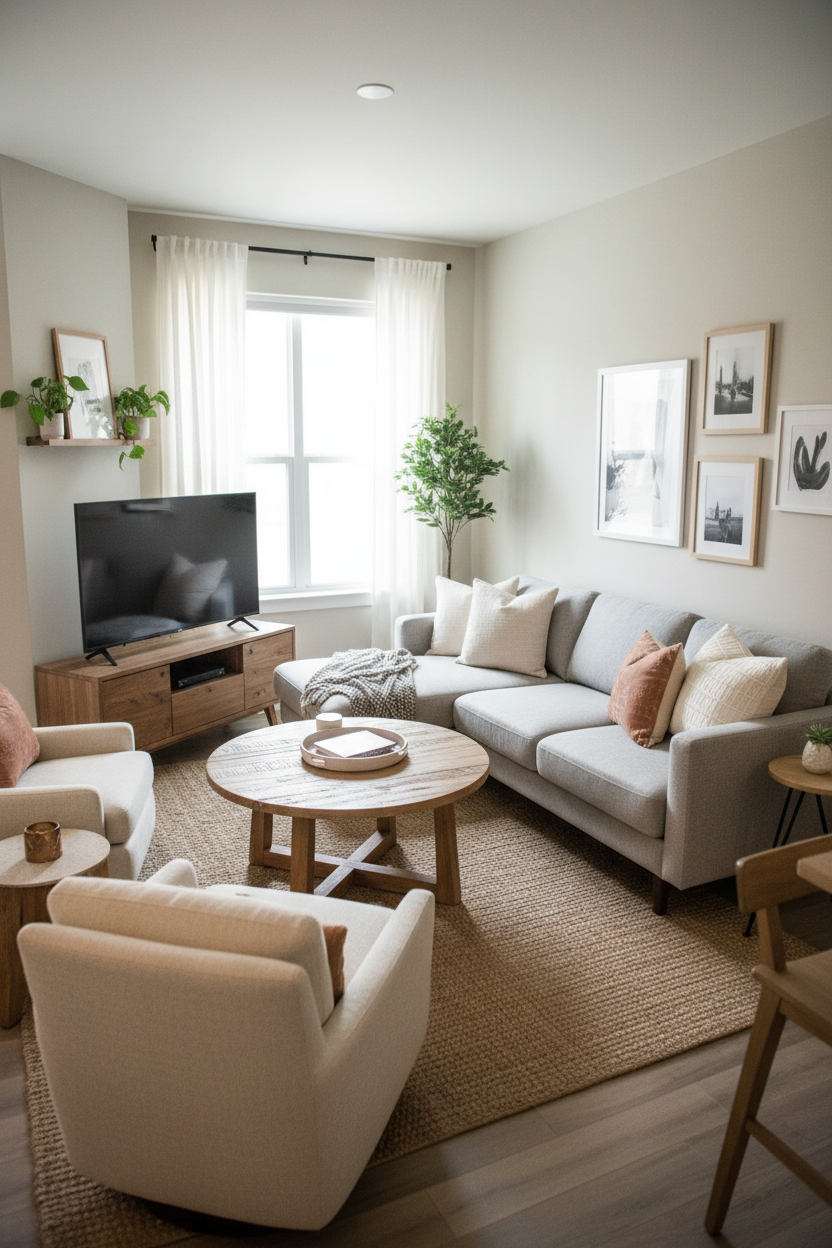
Float the sofa slightly forward. Add one accent chair to create a U-shaped seating area. Anchor with an 8×10 rug if space allows.
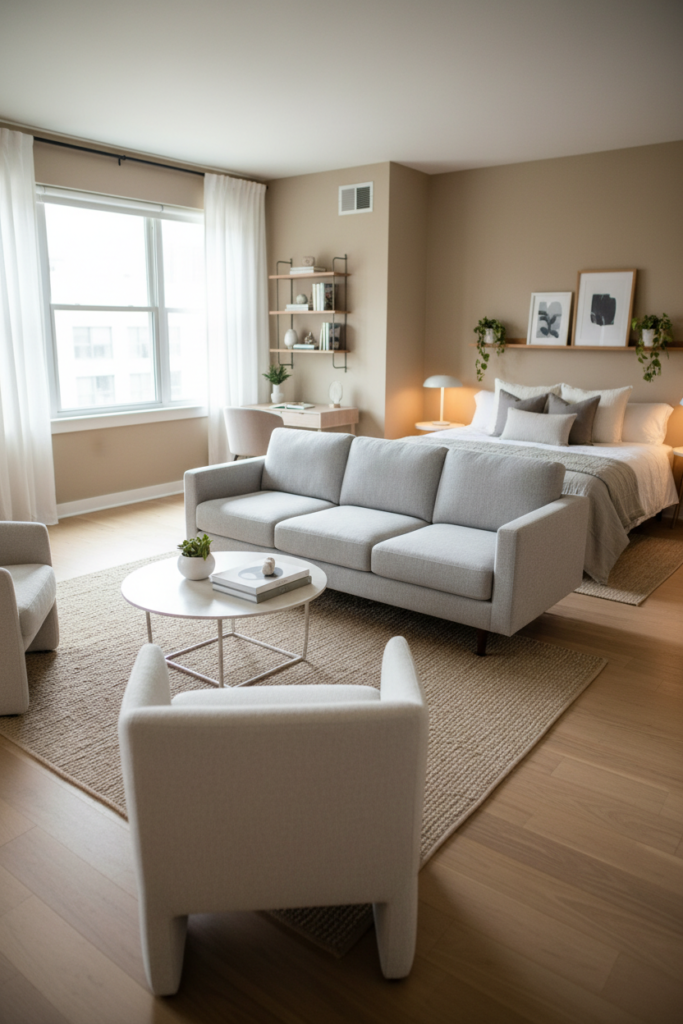
Studio apartment
Position the sofa to act as a divider. Keep furniture low-profile to maintain openness.
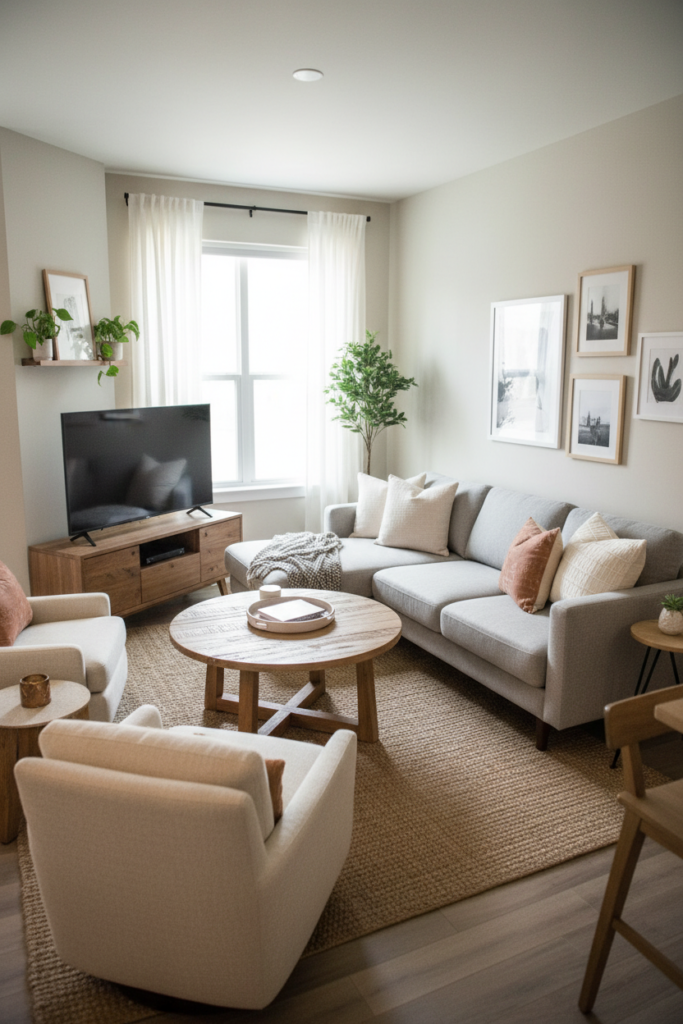
Corner TV layout
Angle the sofa slightly but avoid extreme diagonals. Use a round coffee table to soften the layout.
Common Mistakes
Pushing every piece against the wall
This often shrinks the space visually.
Choosing furniture that’s too bulky
Deep sofas and oversized sectionals overwhelm small layouts.
Ignoring walkway clearance
If people have to squeeze through, adjust spacing.
Using a rug that’s too small
Undersized rugs break up the room.
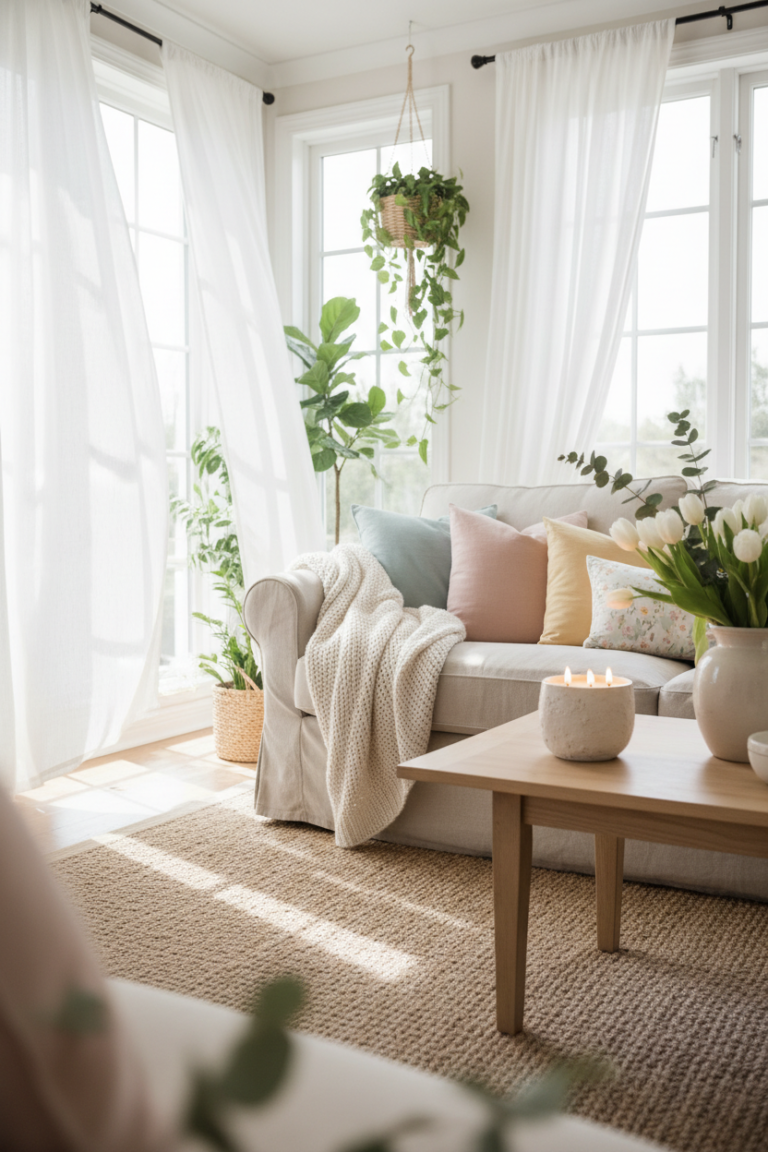
Blocking natural light
Avoid placing tall furniture directly in front of windows.
Centering everything in the room
Align furniture with architectural lines, not just the geometric center.
Pro Tip for a Cozier Look
Create a subtle inward-facing layout.
Angle chairs slightly toward the sofa. Pull seating just a few inches closer together than expected.
When furniture faces inward rather than outward, the room feels intimate.
Add one soft layer within reach of every seat. A small side table, a lamp, or a textured throw makes the layout feel complete.
Coziness comes from closeness and comfort, not just square footage.
Final Thoughts
A well-planned apartment living room layout follows a few key principles:
Define the focal point.
Anchor with the right rug.
Respect spacing guidelines.
Scale furniture appropriately.
Create clear zones.
When layout is intentional, even a small apartment feels open, functional, and inviting.
Measure first. Place with purpose. Adjust slightly until the room feels balanced.
Good layout is not about filling space. It is about making the space you have work beautifully.

Hi, I’m Livia. A mom who believes that a house becomes a home through the little things.
Over time, I started to understand what truly makes a space feel cozy, comfortable, and safe. Little by little, I transformed my own home into a place where my family and I genuinely love to be, a space that feels calm, warm, and ours.
Here, I share simple ideas and thoughtful inspiration to help you turn your home into your favorite place in the world too.