How to Style Open Shelving Without Clutter
This post may contain affiliate links, which means we may earn a small commission at no extra cost to you. We may also display third-party ads and include links to partner brands or shops. Some images may be created or enhanced using AI or sourced from licensed platforms. All opinions are our own.
Open shelving is beautiful in photos.
In real life, it can quickly turn into a crowded mix of mismatched mugs, random decor, and everyday clutter. Instead of feeling airy and curated, the shelves start to look busy and chaotic.
The good news is that open shelving can absolutely feel calm and intentional. It just requires a thoughtful approach. With a few practical styling principles, you can create shelves that feel warm, functional, and visually balanced without looking overfilled.
Here’s how to style open shelving without clutter, in a way that feels cozy and achievable.
1. Start by Clearing Everything Off
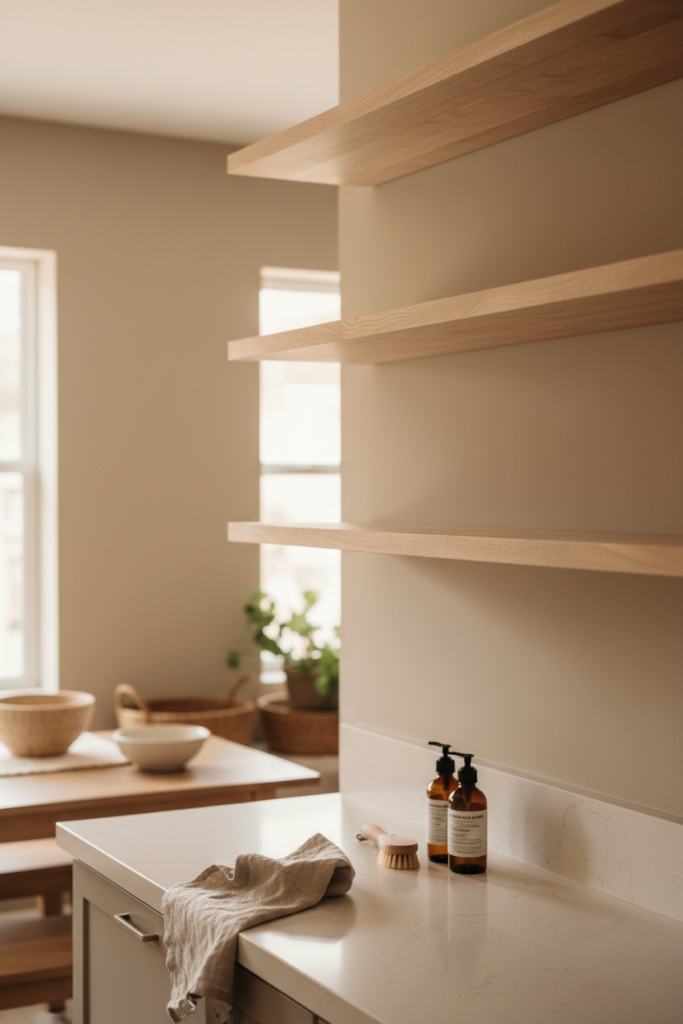
Before you style anything, take everything down.
Yes, everything.
Wipe the shelves clean. Step back and look at the empty space. Notice the wall color, the way light hits the shelves in the morning or evening, and how deep or shallow the shelves are.
Why this works: starting from zero resets your eye. It helps you see the shelves as a design element instead of storage that needs to be filled.
This is also the moment to edit. Keep only items you truly use or love. If a chipped mug or random souvenir doesn’t make you smile, it doesn’t need to live on open display.
When you begin with intention instead of accumulation, the final result feels lighter.
2. Choose a Simple Color Story
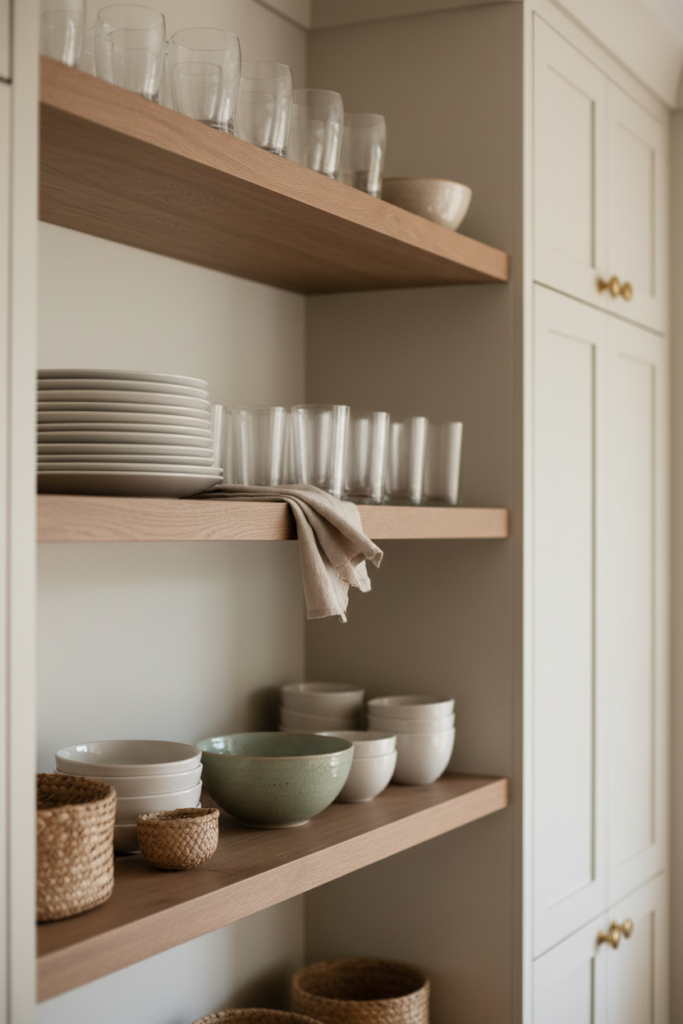
One of the biggest reasons open shelving looks cluttered is too many competing colors.
Instead of displaying every bright dish or decorative object you own, choose a limited palette. Warm whites, soft neutrals, natural wood tones, and one or two muted accent colors work beautifully.
Why this works: a cohesive color story makes the shelves feel calm. The eye moves smoothly across the space rather than jumping from color to color.
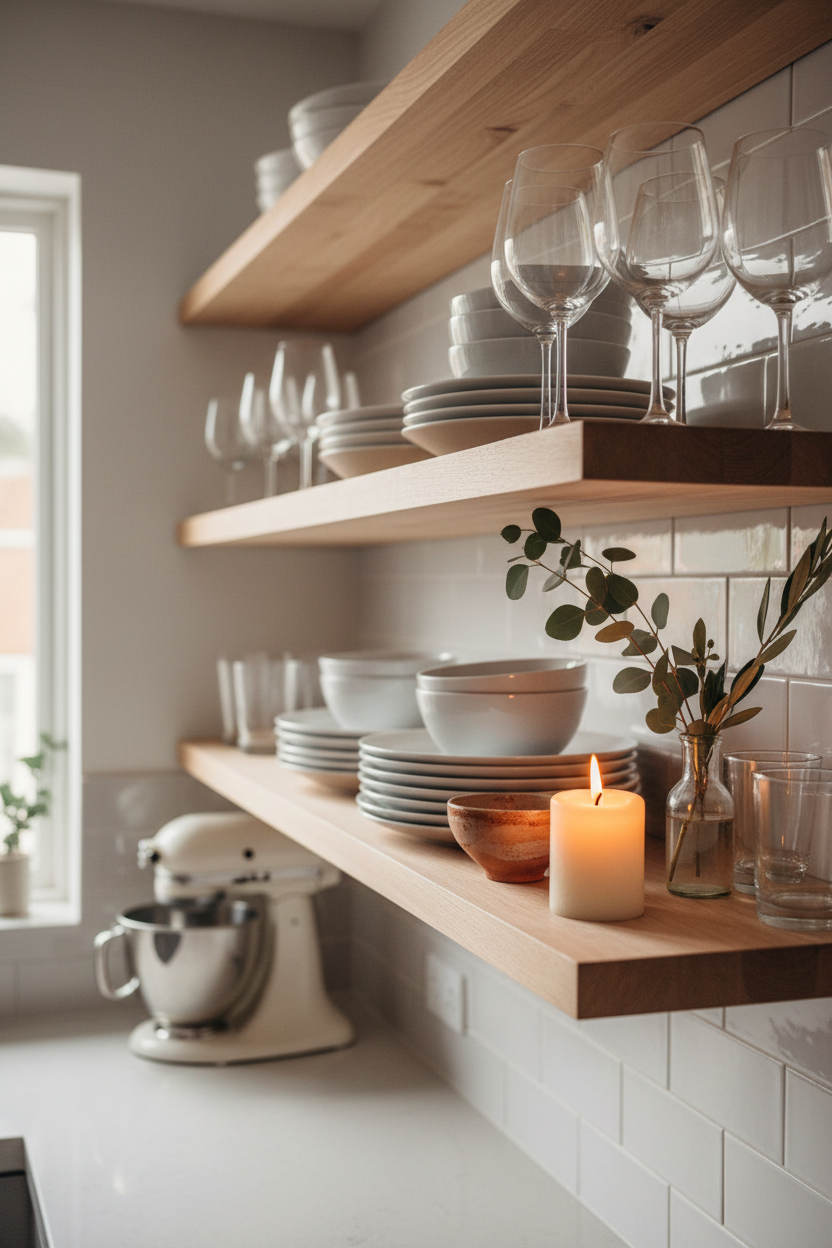
For example, in a kitchen with cream cabinets, you might display white plates, clear glassware, a stack of beige linen napkins, and a small ceramic bowl in muted sage green. The variation in tone adds interest, but the overall look stays harmonious.
If your walls are white, layering slightly warmer whites and soft grays prevents the shelves from feeling flat.
3. Mix Function With Beauty
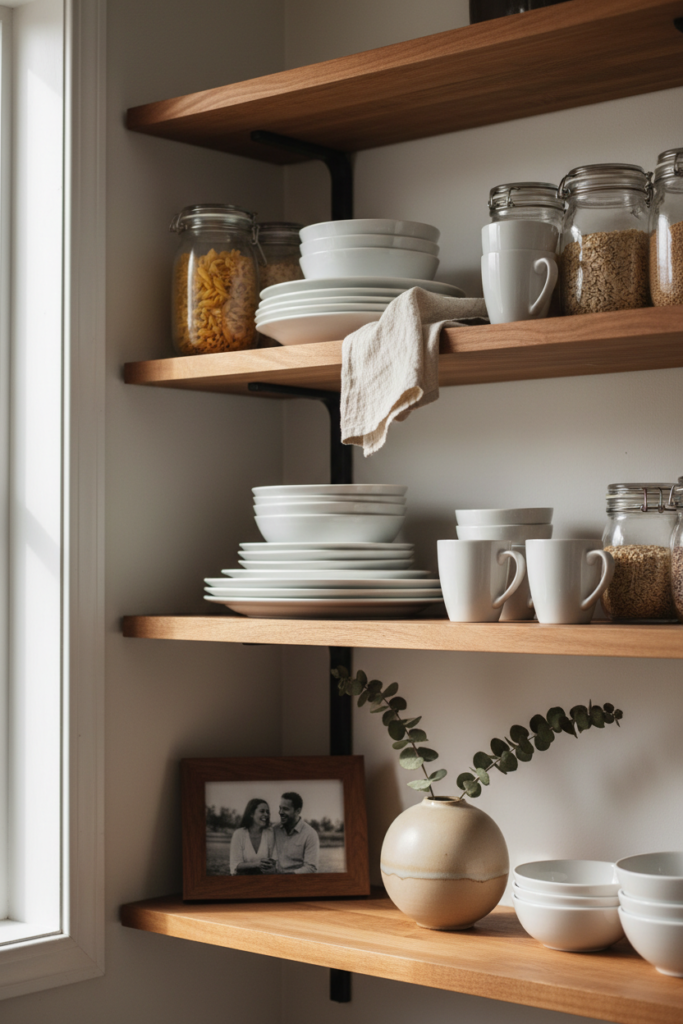
Open shelving works best when it blends practical items with a few decorative touches.
Start with everyday essentials. In a kitchen, this might be stacked dishes, bowls, or glass jars filled with pantry staples. In a living room, it could be books, baskets, or small storage boxes.
Then add one or two decorative elements per shelf. A small framed photo. A ceramic vase. A candle in a soft matte finish.
Why this works: when everything is decorative, shelves can feel staged. When everything is functional, they can feel utilitarian. Mixing the two creates balance.
Imagine a stack of white plates topped with a folded linen tea towel. Or cookbooks arranged horizontally with a small plant resting on top. These small combinations make the shelves feel lived-in yet intentional.
4. Use Negative Space Generously
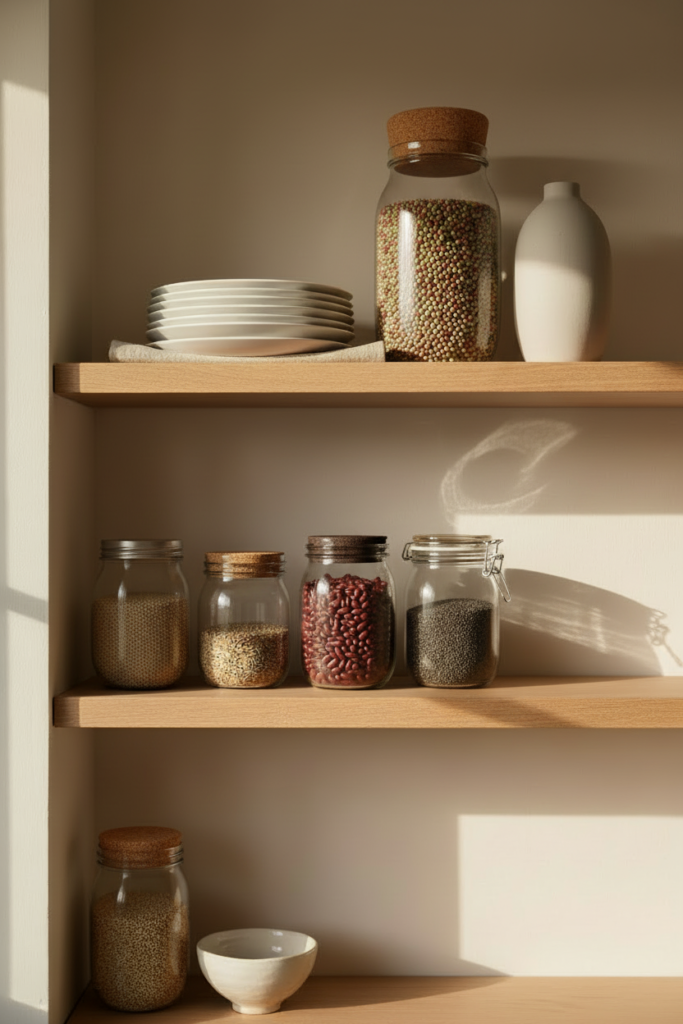
One of the most important rules for styling open shelving without clutter is to leave space.
Resist the urge to fill every inch.
After placing a few items, step back. If the shelves feel full, remove one piece. There should be visible breathing room around objects.
Why this works: negative space allows each item to stand out. It creates calm and prevents visual overwhelm.
If you have three shelves, consider leaving one slightly more open than the others. A single tall vase on one side, with empty space around it, can feel more impactful than five smaller objects grouped together.
The air between items is part of the design.
5. Vary Heights and Shapes
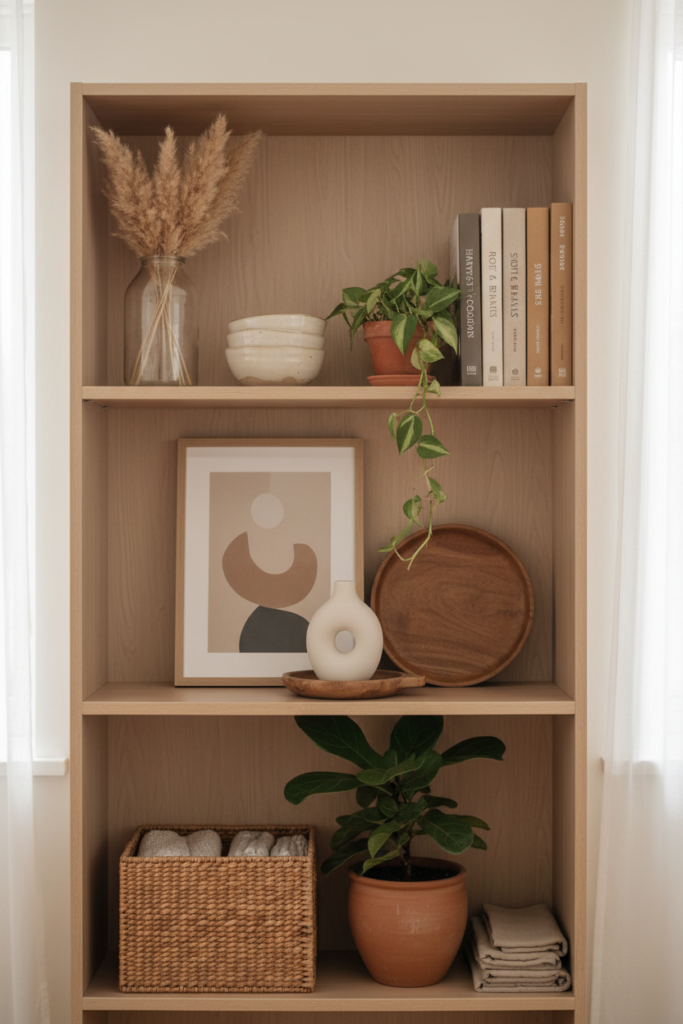
Shelves filled with items that are all the same height can look flat.
To create visual interest without adding clutter, vary the heights and shapes of what you display. Combine tall and short pieces. Mix round bowls with rectangular books. Pair a vertical stack with a horizontal one.
Why this works: variation creates gentle movement for the eye. It adds depth without adding quantity.
For example, place a tall glass jar beside a shorter stack of bowls. Lean a framed print behind a smaller object to create layers. In a living room, combine upright books with a low ceramic dish in front.
Keep the grouping simple. Two or three items together is often enough.
6. Add Texture for Warmth
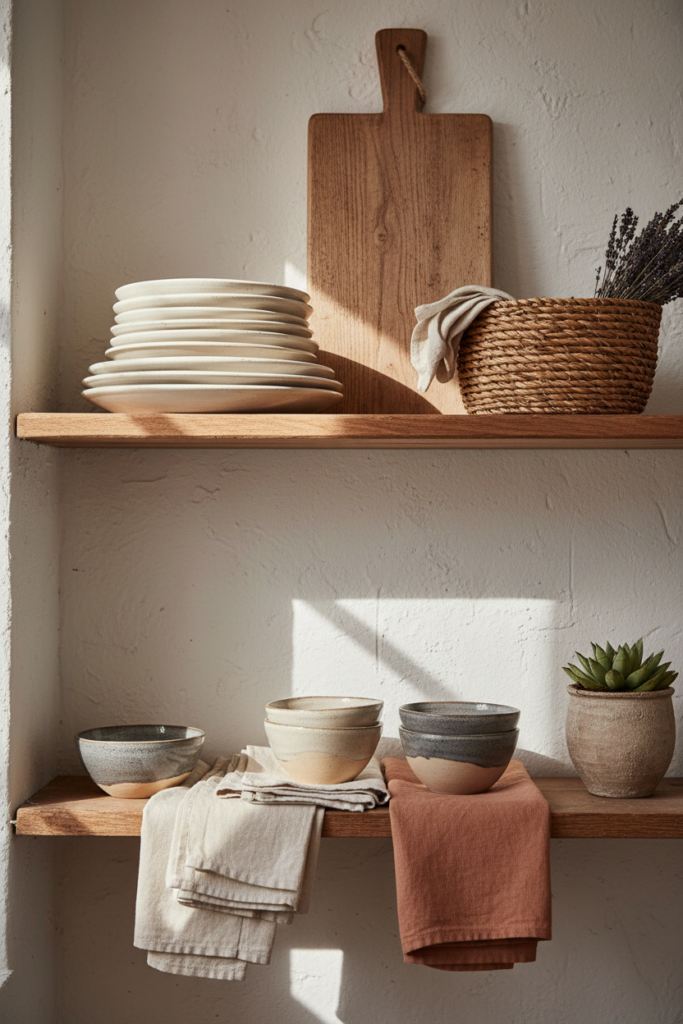
Texture brings warmth to open shelving, especially in neutral spaces.
If everything is smooth and glossy, the shelves may feel sterile. Introduce materials that add subtle contrast. Think woven baskets, linen napkins, matte ceramics, or wooden cutting boards.
Why this works: texture creates dimension without relying on color. It makes the space feel cozy and grounded.
In a kitchen, lean a wooden cutting board against the wall behind stacked plates. Add a small woven basket to hold loose items. In a living area, mix smooth book covers with a textured ceramic vase.
When light hits textured surfaces, it creates soft shadows and depth. The shelves feel layered and warm instead of flat.
7. Edit Seasonally, Not Constantly
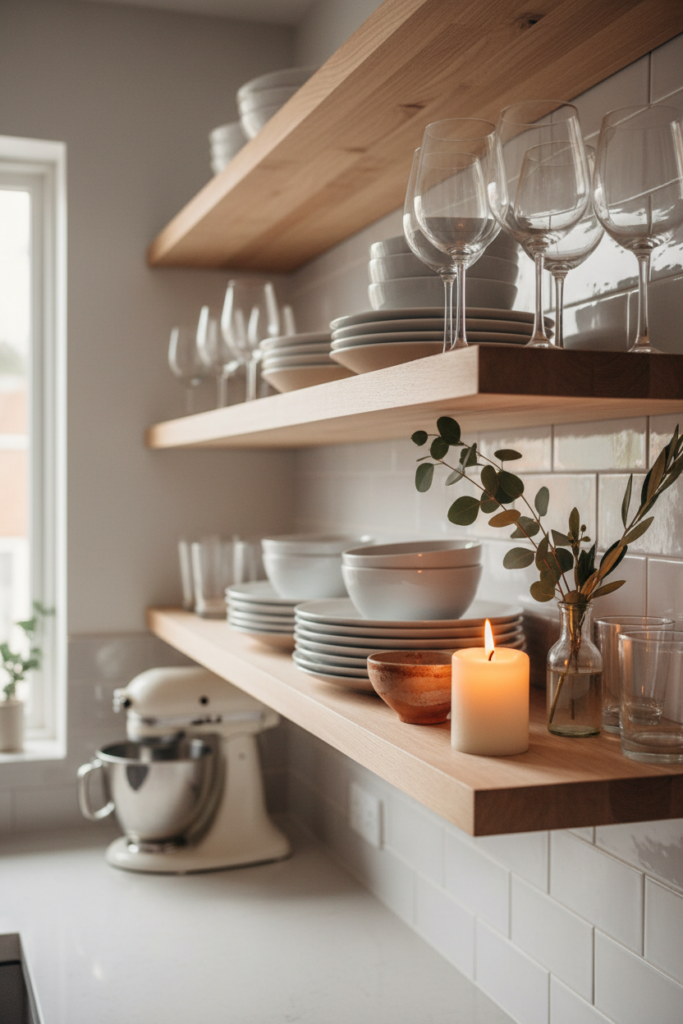
Open shelving doesn’t need to be restyled every week.
Instead of constantly adding new decor, consider small seasonal shifts. In spring, add a small vase of fresh greenery. In fall, swap in a ceramic bowl in a warmer tone or a candle with a subtle amber glow.
Why this works: seasonal edits keep the shelves feeling fresh without overwhelming the space. You’re adjusting, not reinventing.
Keep a small box of alternate decor items stored away. When you feel ready for a change, swap one or two pieces. The overall structure stays the same, which keeps the look cohesive.
This approach prevents accumulation and helps you stay intentional.
Common Mistakes to Avoid
Overfilling every shelf
If every shelf is packed from edge to edge, the entire wall feels heavy. Leave open areas.
Displaying too many small items
A collection of tiny objects can look cluttered quickly. Choose fewer, slightly larger pieces for a calmer look.
Ignoring practicality
If you have to move five objects to grab a plate, the setup isn’t functional. Style around what you use most often.
Using too many colors
Bright, mismatched pieces create visual noise. Stick to a simple palette.
Forgetting about dust and upkeep
Open shelving requires regular cleaning. Keep styling simple enough that you can easily wipe surfaces and maintain order.
A Calm Shelf Is a Confident Choice
Open shelving doesn’t need to feel overwhelming.
When you start with a clear palette, mix beauty with function, leave negative space, and layer in texture, the result feels thoughtful and serene. The goal isn’t to impress anyone. It’s to create a space that feels good to live with every day.
Stand back and trust your eye. If something feels crowded, remove one item. If it feels flat, add a touch of texture.
You don’t need dozens of accessories to make open shelving beautiful. You need intention, balance, and a willingness to keep it simple.
Your shelves can be both practical and peaceful. And with a few small changes, they will feel exactly right in your home.

Hi, I’m Livia. A mom who believes that a house becomes a home through the little things.
Over time, I started to understand what truly makes a space feel cozy, comfortable, and safe. Little by little, I transformed my own home into a place where my family and I genuinely love to be, a space that feels calm, warm, and ours.
Here, I share simple ideas and thoughtful inspiration to help you turn your home into your favorite place in the world too.