How to Style a Coffee Table Like an Interior Designer
This post may contain affiliate links, which means we may earn a small commission at no extra cost to you. We may also display third-party ads and include links to partner brands or shops. Some images may be created or enhanced using AI or sourced from licensed platforms. All opinions are our own.
A coffee table can be one of the hardest surfaces to style.
It sits in the center of your living room, fully visible, yet it also needs to function. Too empty and it feels unfinished. Too full and it feels cluttered. Many people either pile on random decor or leave it completely bare.
The secret is not owning expensive objects. It is about balance, texture, scale, and intention. When styled thoughtfully, a coffee table can anchor your entire room and make it feel layered and welcoming.
Here are six practical steps to style your coffee table like an interior designer.
1. Start with a Clear Surface
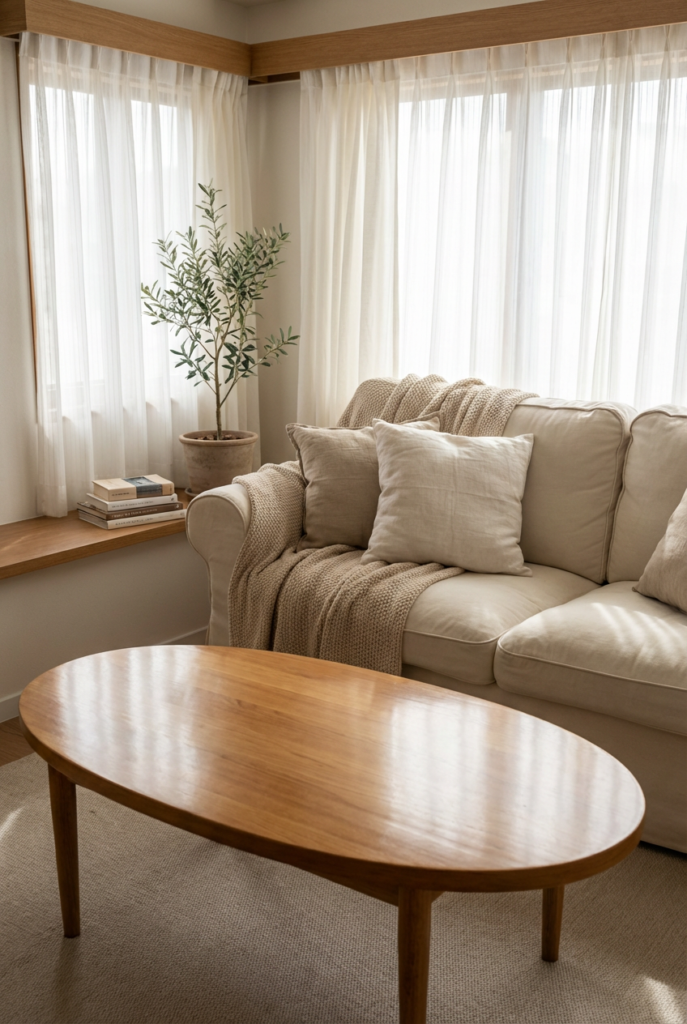
Before adding anything, remove everything.
Wipe down the table so it feels fresh. Notice the material. Is it warm wood, cool marble, glass, or painted? The base matters because your styling should complement it.
This step works because a clean starting point helps you see proportion clearly. Designers rarely decorate around clutter. They build from a blank canvas.
Once the surface is clear, you can be intentional about every item that goes back.
2. Create a Foundation with Books or a Tray
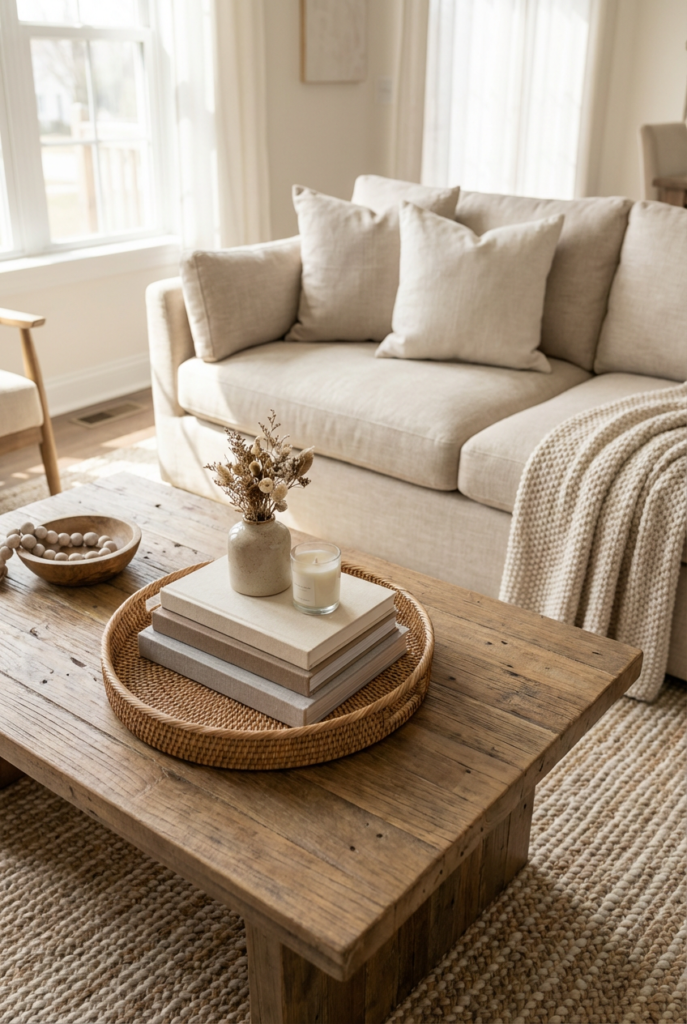
Every well-styled coffee table has structure.
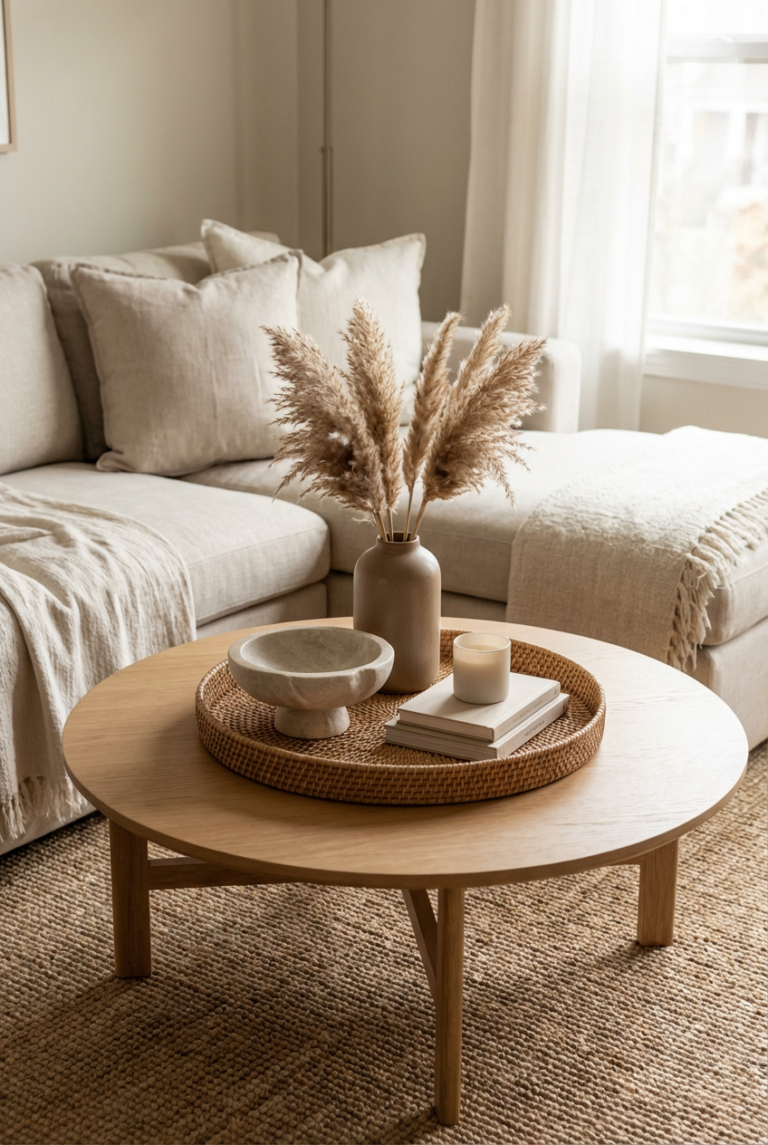
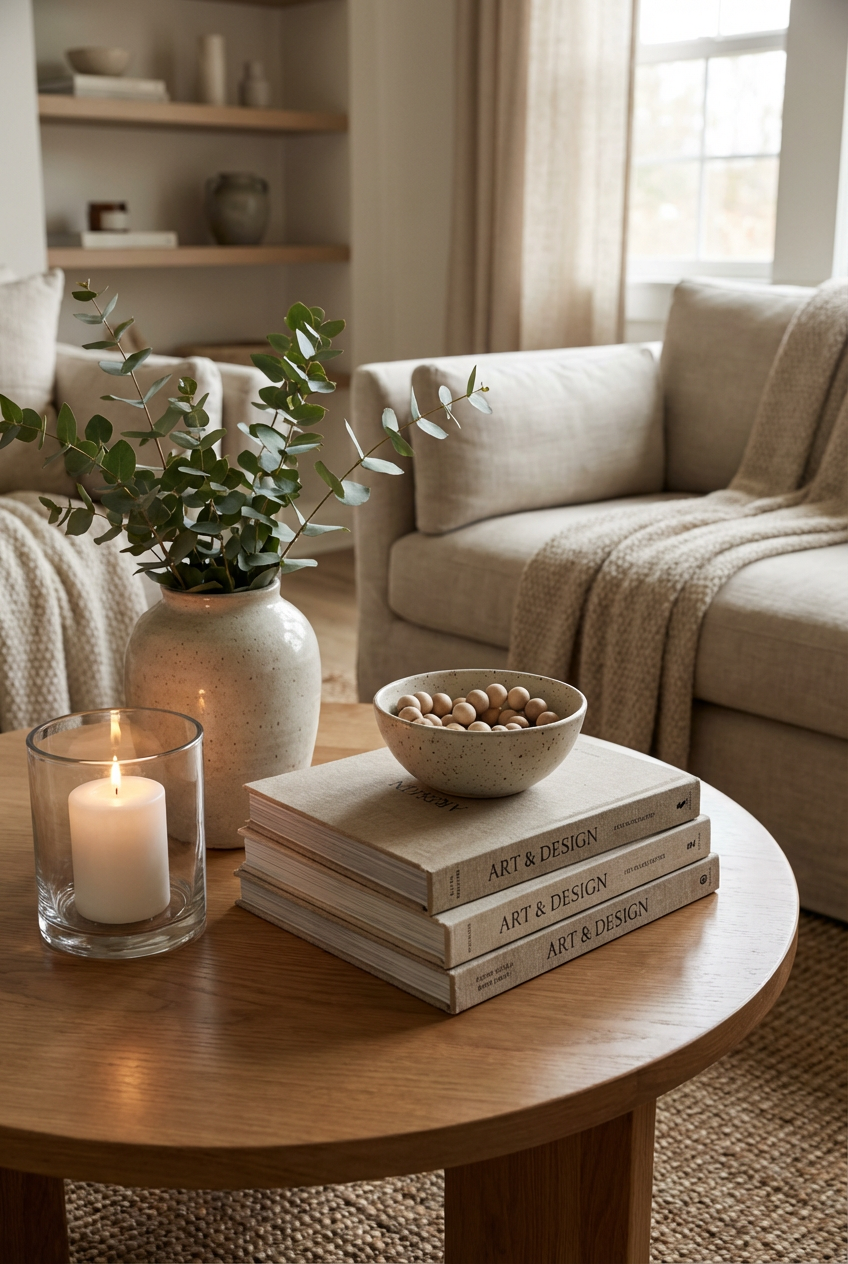
Start with a stack of two to four books or a tray. Books add height and color variation. A tray creates a defined zone and keeps smaller items from looking scattered.
Choose books with covers that complement your room. Neutral spines in cream, taupe, or soft gray feel calm. Art or travel books with muted photography add personality without overwhelming the space.
A tray in wood, rattan, or aged brass instantly grounds objects. It visually tells the eye that the grouping is purposeful.
This foundation works because it gives you layers. Instead of placing items directly on the table, you build upward, which adds depth.
3. Vary Heights for Visual Interest
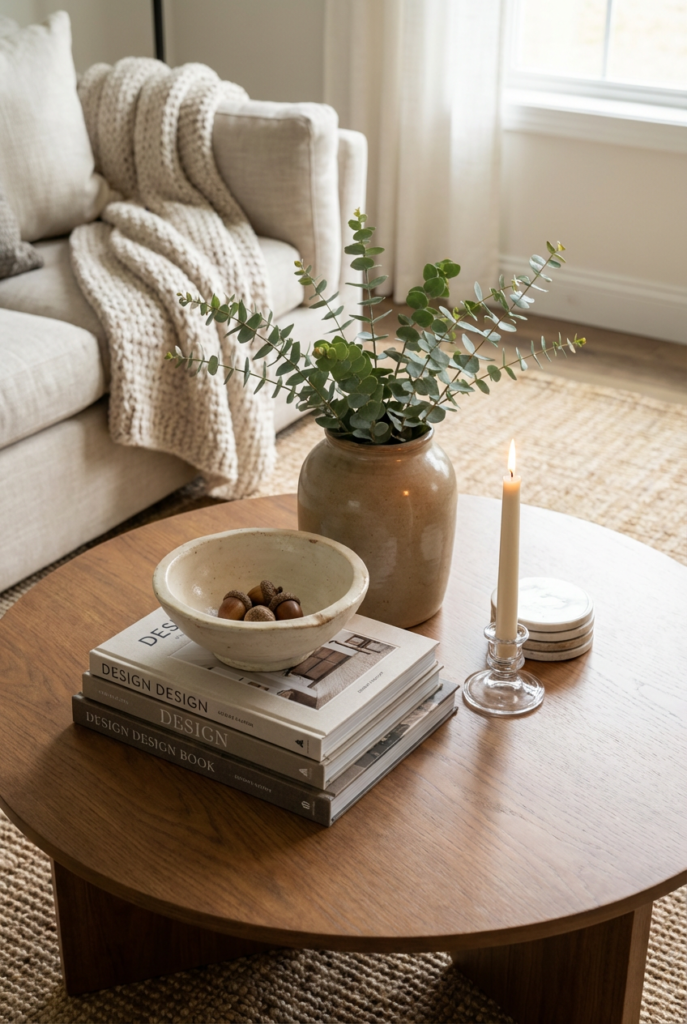
Flat arrangements feel dull.
Once your base is in place, add objects of different heights. A small vase with fresh greenery, a candle in a glass holder, or a sculptural object can create gentle variation.
For example, place a stack of books, then set a ceramic bowl on top. Next to it, add a slightly taller vase. The eye naturally moves across the table instead of stopping in one place.
Varying height works because it mimics how designers layer rooms. It creates movement and makes even simple objects feel dynamic.
Keep the tallest item low enough so you can still see across the table comfortably.
4. Mix Textures, Not Just Objects
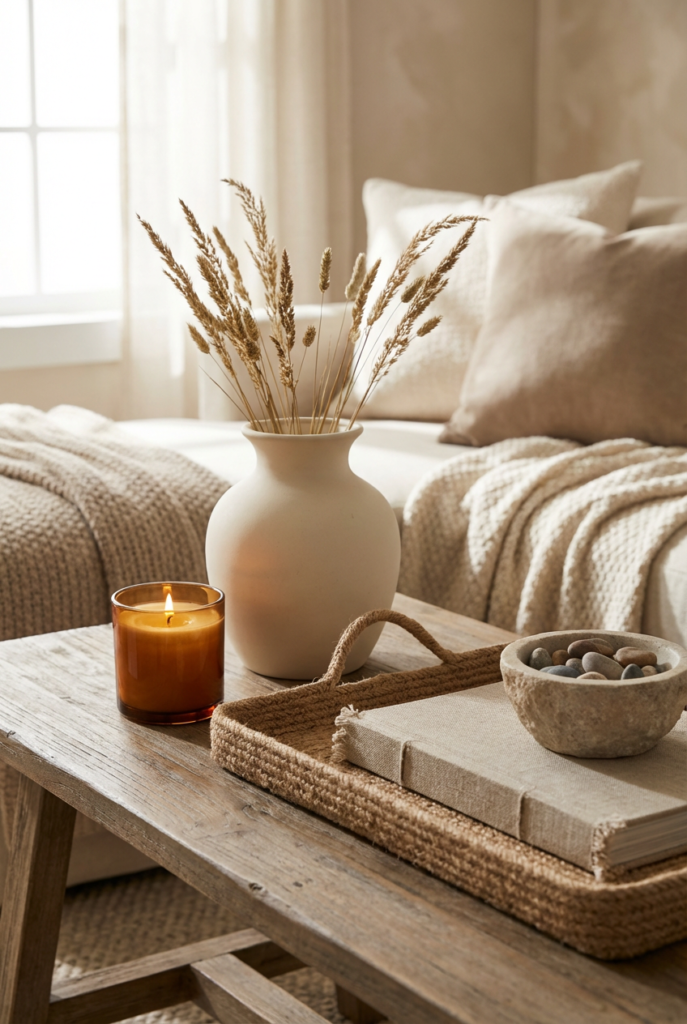
Texture is what makes a coffee table feel cozy instead of staged.
If your table is wood, add something smooth like ceramic or glass. If it is glass, introduce warmth through woven or matte pieces. A linen-covered book, a rough stone bowl, or a soft leather tray all add subtle contrast.
Light interacts differently with each material. A matte vase absorbs light softly. A glass candle reflects it. A woven tray casts tiny shadows.
Mixing textures works because it adds sensory depth. Even in a neutral palette, the room feels richer and more layered.
5. Leave Space to Let It Breathe
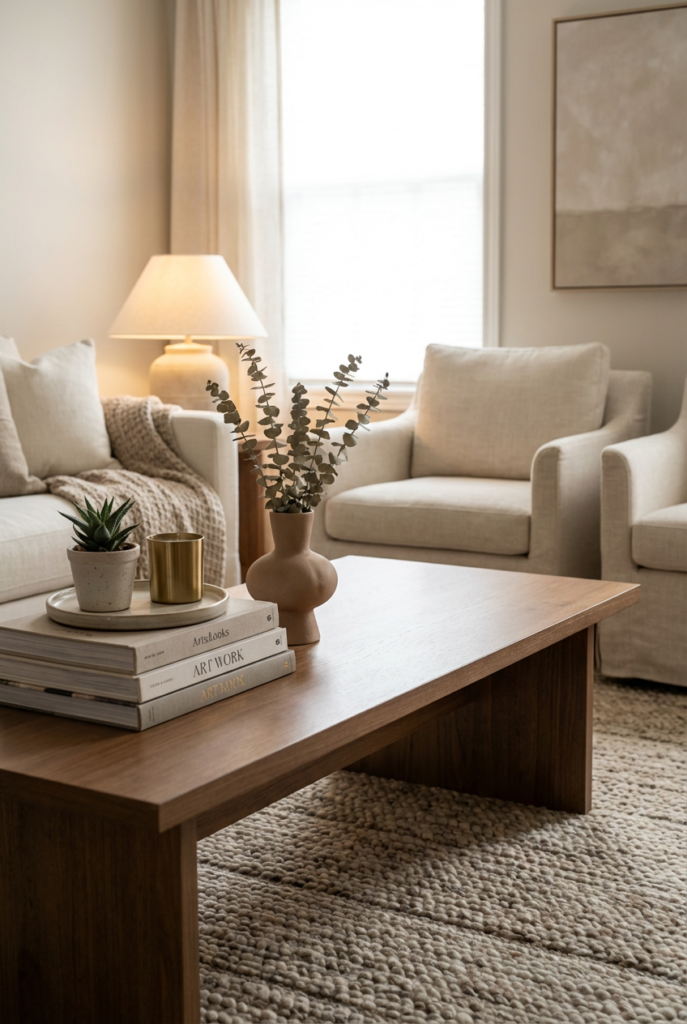
One of the biggest differences between amateur and designer styling is restraint.
Do not feel obligated to fill every inch of the table. Negative space is important. It allows each object to stand out and keeps the room feeling calm.
If you have a rectangular coffee table, try grouping items on one side and leaving the other side open. On a round table, create a tight central arrangement rather than spreading items outward.
This works because open space gives the eye room to rest. It also keeps your coffee table practical for everyday use.
6. Add Something Personal and Seasonal
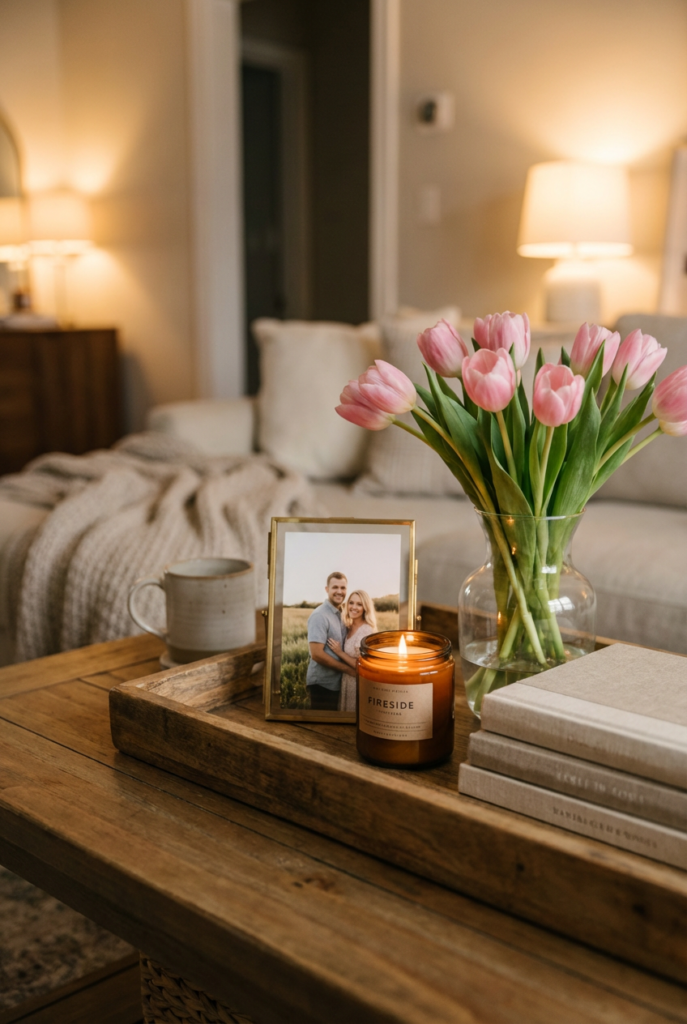
A styled coffee table should not feel like a store display.
Include at least one personal item. A small framed photo, a favorite candle scent, or a collected object from a trip adds meaning.
You can also adjust styling with the seasons. In fall, add a small bowl of pinecones or a warm-toned candle. In spring, use fresh tulips in a simple glass vase.
These small changes keep the table feeling fresh and lived-in.
Personal details work because they make the space feel authentic. Designers often include one unexpected or sentimental piece to avoid a showroom look.
7. Consider the Shape of Your Table
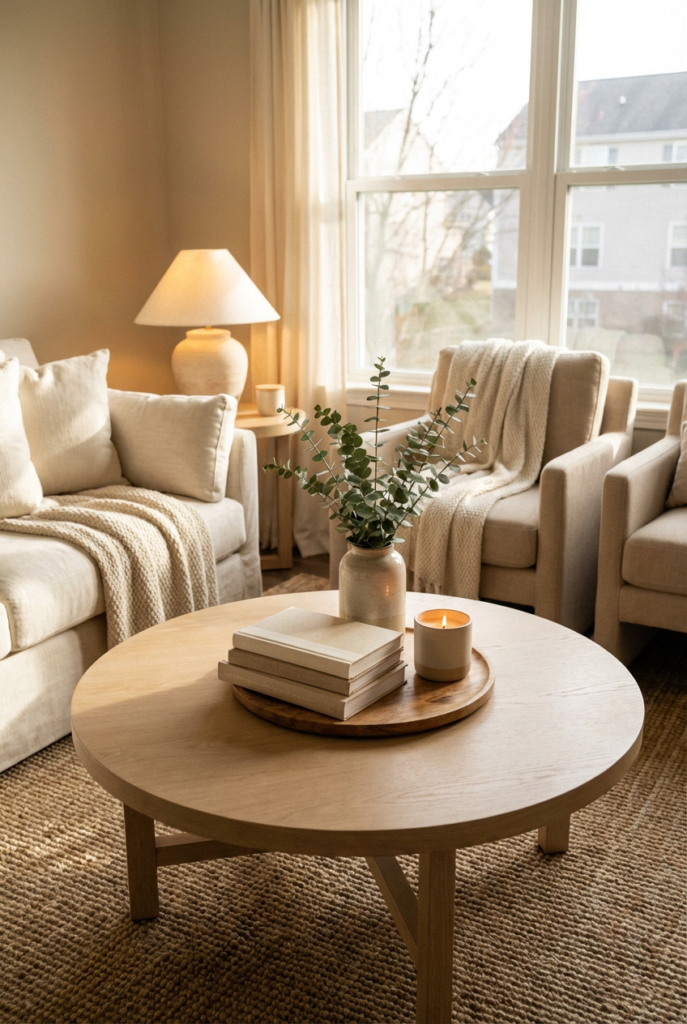
Different shapes require slightly different styling approaches.
For rectangular tables, use the rule of thirds. Divide the table visually into three sections and style two of them, leaving one more open.
For square tables, create a central cluster. A tray with layered objects works well here.
For round tables, keep the arrangement compact and centered. Too many scattered pieces can look chaotic on a circular surface.
Thinking about shape works because it creates natural balance. Your styling will feel intentional rather than random.
Common Mistakes to Avoid
Avoid using too many small items. Tiny decor pieces can make the table feel busy and cluttered. It is better to use fewer, slightly larger objects.
Do not make everything the same height. Without variation, the arrangement looks flat and uninspired.
Resist matching every item perfectly. A mix of materials and subtle tones feels more natural than identical finishes.
Do not ignore function. Leave room for a cup of coffee, a book, or remote controls. A beautiful table that is not usable will quickly become frustrating.
Finally, avoid pushing everything to the edges. Pull groupings inward so they feel connected and grounded.
You Can Style It with What You Already Own
You do not need to buy all new decor to style your coffee table beautifully.
Look around your home. A candle from the bedroom, a bowl from the kitchen, or books from a shelf can be rearranged into something new. Try different combinations and step back to observe.
Focus on balance, texture, and breathing room. Adjust until the arrangement feels calm and intentional.
When styled thoughtfully, your coffee table can anchor the entire living room. It becomes more than a surface. It becomes a quiet focal point that reflects your style and makes the space feel warm and complete.

Hi, I’m Livia. A mom who believes that a house becomes a home through the little things.
Over time, I started to understand what truly makes a space feel cozy, comfortable, and safe. Little by little, I transformed my own home into a place where my family and I genuinely love to be, a space that feels calm, warm, and ours.
Here, I share simple ideas and thoughtful inspiration to help you turn your home into your favorite place in the world too.