How to Make Your Small Balcony Feel Like Part of Your Home
This post may contain affiliate links, which means we may earn a small commission at no extra cost to you. We may also display third-party ads and include links to partner brands or shops. Some images may be created or enhanced using AI or sourced from licensed platforms. All opinions are our own.
A small balcony often ends up feeling like an in-between space.
It is there, but it does not fully belong. You step outside, but the materials feel colder, the furniture feels temporary, and the space is rarely used for more than a few minutes.
Most of the time, it is not about size. It is about connection.
When a balcony starts to reflect the same comfort, textures, and rhythm as the inside of your home, it stops feeling separate. It becomes part of your daily life.
These steps will help you create that connection in a way that feels natural, practical, and easy to maintain.
1. Start with a Floor That Feels Warm and Intentional
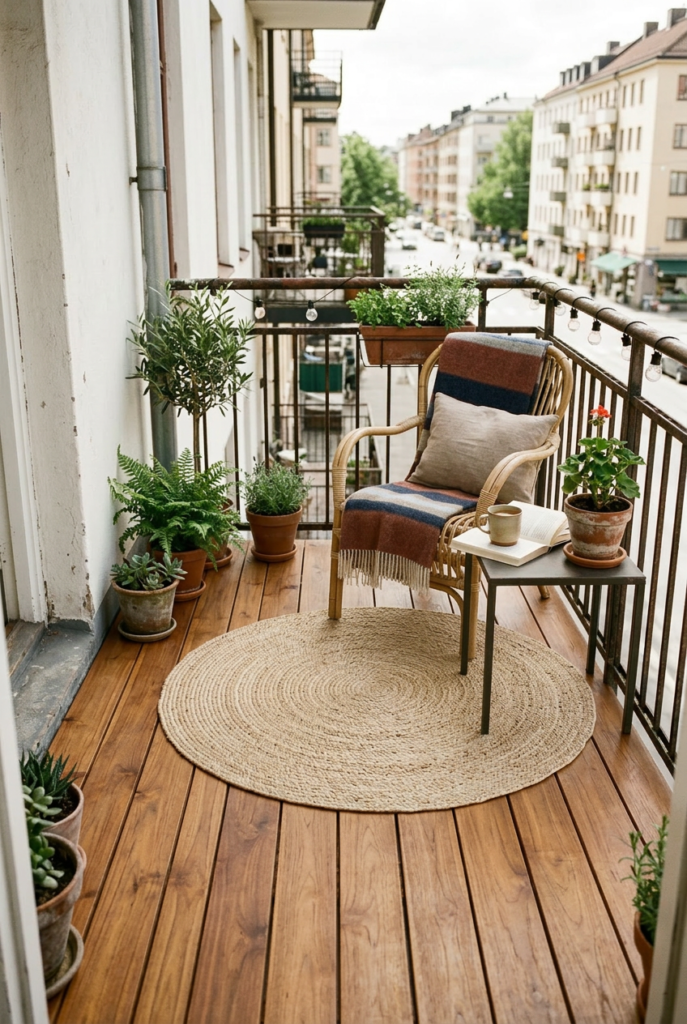
The floor is the foundation of the space, and it is often what makes a balcony feel unfinished.
If you are working with plain tile or concrete, try layering something over it. Wooden deck tiles are one of the easiest options because they click into place and instantly soften the look.
If you prefer something softer underfoot, use an outdoor rug in a neutral tone. Look for flatweave textures in beige, sand, or soft gray so they do not feel heavy.
If your indoor flooring is wood or warm-toned, try to echo that outside. Even a similar color can create a subtle visual connection that makes the balcony feel like a continuation rather than a separate area.
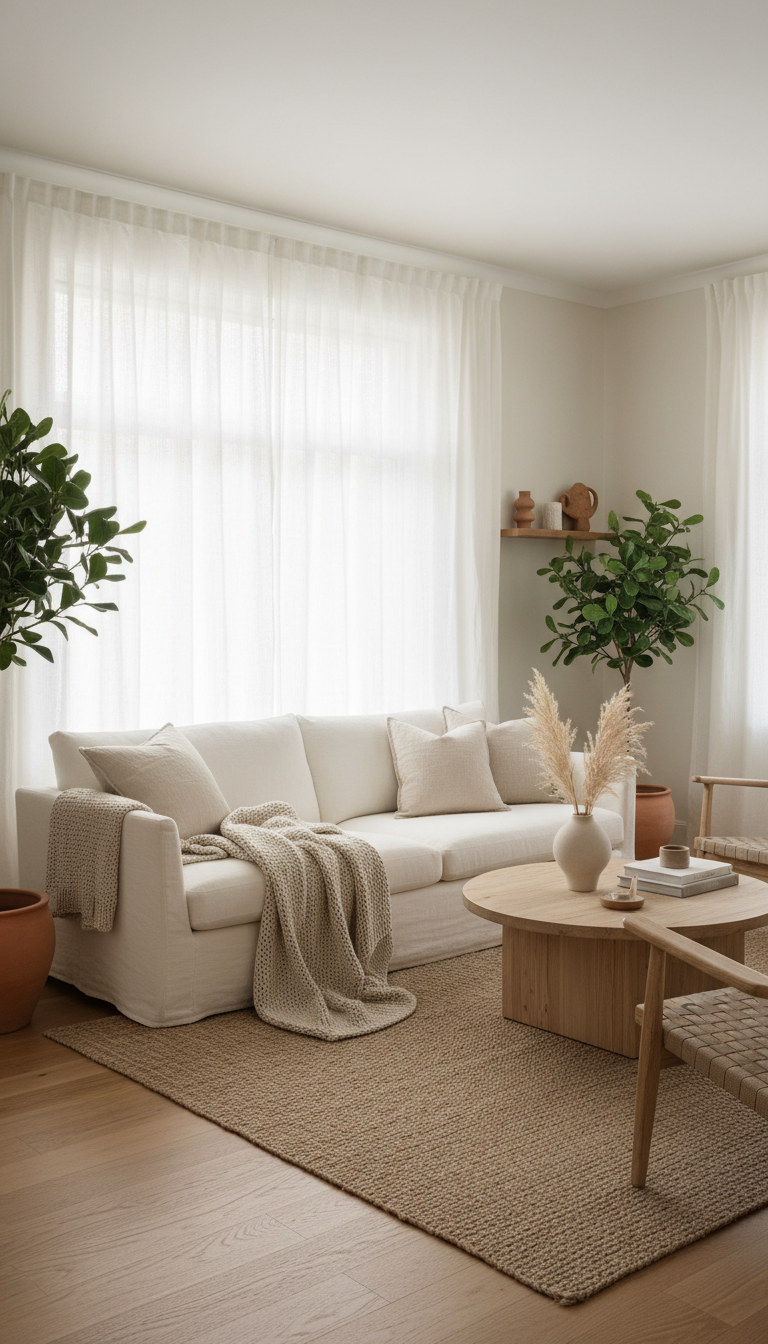
2. Repeat Colors and Materials from Inside
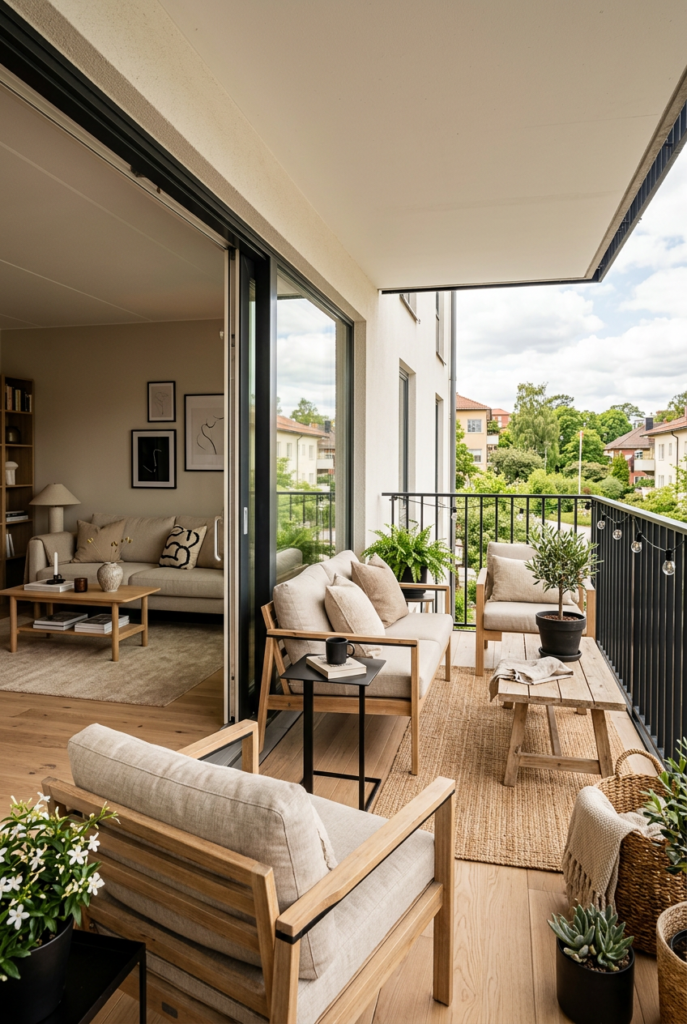
This is one of the most effective ways to create cohesion.
Look at the room closest to your balcony. Notice the dominant colors, but also the materials. Do you see light wood, linen, soft whites, or warm neutrals?
Bring those same elements outside.
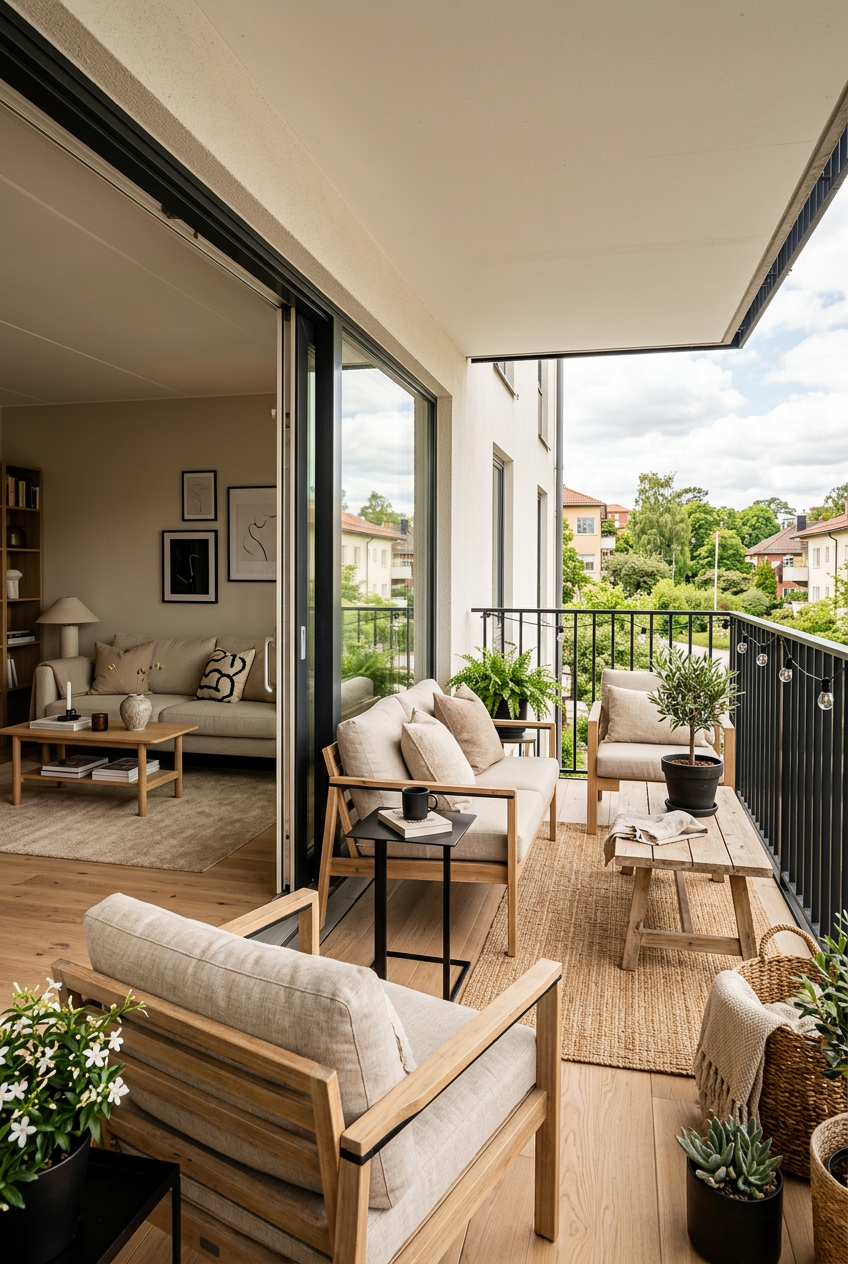
For example, if your living room has beige cushions and light wood furniture, use similar tones on your balcony seating. If you have black accents inside, repeat them in small details like a lantern or planter.
The goal is not to match everything perfectly, but to create a visual conversation between the two spaces.
3. Choose Furniture That Feels Comfortable, Not Temporary
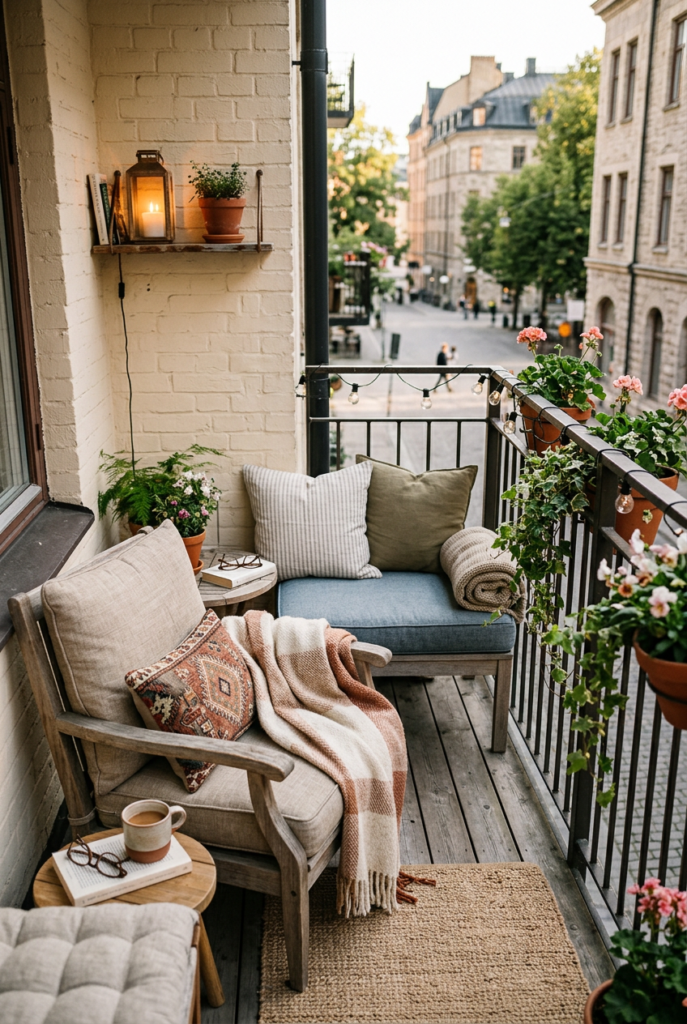
A lot of balcony furniture looks practical but feels uninviting.
Instead of foldable plastic or overly thin metal pieces, look for furniture that feels closer to indoor seating.
A small cushioned bench, a compact armchair, or even a padded stool can make a big difference. If space is tight, use a bench along one wall to keep the layout open.
Add seat cushions that are thick enough to be comfortable, not just decorative. This is what turns the balcony into a place you actually want to sit.
4. Create a Defined Seating Zone
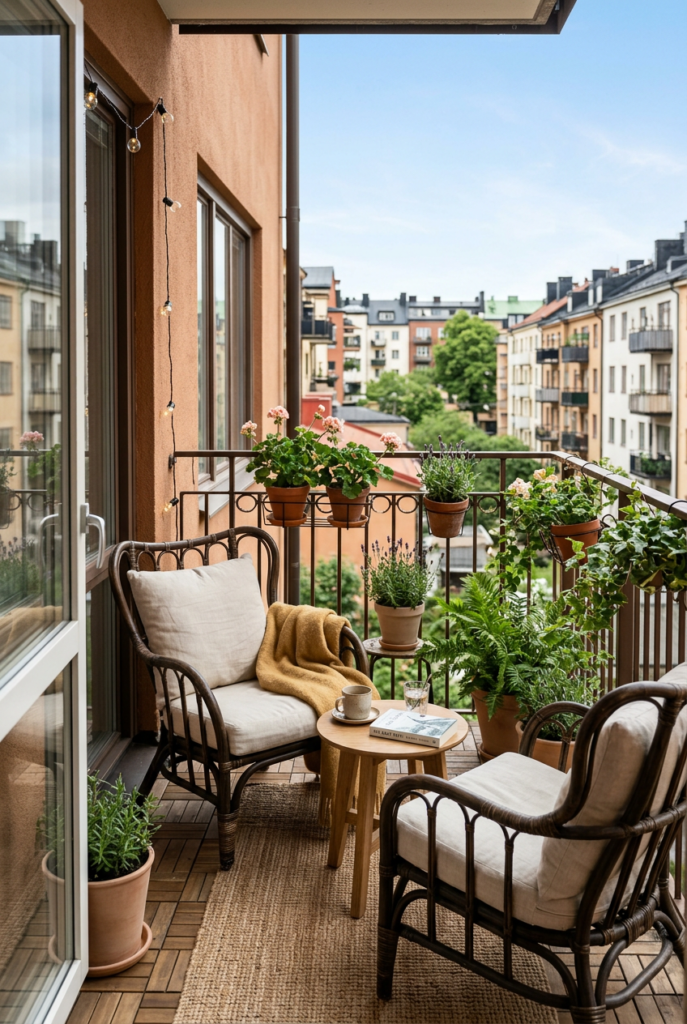
In a small balcony, everything works better when there is a clear purpose.
Instead of placing items randomly, build a small zone. Position your seating so it faces inward, not outward.
Add a small table or stool within reach, and keep everything grouped close enough to feel connected.
This creates a sense of enclosure, even in an open space. It feels more like a small outdoor room rather than a leftover area.
5. Layer Soft Textiles That Add Comfort and Warmth
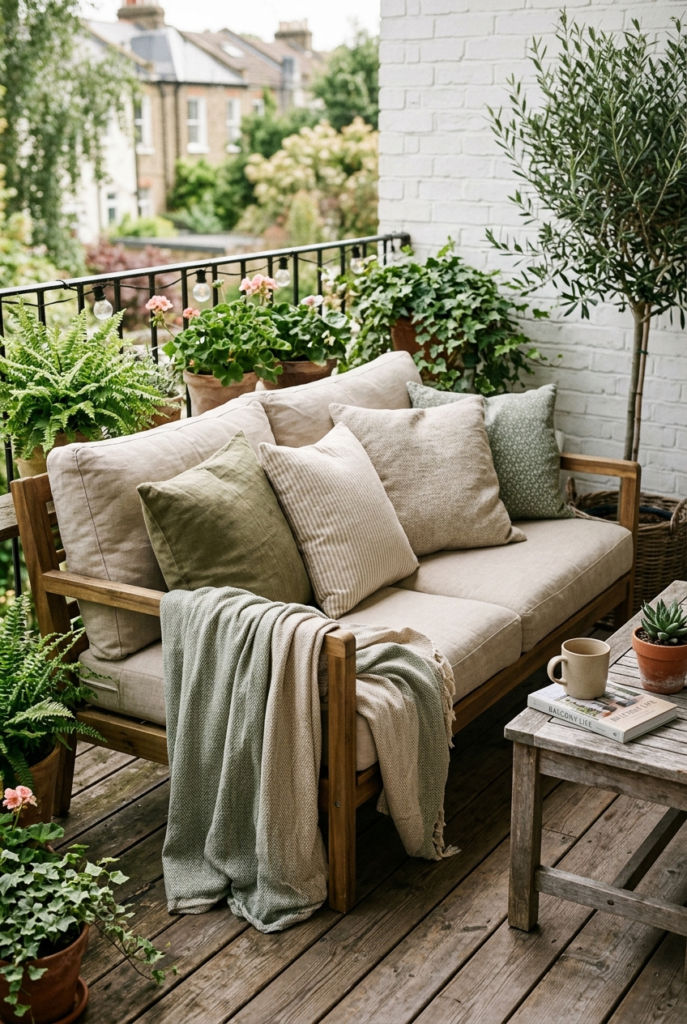
Textiles are what make a space feel lived in.
Use cushions in breathable fabrics like cotton or linen. Mix two or three tones instead of using one flat color. For example, combine warm white with soft green and a faded blue.
Add a lightweight throw and drape it casually over the seating. It does not need to be perfectly styled.
These layers make the space feel softer visually, but they also make it more comfortable to use during cooler mornings or evenings.
6. Use Lighting to Create a Gentle Atmosphere
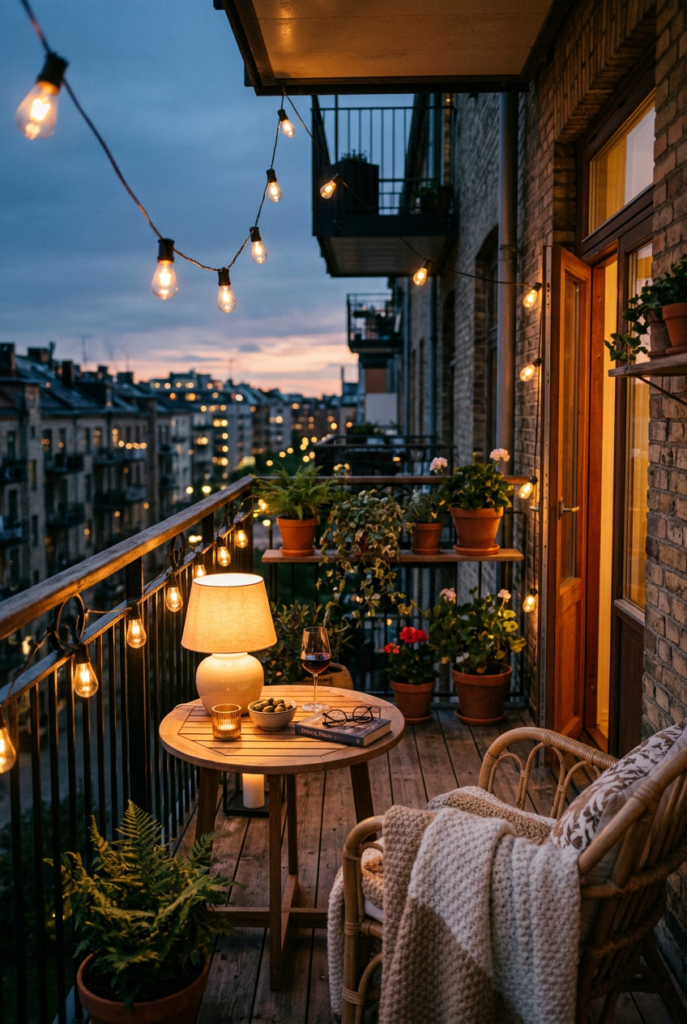
Lighting is what makes the balcony feel like part of your home after sunset.
Instead of relying on overhead lighting, add softer sources. String lights are a great option, especially when draped loosely rather than tightly aligned.
You can also add a small rechargeable lamp on the table or a lantern on the floor.
Warm light is key. It should feel soft and diffused, not bright. This creates a calm atmosphere that encourages you to stay outside longer.
7. Frame the Space with Plants Without Overcrowding
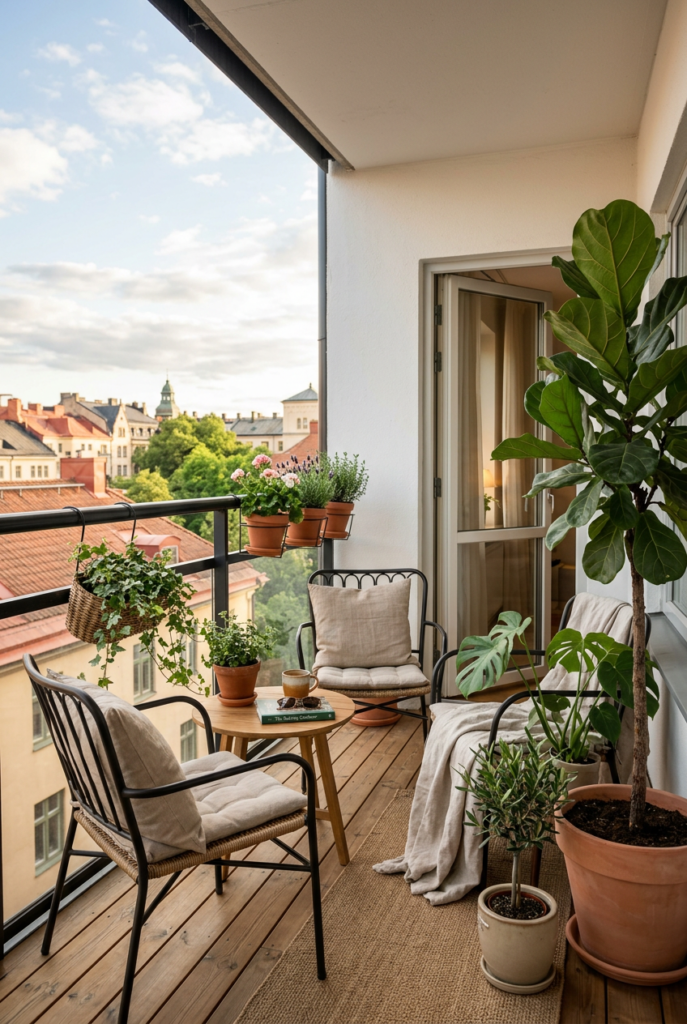
Plants help define the edges of your balcony and make it feel more enclosed.
Instead of filling every corner, choose a few key placements. Add one taller plant near a corner and a couple of medium-sized ones near the seating area.
If your railing feels too exposed, use slim planters with upright plants to create a soft visual barrier.
Choose plants with lighter leaves and open shapes so they do not block airflow or light.
This creates privacy while keeping the space airy.
8. Add a Functional Surface That Supports Daily Use
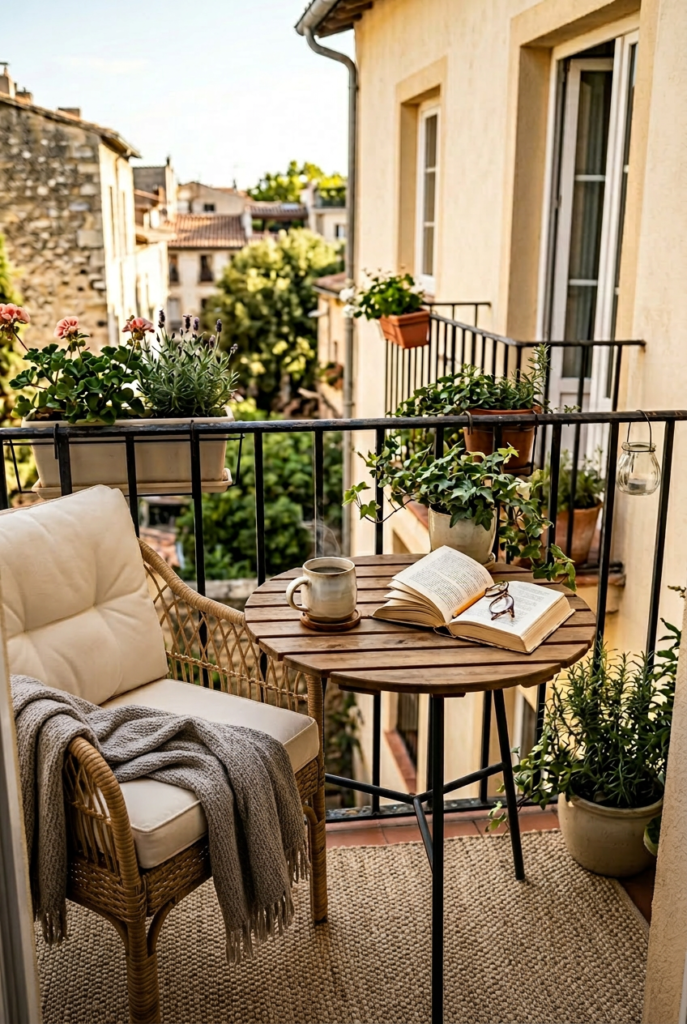
A balcony becomes part of your routine when it is easy to use.
Add a small table or surface that can hold a coffee, a book, or a small tray. Even a narrow ledge attached to the railing can work in very small spaces.
Keep this surface clear most of the time.
When it is not cluttered, it invites use. You can step outside and immediately place something down without rearranging anything.
9. Use Vertical Space in a Light, Balanced Way
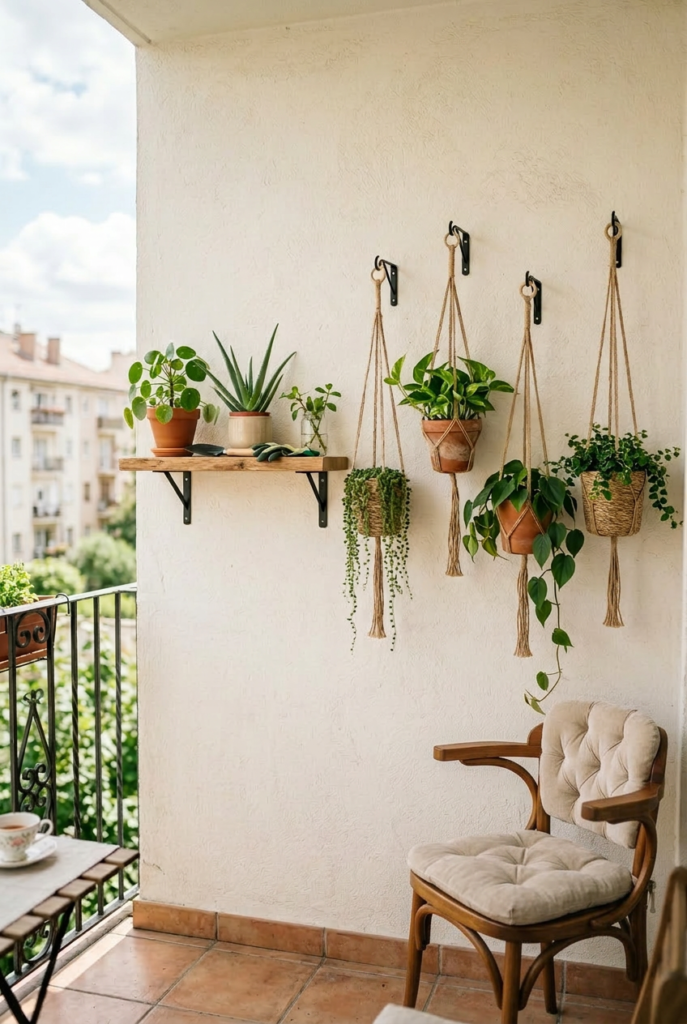
When floor space is limited, vertical elements can add depth without crowding.
Use a narrow wall shelf, a ladder-style rack, or a few hanging planters. Keep spacing between items so it does not feel heavy.
Stick to a limited palette for planters and decor so the wall feels cohesive.
Vertical elements should enhance the space, not dominate it.
10. Keep the Layout Open and Easy to Navigate
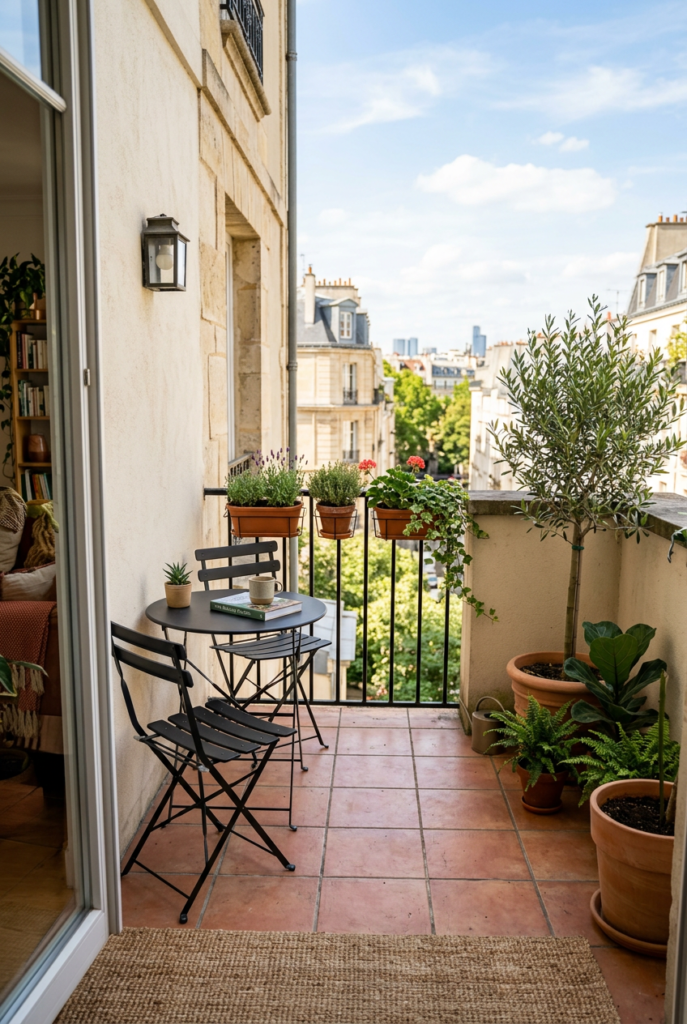
One of the easiest ways to make a balcony feel better is to remove excess.
Make sure you can move comfortably without turning sideways or stepping over items.
Avoid pushing furniture too tightly against railings if it makes the space feel cramped.
Even small gaps between pieces can make the balcony feel more open and breathable.
11. Add One Personal Detail That Anchors the Space
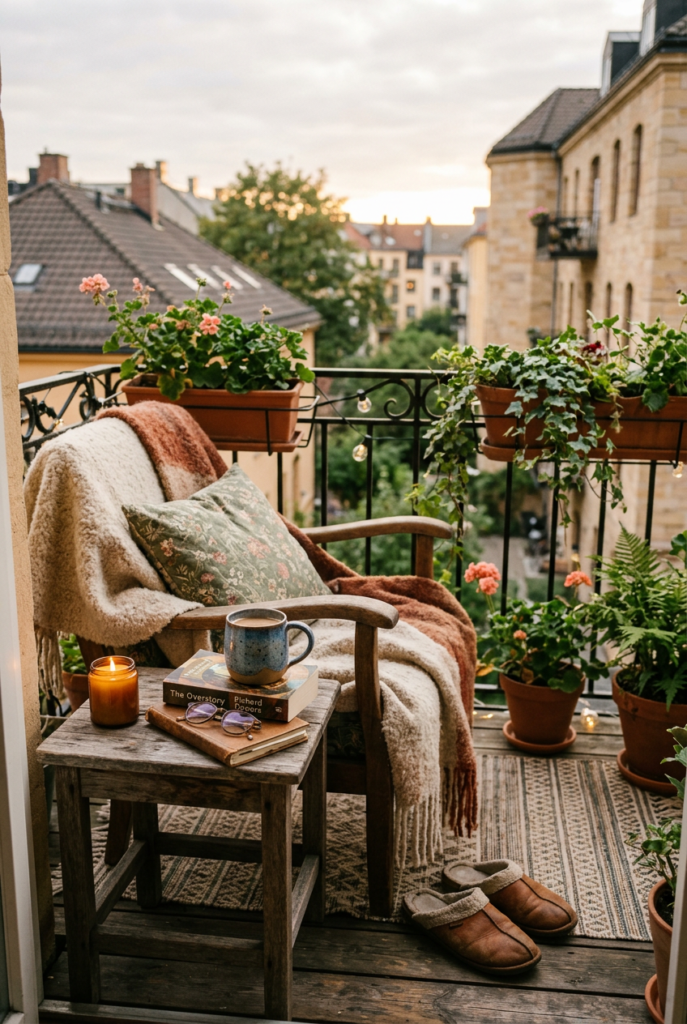
This is what makes the space feel like yours.
It could be a ceramic cup you love, a small stack of books, a candle, or a textile that feels familiar.
Place it where you naturally sit or reach.
This small detail connects the balcony to your daily life. It shifts the space from styled to lived-in.
12. Make the Transition Feel Natural and Inviting
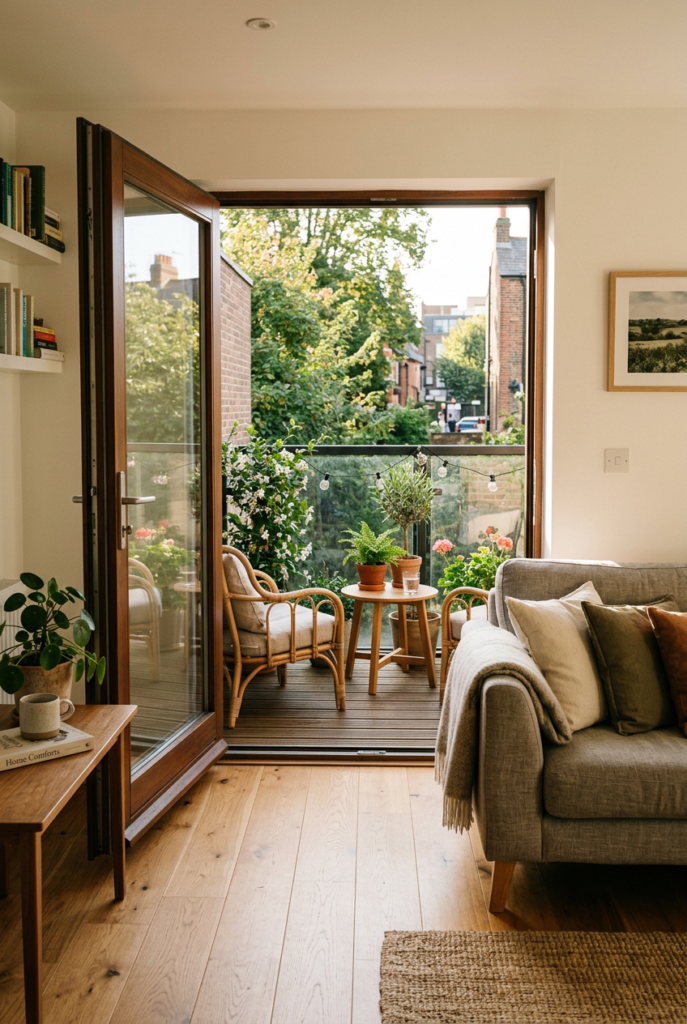
The connection between inside and outside is just as important as the balcony itself.
Keep the doorway clear and uncluttered. If possible, align colors or textures between the interior floor and the balcony.
Even something simple like matching tones or repeating materials can make stepping outside feel seamless.
The easier and more natural the transition feels, the more often you will use the space.
Common Mistakes to Avoid
Trying to do too much in a small space often leads to clutter.
Choosing furniture that is too large or too minimal to be comfortable can make the space less usable.
Ignoring how the space feels at different times of day, especially light and heat, can limit how often it is used.
Using too many unrelated colors or materials can make the balcony feel disconnected from the rest of the home.
Filling every corner with plants or decor can make the space feel heavy instead of relaxing.
When Your Balcony Finally Feels Like Home
A small balcony does not need a complete transformation to feel different.
When the floor feels warm, the seating is comfortable, and the details reflect your home, the space naturally becomes more inviting.
Start with one change that makes the biggest difference. Then build slowly, paying attention to how the space feels as you use it.
Over time, the balcony stops being separate.
It becomes a place you step into without thinking, and one you return to every day.

Hi, I’m Livia. A mom who believes that a house becomes a home through the little things.
Over time, I started to understand what truly makes a space feel cozy, comfortable, and safe. Little by little, I transformed my own home into a place where my family and I genuinely love to be, a space that feels calm, warm, and ours.
Here, I share simple ideas and thoughtful inspiration to help you turn your home into your favorite place in the world too.