How to Make a Small Living Room Feel Bigger and Cozier
This post may contain affiliate links, which means we may earn a small commission at no extra cost to you. We may also display third-party ads and include links to partner brands or shops. Some images may be created or enhanced using AI or sourced from licensed platforms. All opinions are our own.
A small living room can feel frustrating.
Maybe it feels tight when guests come over. Maybe the furniture looks crowded. Or maybe it feels plain and unfinished at the same time. Many small spaces struggle with this balance — either too full or not cozy enough.
The good news is that you don’t need more square footage. With thoughtful layout, warm lighting, and layered texture, you can make your small living room feel both bigger and cozier at the same time.
Here’s how to do it step by step.
1. Start With the Right Layout, Not More Furniture
Before adding anything new, look at your layout.
Pull furniture slightly away from the walls if space allows. Even a few inches can make the room feel more intentional. In some rooms, floating the sofa with a slim console behind it creates depth and defines the area.
Why this works: when furniture is arranged with purpose, the room feels designed instead of squeezed in. Clear walking paths instantly make a space feel larger.
Keep the main seating facing inward to create a cozy conversation zone. Use a properly sized rug to anchor everything — ideally large enough so at least the front legs of your sofa and chairs sit on it. This visually connects the furniture and prevents a scattered look.
2. Use Light to Expand the Space
Lighting is one of the most powerful tools in a small living room.
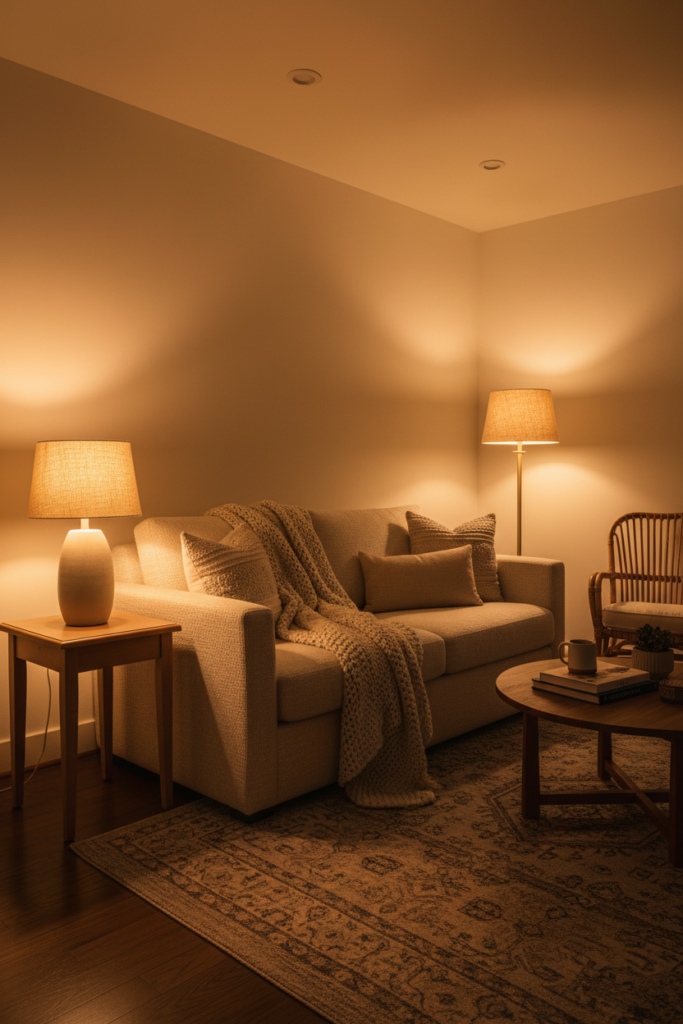
Relying on one overhead light often makes the room feel flat and smaller. Instead, layer your lighting. Add a table lamp near the sofa and a floor lamp in a darker corner.
Why this works: layered lighting creates depth. When light comes from multiple points at eye level, the room feels warmer and more dimensional.
Choose warm white bulbs rather than cool tones. The soft glow against cream walls, wood furniture, and woven textures makes the room feel inviting instead of stark. In the evening, dim lighting adds intimacy without making the space feel cramped.
3. Choose a Soft, Cohesive Color Palette
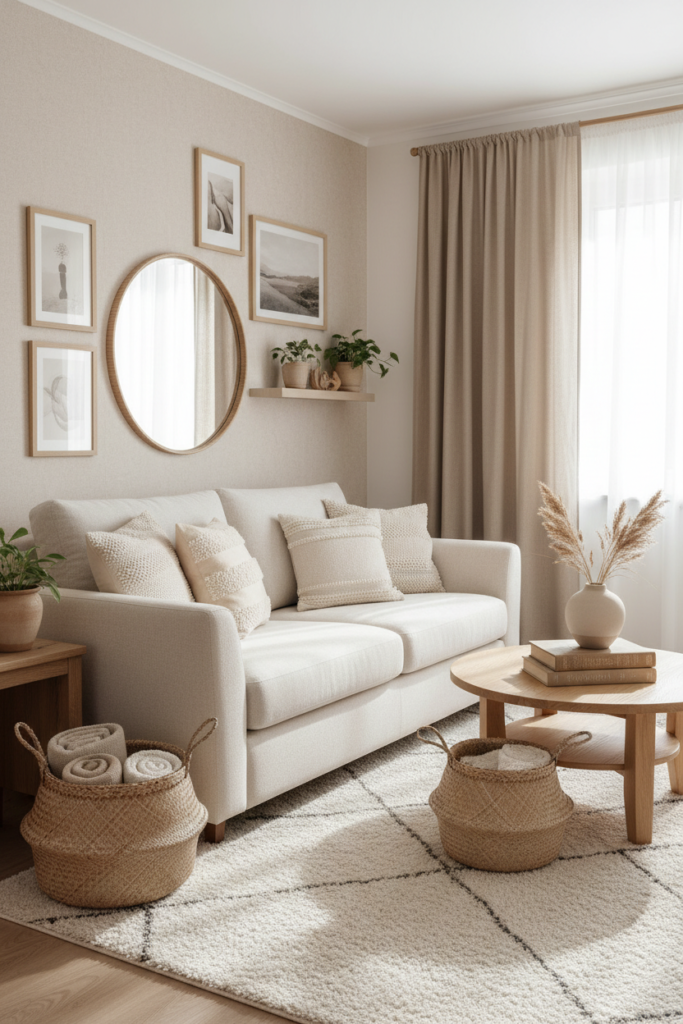
Color has a strong impact on how large a room feels.
Stick to a limited palette of two to three main colors. Warm neutrals like beige, soft white, light taupe, or muted gray help reflect light while still feeling cozy.
Why this works: too many contrasting colors break up the space visually. A cohesive palette allows the eye to move smoothly across the room, which makes it feel larger.
You can still add depth. Layer different shades of the same tone — a creamy sofa, slightly darker curtains, and textured throw pillows in similar hues. Add warmth through natural wood, woven baskets, or subtle brass accents.
4. Add Texture Instead of Bulk
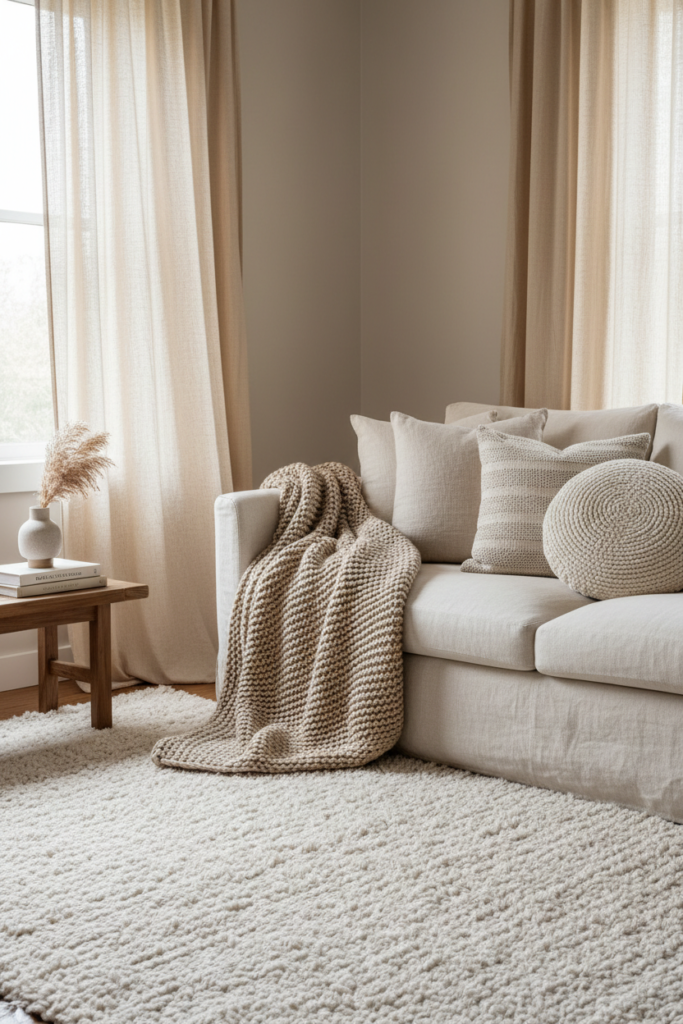
In small living rooms, coziness should come from texture, not extra furniture.
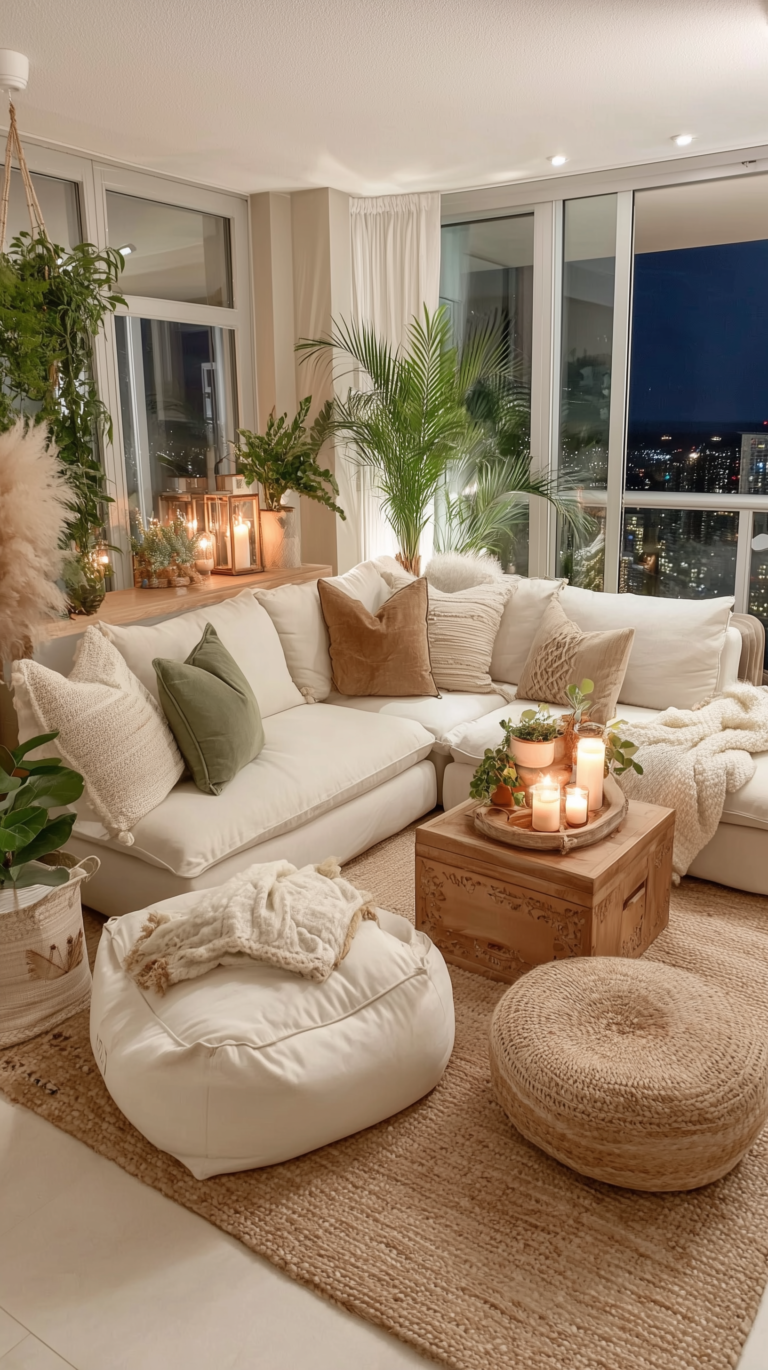
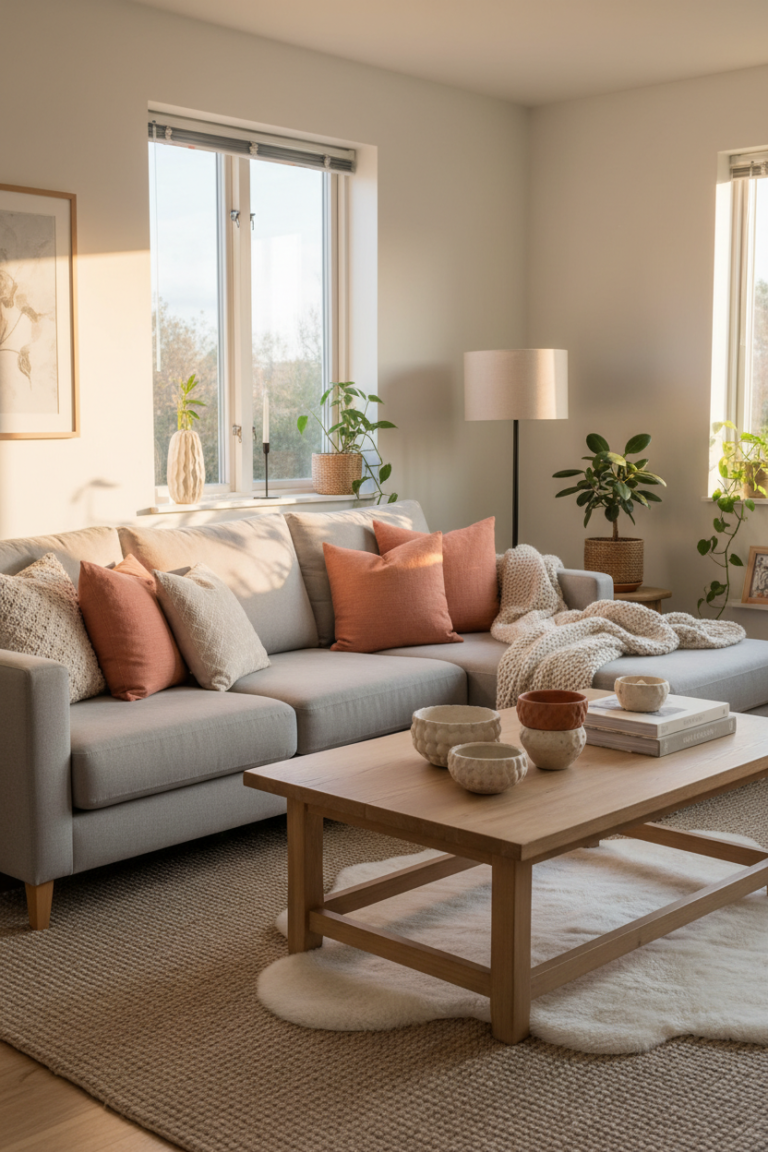
Instead of adding more chairs or tables, layer textiles. A thick area rug underfoot instantly softens the room. Add a knit throw over the sofa and a mix of linen and woven pillows.
Why this works: texture adds visual warmth without taking up physical space. It makes the room feel full and inviting without crowding it.
Think about how the room feels. A soft rug under bare feet. A boucle pillow that catches the light. Linen curtains that move gently in the breeze. These small details create comfort without clutter.
5. Use Mirrors and Vertical Space Thoughtfully
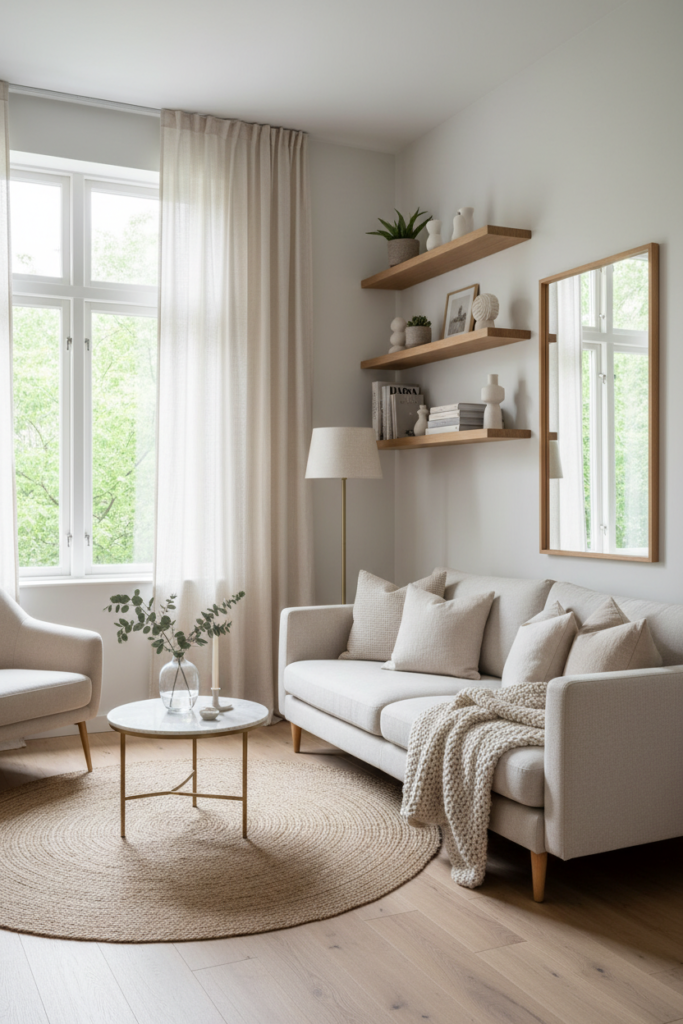
Mirrors can make a small living room feel brighter and more open.
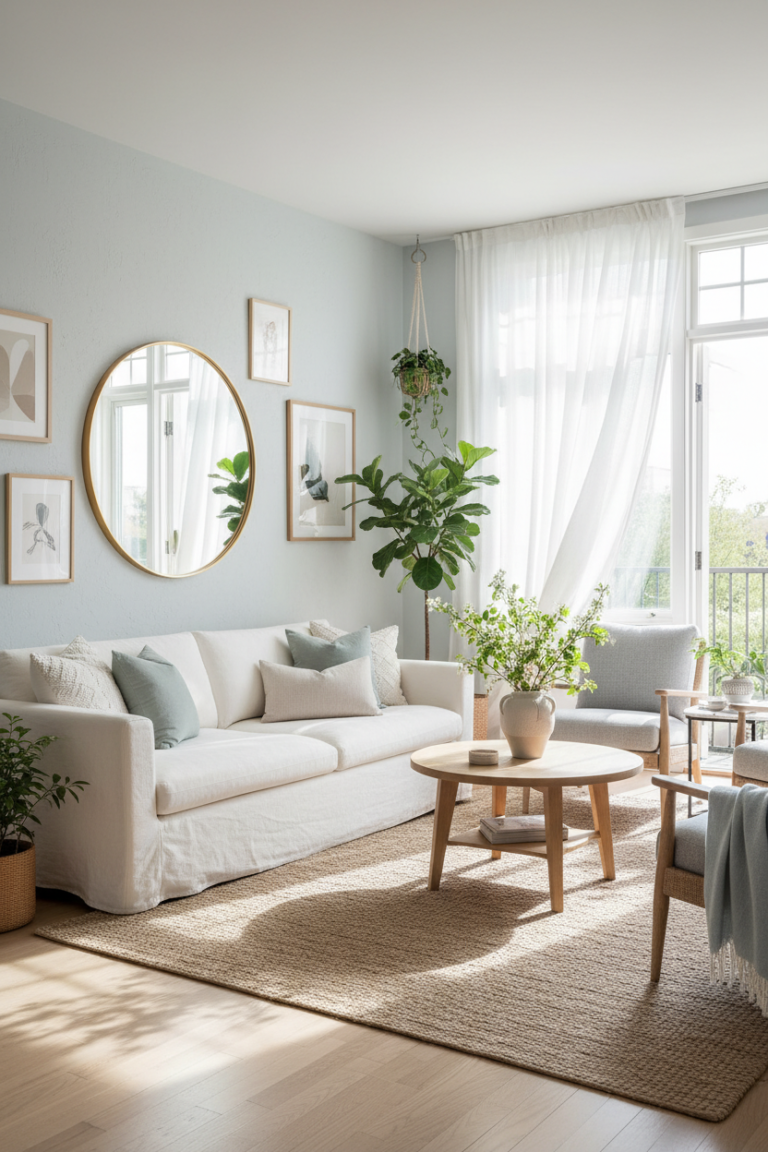
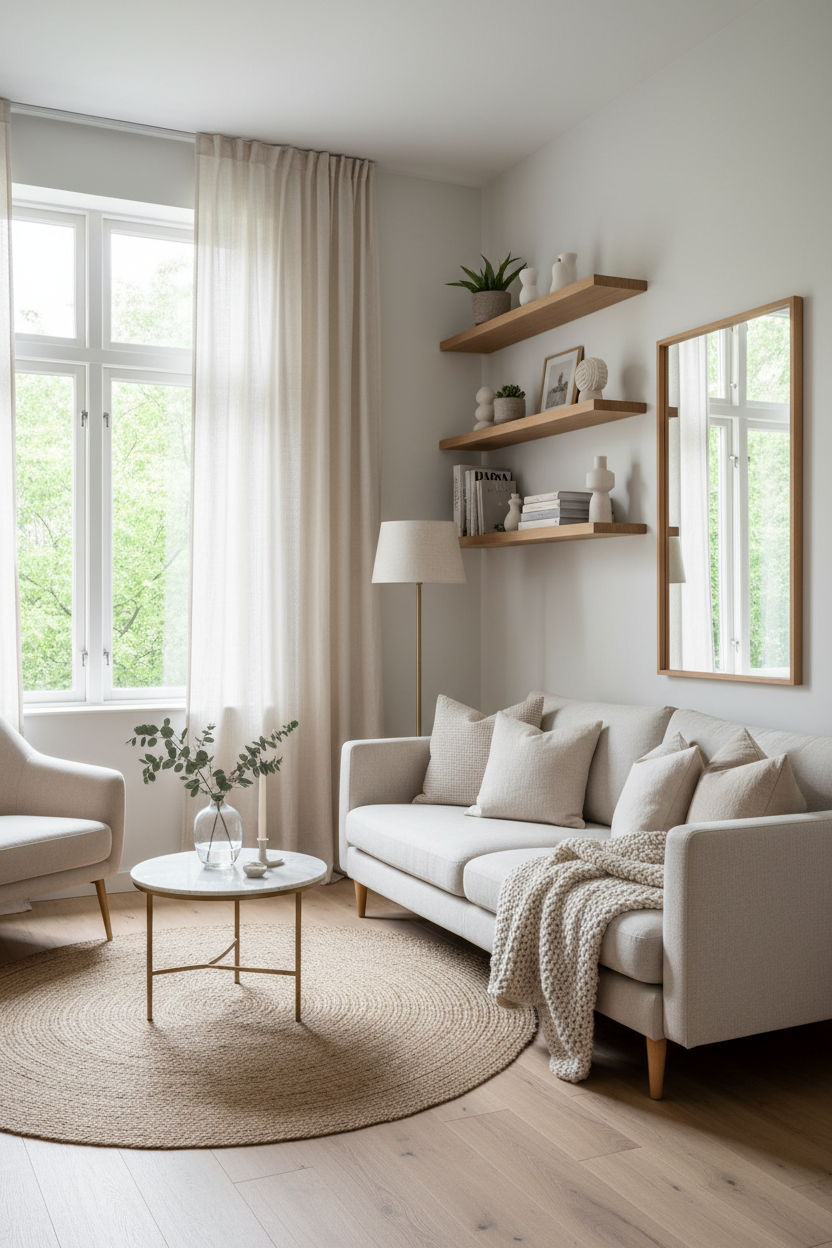
Place a mirror across from a window to reflect natural light. Choose a frame in warm wood or matte black to keep it feeling cozy rather than cold.
Why this works: reflected light increases brightness and creates the illusion of depth. The room feels airier without changing the layout.
Also use vertical space. Install floating shelves higher on the wall to draw the eye upward. Hang curtains closer to the ceiling rather than directly above the window frame. This makes the walls feel taller and the room more spacious.
6. Keep Surfaces Clear but Styled
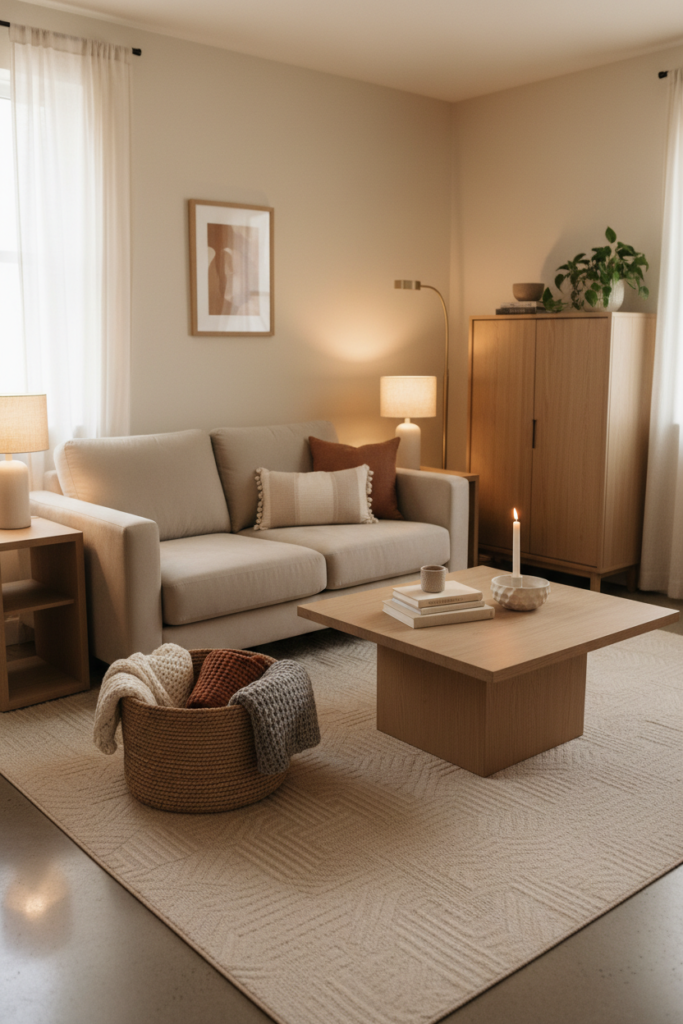
Clutter makes small rooms feel smaller.
Keep coffee tables and side tables mostly clear, but not empty. A small stack of books, a ceramic bowl, or a candle is enough.
Why this works: open surfaces allow the eye to rest. Styled simplicity feels intentional and calm.
Use baskets for hidden storage. A woven basket beside the sofa can hold blankets while adding texture. A slim cabinet with closed storage keeps everyday items out of sight. The goal is balance — not minimal, but controlled.
7. Choose Furniture That Fits the Scale
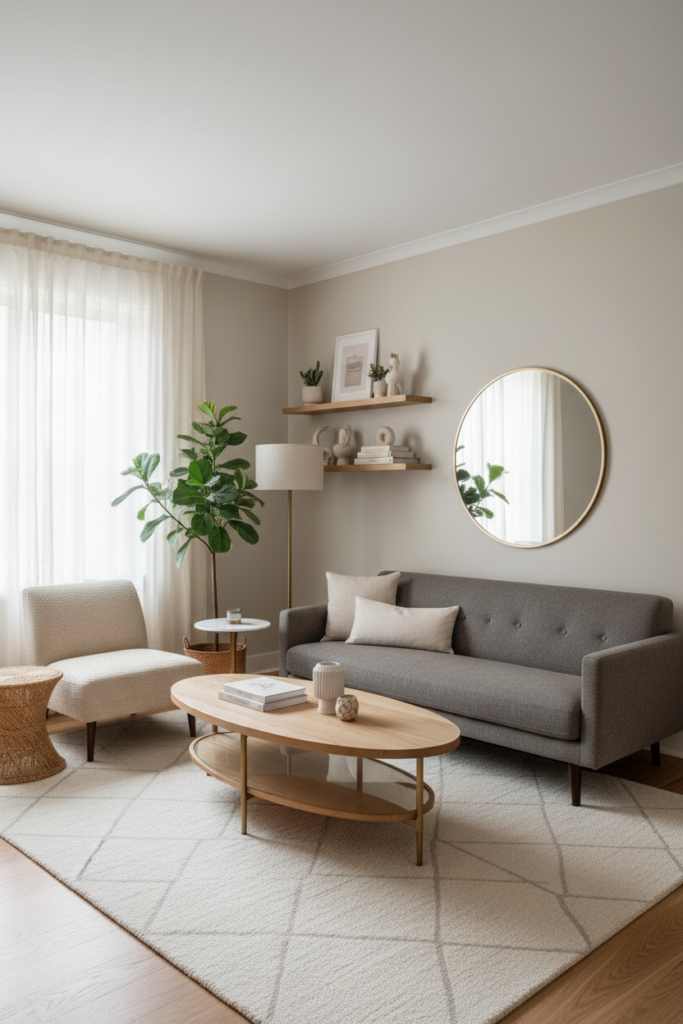
Oversized furniture is one of the biggest challenges in small spaces.
Look for sofas with slim arms and raised legs. Choose round or oval coffee tables to soften sharp edges and improve flow. Avoid bulky side tables that block movement.
Why this works: properly scaled furniture leaves breathing room. Visible floor space makes the room feel larger.
Glass or light wood tables can feel less heavy visually. Even swapping a solid coffee table for one with open legs can make a noticeable difference.
Pay attention to proportion. A small room can still feel cozy and layered, but each piece should serve a purpose.
Common Mistakes to Avoid
Pushing all furniture against the walls
This often makes the center feel empty and awkward. Instead, create a defined seating area.
Using only one light source
A single ceiling light flattens the room. Layer lighting for depth and warmth.
Choosing too many small decor pieces
Many tiny items can feel cluttered. Fewer, slightly larger pieces create a calmer look.
Ignoring the rug size
A rug that’s too small breaks up the space. Go slightly larger than you think you need.
Adding dark colors without balance
Dark tones can feel cozy, but balance them with light textiles and warm lighting so the room doesn’t feel closed in.
A Small Room Can Feel Like a Retreat
A small living room doesn’t have to feel limiting.
With the right layout, soft lighting, layered texture, and thoughtful styling, it can feel both spacious and deeply cozy. The key is intention — choosing pieces that fit, using light wisely, and keeping the space balanced.
You don’t need a bigger room to create comfort. You just need to design the one you have with care.
Small changes can shift the entire mood of your space. And when your living room feels warm and open at the same time, it becomes a place you truly enjoy coming home to.

Hi, I’m Livia. A mom who believes that a house becomes a home through the little things.
Over time, I started to understand what truly makes a space feel cozy, comfortable, and safe. Little by little, I transformed my own home into a place where my family and I genuinely love to be, a space that feels calm, warm, and ours.
Here, I share simple ideas and thoughtful inspiration to help you turn your home into your favorite place in the world too.