How to Add Warmth to an All-White Room
This post may contain affiliate links, which means we may earn a small commission at no extra cost to you. We may also display third-party ads and include links to partner brands or shops. Some images may be created or enhanced using AI or sourced from licensed platforms. All opinions are our own.
All-white rooms are beautiful in photos.
They look clean, airy, and calm. But in real life, they can sometimes feel flat or even cold. When every wall, sofa, and curtain is white, the space may lack depth and personality.
The good news is you do not need to repaint or replace everything. With a few thoughtful adjustments, you can keep the light, fresh feeling of white while adding warmth, texture, and comfort.
Here are six practical ways to warm up an all-white room without losing its brightness.
1. Layer Different Shades of White and Cream
Not all whites are the same.
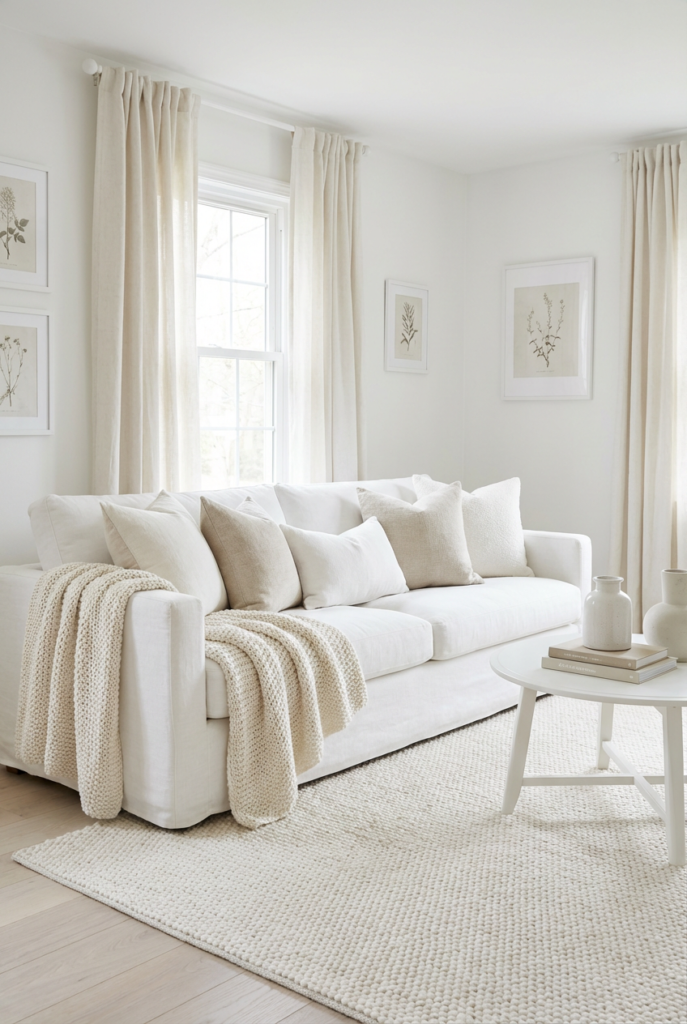
If your walls are bright white, try bringing in softer tones like ivory, cream, or warm off-white through textiles. Swap stark white throw pillows for ones in oatmeal or soft ecru. Add a cream knit blanket over the arm of the sofa.
This works because subtle variation creates depth. When light hits slightly different tones, you see gentle shadows and dimension instead of one flat surface.
A cream linen curtain against a white wall feels softer. An ivory rug layered over pale flooring adds quiet contrast without disrupting the neutral palette.
2. Introduce Warm Wood Tones
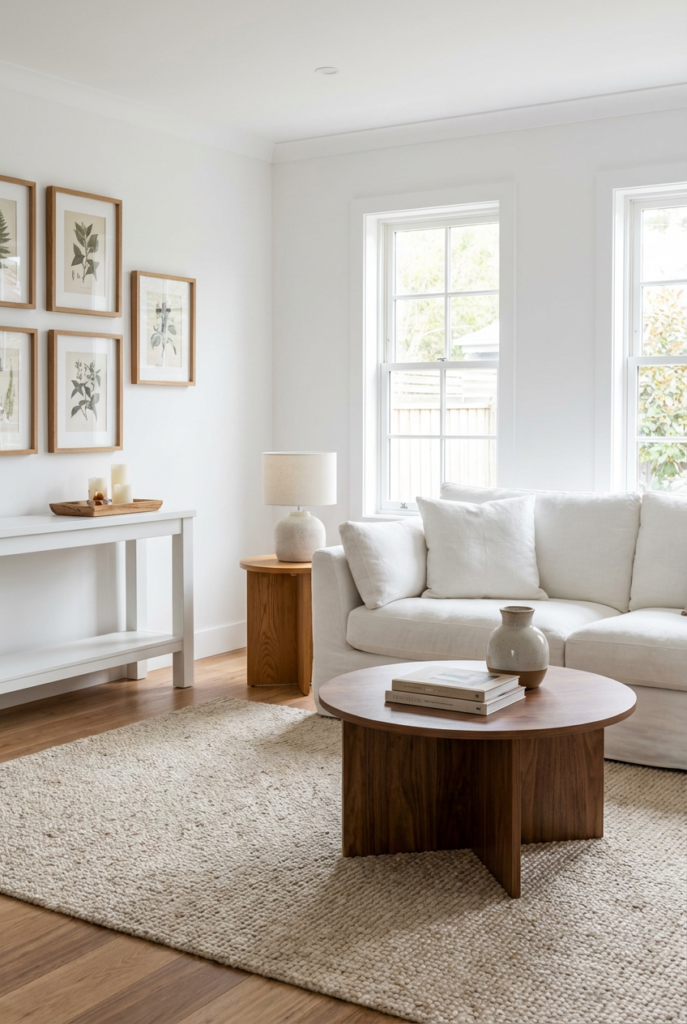
Wood is one of the fastest ways to warm up a white room.
Add a wooden coffee table, a set of picture frames, or even a simple wood tray on a console. Look for tones like oak, walnut, or light pine rather than gray-stained finishes.
If you already have wood furniture elsewhere in your home, consider swapping a piece into the white room. A warm wood side table next to a white sofa instantly makes the space feel grounded.
Wood works because its natural grain and undertones bring in warmth that white alone cannot provide. It adds a sense of balance and comfort.
3. Use Texture to Create Softness
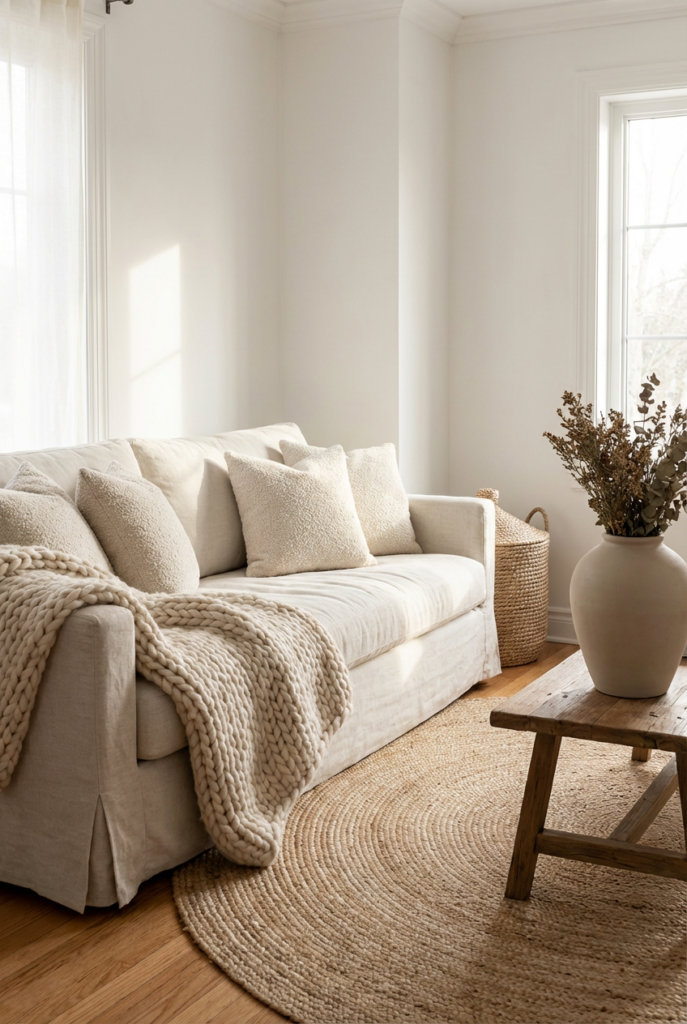
An all-white room can feel sterile if every surface is smooth.
Layer in texture through fabrics and materials. Add a chunky knit throw, a boucle pillow, or a woven basket. Choose a wool or jute rug instead of something flat and synthetic.
Even subtle textures make a difference. A linen slipcover has a relaxed, slightly rumpled look that feels inviting. A ceramic vase with a matte finish adds softness compared to glossy decor.
Texture works because it catches light differently. The tiny shadows created by woven fibers and natural materials add warmth without changing color.
4. Warm Up the Lighting
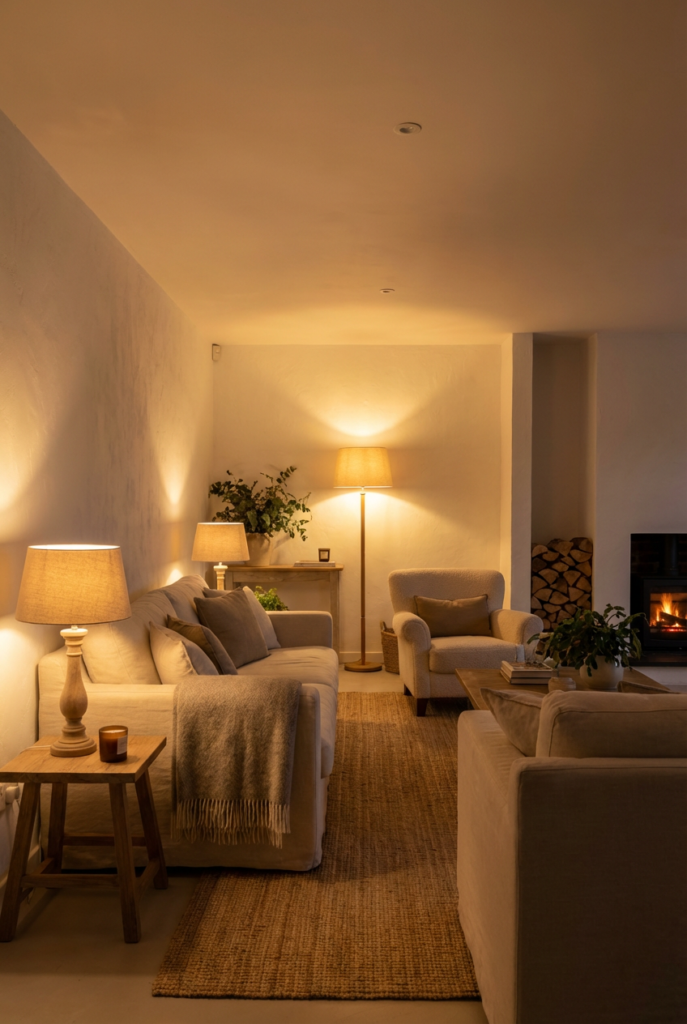
Lighting has more impact than you might expect.
If your room feels cold, check the bulbs. Cool white light can make even cream tones look stark. Replace bulbs with warm ones around 2700K for a soft, golden glow.
Add layers of light instead of relying on one overhead fixture. Use table lamps with fabric shades, a floor lamp in a corner, or even a small wall sconce.
In the evening, turn off the main light and switch on two or three lamps. The room will feel instantly cozier, and the white walls will look warmer and more inviting.
5. Bring in Earthy, Muted Accents
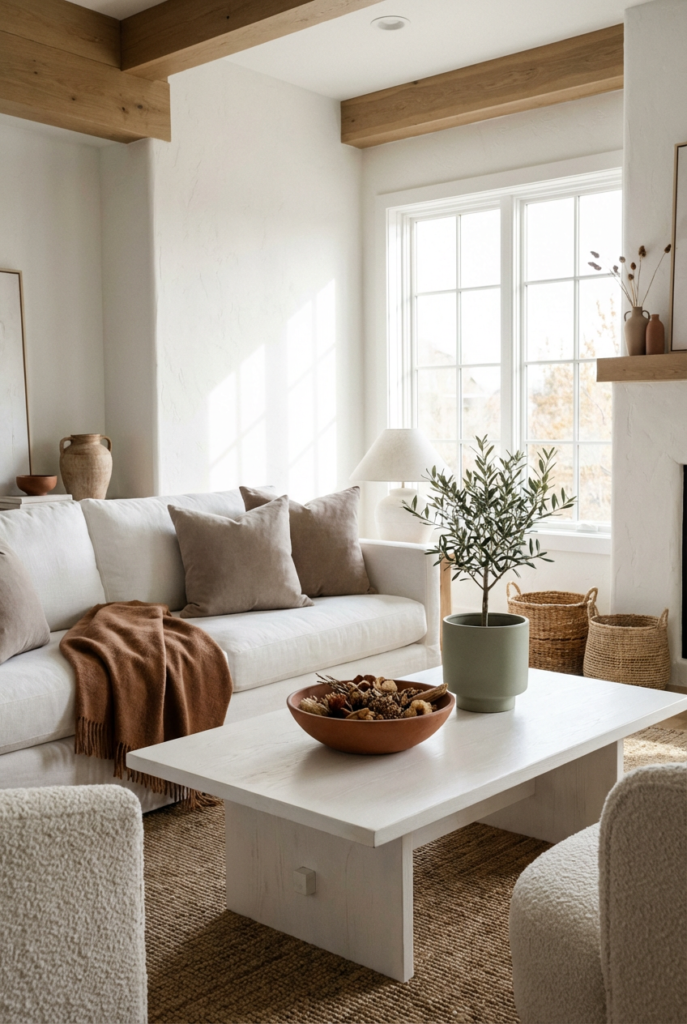
You do not have to introduce bold color to add warmth.
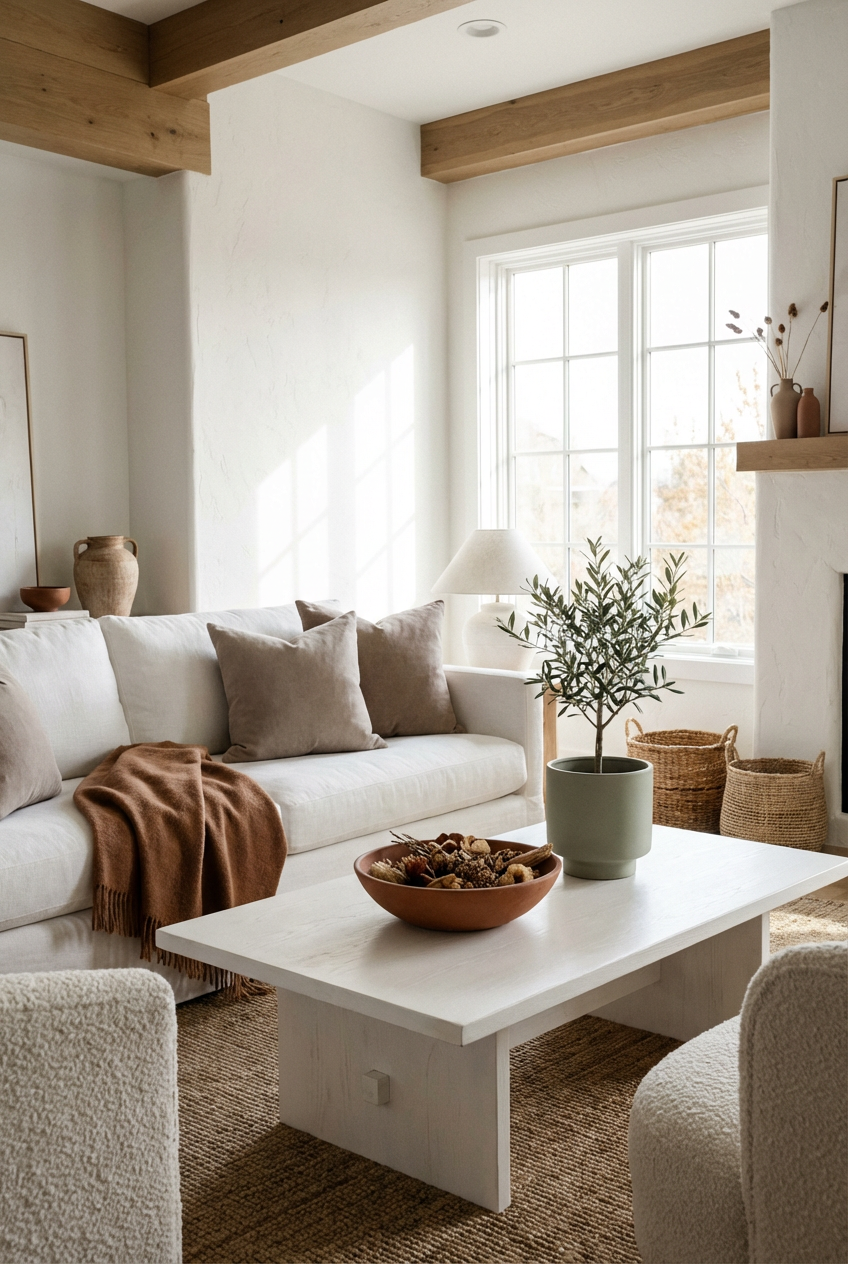
Try muted earth tones in small doses. Think soft taupe pillows, a rust-toned throw, or a sage green plant pot. Keep the colors natural and slightly dusty rather than bright.
A simple example is placing a terracotta bowl on a white coffee table. The subtle warmth of the clay stands out beautifully without overwhelming the space.
These accents work because they gently break up the white while still feeling calm and cohesive.
6. Add Natural Elements for Life and Movement
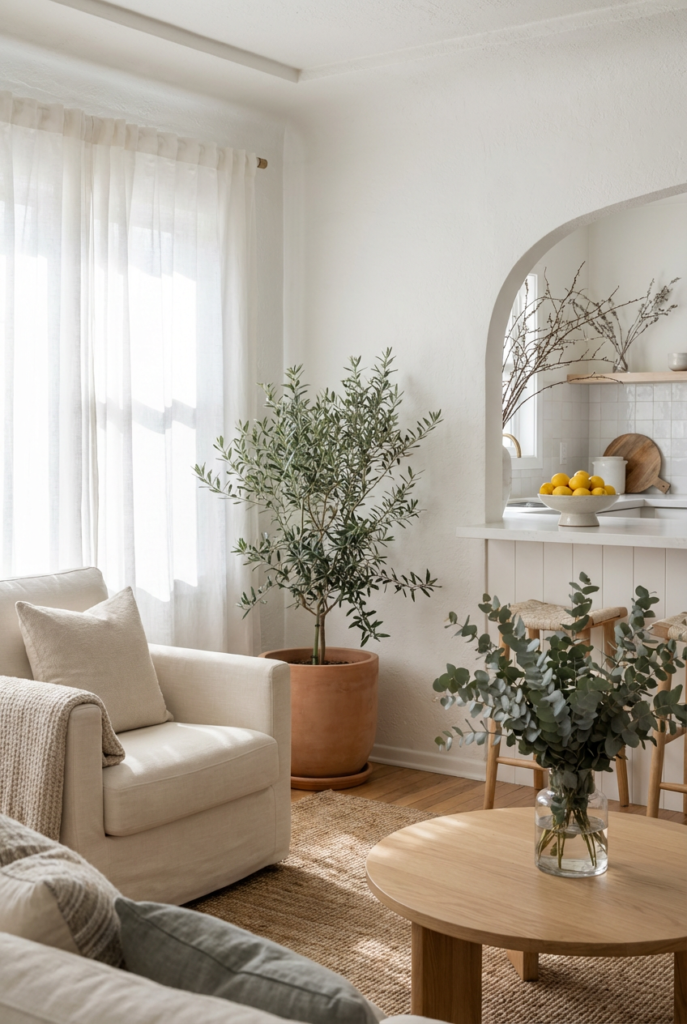
White rooms can feel static.
Bring in elements that feel alive. A potted olive tree in the corner, a vase of eucalyptus on the dining table, or a bowl of fresh lemons in the kitchen adds softness and movement.
Choose greenery with muted, gray-green leaves rather than bright neon tones. The softer shades blend better with white interiors.
Natural elements warm up a space because they add organic shape and subtle color variation. They make the room feel lived-in and fresh rather than staged.
7. Style in Small, Grounded Groupings
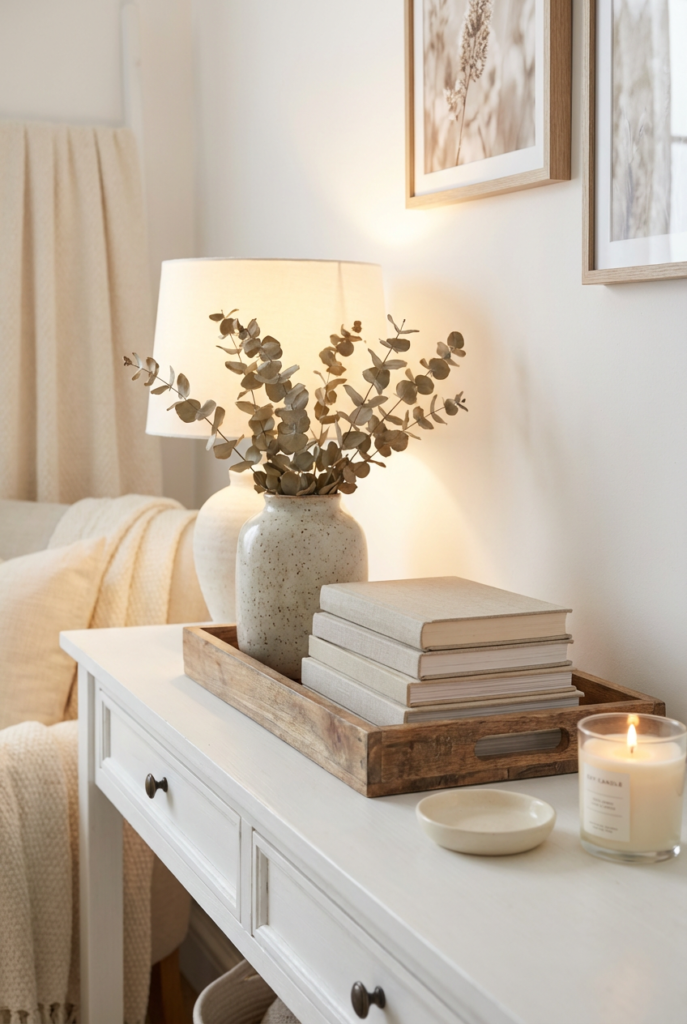
Large white surfaces can feel empty if they are not styled thoughtfully.
Create small vignettes instead of scattering decor everywhere. On a white console, group a wooden tray, a ceramic vase, and a stack of neutral books together.
On a white nightstand, pair a lamp with a linen shade and a small bowl or framed photo. Keep groupings tight and intentional.
This works because it gives the eye a focal point. The room feels layered and cozy rather than bare.
Common Mistakes to Avoid
Avoid adding too many bright colors at once. A sudden mix of bold tones can disrupt the calm feeling that makes white rooms appealing in the first place.
Do not rely only on metallic accents for warmth. While brass and gold can help, they work best when paired with wood and soft fabrics.
Be careful with overly cool gray decor. In an all-white room, cool grays can make the space feel colder instead of warmer.
Do not overcrowd the space with decor. Warmth comes from layers and texture, not from filling every surface.
Finally, do not ignore lighting. Even the most beautifully styled white room will feel uninviting under harsh, cool light.
A White Room That Feels Like Home
An all-white room does not have to feel stark.
With layered shades of cream, warm wood tones, textured fabrics, and soft lighting, you can keep the brightness while adding comfort and depth.
Start small. Swap a pillow. Add a wooden tray. Change a light bulb. Notice how the room shifts.
When you focus on warmth through texture, tone, and light, your white space can feel calm, welcoming, and beautifully lived-in.

Hi, I’m Livia. A mom who believes that a house becomes a home through the little things.
Over time, I started to understand what truly makes a space feel cozy, comfortable, and safe. Little by little, I transformed my own home into a place where my family and I genuinely love to be, a space that feels calm, warm, and ours.
Here, I share simple ideas and thoughtful inspiration to help you turn your home into your favorite place in the world too.