Fresh Flower Arrangement Guide for Beginners
This post may contain affiliate links, which means we may earn a small commission at no extra cost to you. We may also display third-party ads and include links to partner brands or shops. Some images may be created or enhanced using AI or sourced from licensed platforms. All opinions are our own.
Fresh flowers instantly brighten a room.
But arranging them can feel intimidating. You bring home a bouquet, place it in a vase, and somehow it looks uneven, crowded, or flat.
The good news is that beautiful flower arrangements follow simple structure rules. Once you understand proportion, height, and balance, you can create elegant arrangements every time.
This beginner-friendly guide gives you clear formulas and measurements so your flowers look intentional, not accidental.
Step 1: Choose the Right Vase Size
The vase determines the shape.
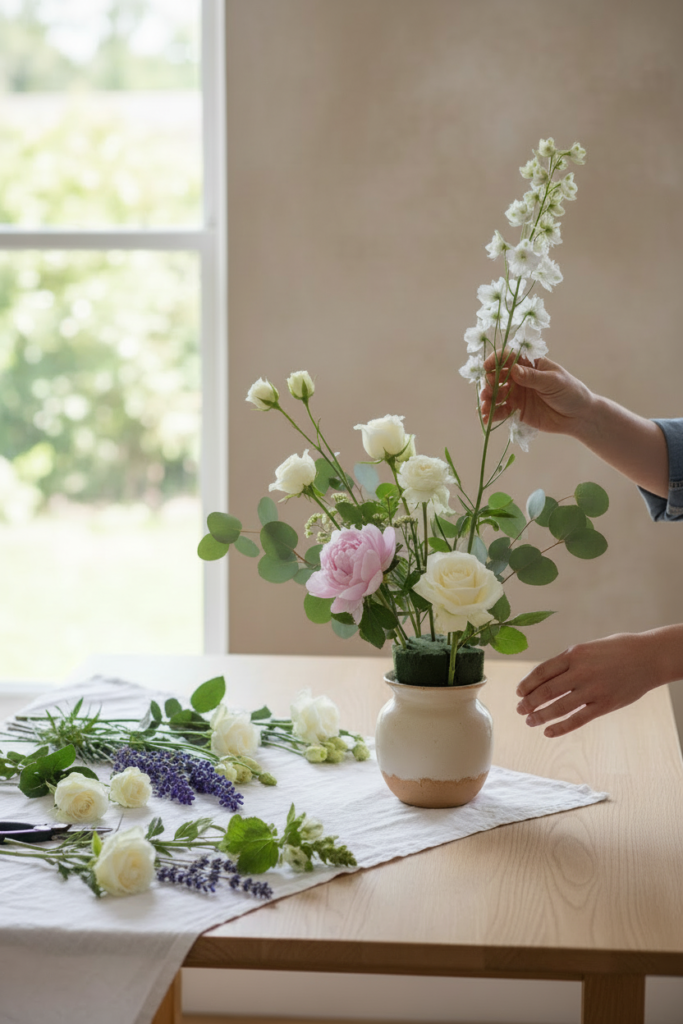
As a general rule, the vase height should be about one third to one half the total height of the finished arrangement.
Example:
If you want a 18-inch tall arrangement, choose a vase between 6 and 9 inches tall.
For compact table arrangements, keep the total height under 12 inches so it does not block conversation.
Wide-mouth vases create fuller shapes. Narrow-neck vases create upright, minimal shapes.
Choose the vase before trimming stems so you can measure properly.
Step 2: Trim Stems to the Correct Proportion
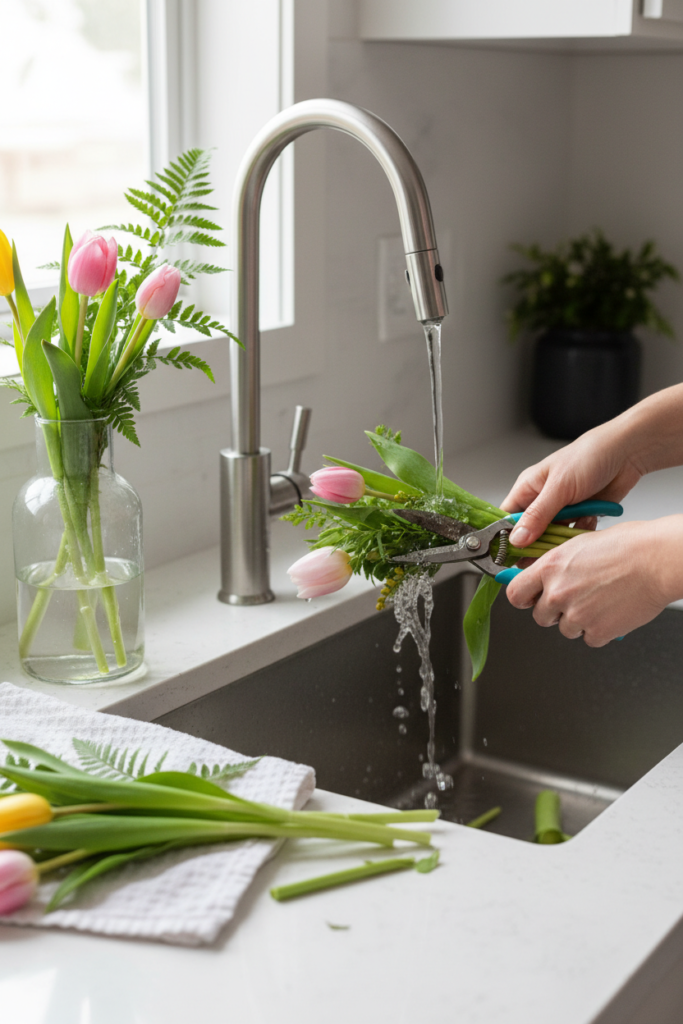
A common beginner mistake is leaving stems too long.
Use this basic proportion rule:
The flowers should be approximately 1.5 times the height of the vase.
If your vase is 8 inches tall, stems should extend about 12 inches above the rim.
Cut stems at a 45-degree angle under running water. This increases water absorption and extends freshness.
Trim 1 inch off stems every two to three days to keep blooms vibrant.
Step 3: Follow the 3-Layer Structure Formula
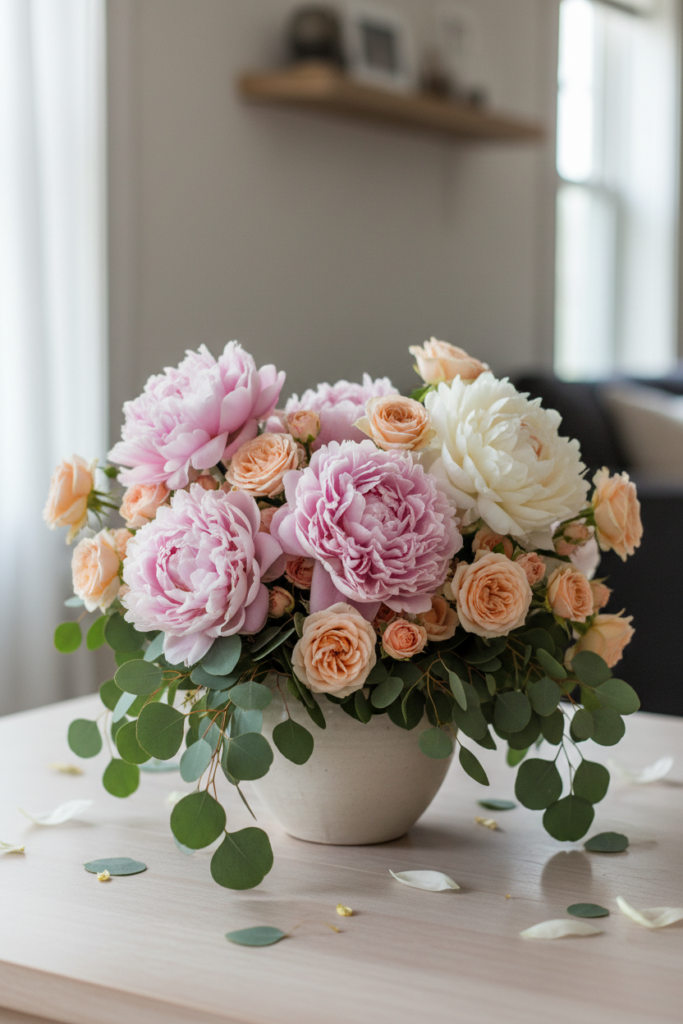
Professional arrangements follow a simple layering system:
1 greenery base
1 focal flower
1 filler or secondary flower
Greenery forms the outer shape and supports structure.
Focal flowers are the largest blooms and anchor the arrangement.
Filler flowers add softness and volume.
For example:
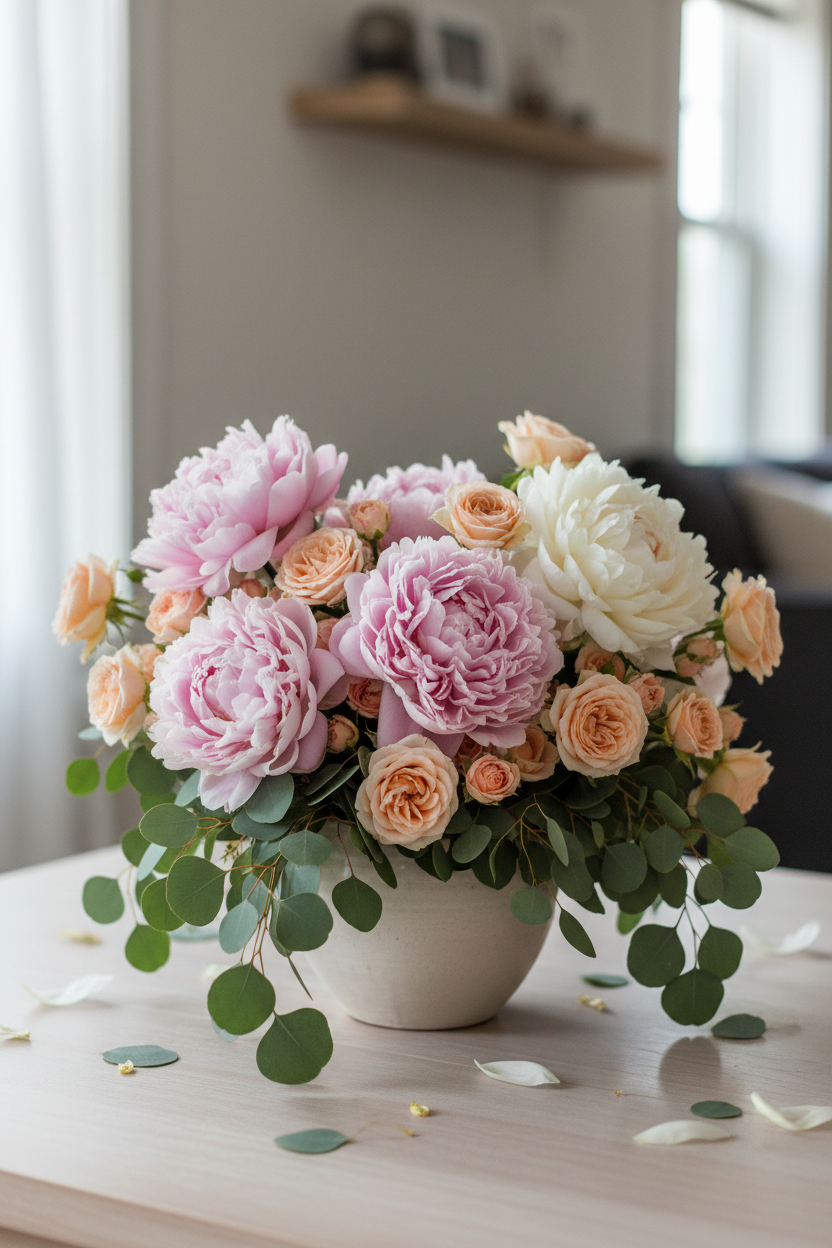
Eucalyptus as greenery
Peonies as focal flowers
Spray roses or baby’s breath as filler
Use roughly:
40 percent greenery
40 percent focal blooms
20 percent filler
This ratio keeps the arrangement balanced.
Step 4: Create a Dome or Triangle Shape
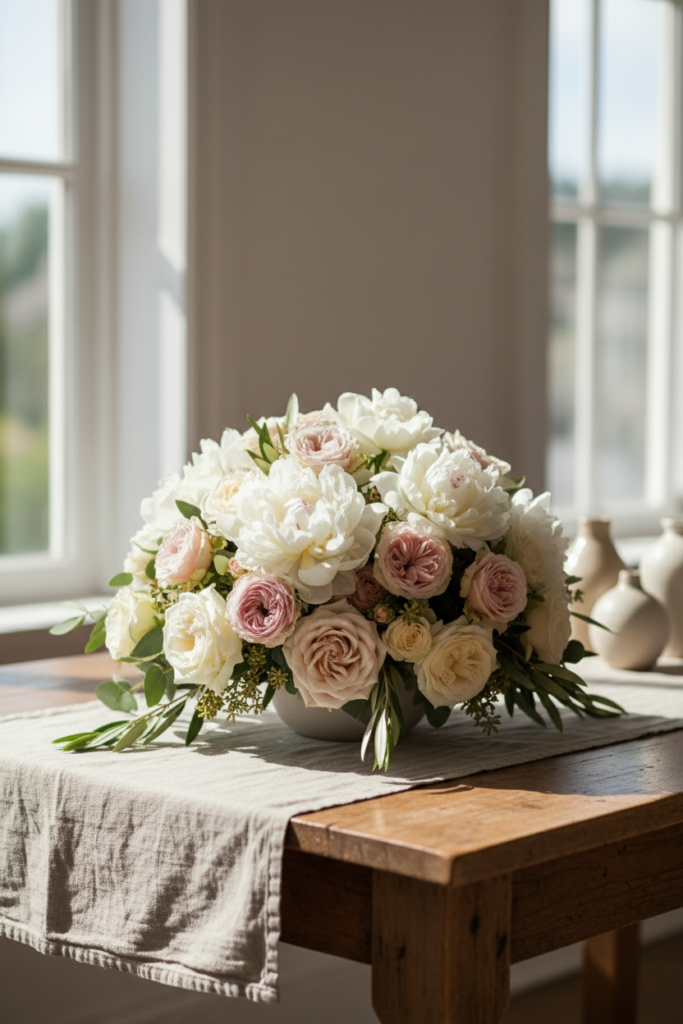
Shape matters more than variety.
Most beginner-friendly arrangements look best in one of two shapes:
Rounded dome
Soft triangular form
For a dome, trim outer stems slightly shorter than center stems.
For a triangular shape, place one slightly taller bloom in the center and angle others outward gradually.
The tallest stem should be no more than 1.5 times the vase height.
Avoid one bloom standing far above the rest. It disrupts balance.
Step back and view the arrangement from multiple angles before finalizing.
Step 5: Limit Color to 2–3 Tones
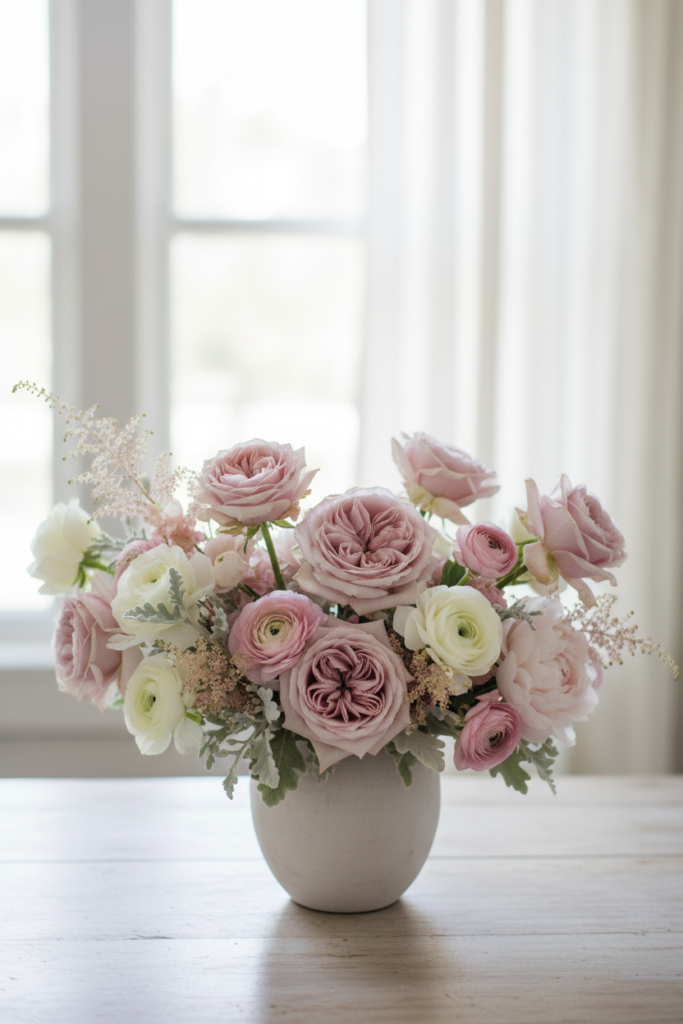
Too many colors can make arrangements look busy.
Choose:
1 dominant color
1 secondary color
1 optional neutral
For example:
White + soft pink
Blush + sage green
Cream + pale yellow
Neutral greenery counts as one of the tones.
Limiting color keeps the arrangement cohesive and easier to style within your home.
If unsure, choose monochromatic tones in varying shades for a refined look.
Step 6: Space Blooms Strategically
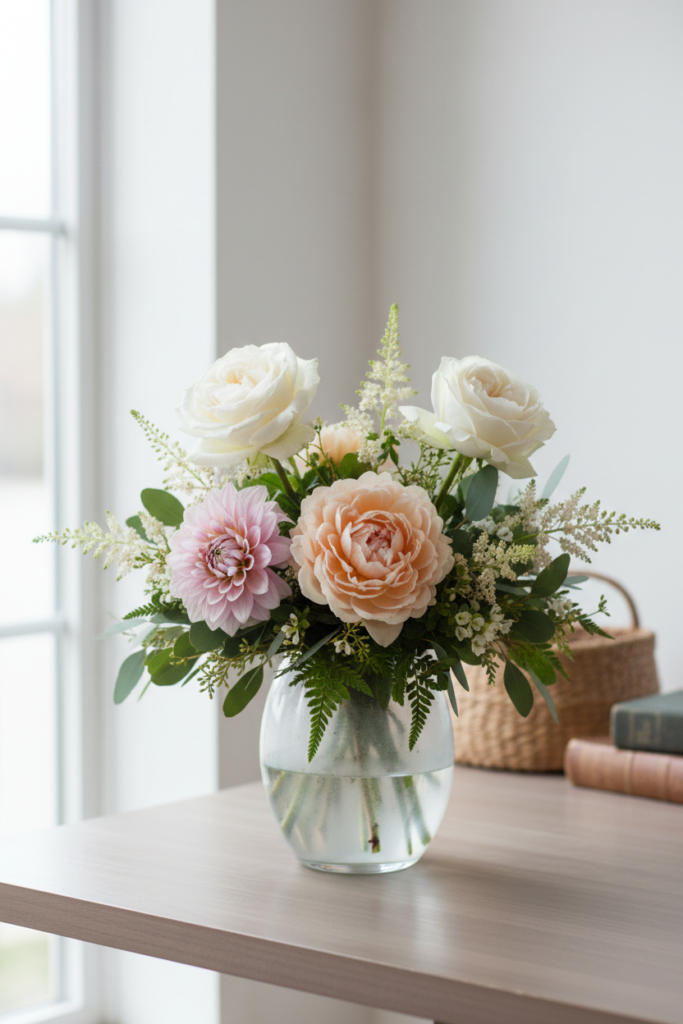
Avoid crowding.
Place focal flowers evenly spaced rather than clustered together.
A helpful trick:
Imagine a triangle within the arrangement and position your three largest blooms at each triangle point.
This distributes weight visually.
Turn the vase as you place each stem to ensure the arrangement looks balanced from all sides.
If it will sit against a wall, you can make the back slightly flatter.
Step 7: Keep Water Clean and Minimal
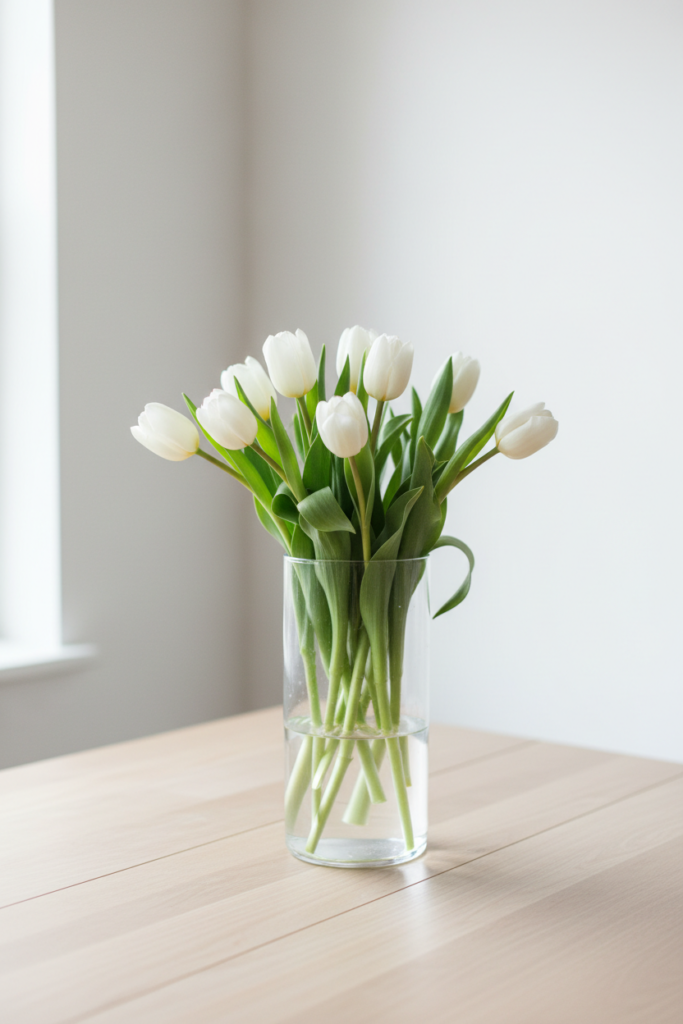
Fill the vase with water covering about one third to one half of stem length.
Remove any leaves that fall below the water line to prevent bacteria growth.
Change water every two days.
Clean water keeps arrangements looking fresh and prevents unpleasant odors.
Simple Beginner Flower Combinations
Classic and safe options:
White tulips in clear glass
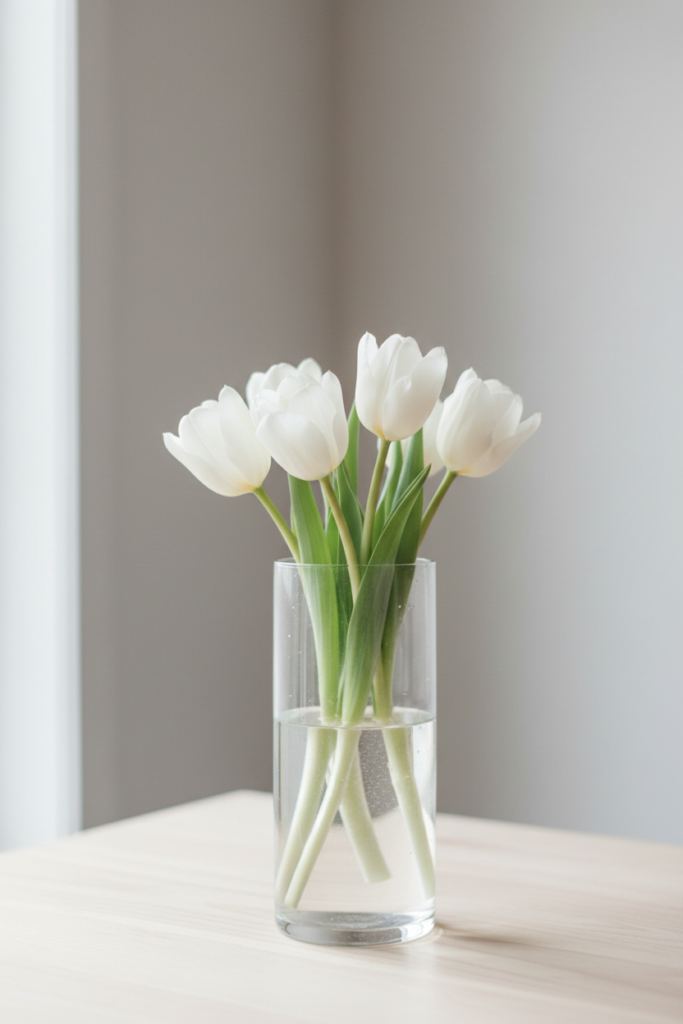
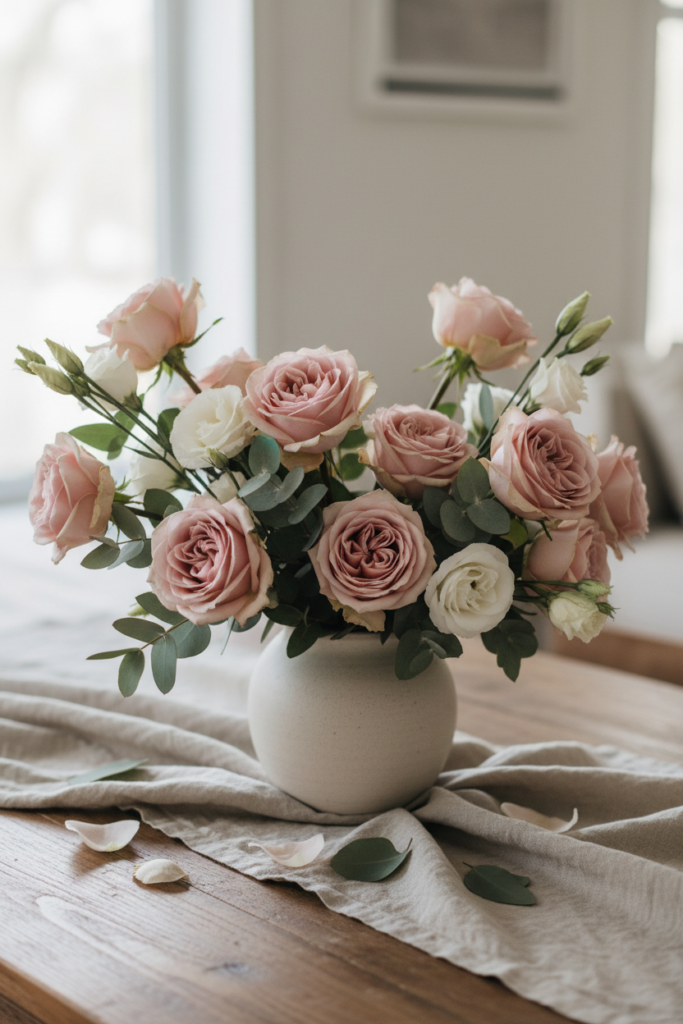
Blush roses with eucalyptus
Yellow daffodils in a ceramic vase
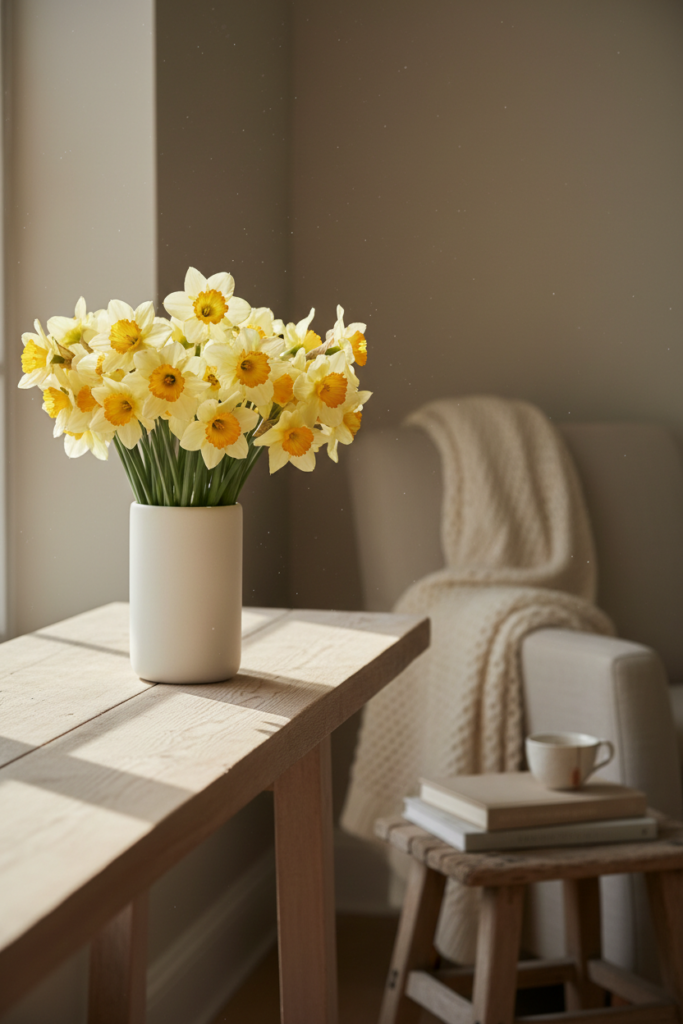
Mixed grocery store bouquet edited down to 2 main flower types
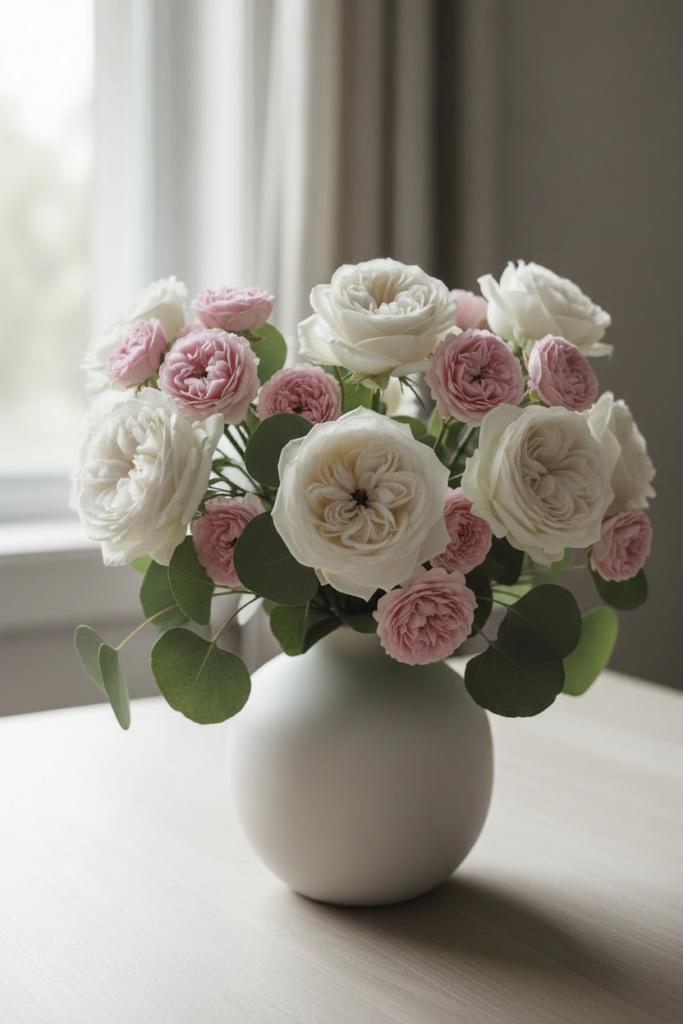
Editing is important.
Remove one or two flower varieties from a mixed bouquet if it feels chaotic.
Less variety often looks more refined.
Common Mistakes
Using a vase that is too small
Overcrowded stems look compressed and unstable.
Leaving stems too long
Tall stems without structure look unbalanced.
Using too many flower types
Stick to 2 to 3 varieties maximum.
Ignoring negative space
Allow small gaps between blooms so they can breathe.
Forgetting greenery
Greenery builds shape and prevents the arrangement from looking flat.
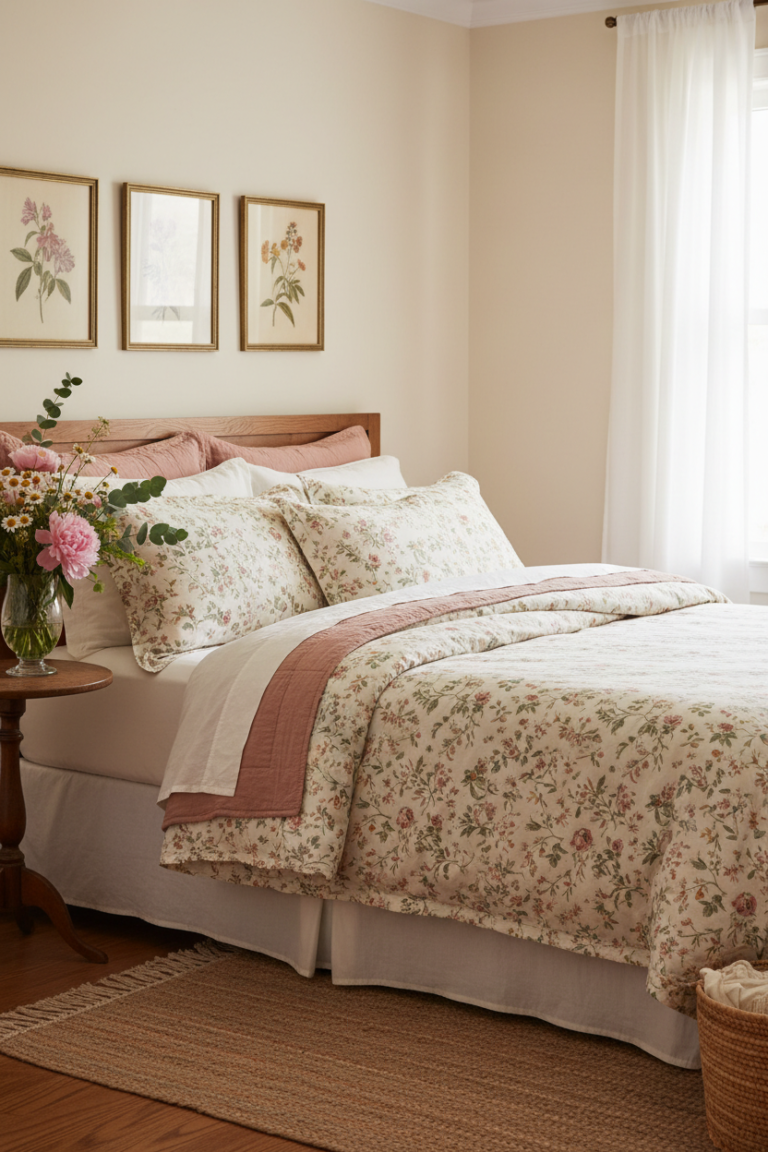
Pro Tip for a Cozier Look
Use warm, textured vessels instead of glossy ones.
Ceramic, stoneware, or matte glass vases soften the overall look and complement cozy interiors.
Place arrangements near natural light during the day and beside a warm lamp in the evening.
Soft lighting enhances petal texture and makes colors feel richer.
Fresh flowers plus warm light create instant atmosphere.
A Simple Formula That Always Works
Choose the right vase.
Trim to 1.5 times vase height.
Follow the 40–40–20 layering ratio.
Limit colors to 2–3 tones.
Maintain shape and spacing.
With these guidelines, arranging flowers becomes straightforward.
You do not need advanced techniques or expensive blooms.
Just proportion, balance, and restraint.
When styled with intention, even a simple grocery store bouquet can look elegant and beautifully at home.