Designing a Garden Corner for Slow Evenings
This post may contain affiliate links, which means we may earn a small commission at no extra cost to you. We may also display third-party ads and include links to partner brands or shops. Some images may be created or enhanced using AI or sourced from licensed platforms. All opinions are our own.
There is a quiet magic in stepping outside at the end of the day.
The air feels cooler against your skin. The light turns golden, then slowly fades. The sounds shift from daytime movement to evening stillness.
In one corner of the garden, a small chair waits. A lantern glows softly. Leaves move gently in the breeze.
You do not need a large yard to create this feeling.
A thoughtfully designed garden corner can become a place for slow evenings, quiet conversations, and moments that feel unhurried.
Why Outdoor Spaces Matter
Outdoor spaces extend the comfort of your home.
They offer fresh air without leaving your sense of familiarity. Even a small corner can provide emotional space after a full day.
When designed intentionally, a garden corner feels like an outdoor room.
It invites you to sit longer. To look up at the sky. To listen to subtle sounds that often go unnoticed.
A slow evening begins with a place that encourages you to stay.
Choose One Anchoring Seat
Every garden corner needs a focal point.
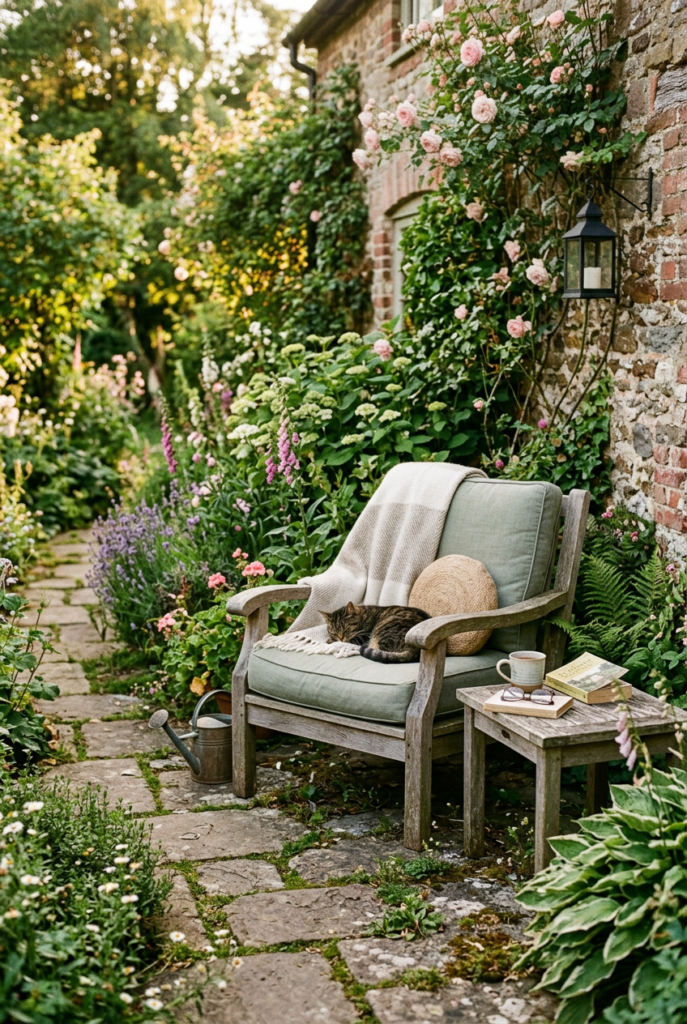
Start with a single comfortable chair, a small bench, or a pair of compact lounge chairs. Position them slightly angled rather than flat against a wall or fence.
Add a simple cushion in a soft neutral shade like warm beige, muted sage, or dusty blue.
When seating is intentional and slightly tucked into the corner, the space feels protected and intimate.
You step into it and immediately feel settled.
Layer Soft Textiles for Warmth
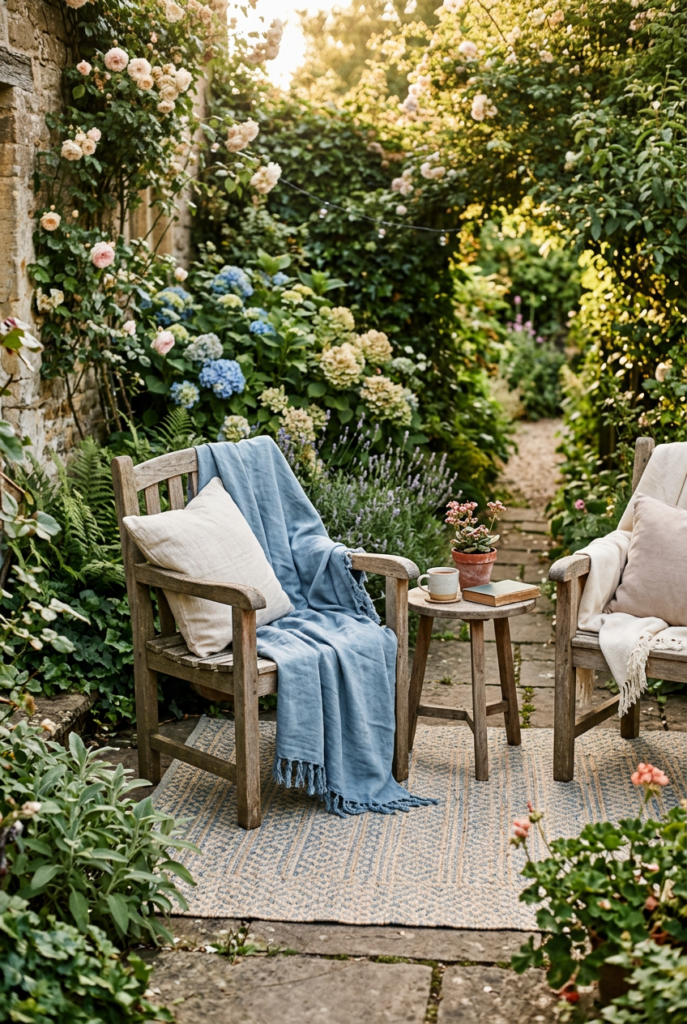
Even outdoors, texture matters.
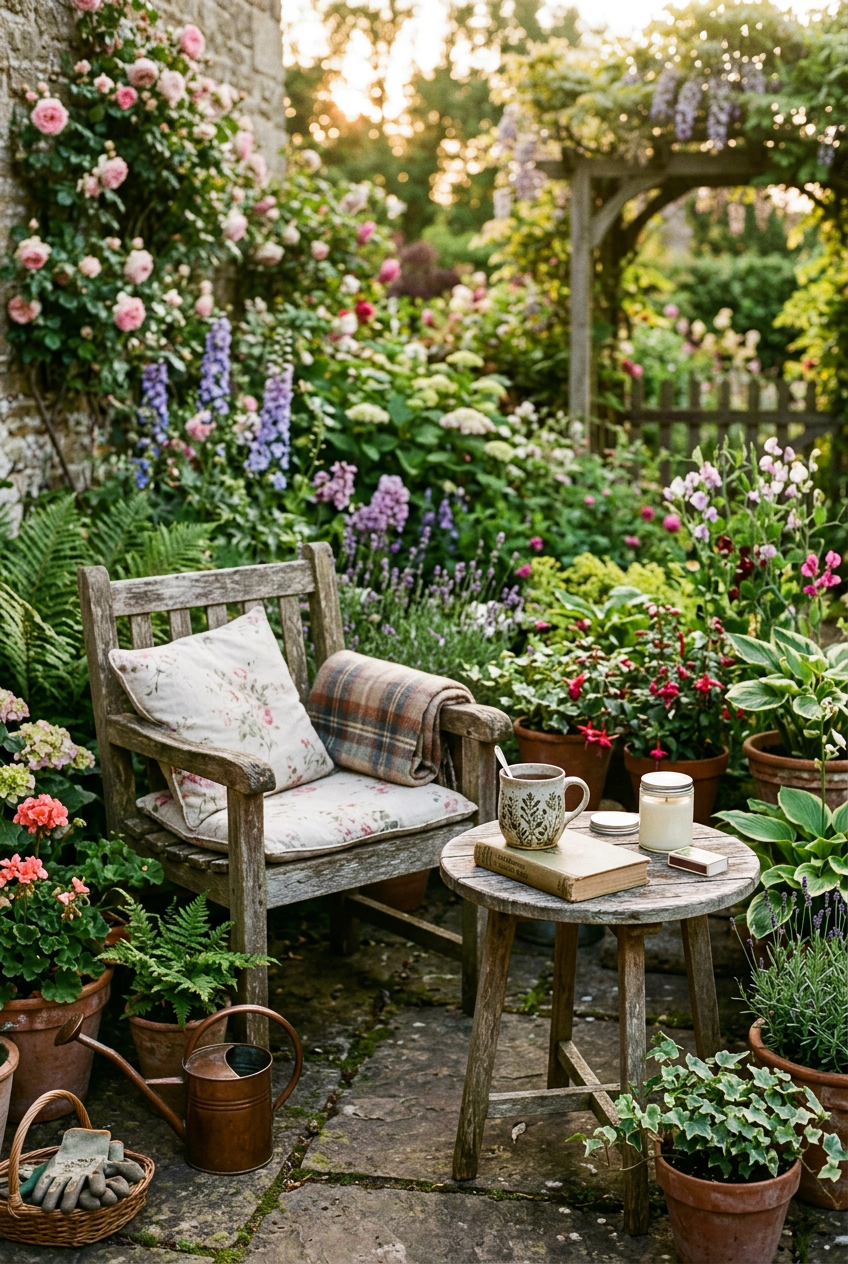
Drape a lightweight throw over the back of a chair. Add a small outdoor rug beneath your feet to soften stone or concrete.
Choose natural textures that echo indoor materials, such as woven fibers, cotton, or linen blends.
As the evening cools, pulling a blanket around your shoulders changes the entire experience.
Soft textiles turn a simple garden spot into a true retreat.
Frame the Corner with Greenery
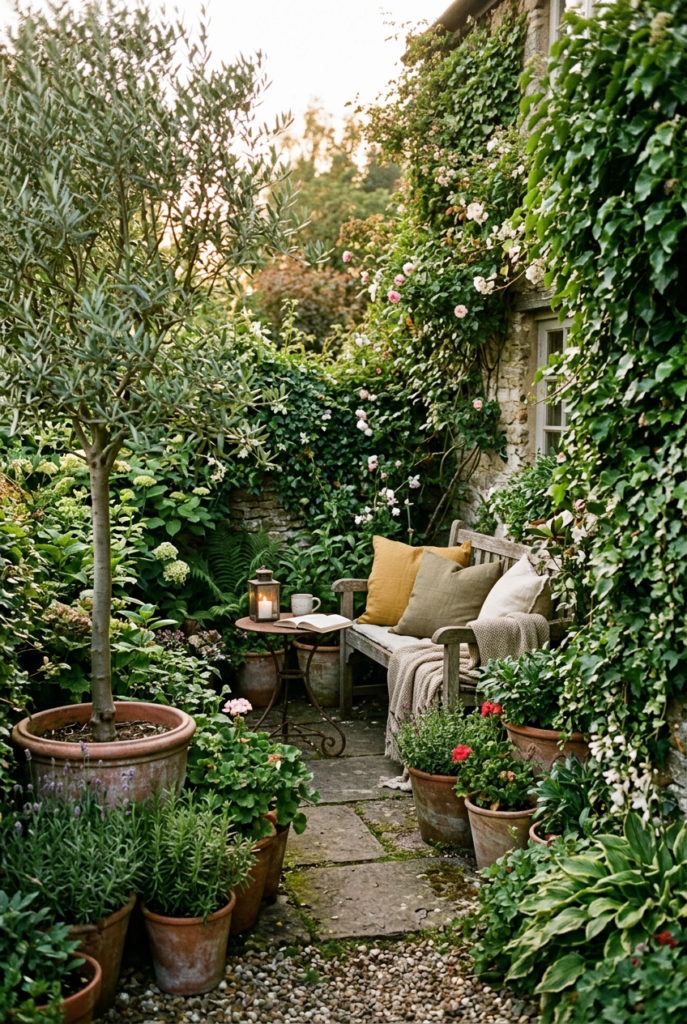
Plants help define the boundaries of the space.
Place taller potted plants behind or beside the seating to create a sense of enclosure. Use trailing plants on a nearby wall or shelf to soften edges.
Choose greenery with varied leaf shapes for gentle visual interest.
The plants should frame the corner, not overwhelm it.
As leaves shift in the breeze and catch the fading light, the space feels alive and peaceful.
Add Low, Warm Lighting
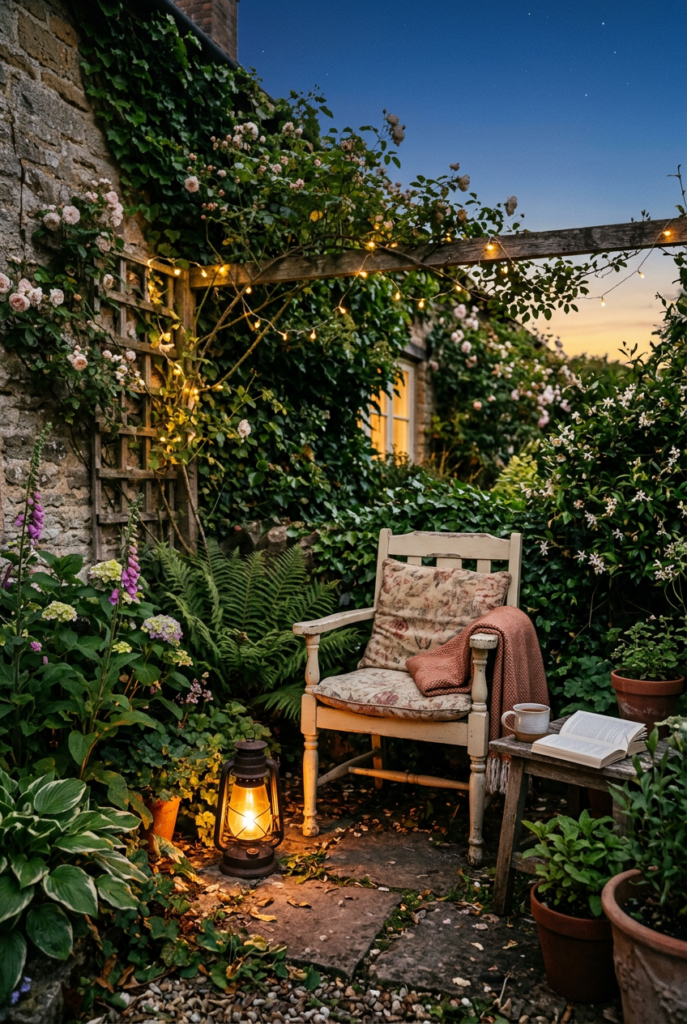
Lighting is what transforms a garden corner at dusk.
Avoid bright overhead fixtures. Instead, layer soft sources.
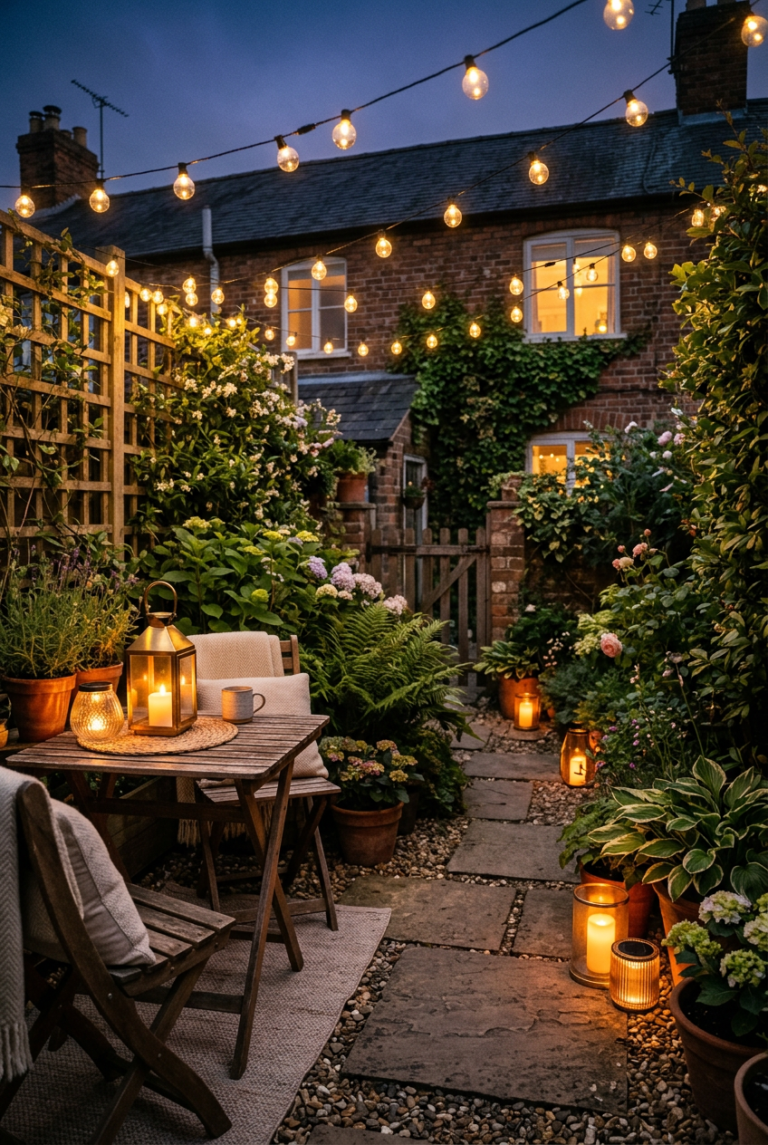
A lantern on the ground, string lights draped loosely overhead, or a small table lamp designed for outdoor use can create a warm glow.
Choose warm white light rather than cool tones.
As darkness settles, the soft illumination makes the corner feel cocooned and inviting.
Include a Small Surface for Ritual
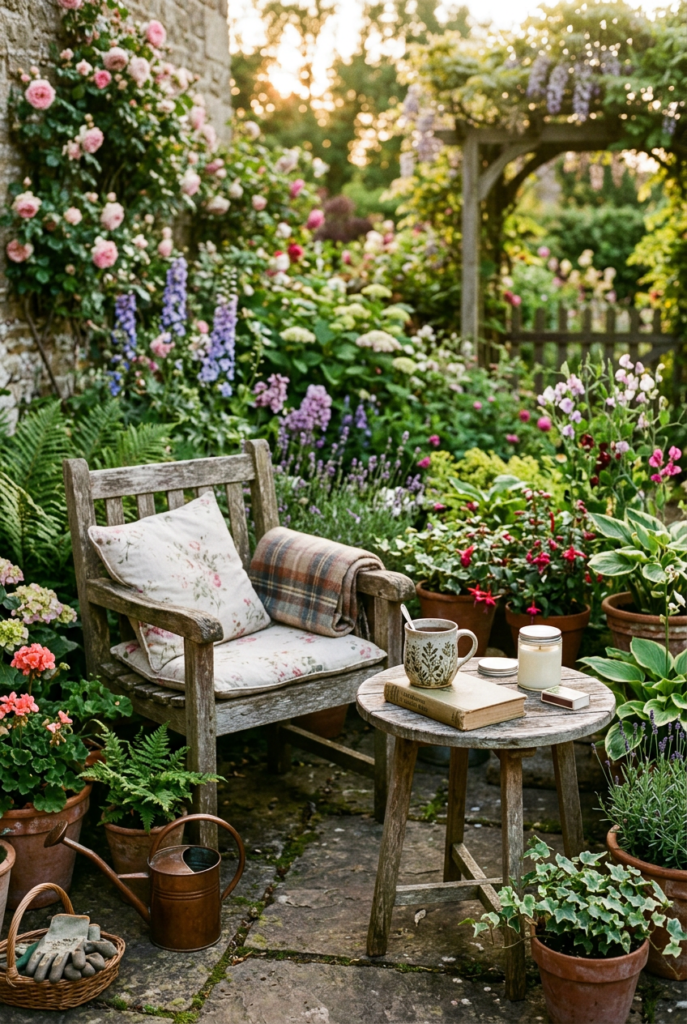
A slow evening often includes a small ritual.
Place a narrow side table or a simple wooden crate next to the chair. Keep it uncluttered.
Use it for a cup of tea, a book, or a small candle.
Having a designated surface makes the corner practical without crowding it.
It signals that this space is meant to be used, not just admired.
Soften Hard Edges with Natural Materials
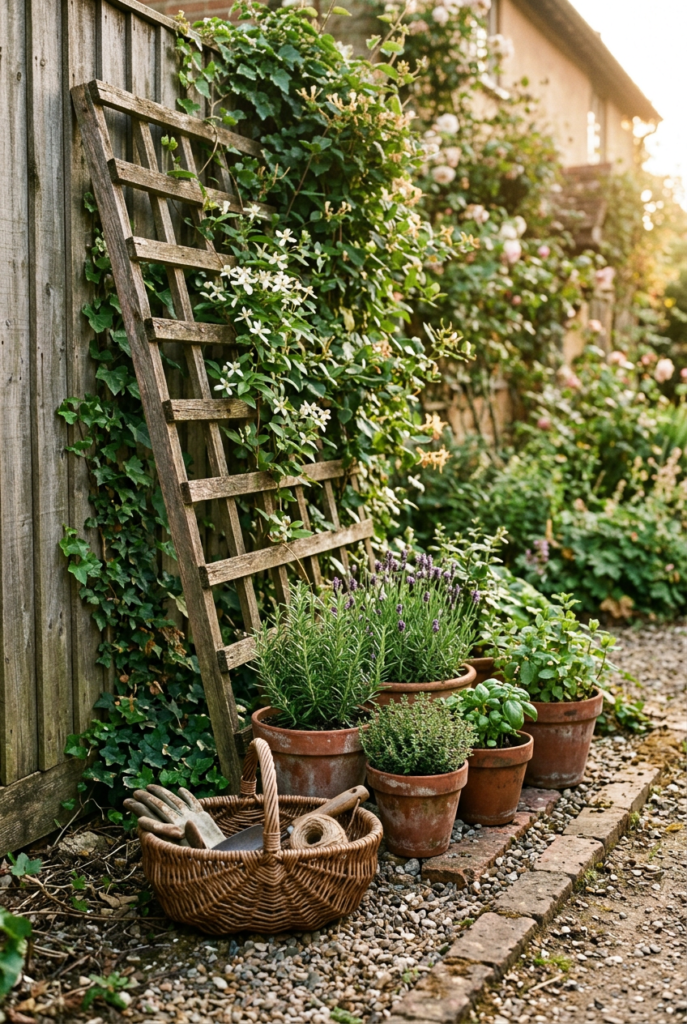
Garden corners often include fences, walls, or hard lines.
Soften them with natural materials.
Lean a wooden trellis against a wall. Use terracotta pots instead of plastic. Choose metal lanterns with warm finishes.
These materials catch evening light in subtle ways.
When the sun sets, wood and clay reflect soft tones that feel grounded and calm.
Create Gentle Privacy
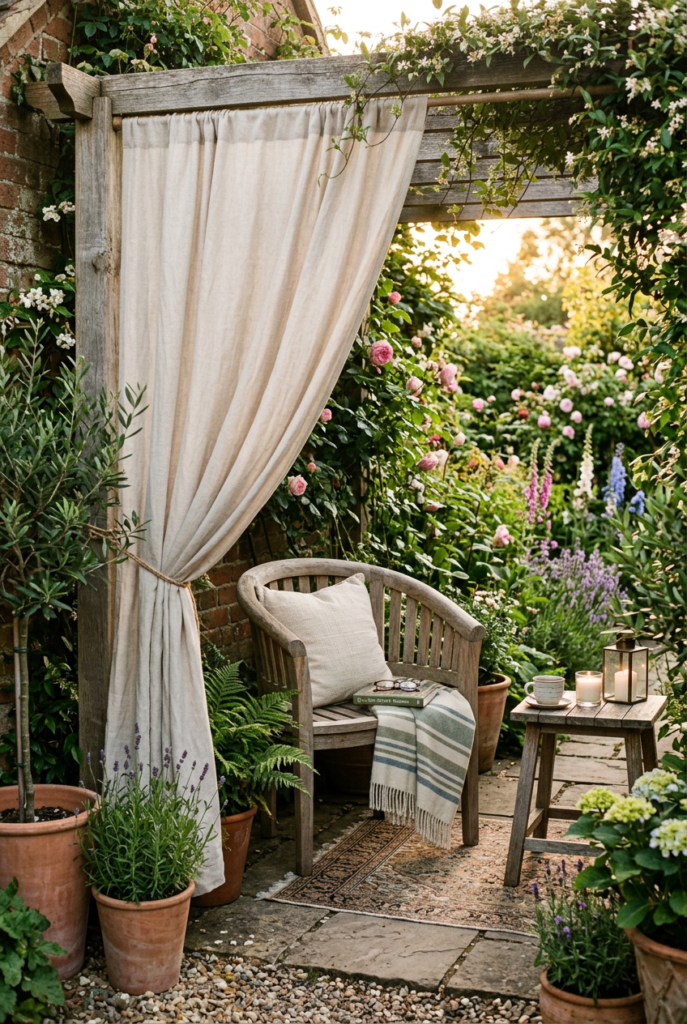
Even a small sense of privacy makes a space feel more intimate.
Use tall planters, a folding screen, or a lightweight outdoor curtain to create a subtle boundary.
Privacy does not have to block the world entirely.
It simply creates a feeling that this corner belongs to you.
When you sit there, you feel slightly tucked away from the rest of the yard.
Common Mistakes to Avoid
Avoid overcrowding the space with too many decorative pieces.
In small corners, simplicity feels more restful than abundance.
Avoid mismatched scale.
Large, bulky furniture can overwhelm a compact area. Choose pieces that leave room to move comfortably.
Avoid harsh lighting.
Bright lights flatten the mood and erase the softness of evening.
Do not ignore comfort.
Thin cushions or hard seating discourage lingering, which defeats the purpose of a slow evening corner.
Making It Work in Small Spaces
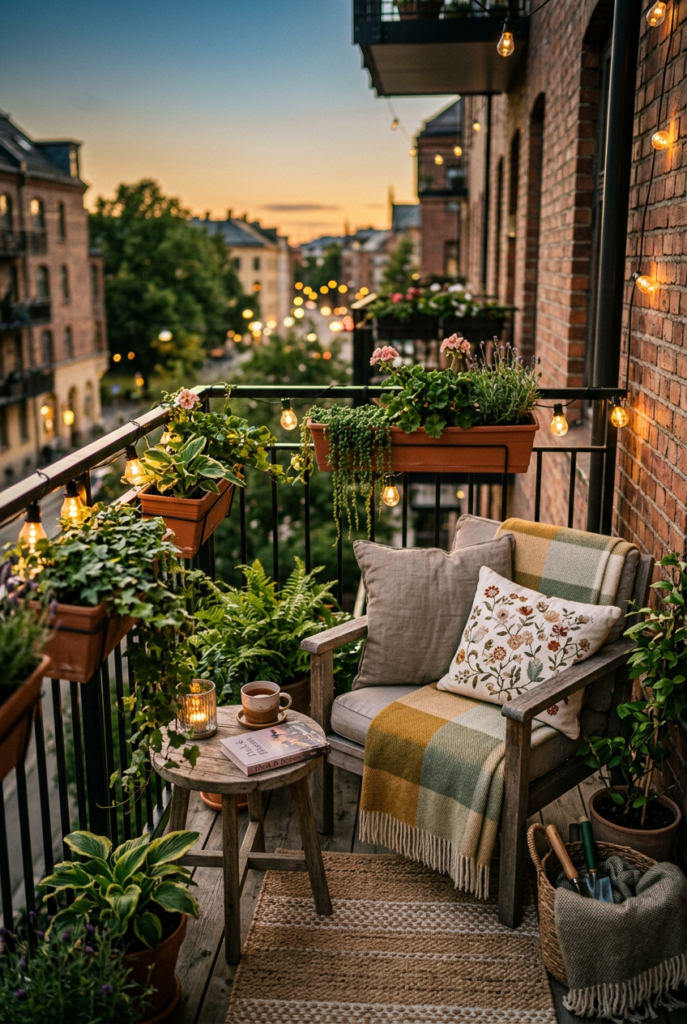
Garden corners are not limited to large yards.
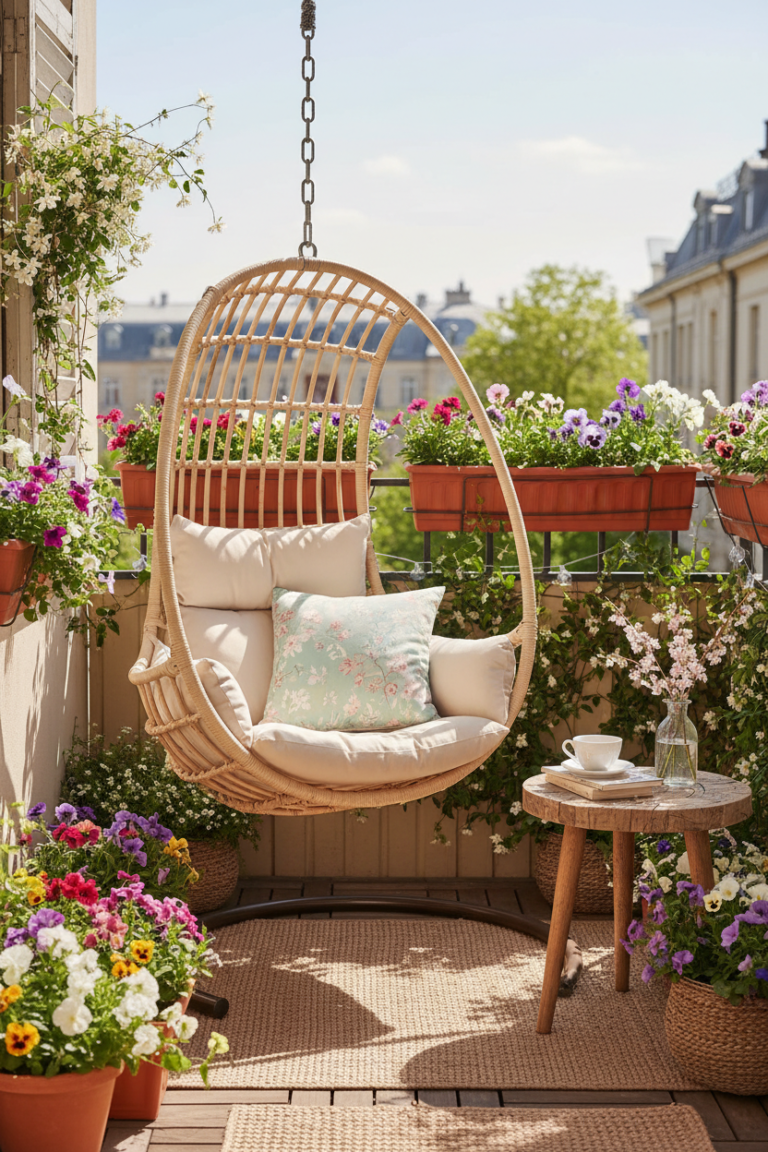
On a balcony, position one comfortable chair near the railing. Add two or three potted plants to create a soft frame.
On a small patio, dedicate one corner to seating and keep the rest open for flow.
Use vertical planters to save floor space.
Even the smallest outdoor area can feel intentional when arranged with care.
Think of it as designing one outdoor room rather than filling every inch.
An Everyday Retreat at the Edge of Home
A garden corner for slow evenings does not need elaborate landscaping or complex design.
It needs comfort, gentle lighting, and a feeling of enclosure.
When you step outside and see a soft chair waiting in the corner, framed by greenery and warmed by low light, the pace of the day shifts naturally.
You sit. You breathe. You listen to the breeze moving through leaves.
In that simple corner, home extends beyond the walls.
And ordinary evenings become something quietly special.