Easter Decor Styling Formula for Living Rooms
This post may contain affiliate links, which means we may earn a small commission at no extra cost to you. We may also display third-party ads and include links to partner brands or shops. Some images may be created or enhanced using AI or sourced from licensed platforms. All opinions are our own.
Decorating your living room for Easter can quickly go in two directions.
Either nothing feels seasonal at all, or the room becomes filled with bright eggs, multiple bunny figurines, and scattered pastel accents that disrupt your cozy base.
This micro-guide gives you a clear, repeatable styling formula so your living room feels subtly festive, elegant, and cohesive. The goal is to layer Easter decor in a way that enhances your existing style instead of overpowering it.
Think refinement, not theme.
Step 1: Keep 80 Percent of Your Base Decor
The biggest mistake is replacing too much.
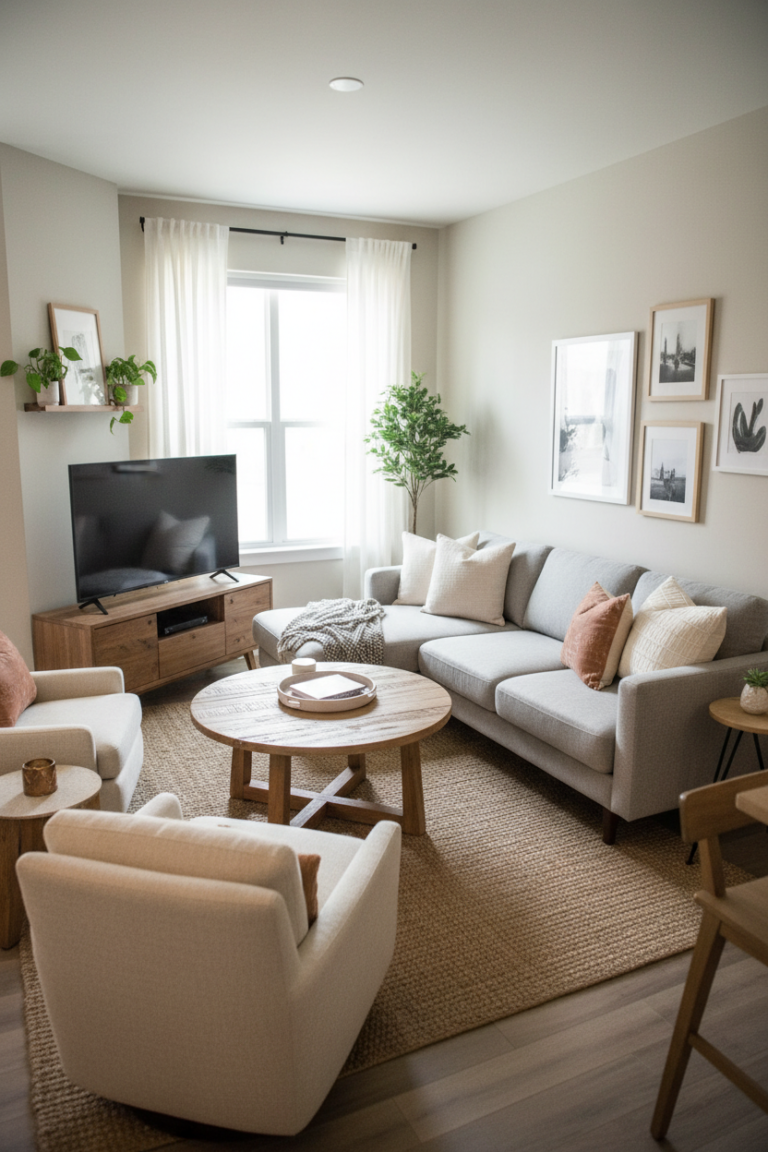
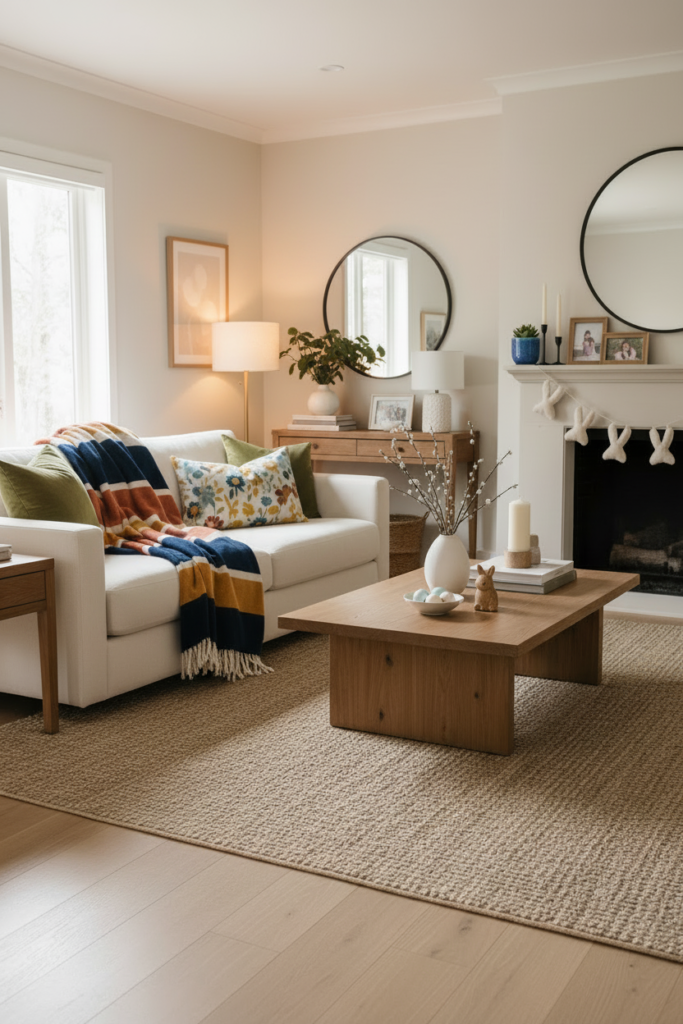
Your living room should remain about 80 percent unchanged. Sofa, rug, main artwork, and large furniture pieces stay the same.
Only 20 percent of the visible decor should shift to reflect Easter or spring.
This keeps the room grounded and prevents it from feeling temporary or chaotic.
Focus your updates on smaller surfaces like:
Coffee table
Mantel
Console table
Side tables
Seasonal styling should be concentrated, not scattered everywhere.
Step 2: Choose a 3-Color Easter Palette
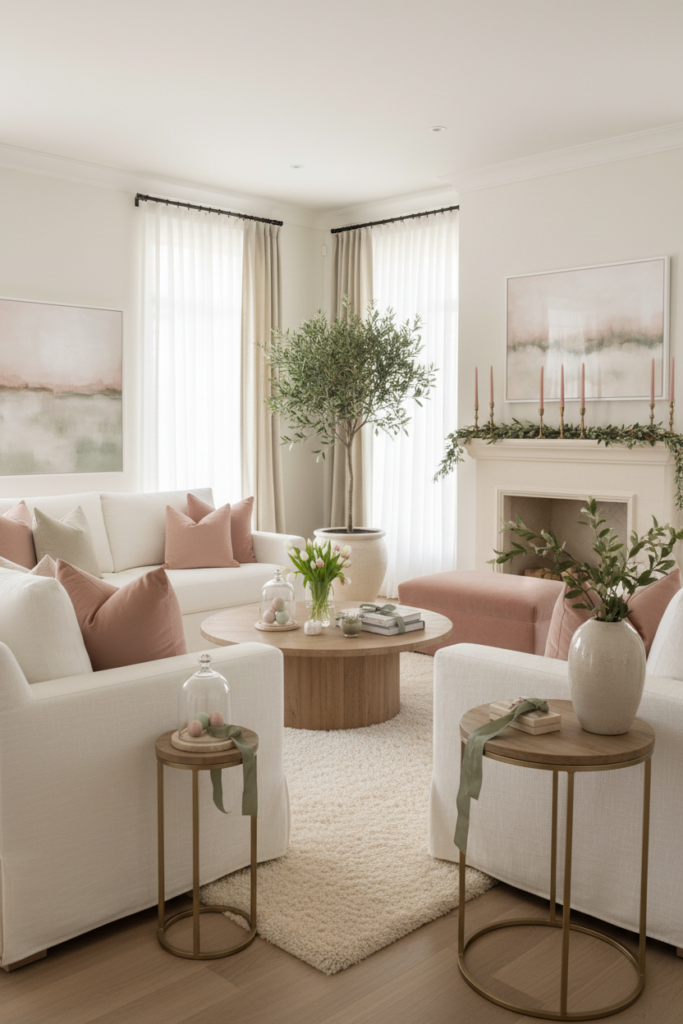
Limit yourself to three tones total.
Use this simple palette structure:
1 dominant neutral
1 soft seasonal accent
1 subtle supporting tone
For example:
Warm white + muted blush + sage
Cream + pale blue + light wood
Beige + buttercream + soft gray
The dominant neutral should still cover at least 60 percent of visible surfaces.
Your seasonal accent color should appear in 20 to 30 percent of small decor items.
The supporting tone fills the remaining 10 percent.
Restricting color automatically makes the decor feel elegant.
Step 3: Use the Rule of One Symbol Per Surface
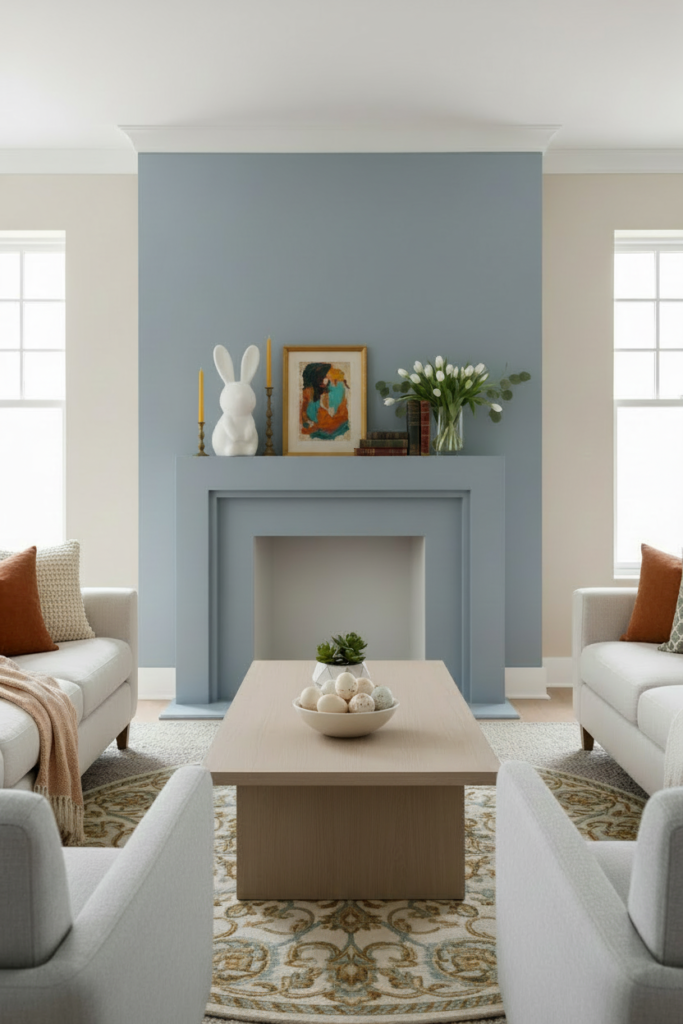
Do not overload surfaces with Easter icons.
Use one clear seasonal symbol per styled area.
For example:
Coffee table: one bowl of neutral decorative eggs
Mantel: one ceramic bunny or one nest under a glass cloche
Console table: one spring wreath or floral arrangement
When multiple symbols compete, the room feels cluttered.
One well-placed seasonal element reads as intentional and refined.
Step 4: Anchor Decor With a Tray or Base
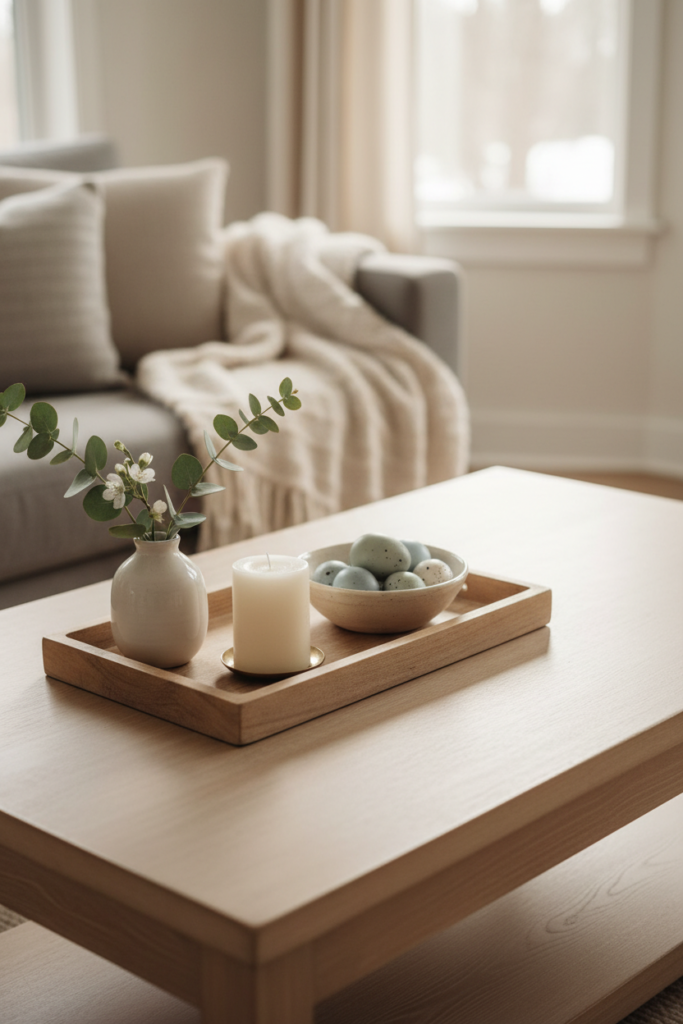
Seasonal pieces should feel grounded.
On coffee tables and consoles, use a tray to anchor smaller items. A tray should cover about one third of the table’s surface, leaving the rest open.
Inside the tray, follow this simple trio formula:
1 natural element (flowers or greenery)
1 candle or soft light source
1 seasonal accent
Keep height varied but balanced. No item should block conversation or sightlines across the room.
Trays create structure. Without them, decor can feel scattered.
Step 5: Balance Visual Weight Across the Room
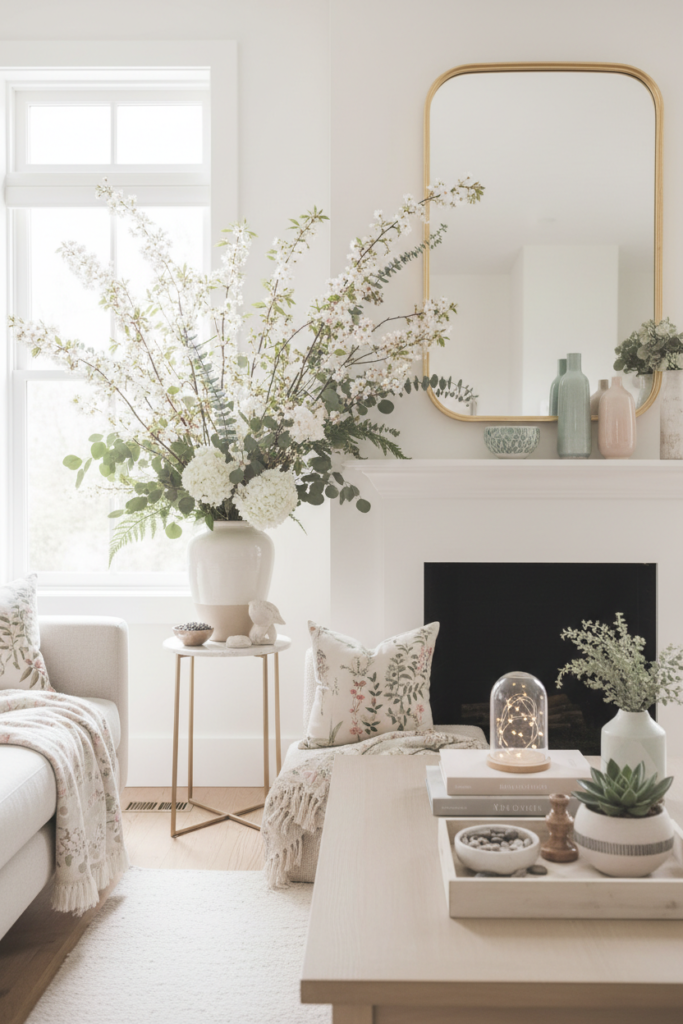
Look at the room from across the space.
If you add a tall floral arrangement on the left side of the mantel, balance it with grouped smaller items on the right.
If your coffee table has seasonal decor, keep side tables simpler.
Distribute seasonal elements evenly. Avoid clustering everything in one corner.
Visual balance prevents your Easter decor from feeling top-heavy or lopsided.
Step 6: Incorporate Natural Texture for Warmth
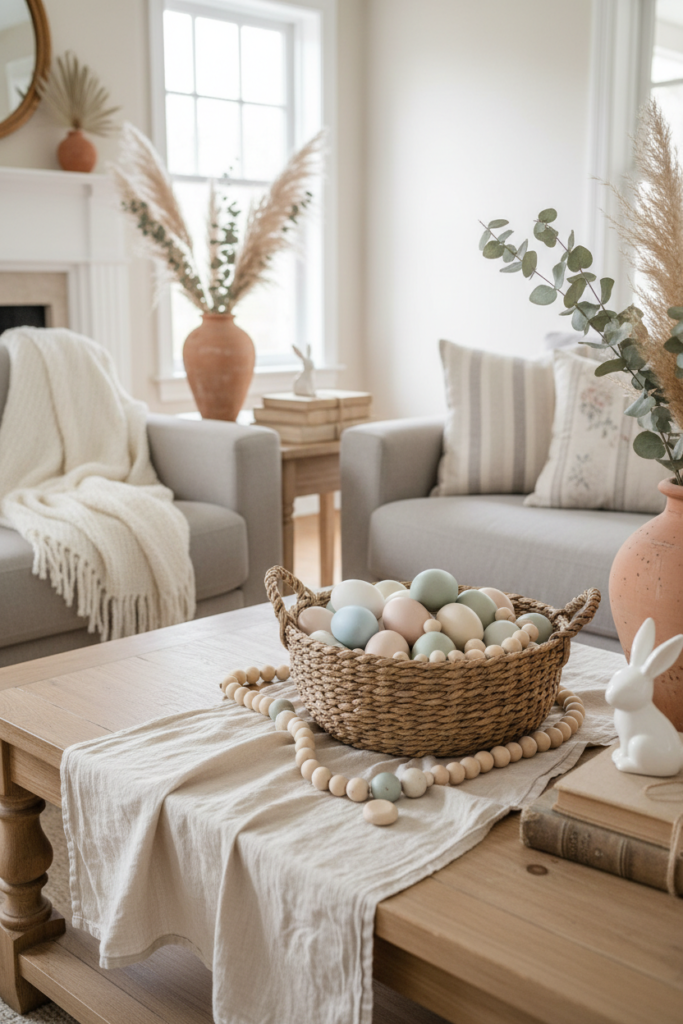
Easter decor feels more elegant when grounded in natural materials.
Use woven baskets, linen napkins, ceramic bowls, wooden beads, or matte glass.
Natural texture should make up at least half of your seasonal accents.
For example:
Speckled ceramic eggs instead of plastic
Woven basket instead of glossy tray
Linen runner instead of synthetic fabric
Texture softens pastel tones and prevents the space from feeling artificial.
Step 7: Maintain Negative Space
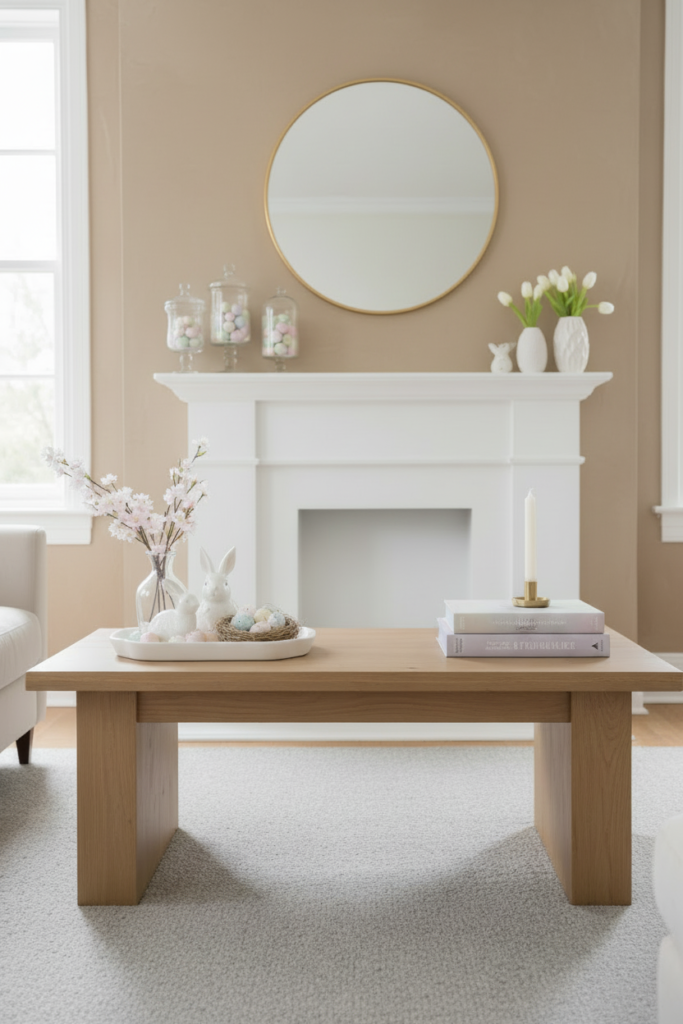
Leave at least 30 percent of each styled surface empty.
Empty space allows seasonal decor to breathe and feel intentional.
If your coffee table is 40 inches long, keep at least 12 inches visually clear.
If your mantel holds five objects, make sure they are grouped with visible gaps between clusters.
Negative space is what makes seasonal decor feel refined instead of crowded.
Sample Living Room Easter Layout
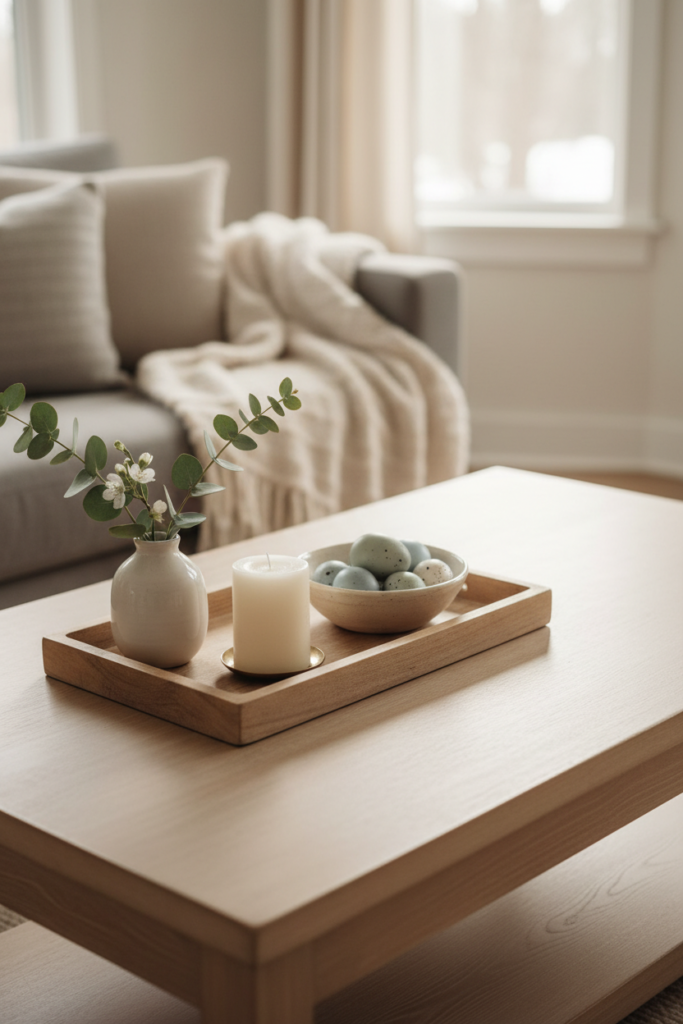
Coffee table:
Neutral tray covering one third of the surface
Small vase with white tulips
Cream pillar candle
Bowl with muted eggs
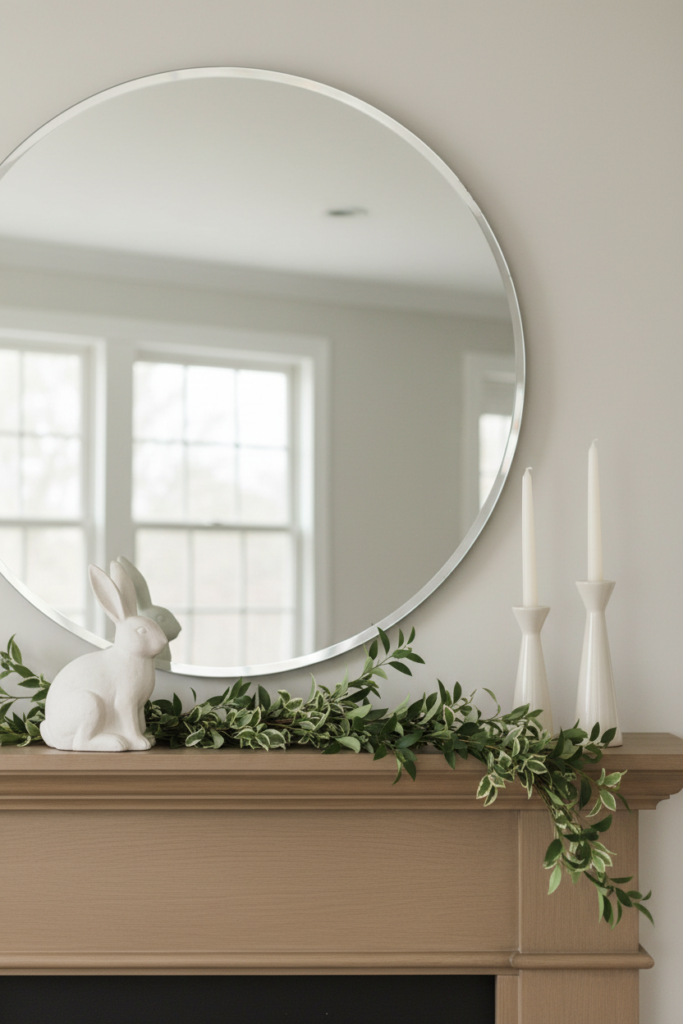
Mantel:
Round mirror or art as base
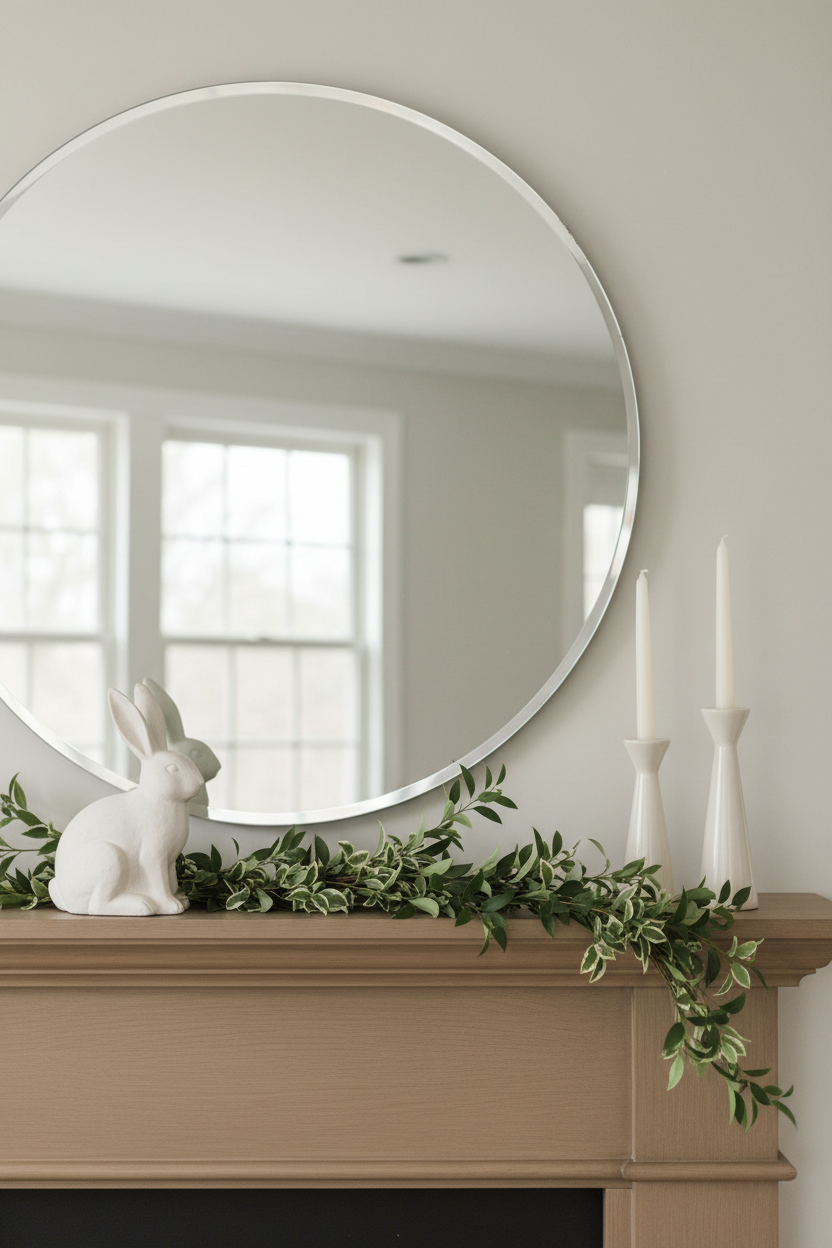
Simple greenery garland
One ceramic bunny off to one side
Two slim candlesticks for balance
Console:
Small woven basket
Glass cloche with nest
Single framed print leaning behind
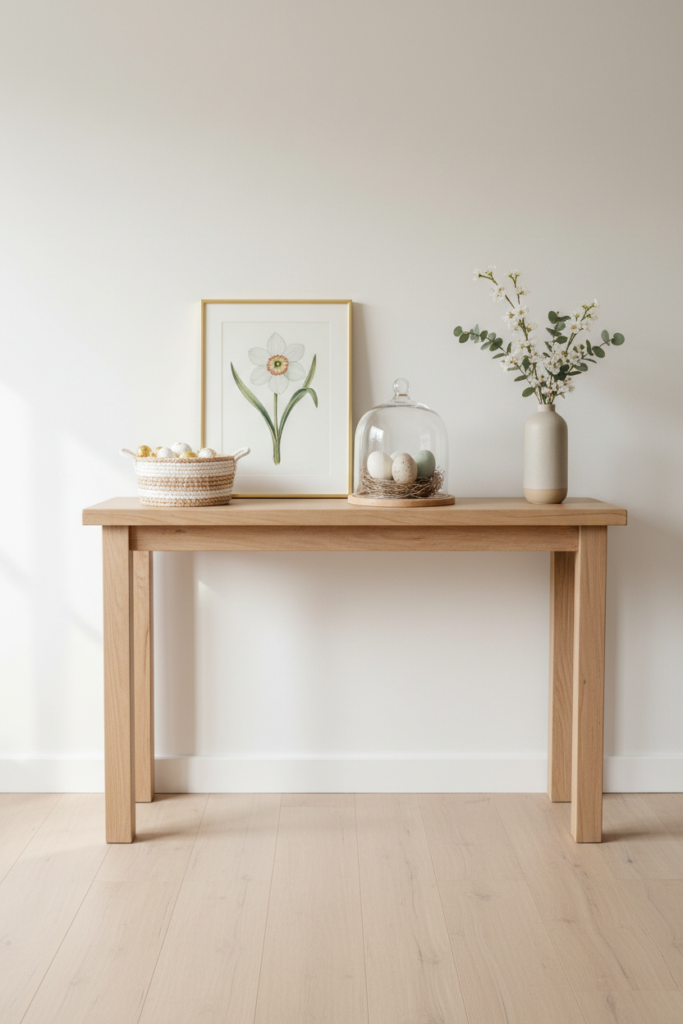
Notice how each surface has one clear focal point and open space around it.
Common Mistakes
Using bright neon pastels
Muted tones feel softer and more cohesive.
Scattering small Easter decor everywhere
Concentrate seasonal pieces in defined areas.
Ignoring scale
Tiny items on a long mantel look cluttered. Use medium-sized decor for balance.
Layering too many patterned textiles
If pillows are pastel, keep throws neutral.
Overfilling surfaces
If it feels crowded, remove one item and reassess.
Pro Tip for a Cozier Look
Add soft lighting to your Easter decor.
Use warm white bulbs around 2700K and include candles or lamps near styled areas.
Soft lighting warms pastel tones and highlights texture in ceramics, linen, and wood.
In the evening, the glow transforms simple decor into something intimate and inviting.
Light is what makes minimal seasonal decor feel cozy rather than sparse.
A Refined and Balanced Easter Living Room
Easter decor does not require excess.
Keep 80 percent of your base. Use a limited color palette. Add one seasonal symbol per surface. Anchor decor with trays. Balance visual weight. Leave space.
With this formula, your living room will feel fresh, elegant, and subtly festive.
The goal is not to redesign your home.
It is to layer in just enough seasonal charm to make it feel intentional, calm, and beautifully in tune with spring.

Hi, I’m Livia. A mom who believes that a house becomes a home through the little things.
Over time, I started to understand what truly makes a space feel cozy, comfortable, and safe. Little by little, I transformed my own home into a place where my family and I genuinely love to be, a space that feels calm, warm, and ours.
Here, I share simple ideas and thoughtful inspiration to help you turn your home into your favorite place in the world too.