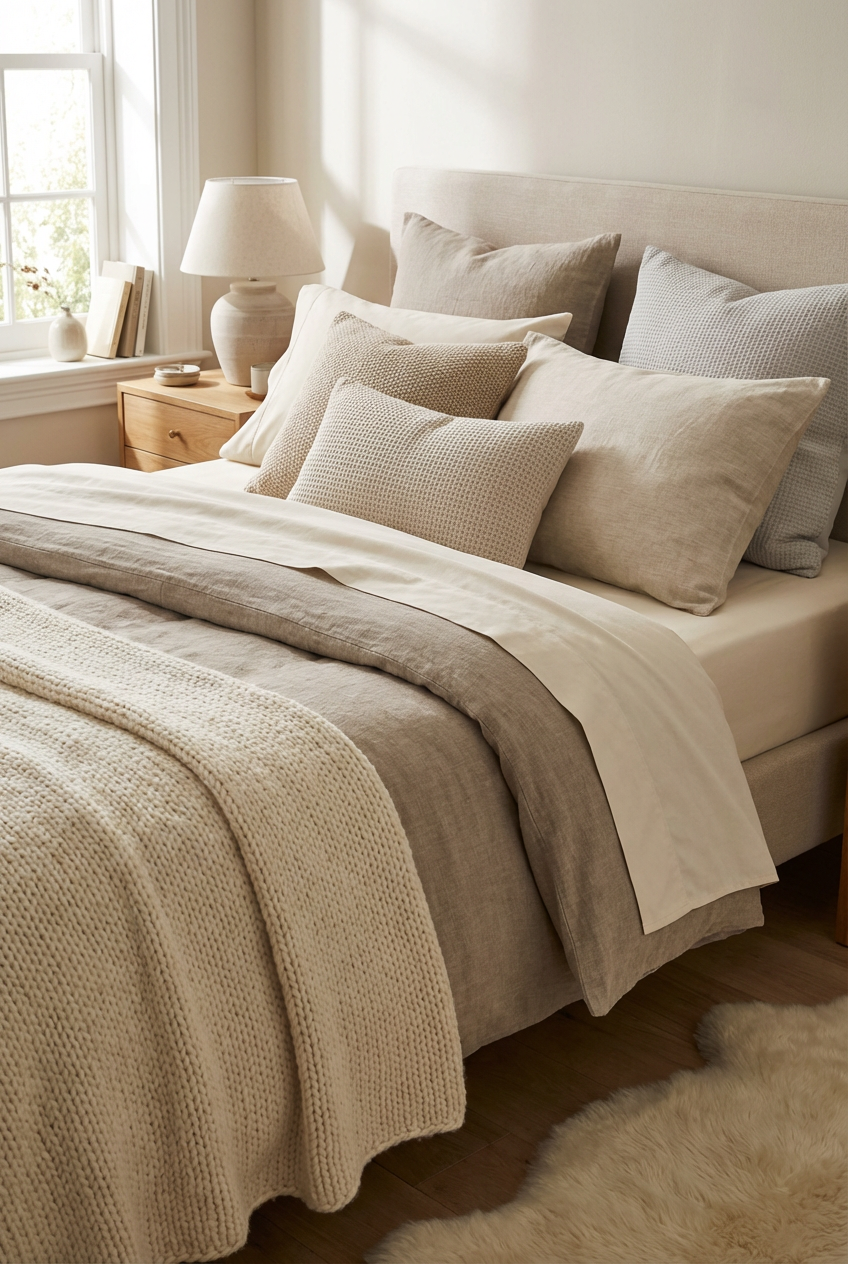
How to Create a Cozy Bedroom Without Buying New Furniture
This post may contain affiliate links, which means we may earn a small commission at no extra cost to you. We may also display third-party ads and include links to partner brands or shops. Some images may be created or enhanced using AI or sourced from licensed platforms. All opinions are our own.
It is easy to believe that a cozy bedroom requires a new bed frame, matching nightstands, or a full makeover.
But most of the time, the furniture is not the problem. The room feels cold because of lighting, bare surfaces, flat bedding, or too much visual clutter. The good news is that you can completely shift the mood of your bedroom using what you already have.
With a few thoughtful changes, you can turn your current space into a warm, layered retreat without spending money on new furniture.
Here are six practical steps to help you do exactly that.
1. Rethink Your Bedding Layers
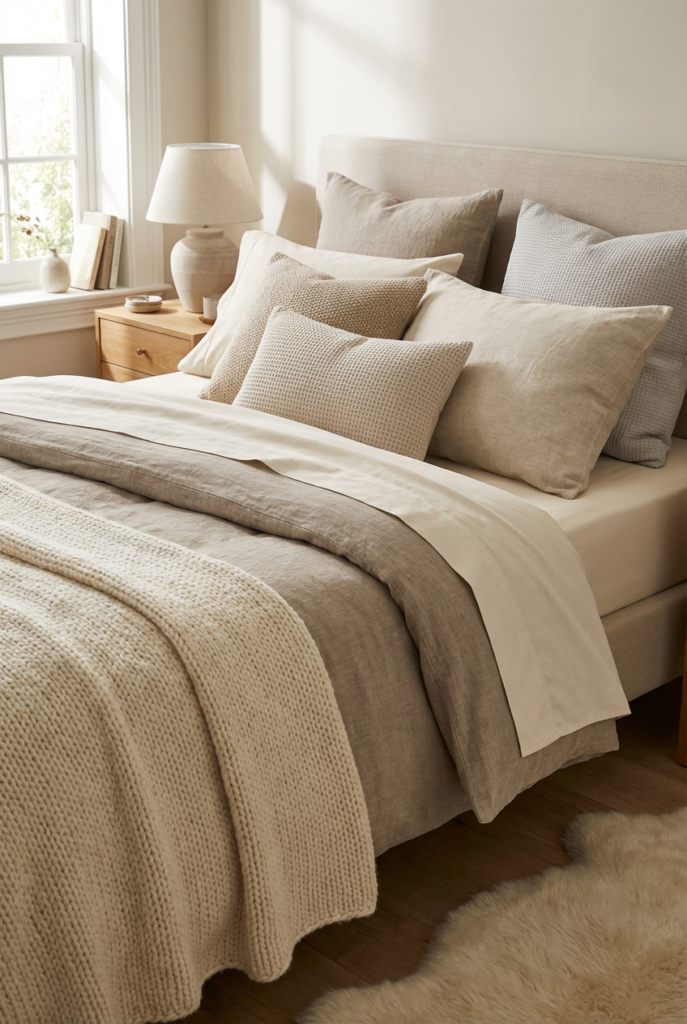
Your bed is the largest visual element in the room. Changing how you layer it makes an immediate difference.
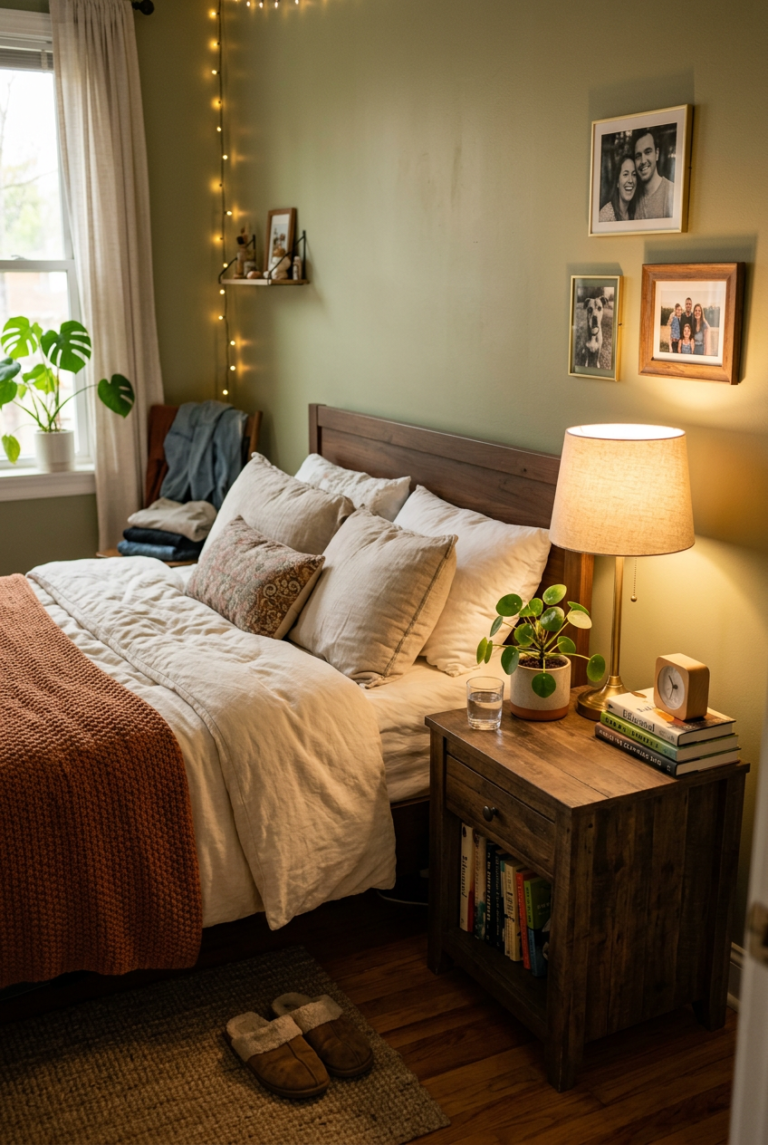
Start by removing everything from the bed. Put back your sheets neatly, smoothing them so they feel fresh and intentional. Then layer a blanket or quilt at the foot of the bed, even if you already use a duvet.
Fold the top of your duvet down slightly to reveal the sheets underneath. This small detail adds depth and texture. If you have extra pillows from the living room, borrow one or two to create a softer, fuller look.
This works because layering creates visual warmth. Even if all your bedding is neutral, adding folds, textures, and subtle contrast makes the bed feel inviting instead of flat.
2. Soften the Lighting
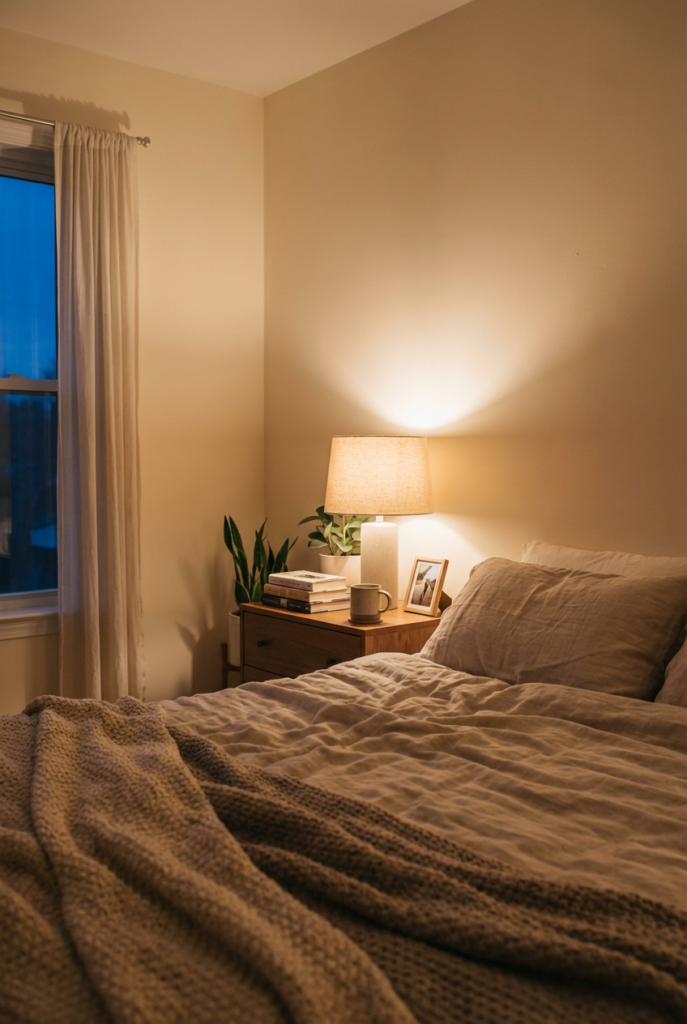
Harsh overhead lighting is one of the biggest reasons a bedroom feels uncozy.
If you only use a ceiling light, try turning it off in the evening. Use bedside lamps instead. If you do not have lamps, move one from another room temporarily and see how it changes the atmosphere.
Switch to warm light bulbs if possible. Look for bulbs around 2700K for a soft, golden glow. Even a single lamp with warm light can make the walls look softer and the bedding feel richer.
Lighting works because it affects how every color and texture appears. Warm light makes beige feel creamy, wood look deeper, and fabric feel softer.
3. Rearrange for Better Flow
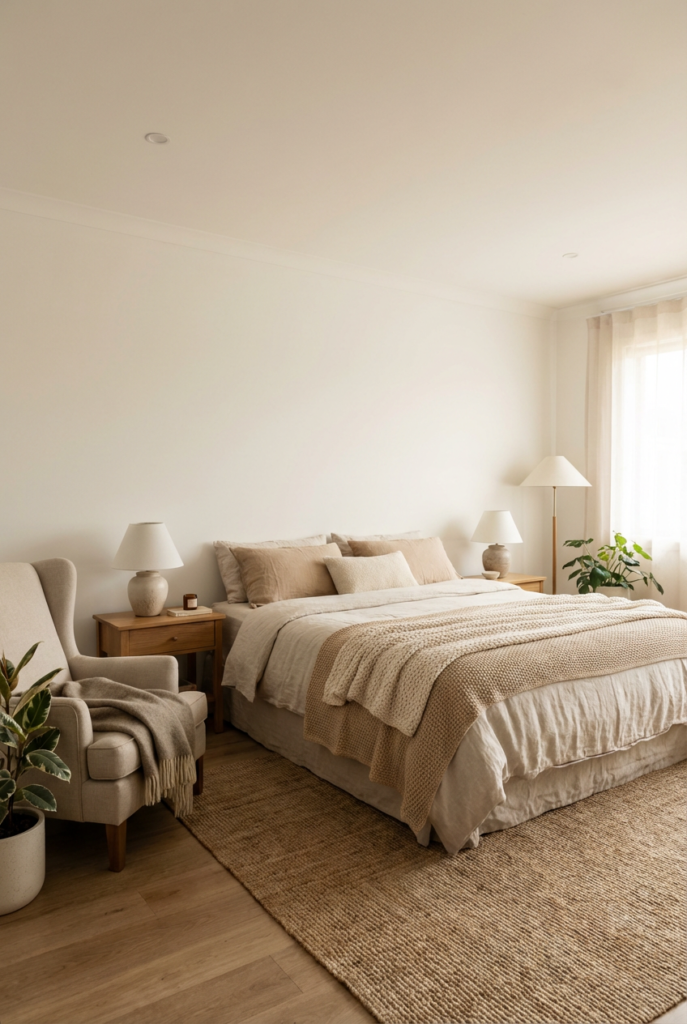
You do not need new furniture, but you might need a new layout.
Stand in your doorway and look at your room. Does the bed feel cramped against one wall? Is there space behind the door that could be used better? Sometimes moving the bed to center it on the longest wall creates balance.
Pull furniture slightly away from walls if possible. Even a few inches can make a room feel less stiff. Create small zones, such as a reading corner with a chair and a folded blanket.
Rearranging works because balance and breathing room create calm. A well-placed bed feels intentional and grounding, even if it is the same bed you have always had.
4. Add Texture with What You Already Own
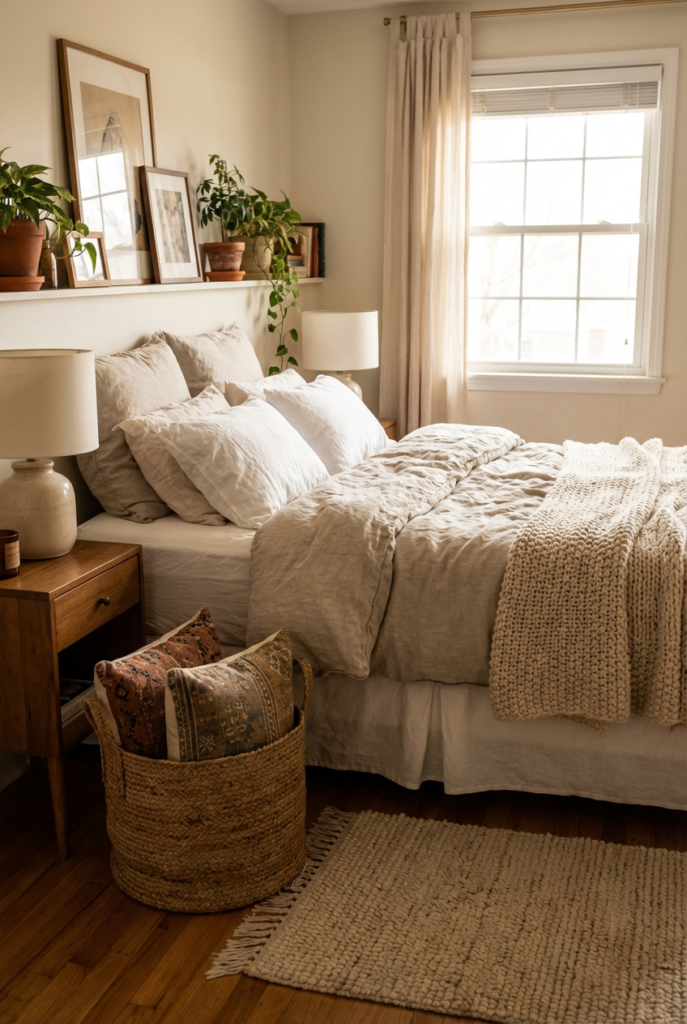
Cozy rooms rely on texture more than new furniture.
Look around your home for items you can repurpose. A throw blanket from the sofa can be folded at the foot of the bed. A woven basket from the hallway can hold extra pillows or books.
Layer different materials together. Pair smooth cotton sheets with a chunky knit throw. Place a small rug from another room beside the bed if your floors feel cold.
Texture works because it adds depth. When light hits woven fibers, soft knits, or slightly rumpled linen, it creates shadows and warmth that flat surfaces cannot.
5. Declutter with Intention, Not Perfection
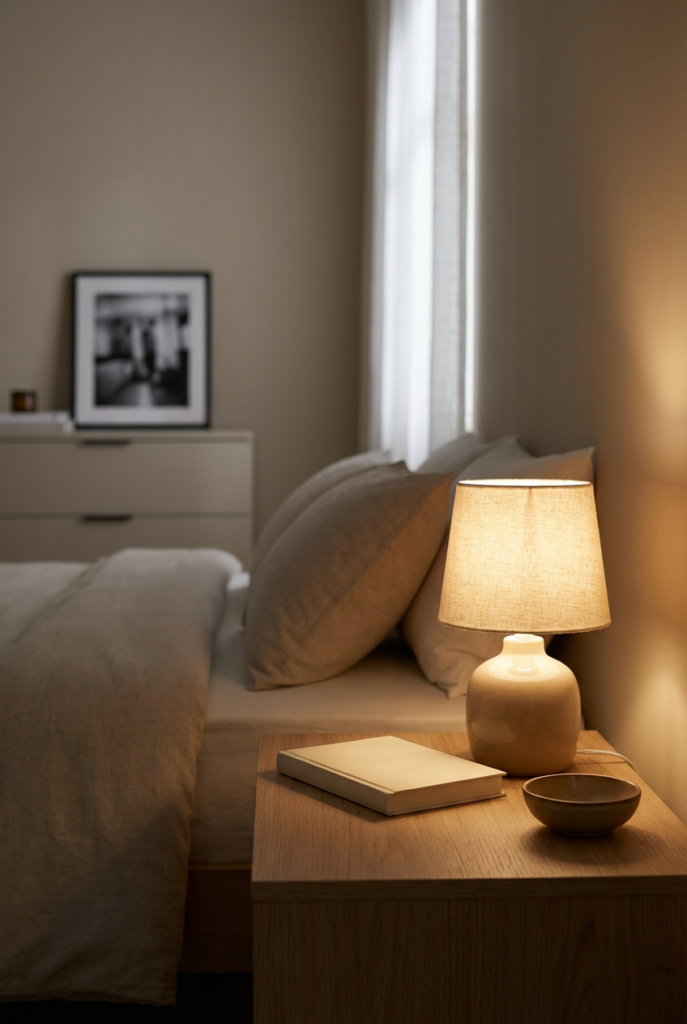
Clutter blocks coziness.
Start with your nightstands. Remove everything and put back only what feels useful or calming. A lamp, a book, and a small dish are often enough. If cords are visible, tuck them behind furniture or use a simple clip to organize them.
Clear off dressers and leave negative space. A single framed photo or a ceramic bowl has more impact than ten small items scattered across the surface.
This works because the eye needs rest. A tidy, edited space feels more peaceful, which naturally makes it feel cozier.
6. Use Color to Create Warmth
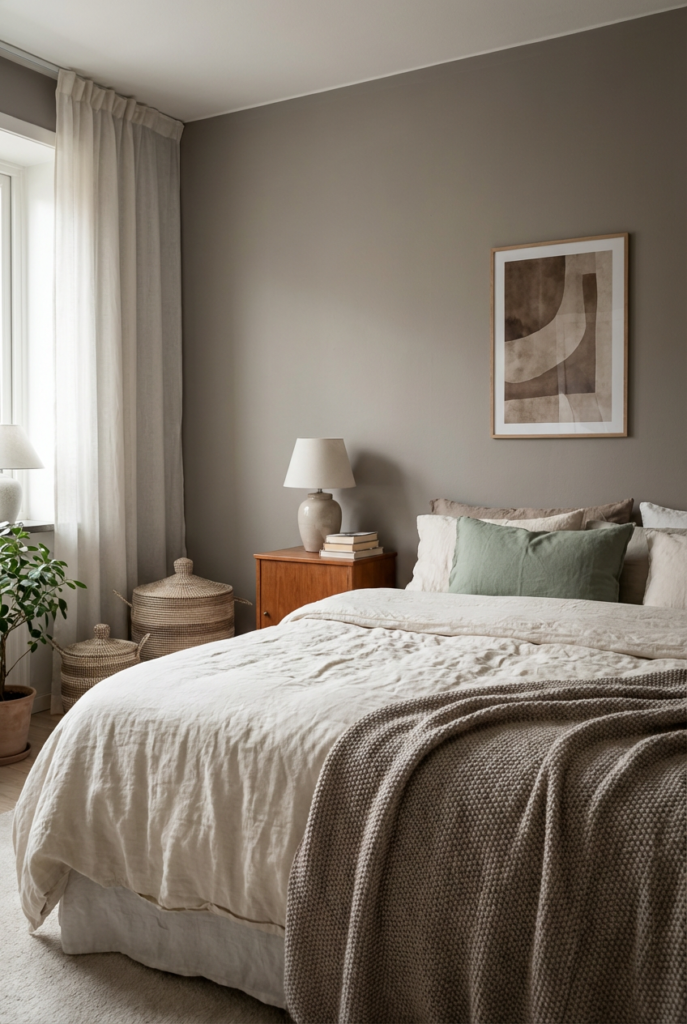
You may not be painting the walls, but you can adjust color through small details.
Swap out bright white or overly cool accessories for warmer tones. Think cream instead of stark white, soft taupe instead of gray, muted sage instead of bold green.
If you have artwork in other rooms, try switching it into your bedroom. A landscape with warm earth tones or soft blues can shift the mood of the entire space.
Color works because warm, muted tones reflect light in a softer way. They make the room feel enveloping rather than sharp.
7. Create a Simple Evening Ritual Corner
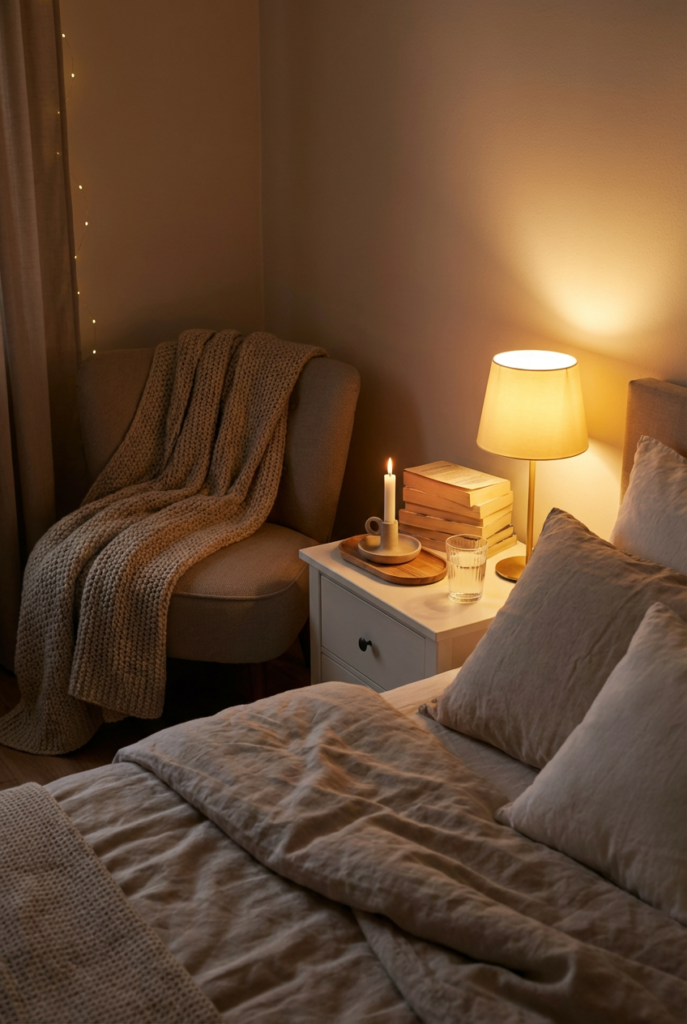
Cozy bedrooms feel personal.
Designate one small area for winding down. It could be a chair with a folded blanket, a small stack of books on your nightstand, or a candle placed on a tray.
In the evening, dim the lights, pull back your bedding slightly, and place a glass of water on your nightstand. These small habits make the room feel prepared for rest.
This works because coziness is not only visual. It is about how the space supports your routines. When your bedroom feels ready for you, it becomes more inviting.
Common Mistakes to Avoid
Trying to do everything at once can make the room feel overwhelming. Focus on one or two changes, then step back and notice the difference.
Avoid adding too many decorative items. Cozy does not mean crowded. Layer texture and light first before introducing more decor.
Do not ignore lighting temperature. Cool white bulbs can cancel out even the most beautiful bedding and soft colors.
Resist pushing all furniture tightly against the walls if it makes the room feel awkward. Balance and proportion matter more than maximizing floor space.
Finally, do not chase perfection. Slightly rumpled bedding, casually folded throws, and lived-in details are what make a bedroom feel warm and real.
You Already Have What You Need
Creating a cozy bedroom does not require a shopping list.
It requires attention to light, texture, layout, and color. When you layer your bedding, soften the lighting, edit your surfaces, and use what you already own in thoughtful ways, the room begins to shift.
Start small. Turn off the overhead light tonight and use a lamp instead. Fold a blanket at the foot of your bed. Clear your nightstand.
With simple changes, your existing bedroom can become the calm, inviting retreat you have been wanting all along.

Hi, I’m Livia. A mom who believes that a house becomes a home through the little things.
Over time, I started to understand what truly makes a space feel cozy, comfortable, and safe. Little by little, I transformed my own home into a place where my family and I genuinely love to be, a space that feels calm, warm, and ours.
Here, I share simple ideas and thoughtful inspiration to help you turn your home into your favorite place in the world too.