Neutral Color Palette Guide for Cozy Homes
This post may contain affiliate links, which means we may earn a small commission at no extra cost to you. We may also display third-party ads and include links to partner brands or shops. Some images may be created or enhanced using AI or sourced from licensed platforms. All opinions are our own.
Neutral homes can feel calm and inviting.
They can also feel flat, cold, or unfinished when the palette isn’t thoughtfully layered.
The difference between a cozy neutral space and a bland one comes down to undertones, contrast, proportion, and texture. This guide will show you exactly how to build a neutral color palette that feels warm, cohesive, and lived in.
No guesswork. Just practical formulas you can apply room by room.
Step 1: Choose Your Base Neutral First
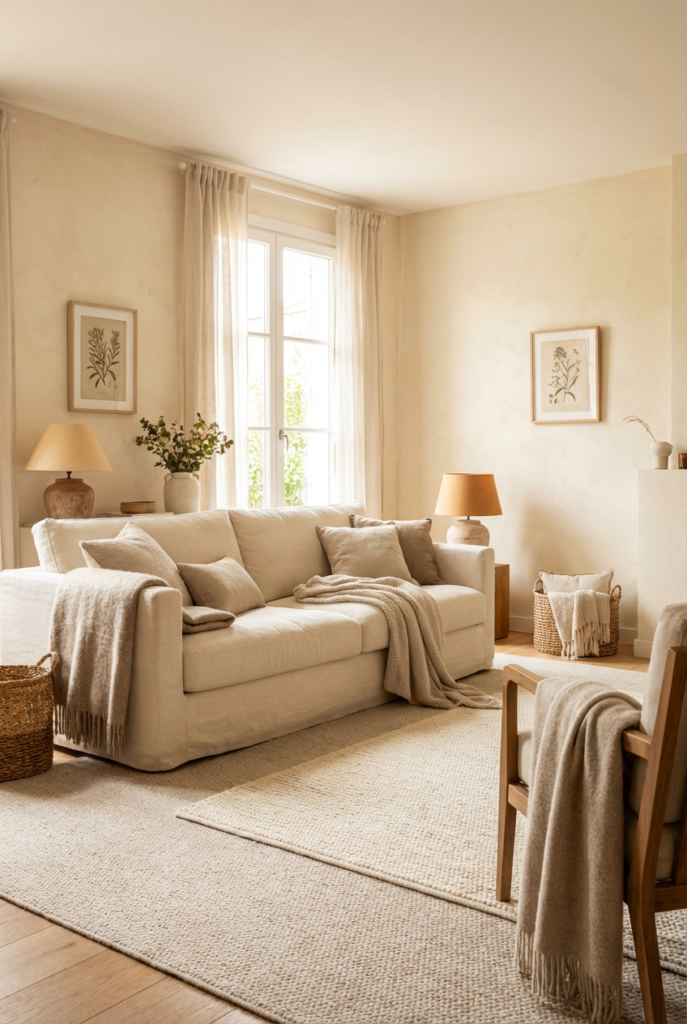
Every cozy neutral home starts with one dominant base color.
This is usually your wall color and often the largest upholstered piece in the room, like a sofa.
Choose one of these warm-leaning base families:
Cream
Warm white
Greige
Soft taupe
Light beige
Avoid stark cool whites or blue-gray tones if your goal is warmth.
Here’s the rule:
Your base neutral should cover about 60 percent of the room.
This includes walls, large furniture, and large rugs.
When testing paint, look at it in both morning and evening light. A warm white should feel slightly creamy, not icy. If it looks gray at night, it may be too cool.
Step 2: Add a Secondary Neutral for Depth
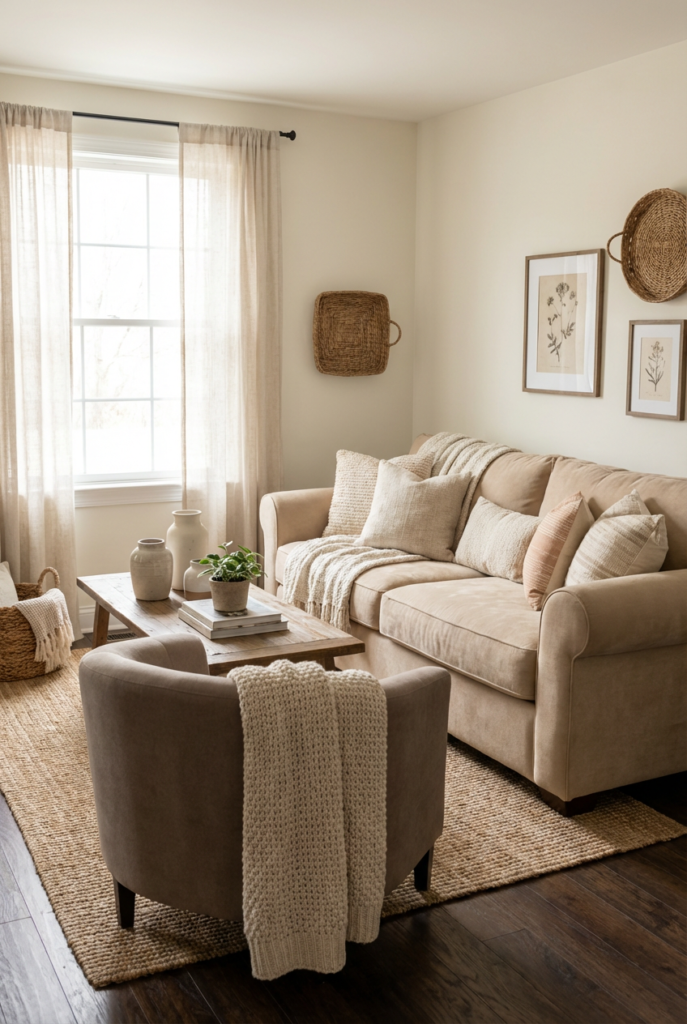
A cozy neutral room needs contrast within the neutral range.
Choose a second tone that is either two shades darker or two shades lighter than your base.
This should make up about 30 percent of the room.
For example:
Cream walls
Warm beige sofa
Medium taupe accent chair
Or:
Light greige walls
Soft ivory sofa
Sandy beige rug
The key is visible contrast without sharp jumps.
If your base and secondary color look almost identical from across the room, increase the contrast slightly.
Subtle variation creates depth. Identical tones create flatness.
Step 3: Introduce a Grounding Tone
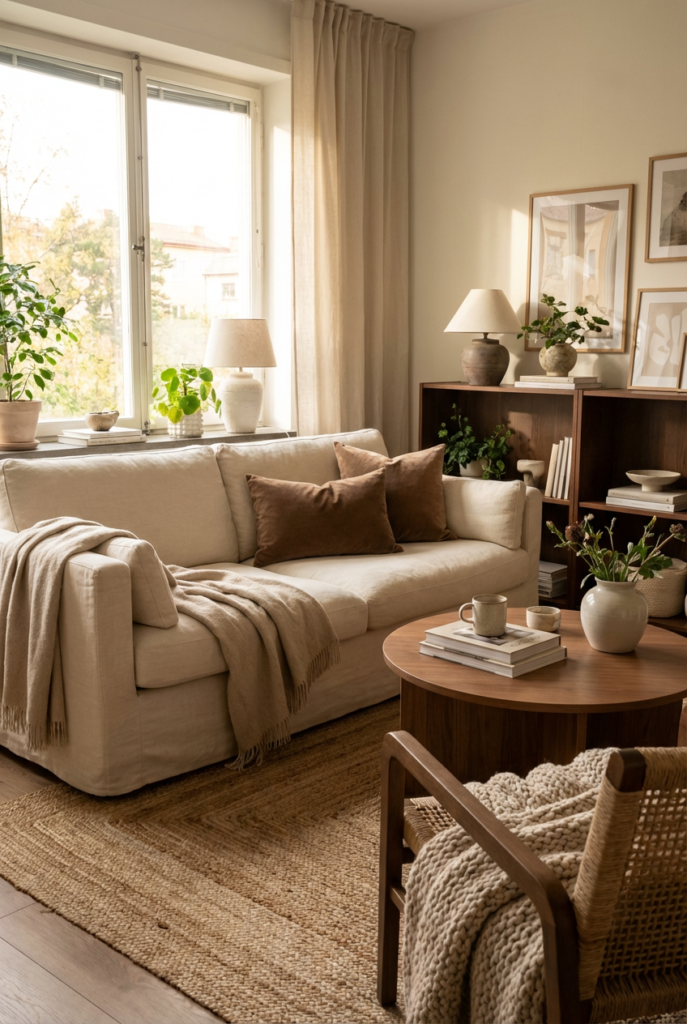
Every neutral palette needs weight.
Add one grounding element that anchors the space visually. This can be:
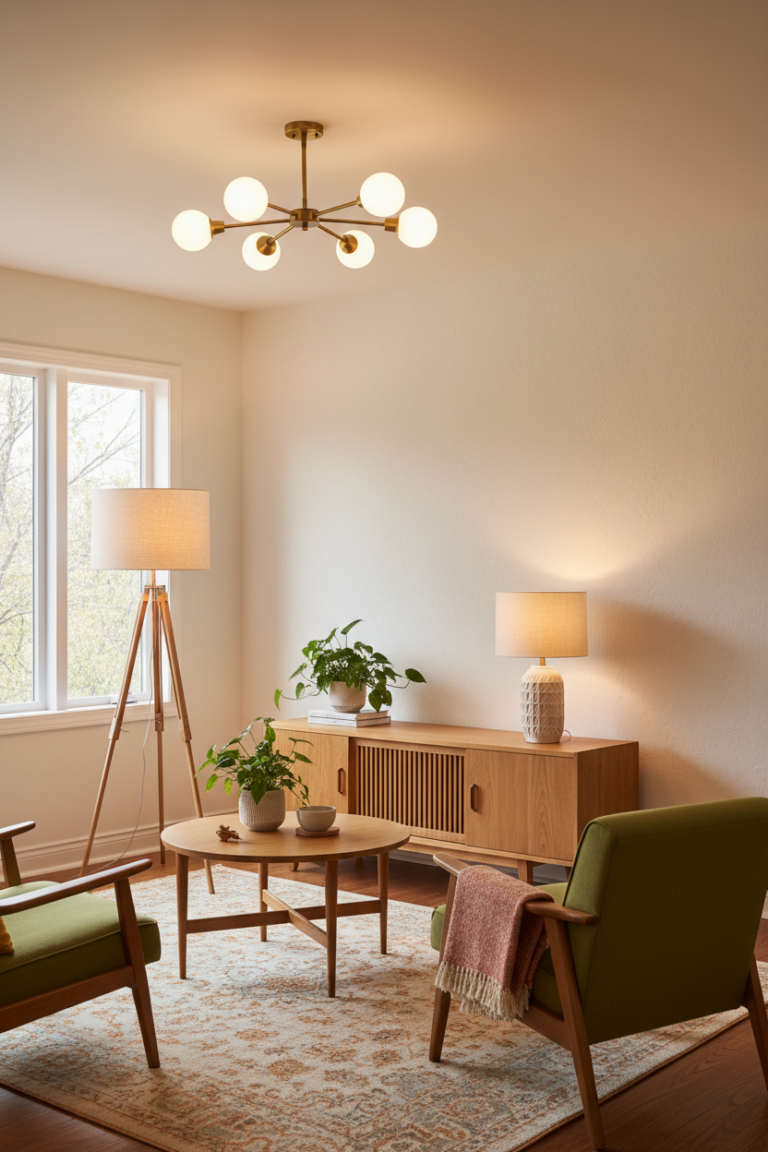
Medium wood tones
Warm brown
Soft charcoal
Muted olive
Deep taupe
This tone should represent about 10 percent of the room.
Think coffee table, side tables, picture frames, or a darker throw pillow.
Without a grounding tone, a neutral room can feel airy but unfinished.
Wood is one of the easiest ways to add grounding warmth. Look for mid-tone woods with warm undertones rather than gray-stained finishes.
The 60-30-10 Formula for Neutrals
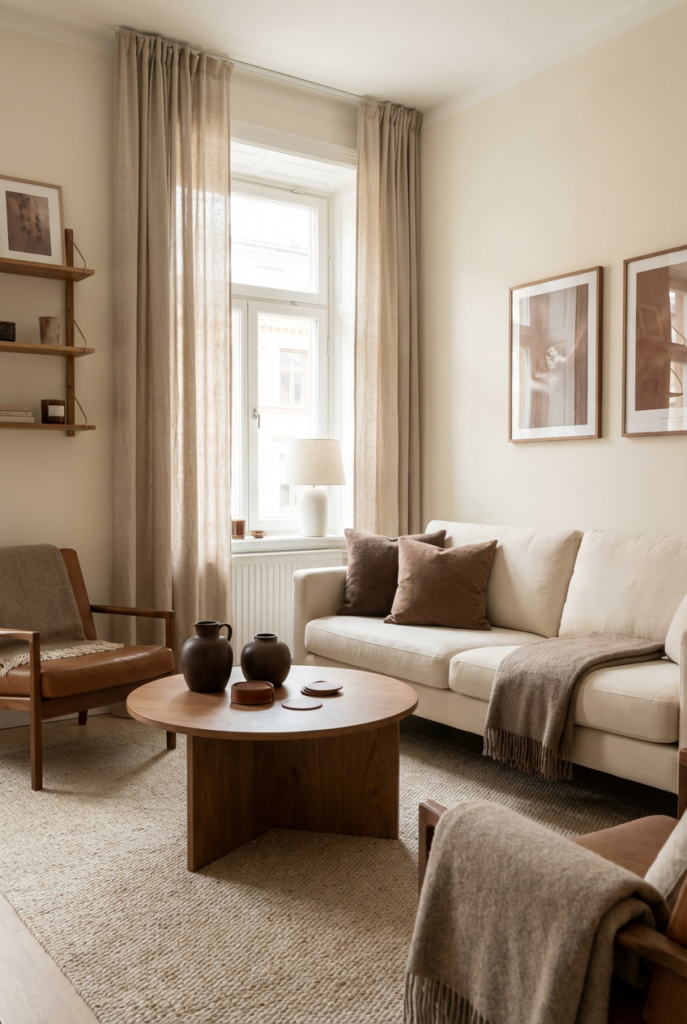
Use this breakdown in every room:
60 percent dominant neutral
30 percent secondary neutral
10 percent grounding or accent tone
This formula creates balance without overwhelming the space.
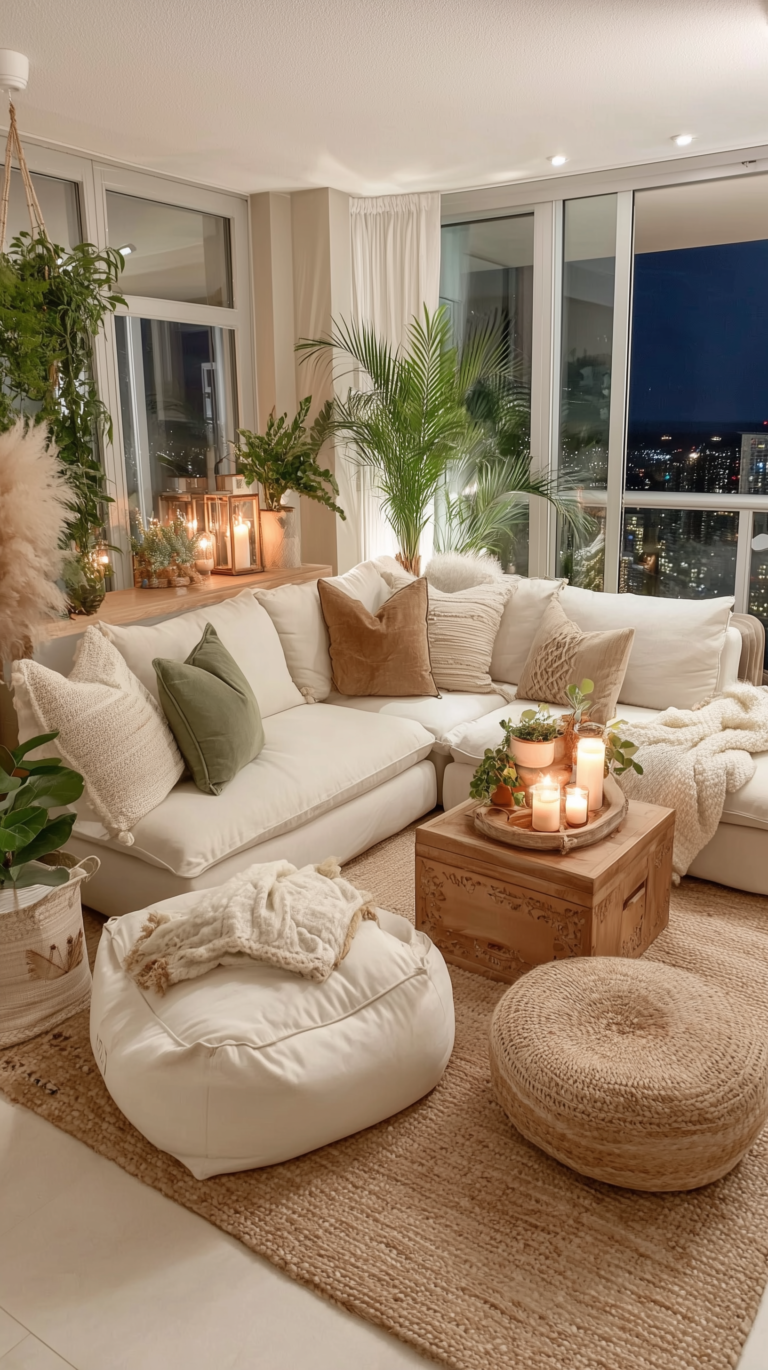
For a small living room:
60 percent warm cream walls and sofa
30 percent beige rug and curtains
10 percent medium wood and soft brown accents
It’s simple. It works every time.
Pay Attention to Undertones
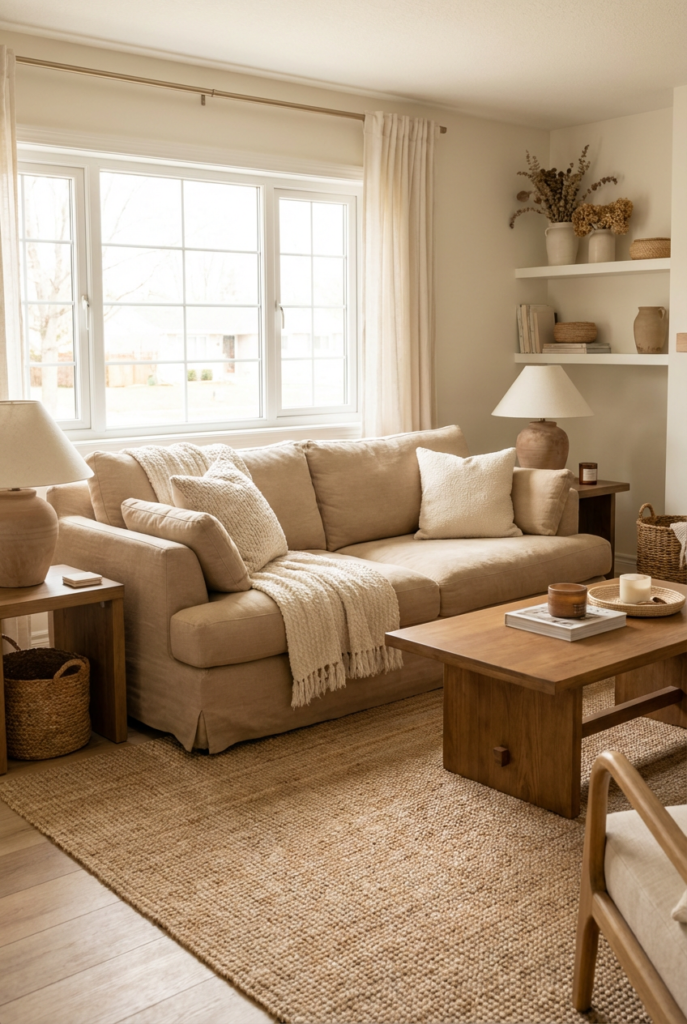
Not all neutrals mix well.
Before combining colors, check their undertones.
Warm undertones include:
Yellow
Red
Warm brown
Cool undertones include:
Blue
Green
Purple
If your sofa leans warm beige and your rug leans cool gray, the room will feel disconnected.
Keep undertones consistent within the same temperature family.
If you want to mix warm and cool neutrals, do so intentionally and in small amounts. For example, warm cream walls with a slightly cooler stone accent in a small decor piece.
But avoid equal balance between warm and cool. That tension can feel unsettled.
Layer Texture Instead of Adding More Colors
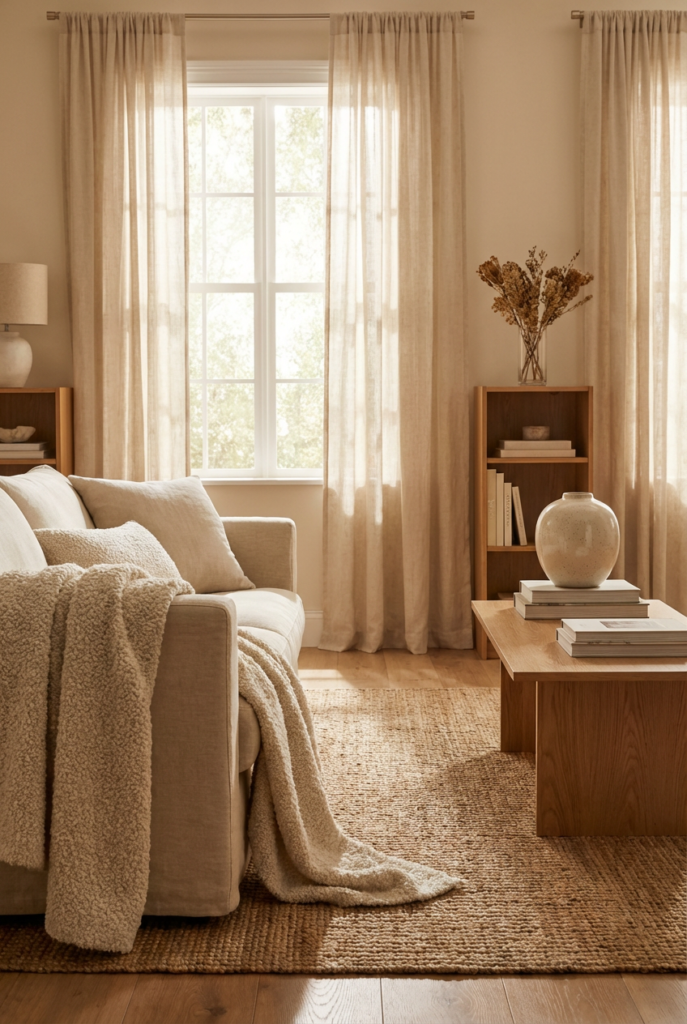
In a neutral palette, texture replaces bold color contrast.
Use at least three different textures in every room.
For example:
Linen curtains
Woven jute rug
Boucle or knit throw
Smooth ceramic vase
Wood furniture
When light hits different surfaces, it creates shadow and dimension. That’s what makes a neutral room feel layered instead of flat.
If everything is smooth cotton and painted wood, the space will lack depth.
Texture creates visual warmth without adding new colors.
Contrast Is Necessary, But Keep It Soft
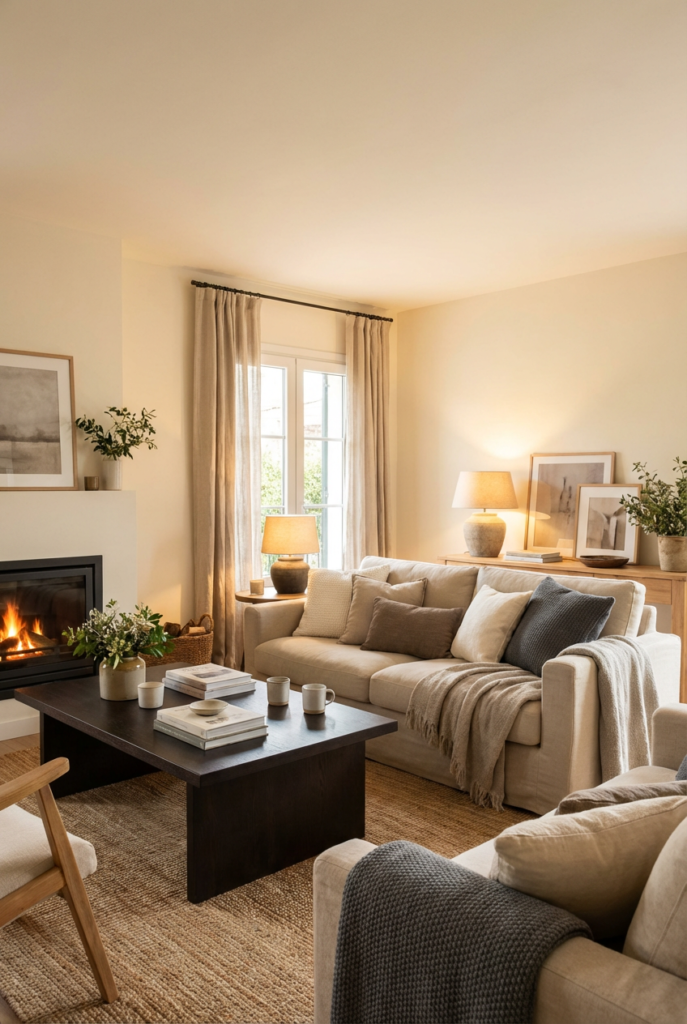
A cozy neutral room still needs contrast.
But avoid harsh black-and-white combinations unless used sparingly.
Instead of pure black, use soft charcoal or deep espresso brown.
Instead of stark white, use warm ivory.
Contrast should feel gentle, not graphic.
Stand in the doorway and squint slightly. You should see subtle variation and layers, not strong blocks of color fighting for attention.
Use Natural Materials to Enhance Warmth
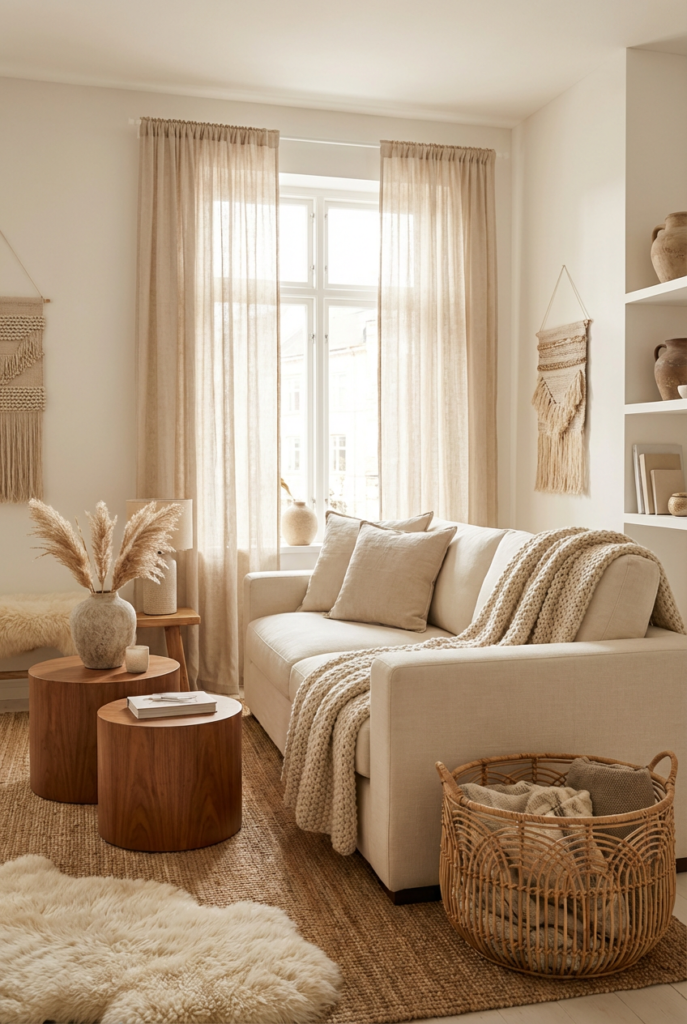
Natural materials enhance neutral palettes automatically.
Incorporate:
Wood
Rattan
Linen
Cotton
Stone
Wool
Even small pieces like a wooden bowl or woven basket can warm up a cool corner.
If your space feels sterile, it likely lacks natural texture.
Neutral does not mean synthetic or glossy. It means soft, layered, and organic.
Common Mistakes
Choosing neutrals that are too cool
Blue-grays and icy whites often feel cold, especially in low light.
Using only one shade
One flat beige across walls, sofa, rug, and decor creates a washed-out look.
Skipping contrast
Without a grounding tone, the room feels unfinished.
Ignoring lighting
Paint that looks warm in the store can look gray in north-facing rooms.
Overusing bright white
Too much stark white removes softness.
Forgetting texture
Color alone does not create coziness.
Pro Tip for a Cozier Look
Add warmth through subtle tonal shifts within the same family.
For example, instead of pairing cream with pure white, layer cream, ivory, and soft oatmeal together.
The slight variation feels intentional and soft.
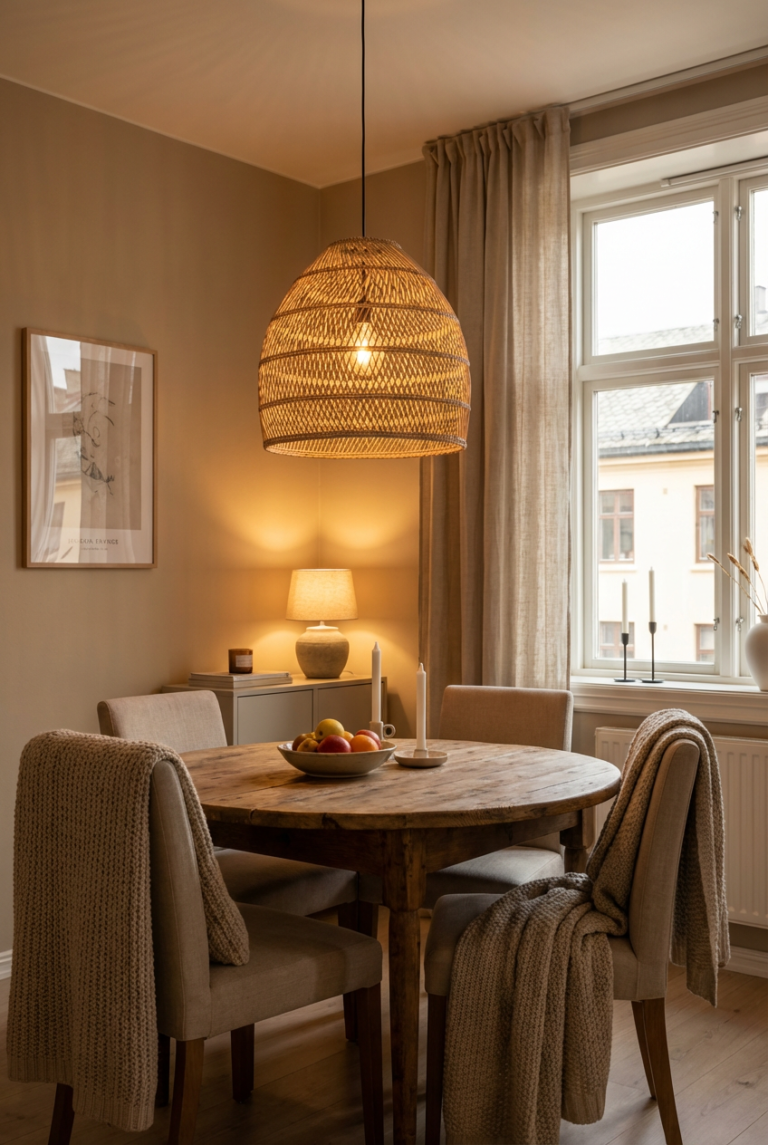
You can also warm up lighting.
Use bulbs around 2700K to 3000K for a warm glow. Neutral colors look significantly cozier under warm lighting compared to cool-toned bulbs.
Light changes everything in a neutral space.
Final Thoughts
A cozy neutral palette is about layering, not limiting.
Choose a warm base.
Add a secondary tone for depth.
Ground the space with a darker accent.
Layer in texture generously.
Stick to the 60-30-10 formula and keep undertones consistent.
When neutrals are layered thoughtfully, they feel calm, welcoming, and timeless.
And once you understand these proportions, creating a cozy neutral home becomes simple, not overwhelming.

Hi, I’m Livia. A mom who believes that a house becomes a home through the little things.
Over time, I started to understand what truly makes a space feel cozy, comfortable, and safe. Little by little, I transformed my own home into a place where my family and I genuinely love to be, a space that feels calm, warm, and ours.
Here, I share simple ideas and thoughtful inspiration to help you turn your home into your favorite place in the world too.