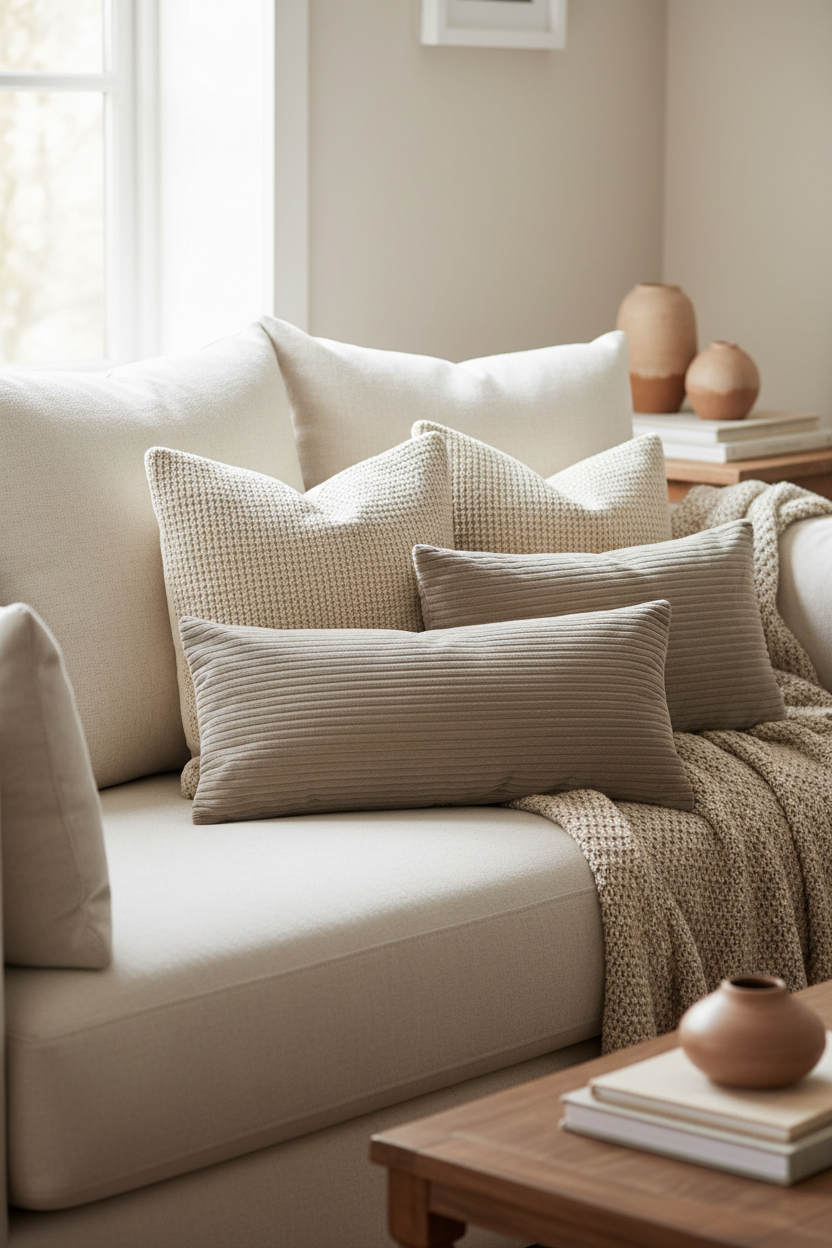
Throw Pillow Size and Layering Guide
This post may contain affiliate links, which means we may earn a small commission at no extra cost to you. We may also display third-party ads and include links to partner brands or shops. Some images may be created or enhanced using AI or sourced from licensed platforms. All opinions are our own.
Throw pillows can instantly warm up a sofa or bed.
But when the sizes are off or the layering feels random, the whole room can look cluttered or flat. Too many small pillows feel busy. Oversized pillows on a compact sofa overwhelm it.
This guide will help you choose the right pillow sizes and layer them in a way that looks intentional, balanced, and cozy. No guesswork. Just clear formulas you can follow every time.
Let’s make your sofa and bed look styled, not stuffed.
Start With the Sofa Width Formula
Before choosing pillows, measure your sofa.
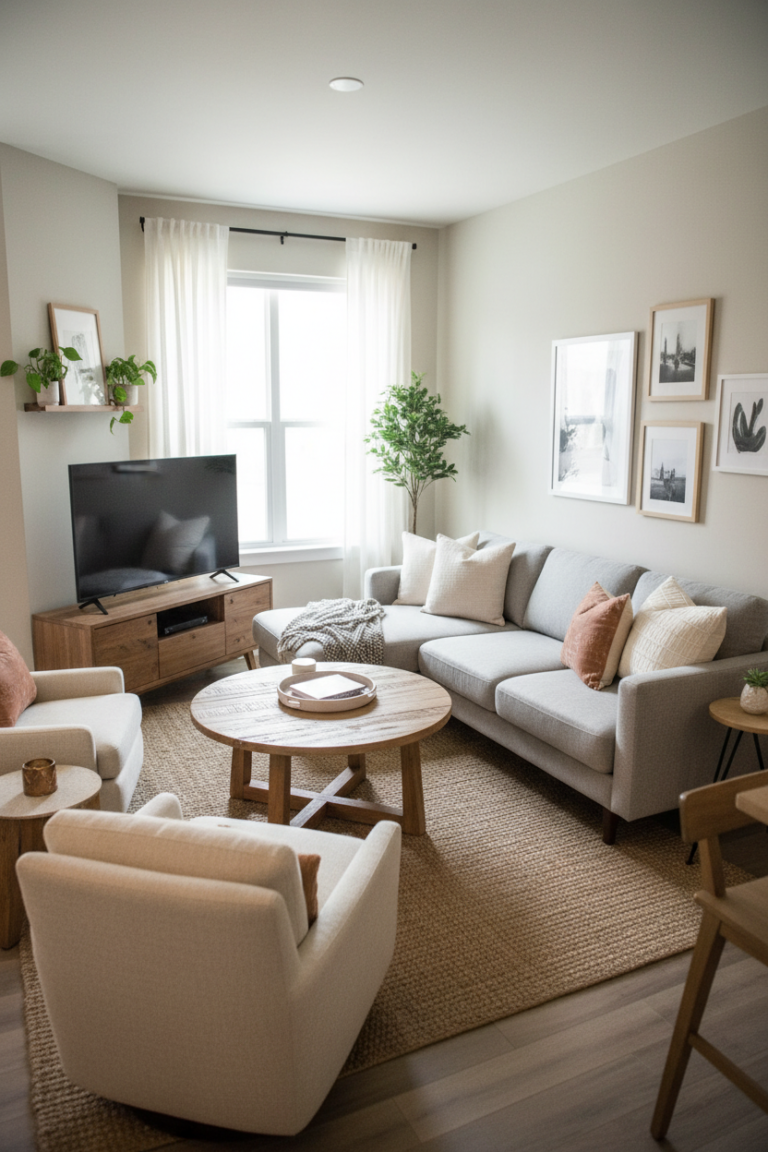
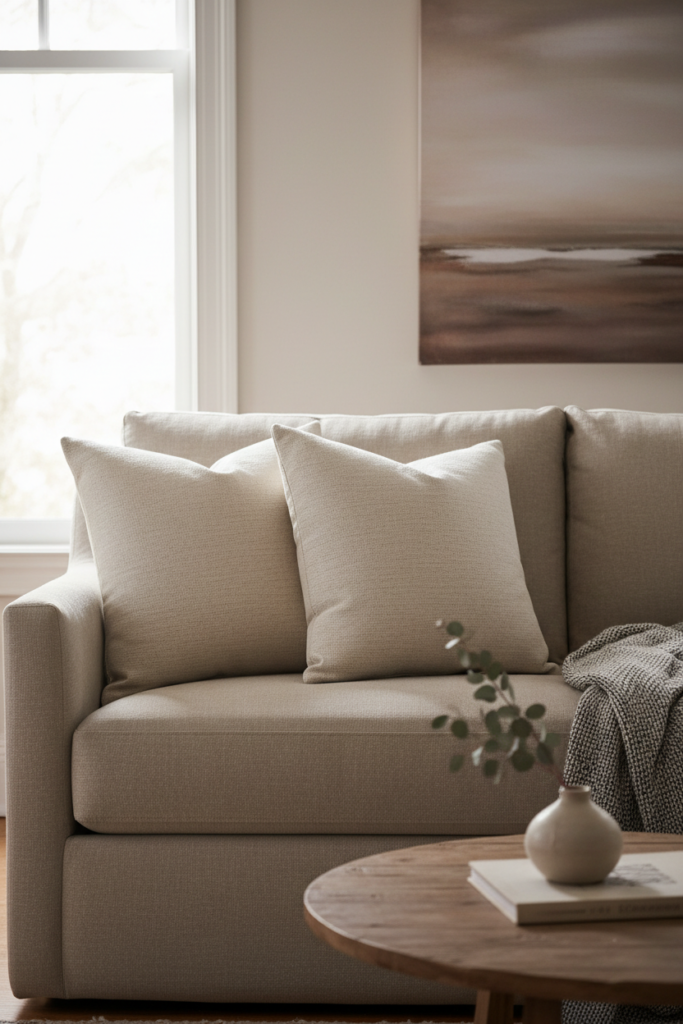
For sofas between 72 and 84 inches long, the ideal starting size is 20×20 or 22×22 inches.
For sofas over 90 inches long, you can go up to 24×24 inches for your largest back layer.
Here’s the rule:
Your largest pillow should take up about one-third of the sofa depth and roughly one-quarter of the sofa width when placed in the corner.
Anything smaller than 18×18 inches usually looks undersized on a standard sofa.
For loveseats under 60 inches, 18×18 inches works well as your largest size.
Scale is everything.
The Simple 3-Layer Formula for Sofas
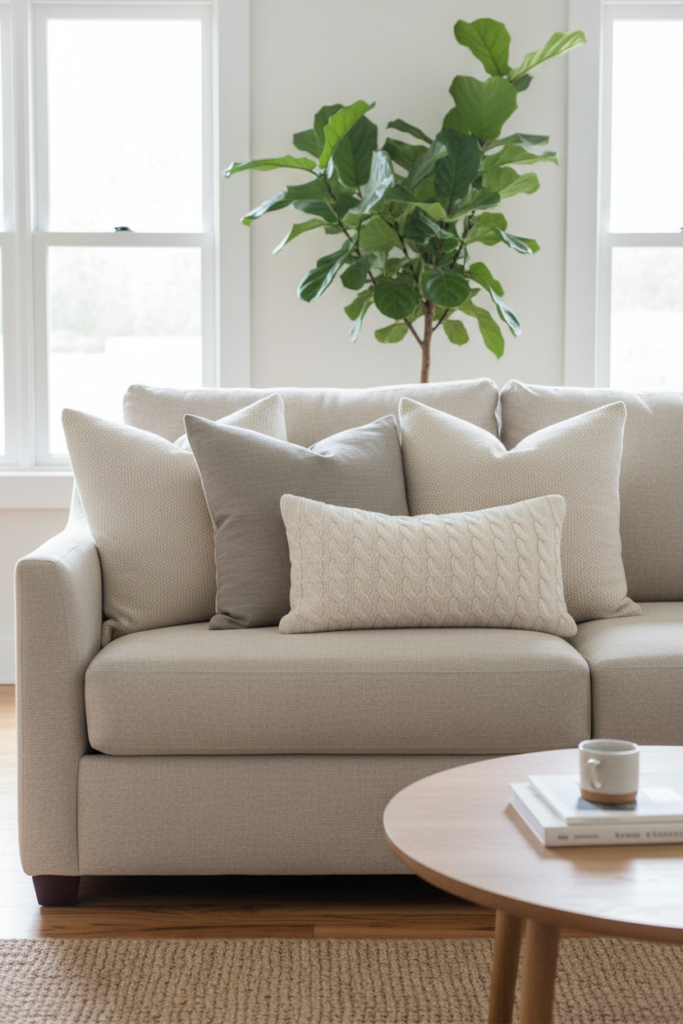
A balanced pillow arrangement usually includes three sizes:
Large base layer
Medium middle layer
Small front accent
This creates depth and keeps the arrangement from looking flat.
For a standard 80-inch sofa, use:
Two 22×22 inch pillows in the back corners
Two 20×20 inch pillows layered slightly in front
One lumbar pillow in the center, around 12×20 or 14×24 inches
This five-pillow setup feels full but not crowded.
If you prefer fewer pillows, use the 3-pillow version:
Two 22×22 inch pillows
One lumbar in the center
Odd numbers often feel more relaxed. Even numbers feel more symmetrical and tailored.
Choose based on the mood you want.
Depth and Insert Size Matter
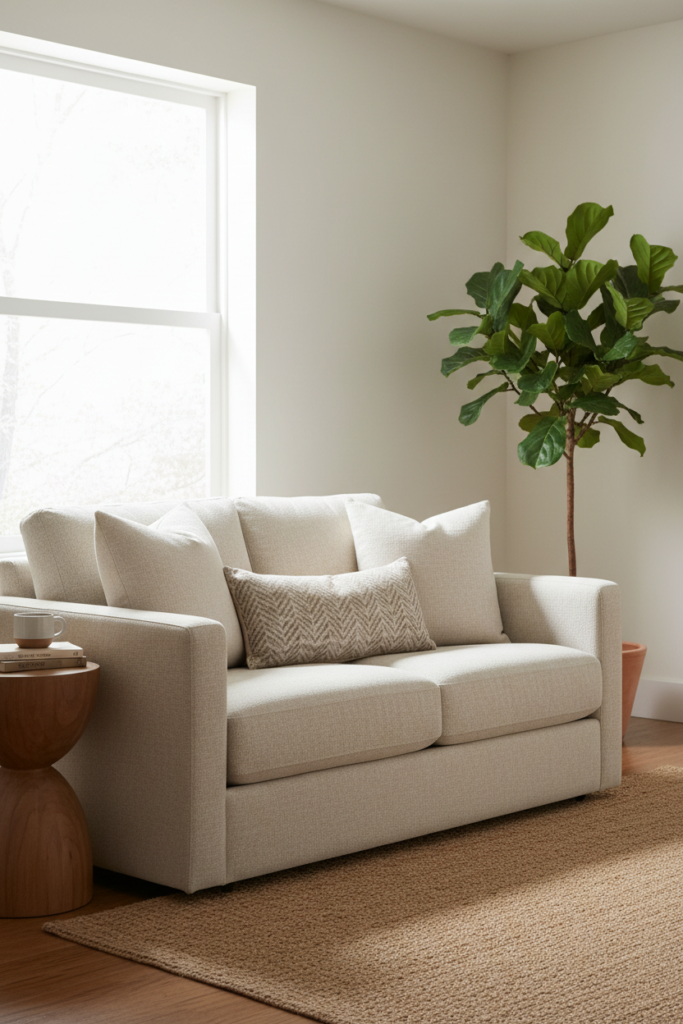
Always use inserts that are 1 to 2 inches larger than the cover.
For a 20×20 cover, use a 22×22 insert.
This gives you that plush, full look instead of a flat, lifeless pillow.
Down or down-alternative inserts create softer edges and allow for a gentle “chop” in the center if you like that relaxed look.
Overstuffed pillows feel cozy. Underfilled pillows look unfinished.
Layering by Height, Not Just Size
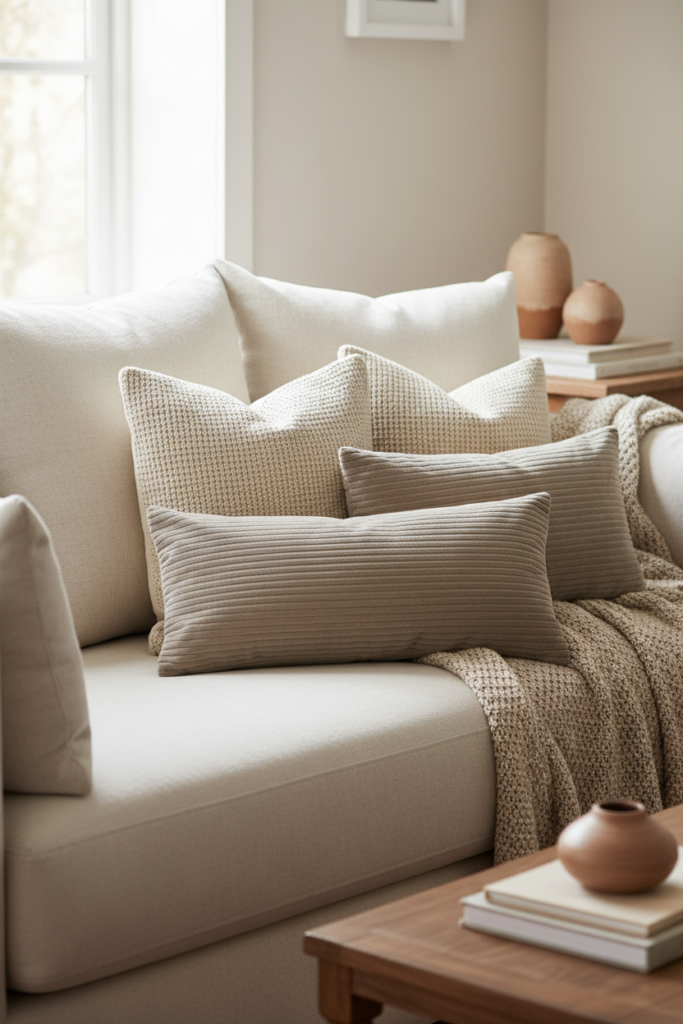
Think vertically when layering.
Back pillows should be tallest.
Middle layer slightly shorter.
Front accent lowest.
The goal is to create a gentle slope from back to front.
If all pillows are the same height, the arrangement looks stiff.
For example:
Back layer: 22×22
Middle layer: 20×20
Front layer: 14×24 lumbar
The lumbar breaks the square repetition and adds horizontal contrast.
Mixing Patterns and Texture
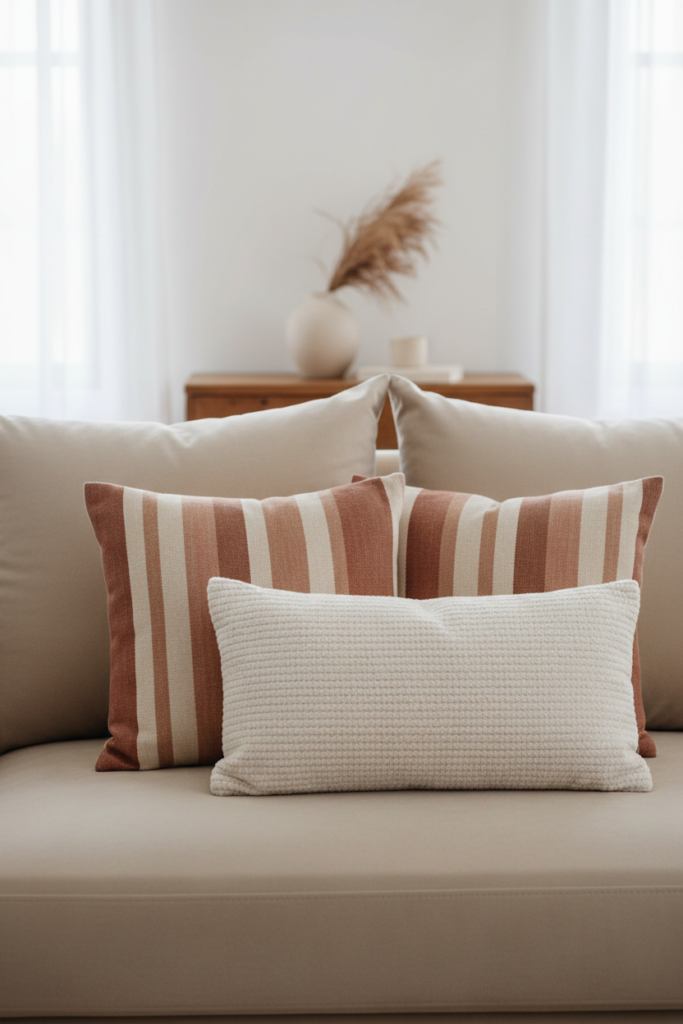
Limit your color palette to two or three main tones.
Use this simple formula:
One solid
One subtle pattern
One textured or woven piece
For example:
Solid warm beige 22×22
Muted striped 20×20
Textured boucle lumbar
This keeps things cohesive without feeling matchy.
If your sofa is patterned, lean toward mostly solid pillows with one subtle texture. If your sofa is solid, you can introduce gentle pattern variation.
Scale your patterns thoughtfully.
Large-scale patterns work best on larger back pillows.
Small-scale patterns belong on smaller front pillows.
Too many bold patterns competing at the same scale creates visual noise.
Pillow Placement for Sectionals
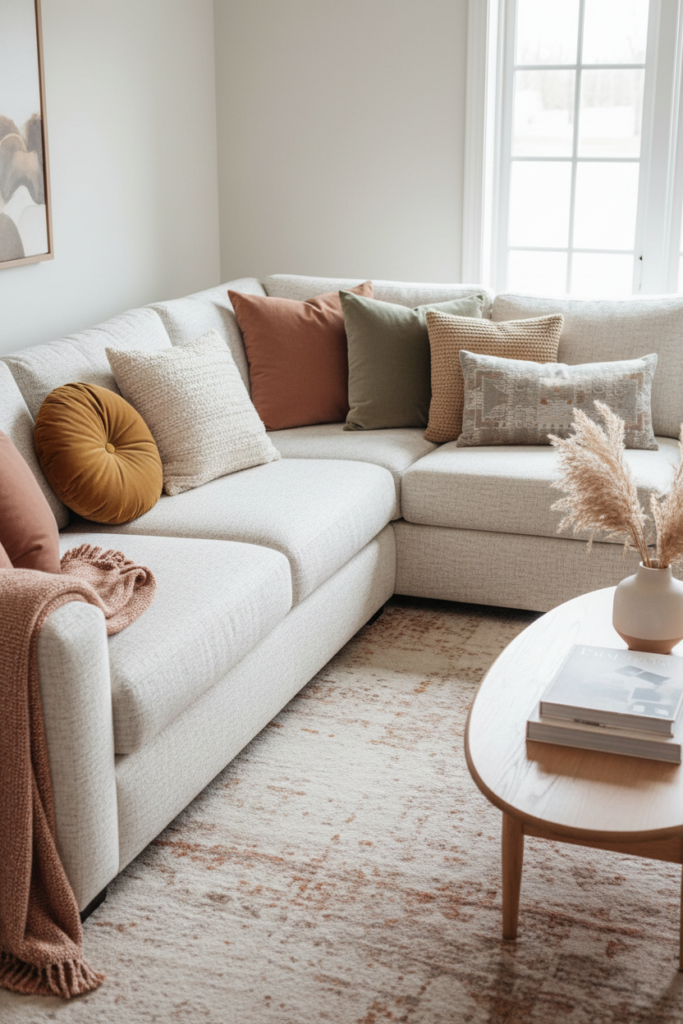
Sectionals require slightly different planning.
On an L-shaped sectional:
Place larger pillows in the far corners.
At the corner bend, use one or two medium pillows.
Add a lumbar to soften the center if desired.
Avoid overcrowding the chaise section. Two pillows at most on that side keeps it functional.
If the sectional is under 100 inches total, limit yourself to five pillows maximum.
Function should always come first.
Bed Pillow Layering Guide
Throw pillows on beds should complement, not overwhelm.
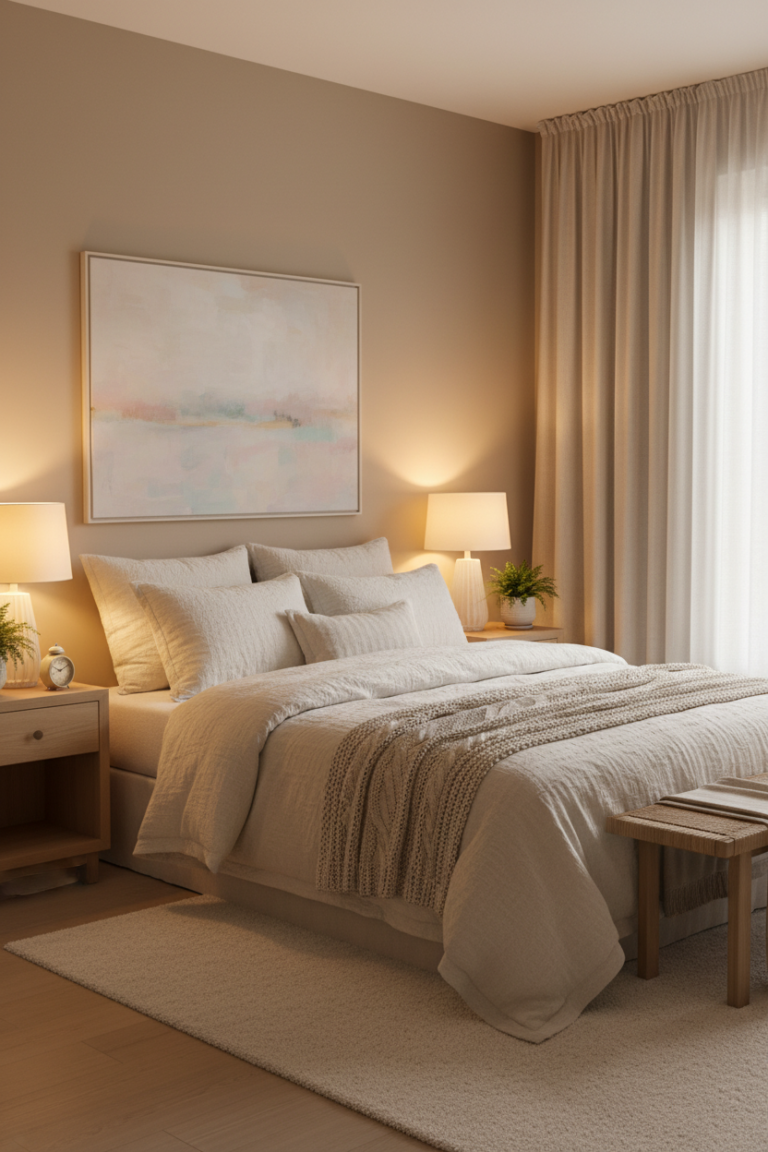
For a queen bed:
Two 26×26 euro pillows against the headboard
Two 20×20 standard throws
One lumbar or small decorative pillow in front
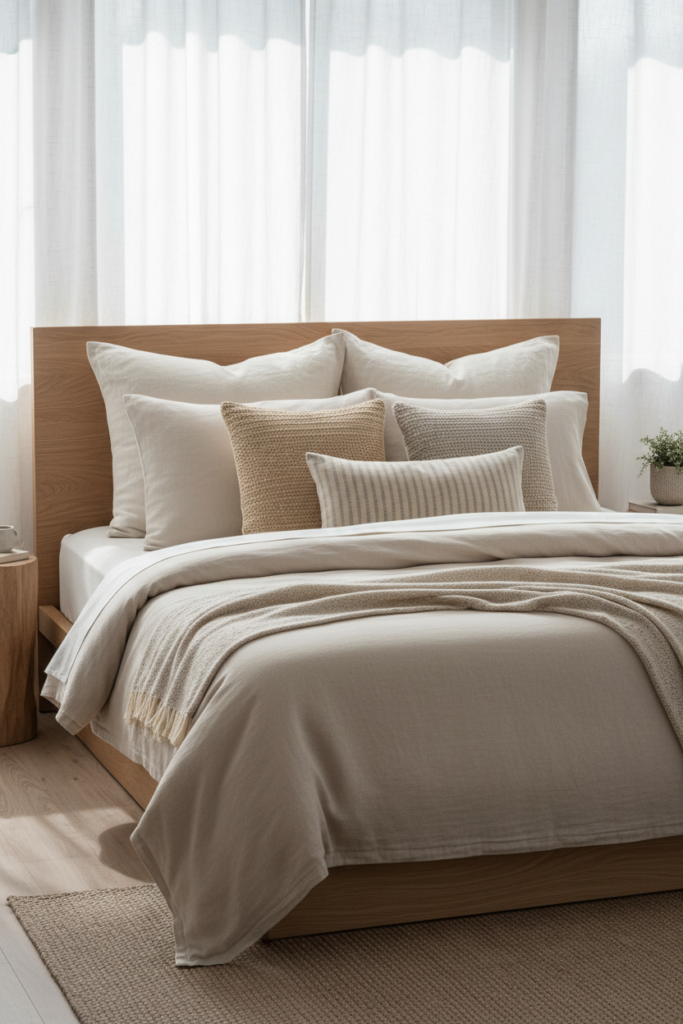
For a king bed:
Three euro pillows (26×26)
Two 22×22 pillows
One lumbar around 14×36 inches
The layered depth should not extend more than 12 to 16 inches from the headboard. If it does, the bed starts to look crowded.
Stick to one consistent color story that echoes the bedding.
Spacing and Breathing Room
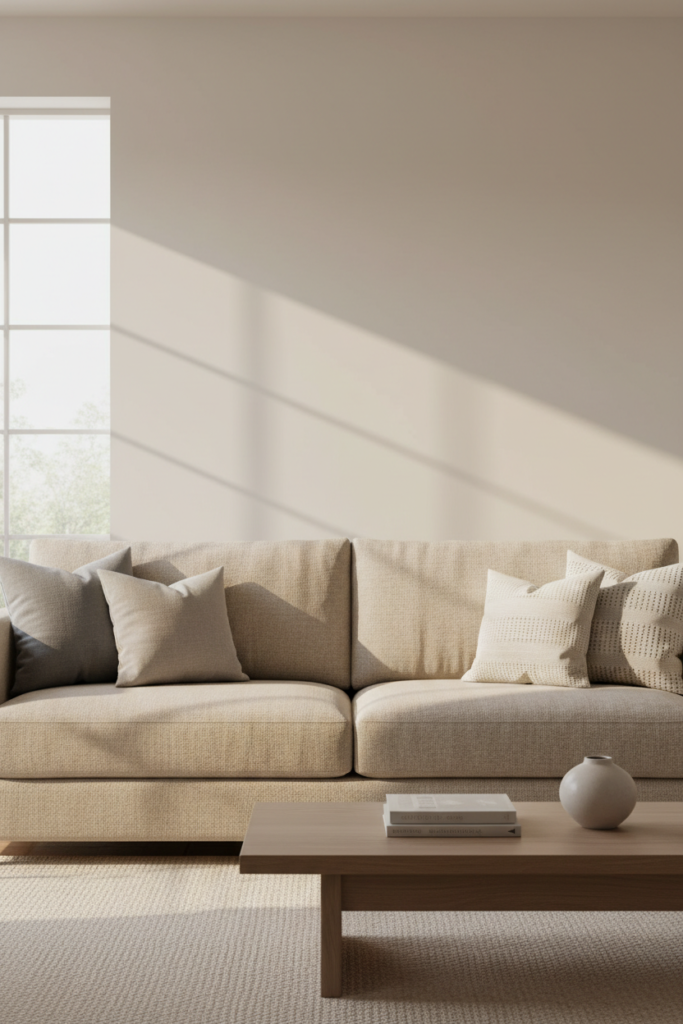
Do not push pillows tightly together.
Allow slight gaps so each shape can be seen.
If pillows extend beyond the sofa arms or droop over the edges, they are too large.
If they barely fill the corner, they are too small.
Stand back and check proportions from across the room. That perspective reveals imbalance quickly.
Common Mistakes
Using pillows that are too small
Anything under 18 inches usually looks undersized on standard sofas.
Choosing all the same size
Uniform sizes create a flat, lifeless look.
Overloading the sofa
If you need to remove three pillows just to sit down, it’s too many.
Ignoring insert fullness
Flat inserts ruin even the best covers.
Using too many competing patterns
Limit bold prints and balance them with solids.
Placing pillows too upright
Relax them slightly. A gentle lean looks more inviting.
Pro Tip for a Cozier Look
Soften one element intentionally.
If all pillows are crisp cotton or linen, add one textured piece like boucle, knit, or velvet.
Texture absorbs light differently. It creates subtle shadow and dimension, especially in evening light.
You can also slightly angle the outermost pillows instead of keeping them perfectly straight. That small shift makes the sofa feel relaxed and lived in rather than staged.
Comfort is visual as much as physical.
Final Thoughts
Throw pillow styling is about proportion and layering.
Choose the right base size for your sofa.
Layer in descending heights.
Mix texture and subtle pattern.
Use properly sized inserts.
Keep the arrangement balanced but not rigid.
When scale and layering are correct, pillows don’t look random. They look intentional, inviting, and complete.
And once you follow these simple formulas, you can style any sofa or bed with confidence.

Hi, I’m Livia. A mom who believes that a house becomes a home through the little things.
Over time, I started to understand what truly makes a space feel cozy, comfortable, and safe. Little by little, I transformed my own home into a place where my family and I genuinely love to be, a space that feels calm, warm, and ours.
Here, I share simple ideas and thoughtful inspiration to help you turn your home into your favorite place in the world too.