How to Start a Cozy Herb Garden in a Small Kitchen
This post may contain affiliate links, which means we may earn a small commission at no extra cost to you. We may also display third-party ads and include links to partner brands or shops. Some images may be created or enhanced using AI or sourced from licensed platforms. All opinions are our own.
A small kitchen can make it feel like there is no room for anything extra.
Counters are already in use, shelves feel full, and the idea of adding plants might seem impractical. At the same time, there is something very inviting about having fresh herbs within reach. The scent, the color, the small ritual of cutting a few leaves while cooking.
The good news is that you do not need much space to make it work.
With a few thoughtful choices, a small herb garden can fit naturally into your kitchen and become part of your daily routine.
1. Choose the Right Spot Based on Natural Light
Before buying anything, look at your kitchen during the day.
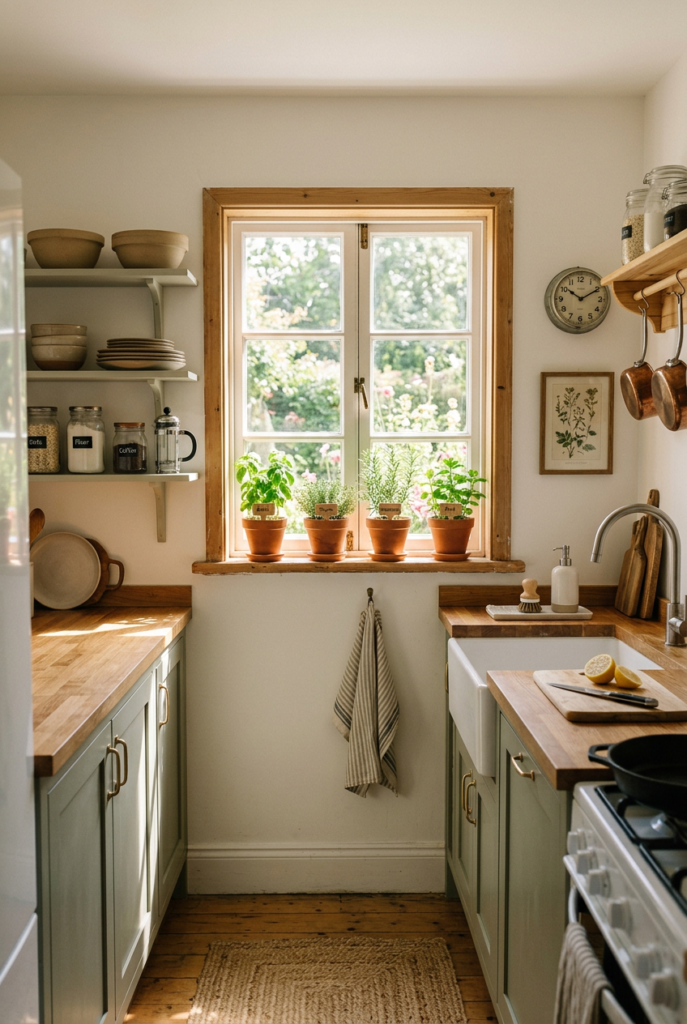
Notice where the light falls and how long it stays. Herbs need consistent light, ideally near a window that gets several hours of sun.
A windowsill is the most obvious option, but you can also use a small table, a shelf, or even the corner of a countertop that receives light.
This works because herbs rely on steady light to grow evenly. When you place them in the right spot from the beginning, everything becomes easier to maintain.
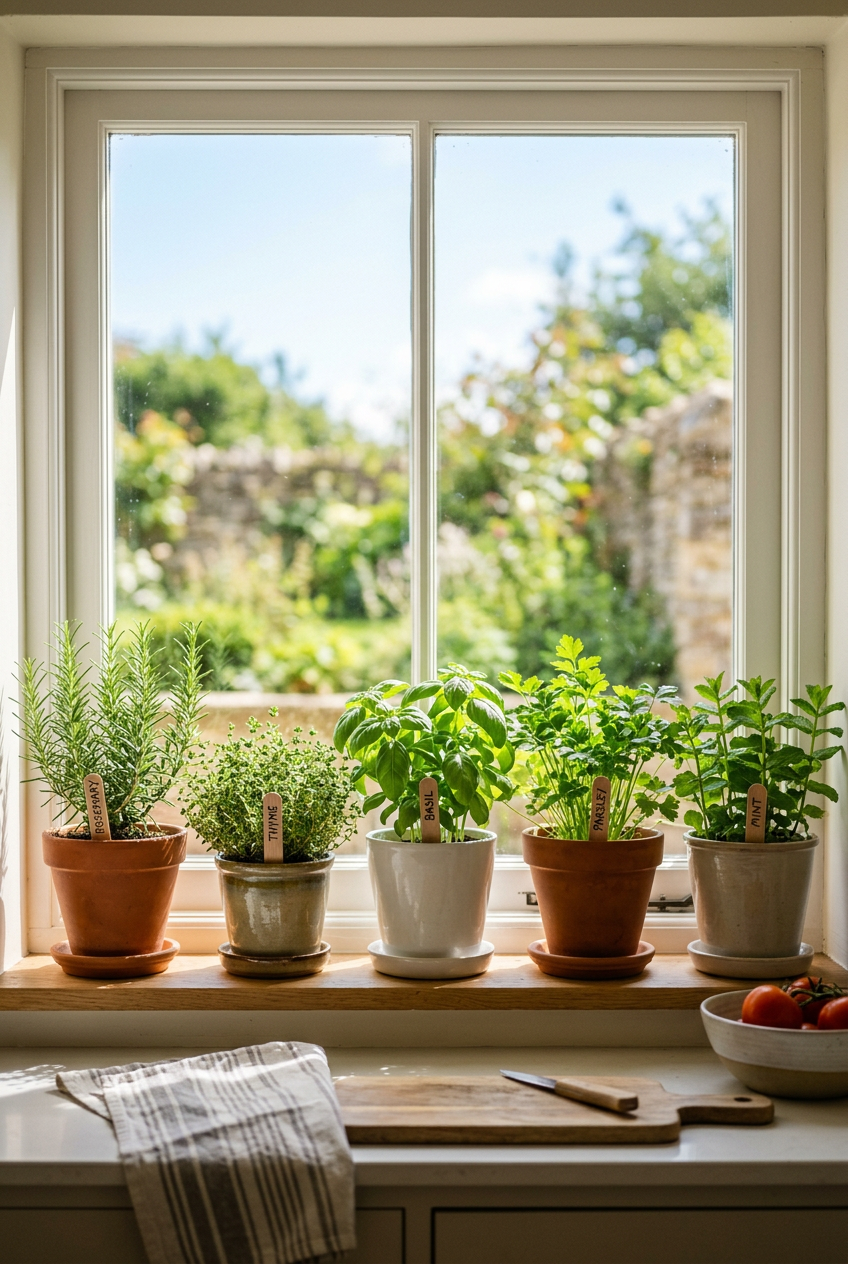
If the light is softer, choose herbs like mint or parsley. If you have stronger sunlight, basil and rosemary tend to thrive.
2. Start Small with Herbs You Actually Use
It is tempting to grow many varieties, but starting small works better.
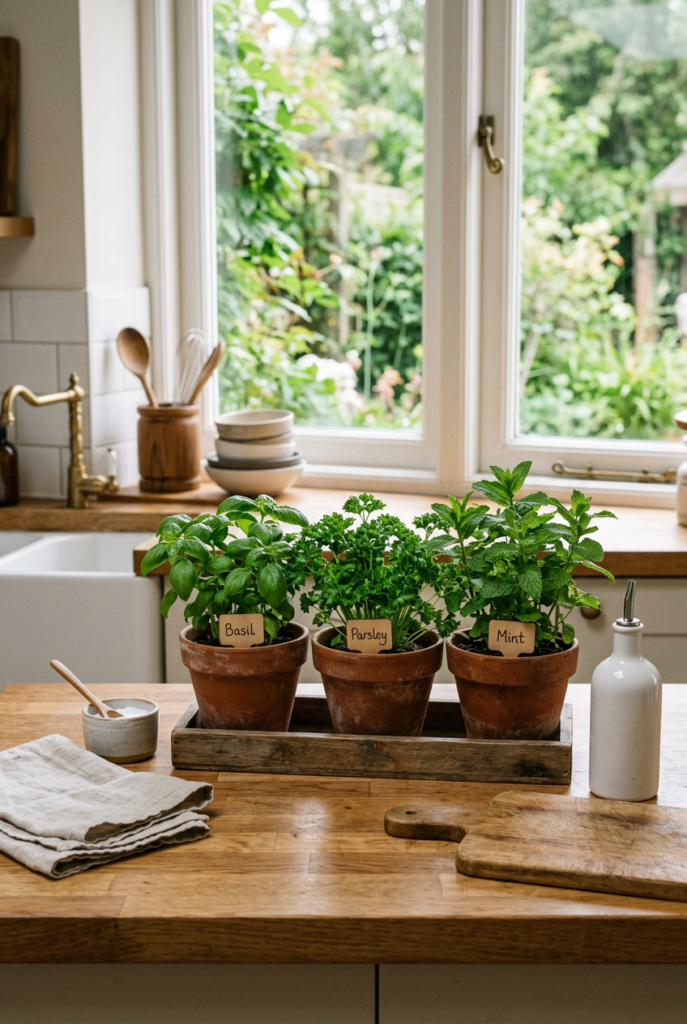
Choose two or three herbs that you already use in your cooking. Basil, chives, parsley, or mint are good starting points.
This keeps the setup simple and ensures that the herbs do not go unused.
When you reach for them regularly, they become part of your routine instead of something you have to remember to use.
It also helps you learn how each plant behaves without feeling overwhelmed.
3. Use Containers That Balance Function and Style
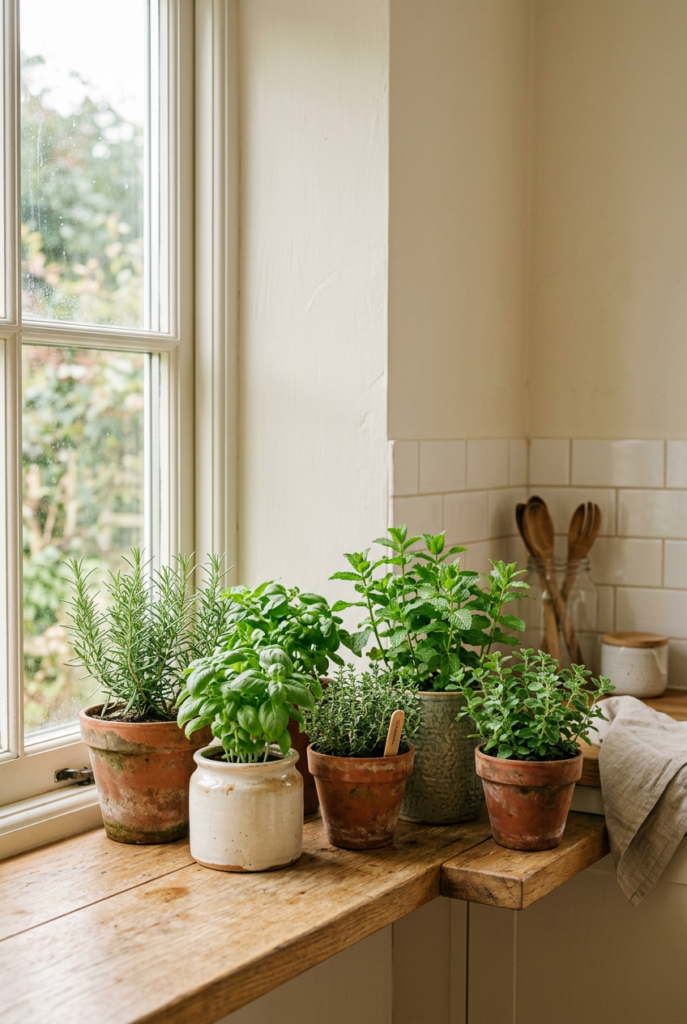
The containers you choose affect both how your plants grow and how your kitchen feels.
Make sure each pot has proper drainage. This prevents excess water from sitting at the bottom and damaging the roots.
For styling, choose materials that match your kitchen. Terracotta adds warmth, ceramic feels soft and clean, and glass can look light and minimal.
Keep the palette simple so the space feels calm.
A small grouping of similar pots creates a cohesive look and makes the herbs feel like part of the kitchen, not an afterthought.
4. Create a Dedicated Herb Area Instead of Scattering Them
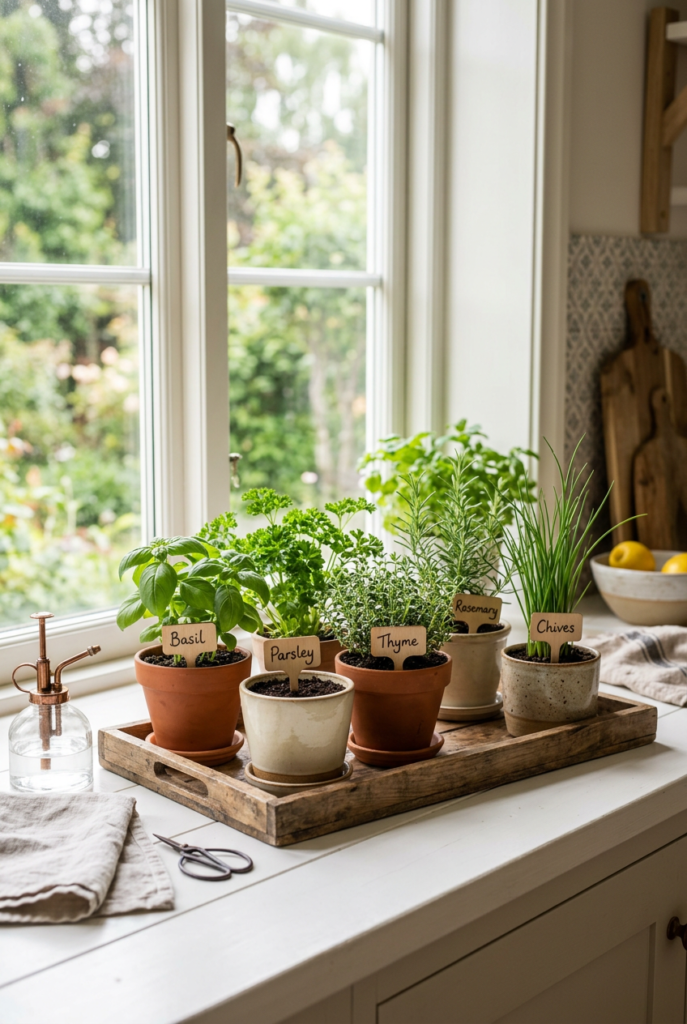
Instead of placing herbs in different spots, keep them together.
Use a tray, a narrow shelf, or a section of your windowsill to group them in one place.
This makes watering and care easier because everything is in one area.
It also creates a visual moment in your kitchen. A small row of green leaves in soft light adds life and texture without taking up much space.
When the herbs are grouped, they feel intentional and easier to maintain.
5. Water with a Simple, Consistent Rhythm
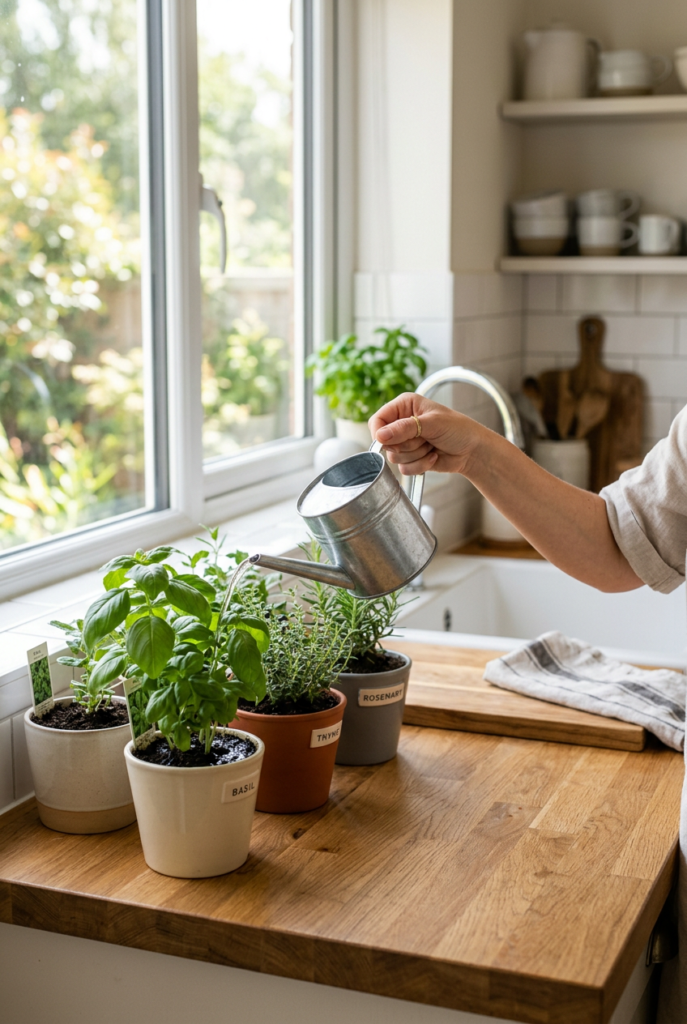
One of the most common challenges is overwatering or forgetting to water.
Instead of following strict schedules, pay attention to the soil. Touch it lightly. If it feels dry just below the surface, it is time to water.
Use a small watering can or a cup and add water slowly until it drains through the bottom.
This works because herbs prefer steady, moderate moisture rather than large amounts all at once.
Keeping a simple rhythm makes the process feel natural instead of complicated.
6. Trim and Use Your Herbs Regularly
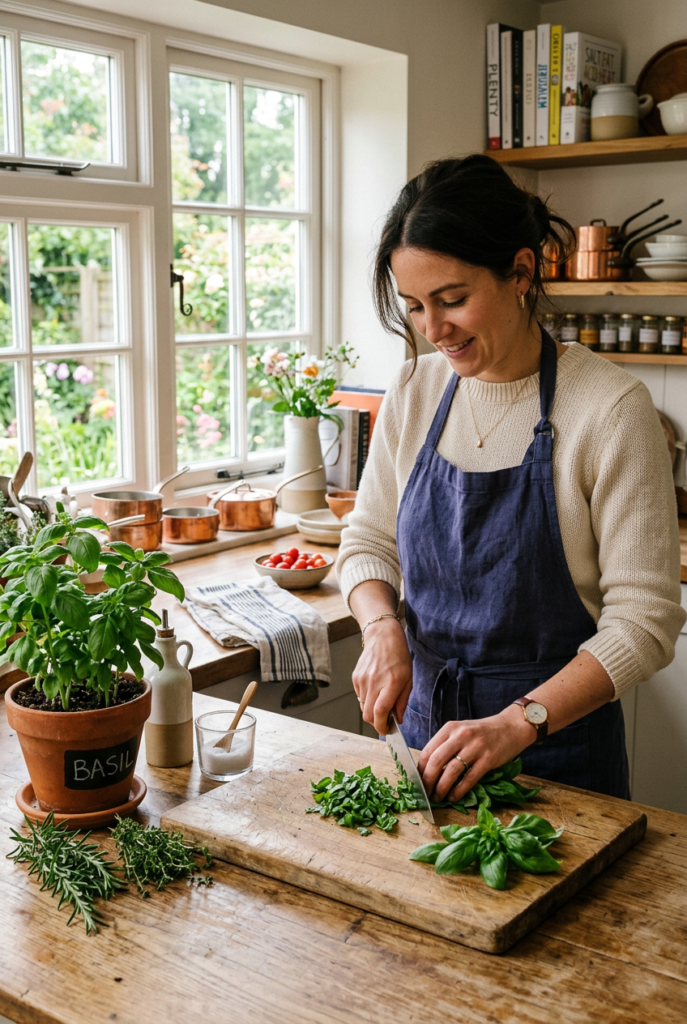
Herbs grow better when they are used.
Cutting leaves encourages new growth and prevents the plants from becoming too tall or sparse.
Use clean scissors or pinch gently with your fingers. Always leave enough leaves so the plant can continue growing.
This step connects your herb garden to your daily life.
When you cook, you reach for fresh leaves. The scent releases immediately, and the experience feels more hands-on and satisfying.
7. Keep the Space Light, Clean, and Easy to Access
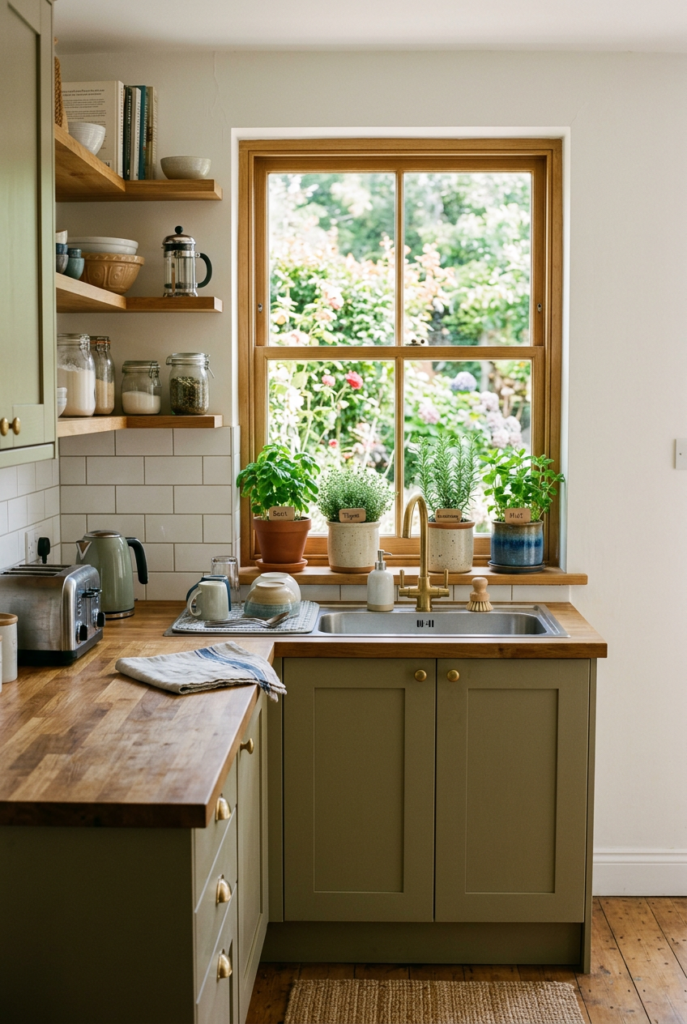
A small kitchen works best when everything feels open and easy.
Avoid overcrowding your herb area with too many items. Leave a bit of space around the pots so light can reach all sides.
Wipe the area occasionally and remove dry leaves to keep it fresh.
This makes the herb garden feel like part of the kitchen’s flow instead of something separate.
When it looks clean and simple, you are more likely to care for it consistently.
8. Rotate Your Pots for Even Growth
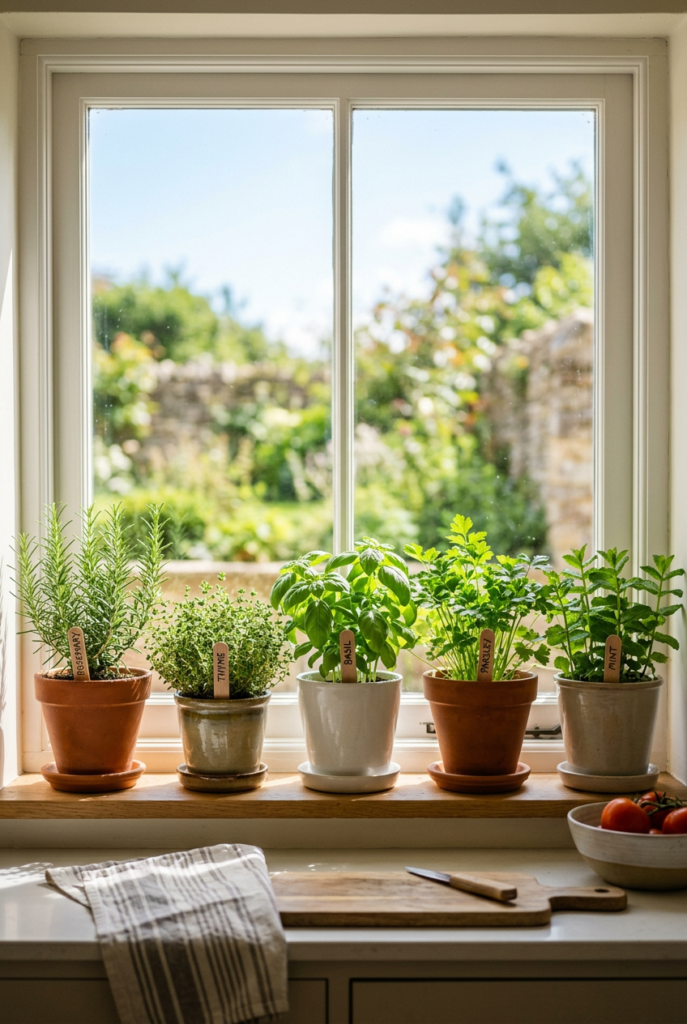
Herbs naturally grow toward the light.
If they stay in the same position, you might notice them leaning to one side over time. This can make the plant look uneven and slightly weak.
Every few days, turn your pots a little so all sides receive light.
This keeps the plant fuller, more balanced, and visually more beautiful. It also helps prevent stems from becoming too thin or stretched.
9. Use a Simple Tray to Keep Everything Organized
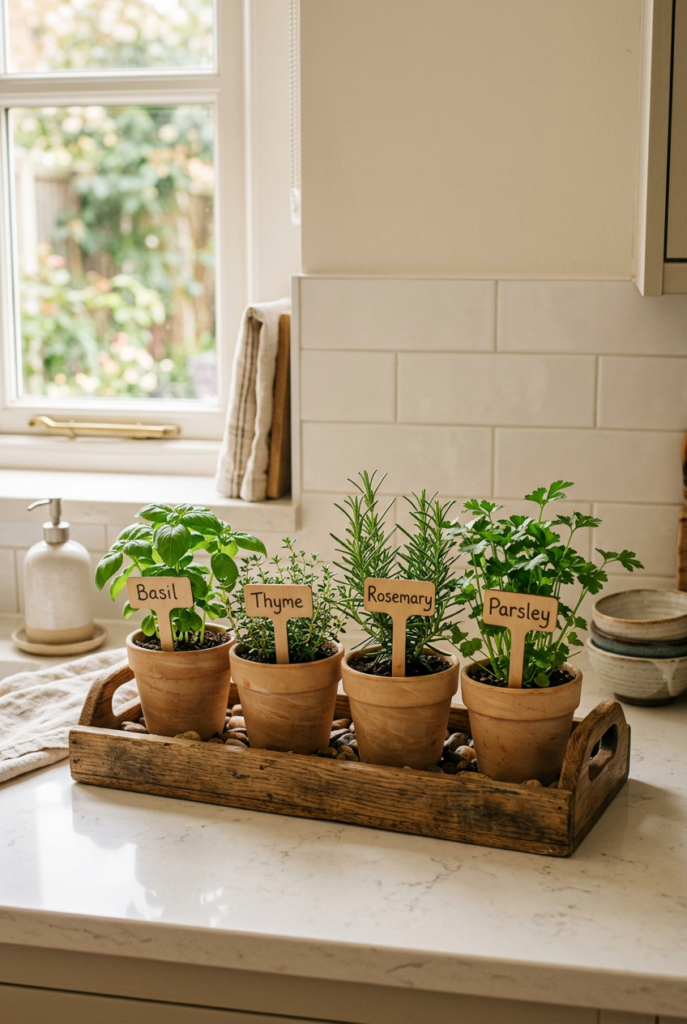
A small tray can make a big difference in a compact kitchen.
Place all your herb pots on a wooden or ceramic tray. This keeps water contained and makes it easier to move everything at once when cleaning.
It also creates a clear visual boundary.
Instead of feeling scattered, your herb garden becomes one cohesive area, which makes the kitchen feel calmer and more intentional.
10. Pay Attention to Temperature and Air Flow
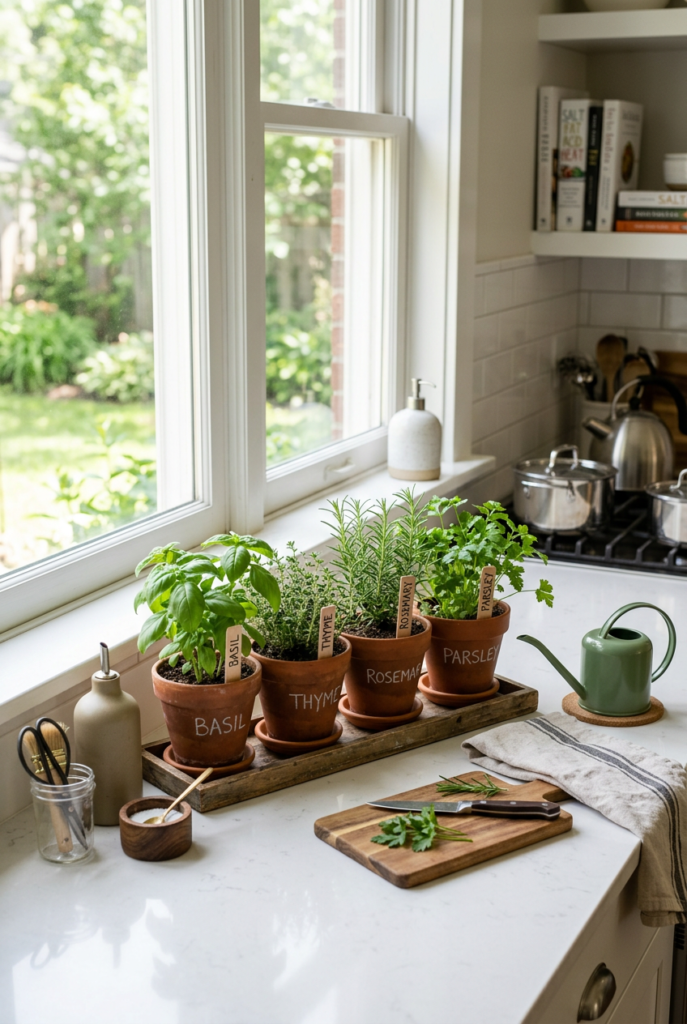
Kitchens can have sudden changes in temperature.
Avoid placing herbs too close to the stove, oven, or strong drafts from windows or air vents.
Herbs prefer a stable, slightly warm environment with gentle air circulation.
When the conditions feel comfortable to you, they are usually comfortable for the plants as well. This helps them stay healthy and keeps the leaves fresh and vibrant.
11. Use Plant Hangers to Free Up Counter Space
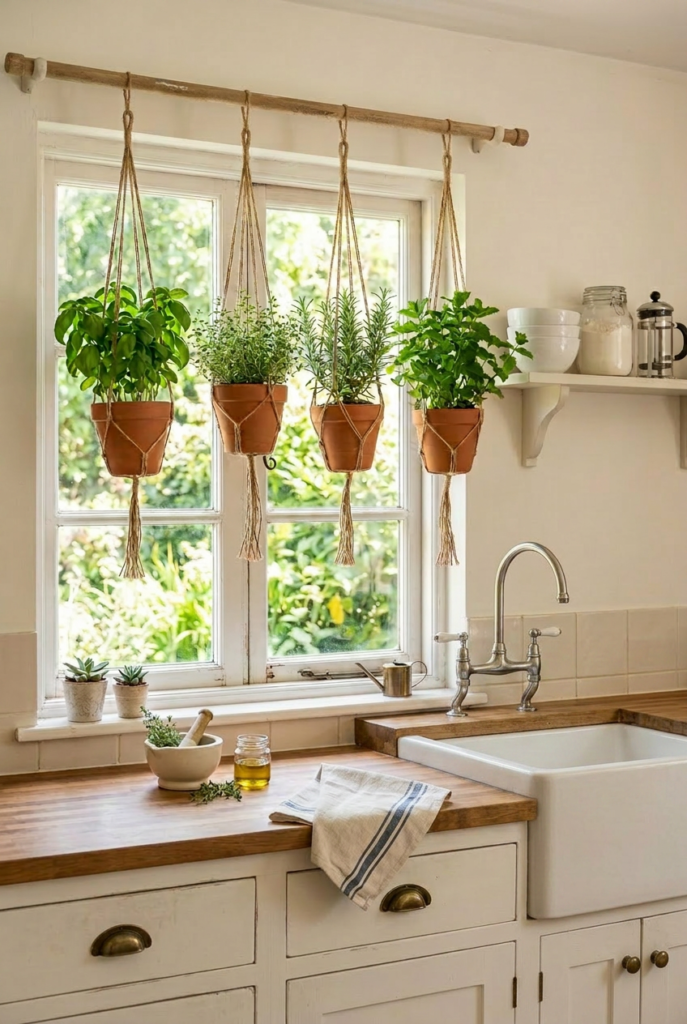
If your kitchen feels crowded, take advantage of vertical space.
Plant hangers are a simple way to keep herbs near the light without using counters or shelves. You can hang them near a window, from a ceiling hook, or even on a wall-mounted bracket.
Choose lightweight pots and soft materials like cotton rope or simple metal hangers to keep the look light.
This works especially well for trailing herbs like mint or oregano, which naturally grow downward.
It also creates a beautiful visual layer in the kitchen. The leaves catch the light, move slightly with the air, and make the space feel more alive without adding clutter.
Common Mistakes to Avoid
One of the most common mistakes is starting with too many herbs at once.
It seems like a good idea in the beginning, but quickly becomes harder to manage. Different herbs need slightly different care, and when everything is new, it can feel confusing. Starting with just two or three makes the process much easier and more enjoyable.
Another thing that often goes wrong is placing herbs where they look good, not where they grow well.
A pretty corner without enough light will not support healthy plants. If the leaves start to look pale or stretched, it is usually a sign they need more sun. Light should always come before aesthetics.
Watering can also be tricky.
It is easy to water too often, especially when you are excited to care for your plants. But herbs prefer slightly dry soil over constantly wet roots. A quick touch of the soil is more reliable than following a strict schedule.
Containers are another detail that gets overlooked.
Pots without drainage may seem convenient, but they can slowly damage the plant. Even if everything looks fine at first, excess water builds up over time. A simple drainage hole makes a big difference.
There is also the habit of not trimming the herbs enough.
It feels counterintuitive at first, but using your herbs regularly actually helps them grow. When they are left untouched, they can become thin and less productive.
And finally, trying to make everything perfect from the beginning.
A cozy herb garden is something that develops over time. It does not need to look complete right away. Small adjustments, observation, and daily use are what make it work in the long run.
A Small Ritual That Changes Your Kitchen
Starting a herb garden in a small kitchen is not about adding something extra to your space.
It is about changing how you use what you already have.
At first, it might just be a few small pots near the window. But over time, it becomes part of your rhythm. You notice the light in the morning, you water the plants without thinking, you reach for fresh herbs while cooking.
These small moments add up.
The kitchen begins to feel more alive, more personal, and more connected to your daily life.
You do not need a perfect setup or a lot of space to get there.
Just a small start, a bit of light, and the willingness to care for something consistently.
And from that, the space slowly transforms.

Hi, I’m Livia. A mom who believes that a house becomes a home through the little things.
Over time, I started to understand what truly makes a space feel cozy, comfortable, and safe. Little by little, I transformed my own home into a place where my family and I genuinely love to be, a space that feels calm, warm, and ours.
Here, I share simple ideas and thoughtful inspiration to help you turn your home into your favorite place in the world too.