Beginner-Friendly Homesteading Ideas for Small Spaces
This post may contain affiliate links, which means we may earn a small commission at no extra cost to you. We may also display third-party ads and include links to partner brands or shops. Some images may be created or enhanced using AI or sourced from licensed platforms. All opinions are our own.
Homesteading can feel out of reach when you live in a small space.
It often brings to mind large gardens, storage rooms, and long days spent outdoors. But the heart of it is much simpler than that. It is about creating small systems that support your daily life. Growing something you use. Making something with your hands. Reducing waste in a quiet, practical way.
You do not need more space to begin. You need a few intentional choices and a place to start.
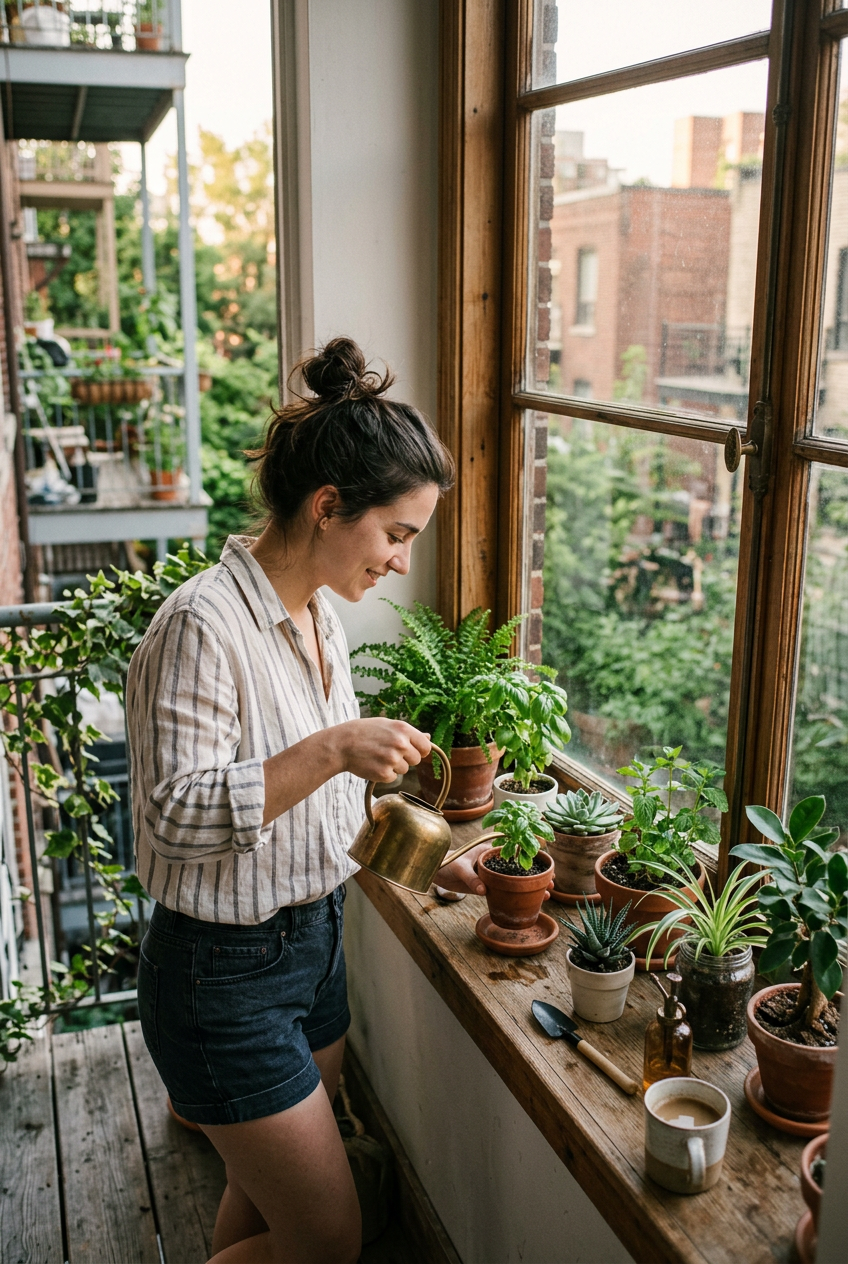
Even a windowsill, a corner shelf, or a small balcony can hold meaningful routines. And once those routines are part of your day, your home begins to feel more grounded, more alive, and more yours.
These ideas are designed to be realistic, useful, and easy to begin.
1. A Small Herb Garden by the Window
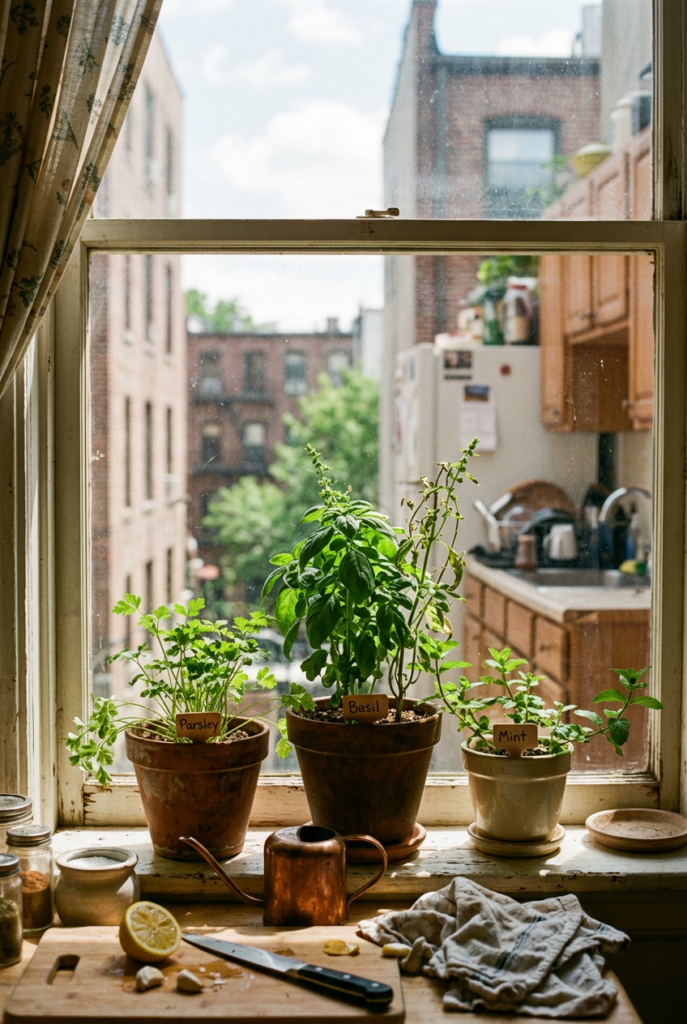
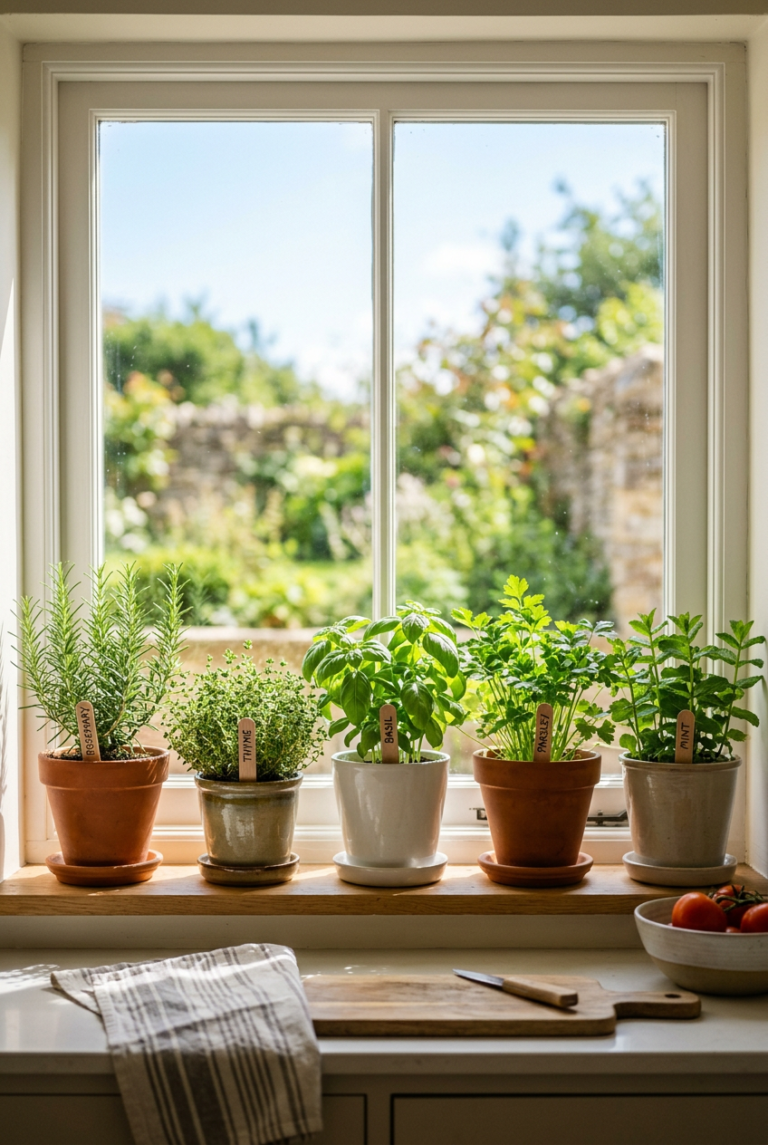
Start with herbs you already use in your cooking.
Choose two or three, such as basil, parsley, or mint, instead of trying to grow everything at once. Place them in pots with drainage and set them near your brightest window.
Water lightly every few days and rotate the pots so they grow evenly toward the light.
The key is accessibility. When herbs are within reach, you will use them more often. Cutting fresh leaves while cooking creates a small, satisfying connection between your space and your meals.
2. A Compact Balcony Garden with Edible Plants
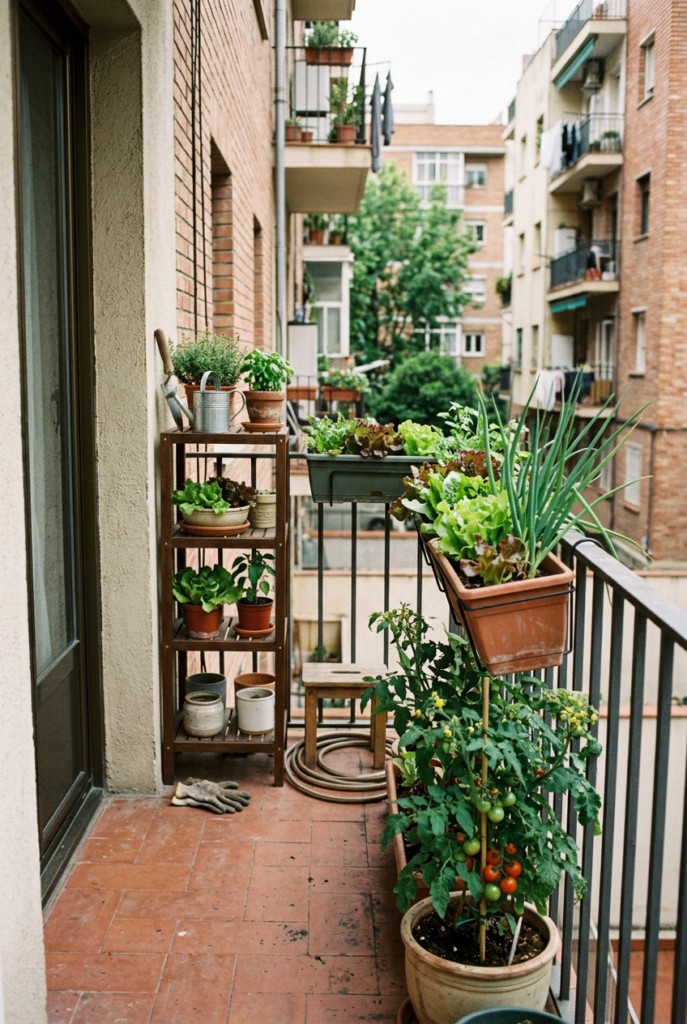
If you have a balcony, even a narrow one, you can grow simple foods.
Use vertical shelves or railing planters to save space. Start with easy options like lettuce, green onions, or cherry tomatoes.
Group plants with similar water needs together so care becomes easier.
Keep the layout light and breathable. A few well-placed pots are more effective than filling every inch. This makes the space feel calm while still being productive.
3. A Simple Indoor Compost Setup
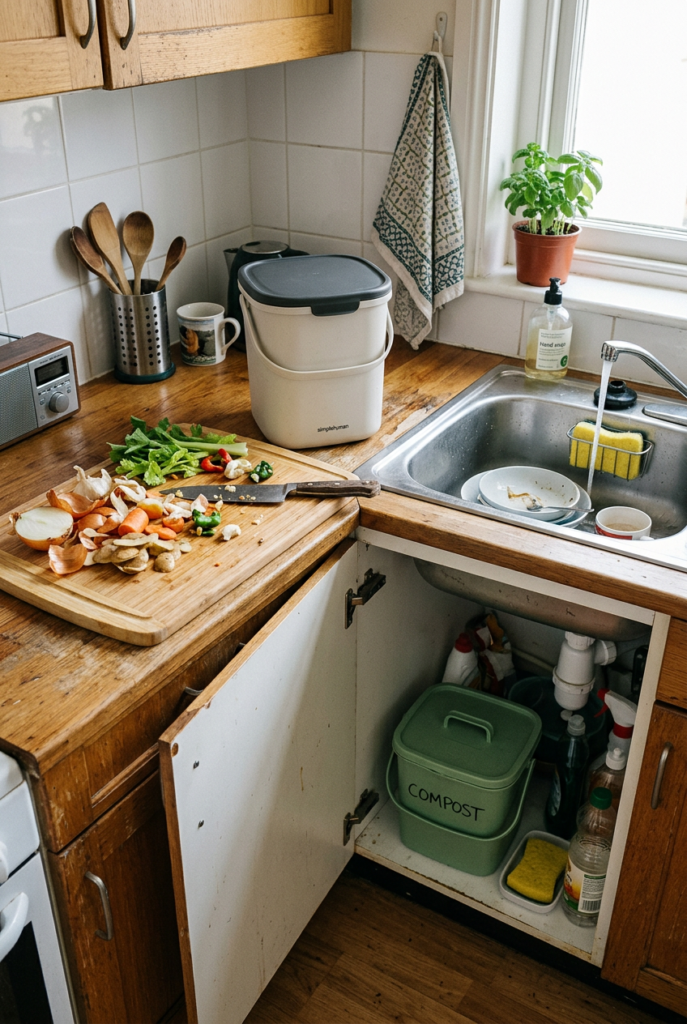
Food scraps can become part of a small, useful system.
Use a compact container with a lid and keep it in a convenient spot, like under the sink or near where you prep food.
Empty it regularly into a compost bin if you have access, or use it for balcony plants if suitable.
This habit reduces waste and changes how you think about what you throw away. It becomes part of your routine instead of an extra task.
4. A Drying Rack for Herbs and Flowers
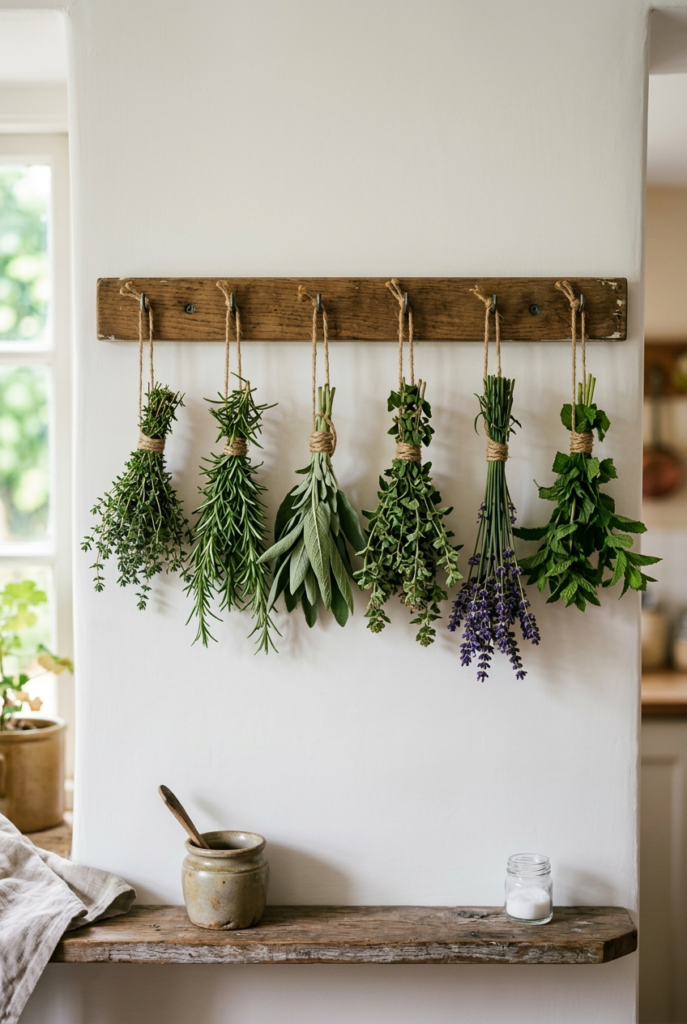
Drying herbs allows you to preserve what you grow or buy.
Tie small bundles with string and hang them in a dry, airy spot away from direct sunlight. A simple wall hook or small rack works well.
Check them after a week or two. Once dry, store them in glass jars.
This process adds a seasonal rhythm to your space and gives you ingredients you prepared yourself.
5. A Cozy Corner for Homemade Foods
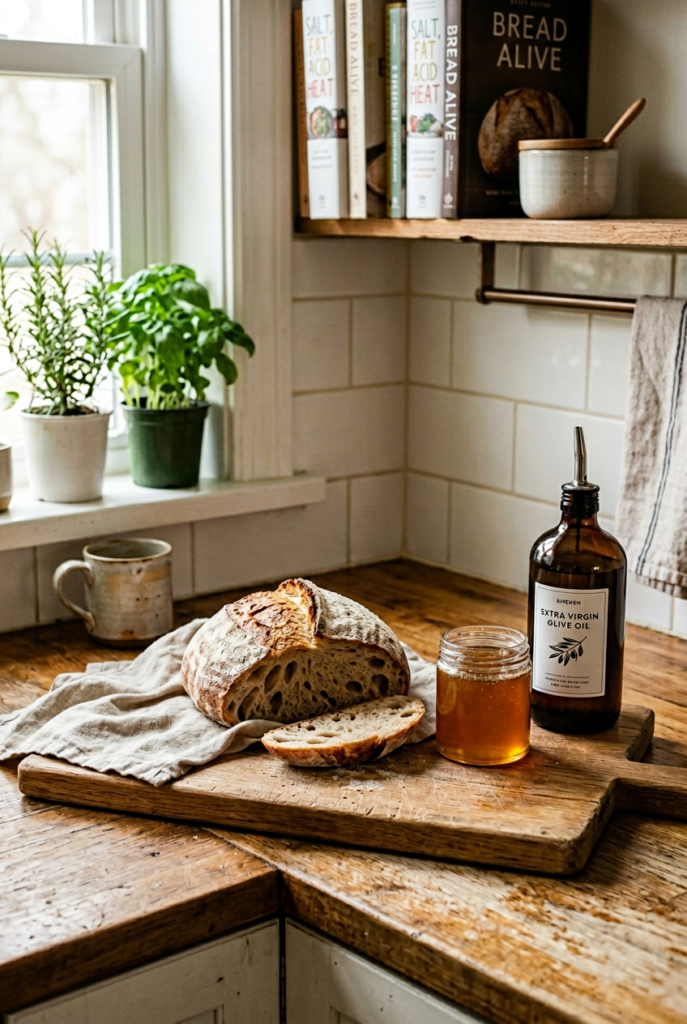
Choose one surface in your kitchen to dedicate to homemade items.
It could be a small wooden board with a jar of honey, a bottle of oil, or something you baked.
Keep it simple and uncluttered. Rotate items based on what you are using that week.
This small setup encourages you to prepare food at home and makes those efforts visible and rewarding.
6. A Basket System for Produce and Pantry Items
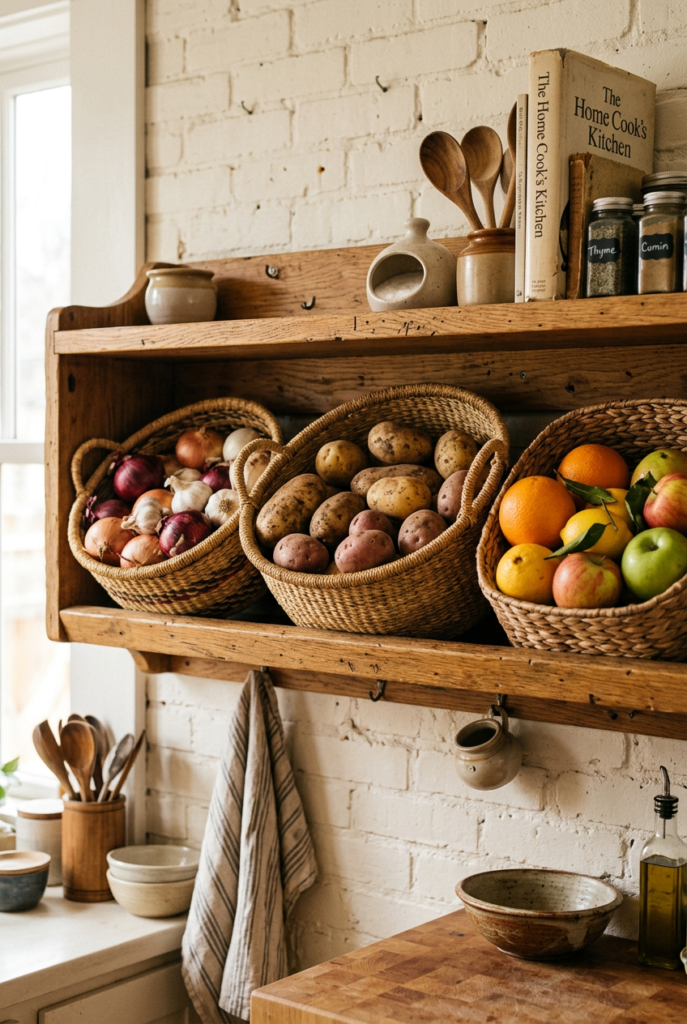
Use baskets or crates to store items you use often.
Place them where you can see them, like a shelf or countertop. Keep similar items together so everything feels organized.
For example, one basket for fruits, another for onions or potatoes.
This reduces waste because you can easily see what needs to be used, and it adds warmth through natural textures.
7. A Small Space for Handcrafting
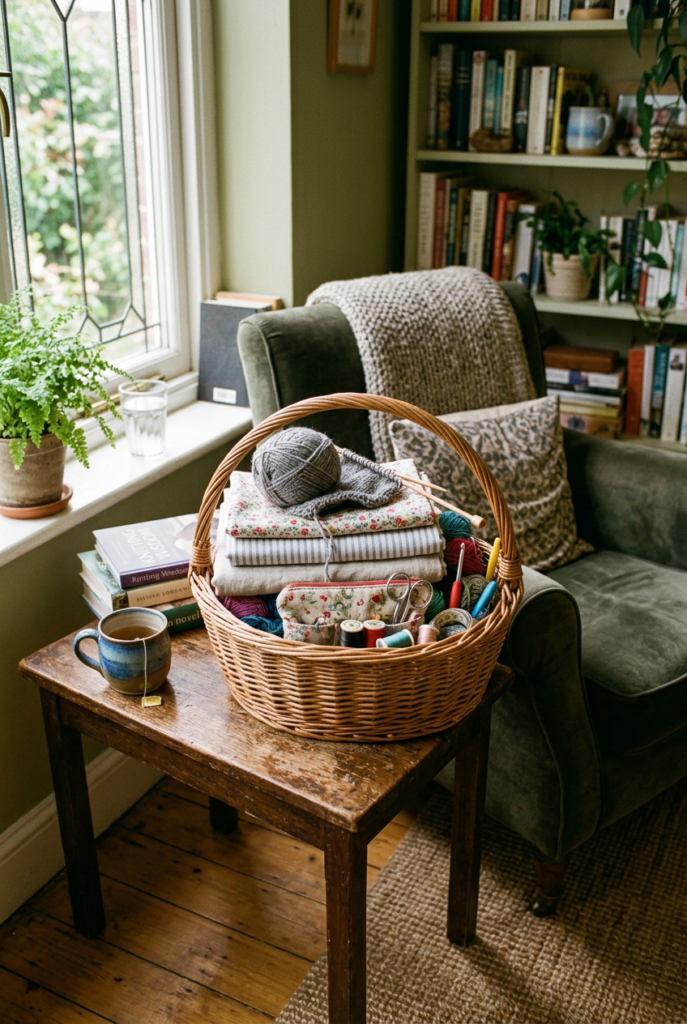
Homesteading includes making and repairing.
Create a small, accessible setup for simple crafts. This could be a basket with knitting, a sewing kit, or basic tools for mending.
Keep it easy to take out and put away.
When materials are visible and ready, you are more likely to use them. This turns small tasks into quiet, satisfying moments.
8. A Fermentation or Pickling Shelf
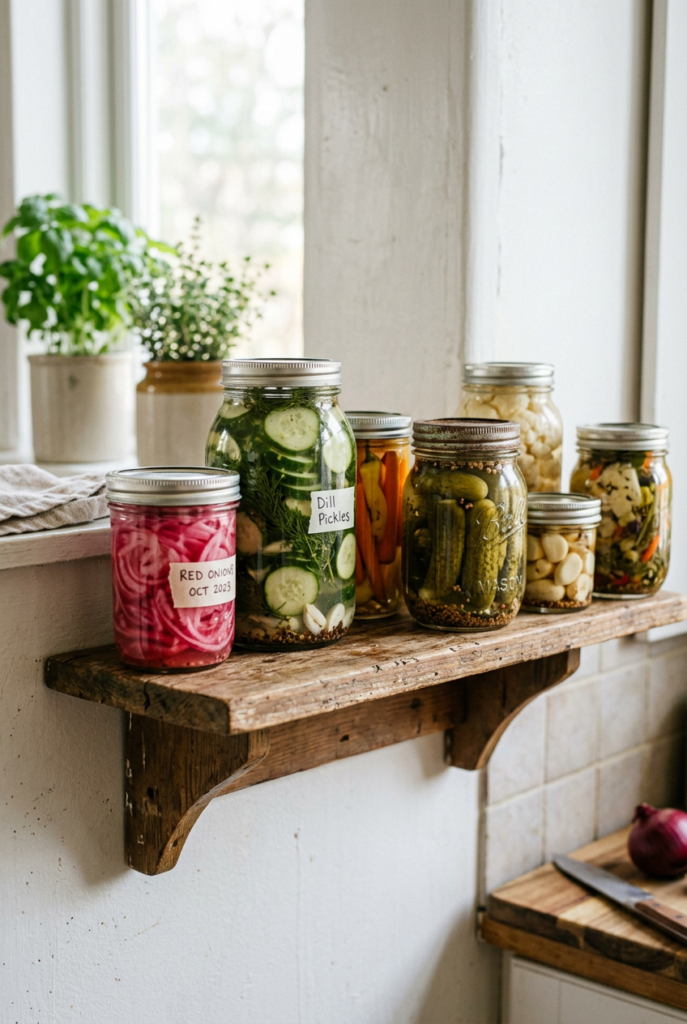
Start with one simple project.
Pickled onions or cucumbers are a good beginning. Use a clean glass jar, basic ingredients, and follow a simple recipe.
Keep the jar on a small shelf where you can see it.
Watching the process happen over a few days makes it feel more connected. It is a slow transformation that becomes part of your space.
9. A Natural Cleaning Station
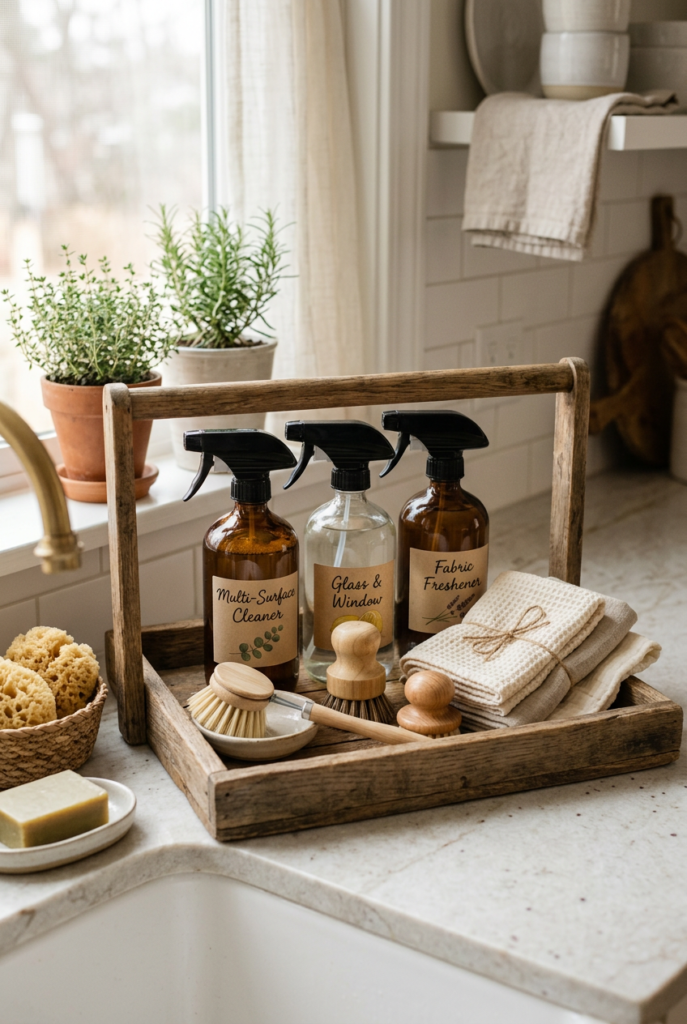
Replace a few cleaning products with simpler options.
Use glass bottles, natural brushes, and cloths. Keep them organized in a small tray or basket.
Place this setup somewhere accessible so cleaning feels easier to start.
This small shift makes everyday tasks feel less harsh and more in line with a slower, more intentional home.
10. A Daily Routine That Supports It All
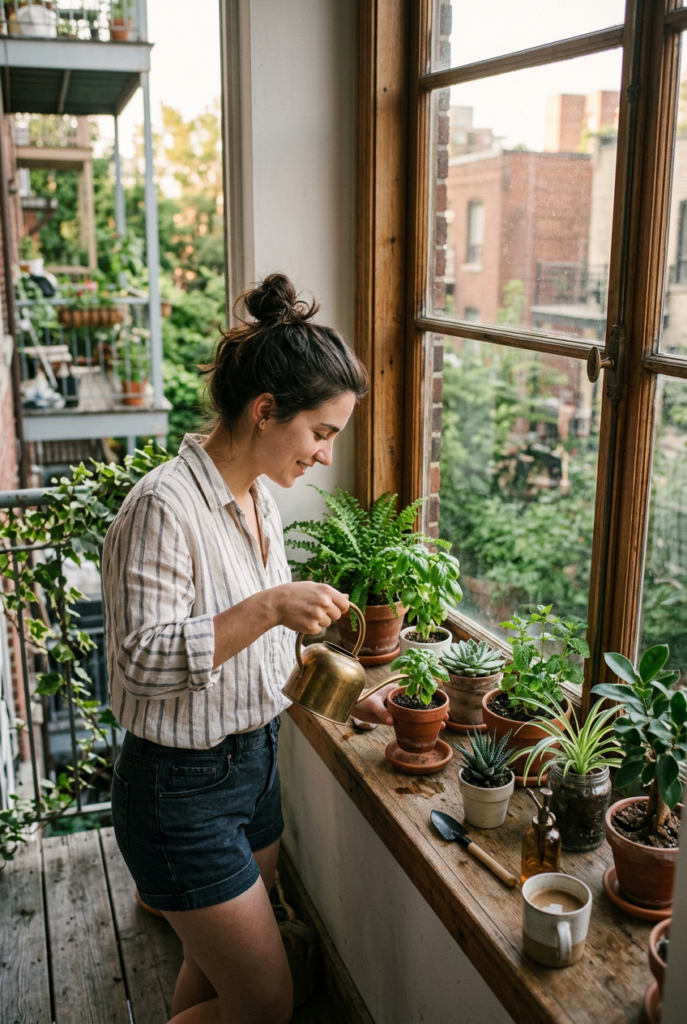
The most important part is not the setup, but the rhythm.
Choose one small moment in your day. Water your plants in the morning. Check your herbs before cooking. Reset your space in the evening.
Keep it simple and repeatable.
These routines connect all the elements together and turn your home into something you actively care for, not just live in.
How to Make It Work in Your Space
Start with one idea that fits your current routine.
Do not try to change everything at once. Choose something small and build from there.
Pay attention to light. Place plants where they can thrive. Keep frequently used items within reach.
Use materials that feel natural and cohesive. Wood, glass, linen, and clay help create a calm, consistent atmosphere.
Let your space evolve slowly. The goal is not to create a perfect setup, but one that supports your daily life.
A Slower, More Intentional Home
Homesteading in a small space is not about doing more.
It is about doing a few things with care.
When you grow something, make something, or simply pay attention to how your home functions, the space begins to change.
It feels quieter. More grounded. More connected to your everyday life.
And over time, those small routines become something you return to without thinking.
That is where the real value is.

Hi, I’m Livia. A mom who believes that a house becomes a home through the little things.
Over time, I started to understand what truly makes a space feel cozy, comfortable, and safe. Little by little, I transformed my own home into a place where my family and I genuinely love to be, a space that feels calm, warm, and ours.
Here, I share simple ideas and thoughtful inspiration to help you turn your home into your favorite place in the world too.