How to Use Plants to Create Privacy in Small Outdoor Spaces
This post may contain affiliate links, which means we may earn a small commission at no extra cost to you. We may also display third-party ads and include links to partner brands or shops. Some images may be created or enhanced using AI or sourced from licensed platforms. All opinions are our own.
A small outdoor space can feel exposed very quickly.
Whether it is a balcony, a compact backyard, or a small patio, the lack of privacy often makes it harder to relax. You sit down with a coffee, but you feel visible. You want to unwind, but the space does not feel enclosed enough.
Adding walls or permanent structures is not always possible. And even when it is, it can make the space feel smaller.
Plants offer a softer solution.
They create privacy without closing the space. They filter light, add texture, and make the environment feel calmer and more personal.
With a few thoughtful choices, even a small outdoor area can feel more protected, cozy, and inviting.
1. Use Tall Plants to Create a Natural Screen
Start by identifying where you feel most exposed.
This could be along a railing, a fence, or a side that faces neighbors. Instead of filling the entire space, focus on those specific lines of sight.
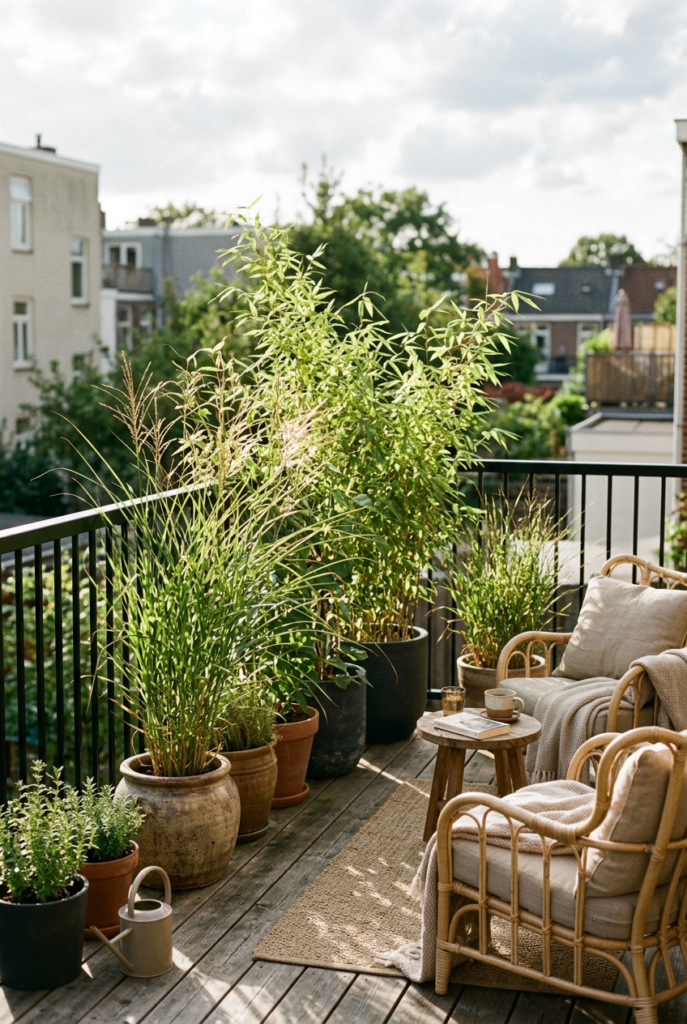
Use tall plants like bamboo, ornamental grasses, or slim shrubs placed in planters. Choose varieties that grow upward rather than outward.
Position them close enough to create a visual barrier, but leave small gaps so light can still pass through.
This works because it softens the view rather than blocking it completely. You still feel connected to the outdoors, but with a sense of separation.
2. Layer Plants at Different Heights
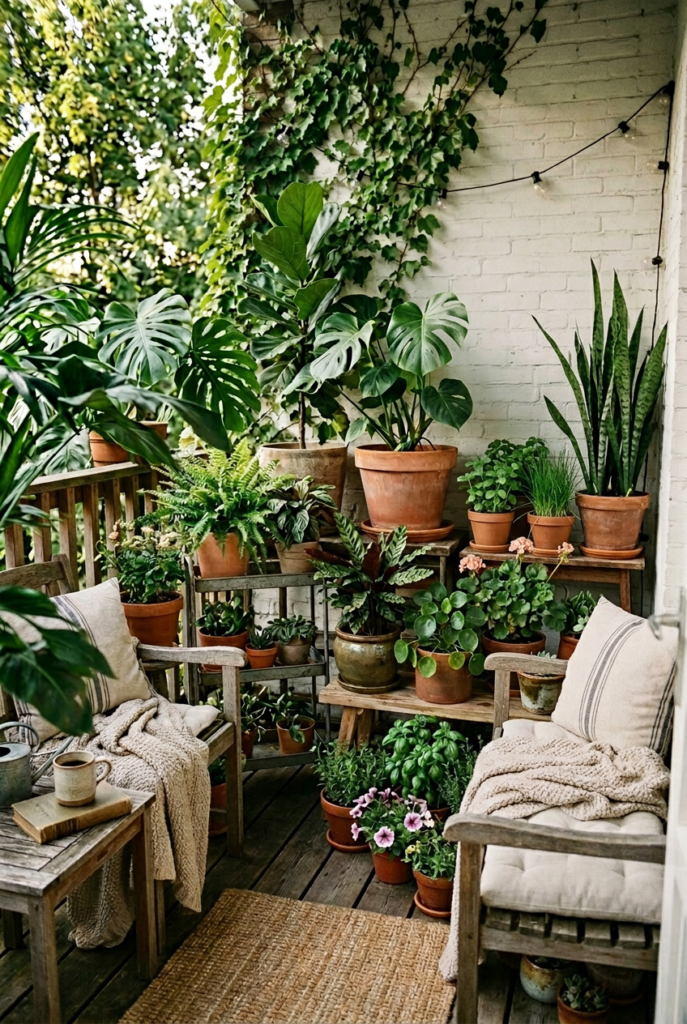
One row of plants can feel flat.
To create a more natural and effective sense of privacy, layer your plants. Combine taller plants in the back with medium and lower ones in front.
Use plant stands, stacked planters, or even a bench to vary the height.
This creates depth and makes the greenery feel fuller without needing a large number of plants.
It also mimics how plants grow in nature, which makes the space feel more relaxed and less structured.
3. Use Climbing Plants on Vertical Surfaces
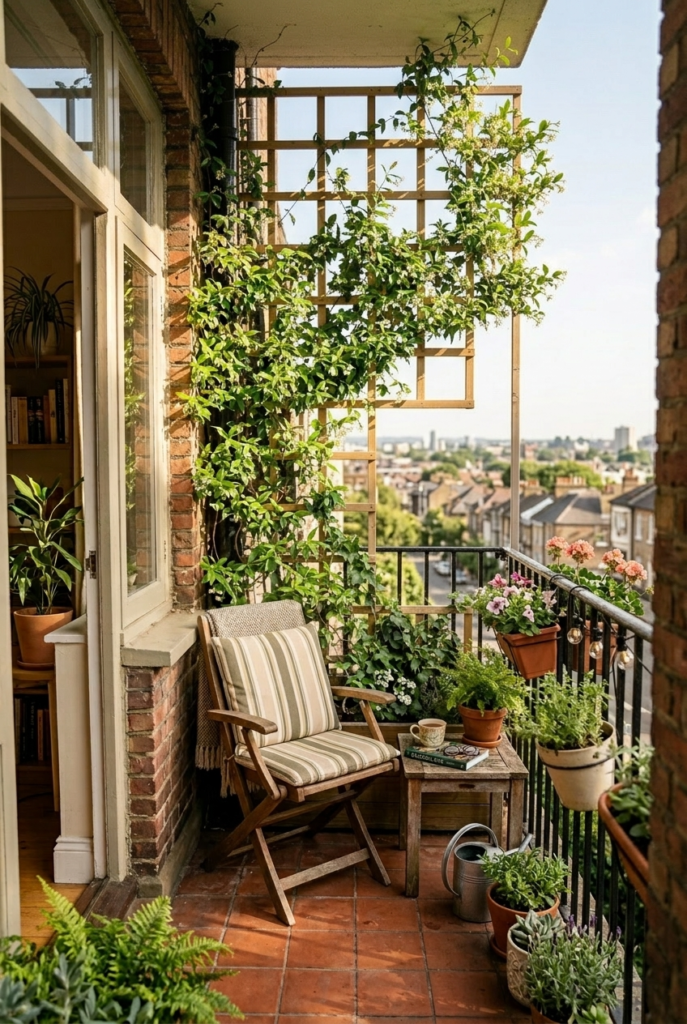
If your space is limited, go vertical.
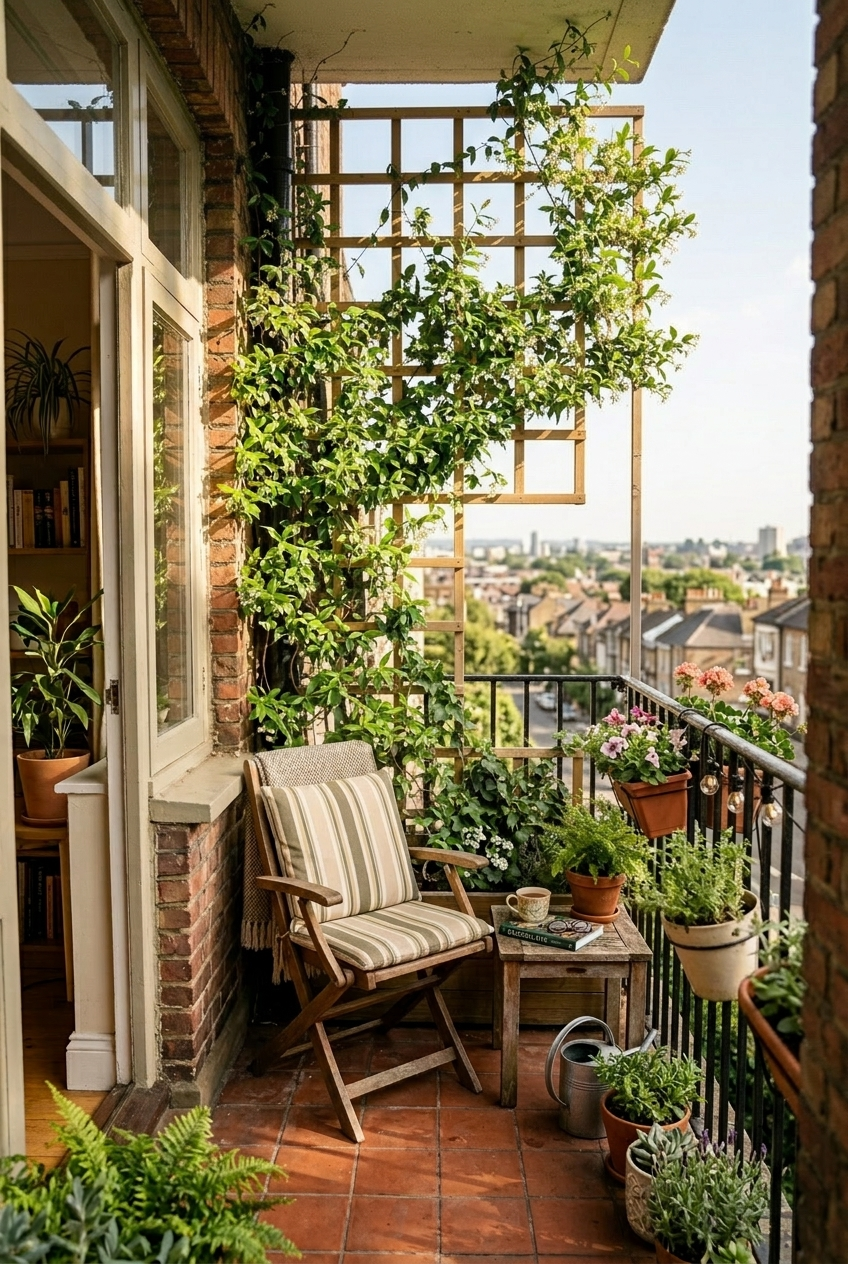
Install a simple trellis, wire grid, or wooden frame against a wall or railing. Let climbing plants like jasmine, ivy, or flowering vines grow upward.
Over time, they create a soft green wall that filters light and adds privacy.
This is especially helpful in narrow balconies or patios where floor space is limited.
Climbing plants also add movement and texture as they grow, making the space feel more alive.
4. Choose Planters That Feel Cohesive and Calm
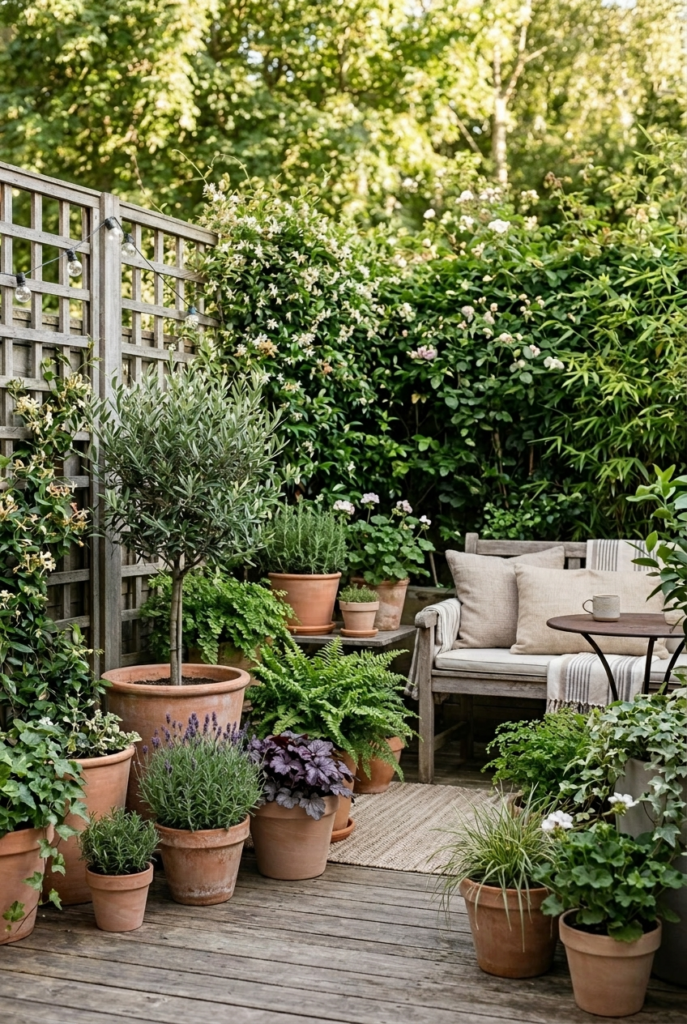
The containers you choose matter as much as the plants.
Too many different styles or colors can make the space feel cluttered, which works against the calm feeling you are trying to create.
Stick to a simple palette.
Terracotta, soft gray, white, or natural woven baskets work well. Mix sizes, but keep the overall look cohesive.
When the planters feel intentional, the greenery stands out more and the space feels more put together.
5. Create a Green Corner Instead of Filling Everything
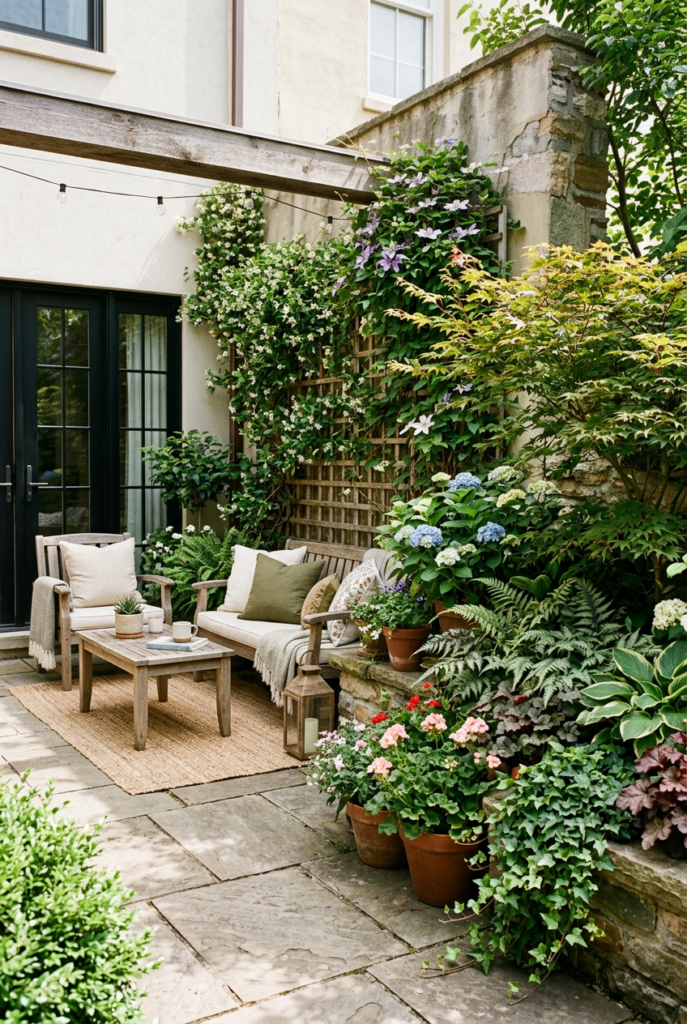
It can be tempting to line every edge with plants.
But in a small space, that often feels overwhelming.
Instead, choose one corner or one side and build a denser cluster of plants there.
Combine tall plants, layered greenery, and maybe a climbing element.
This creates a sense of enclosure without making the entire space feel closed in.
It also gives your outdoor area a focal point, which helps it feel more designed and less scattered.
6. Use Plants to Frame Your Seating Area
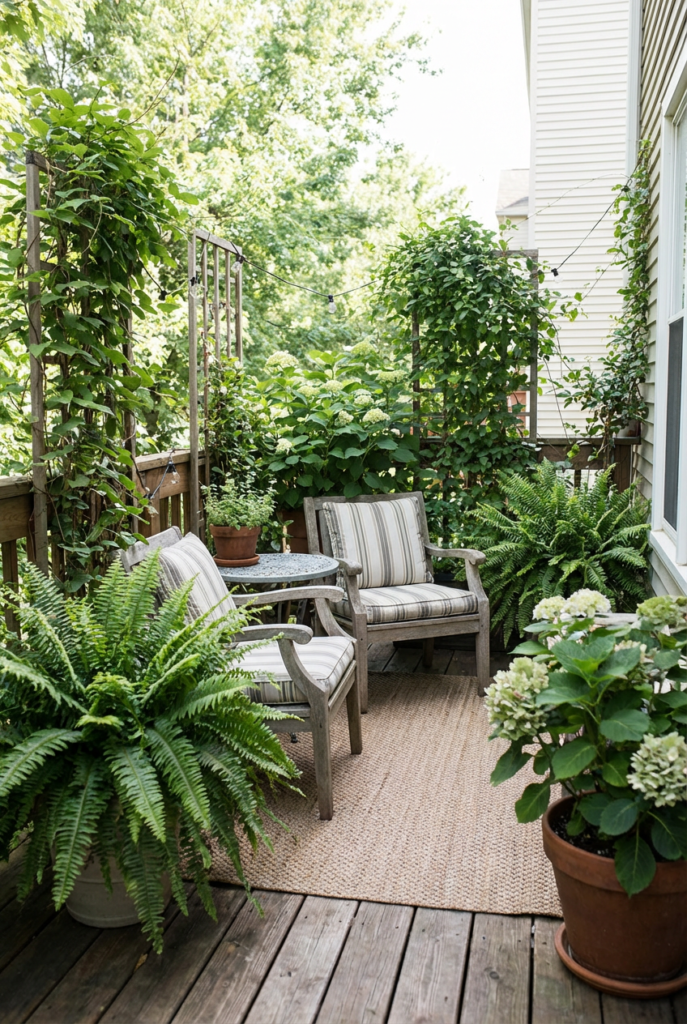
Privacy is not just about blocking views.
It is also about how the space feels when you sit down.
Place plants around your seating area to create a soft boundary. A tall planter beside a chair, a small grouping behind a bench, or a row along the side.
This framing effect makes the seating area feel more intimate.
Even if the space is still partially open, it feels more contained and comfortable.
7. Choose Light, Airy Plants Instead of Dense Ones
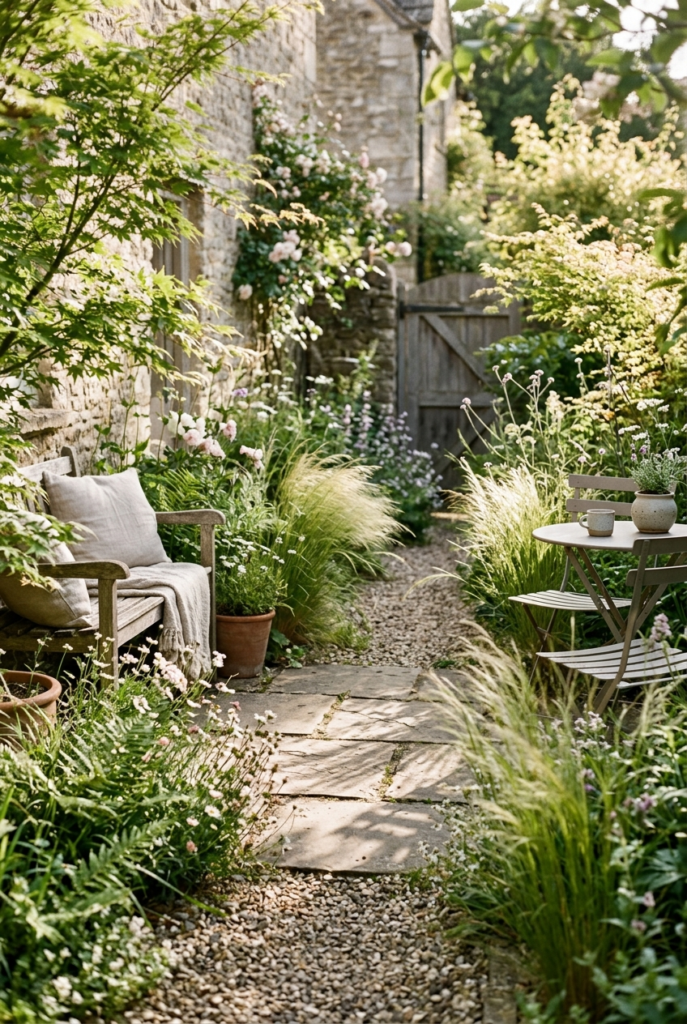
Not all privacy needs to be solid.
In small spaces, dense hedges or heavy foliage can feel too closed and reduce airflow.
Instead, choose plants with lighter leaves and softer shapes. Grasses, delicate branches, or plants with space between leaves allow light to pass through.
This creates a filtered effect.
You get privacy, but the space still feels bright and breathable.
It is a balance between protection and openness.
8. Use Planters as Flexible “Walls”
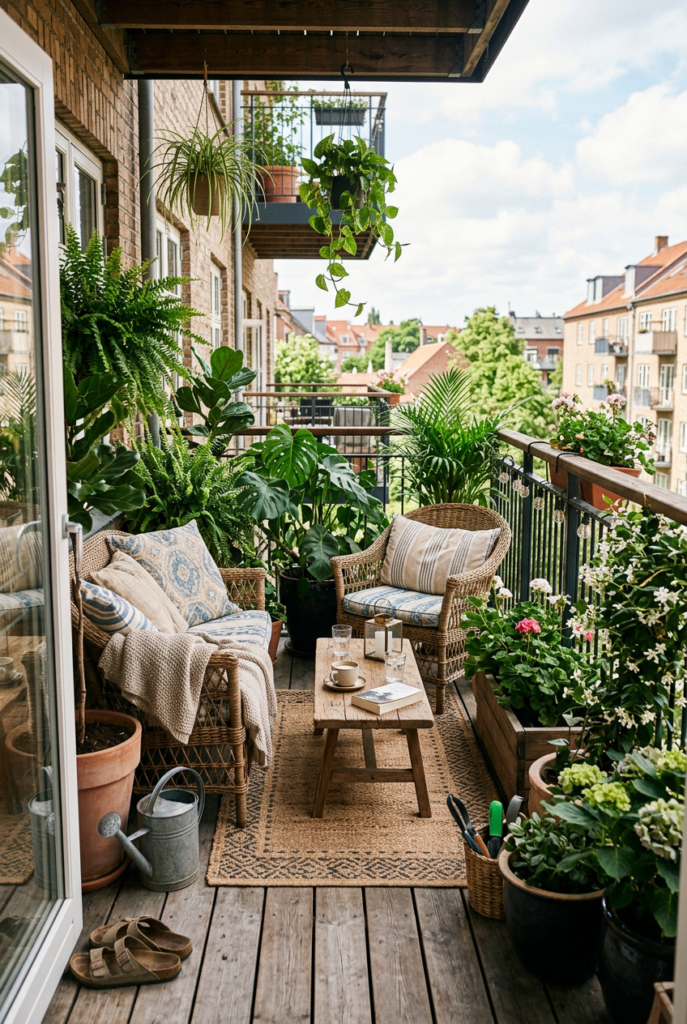
Instead of thinking in fixed layouts, treat your planters as movable elements.
Use larger pots or rectangular planters to create soft boundaries where you need them most. You can line them along a railing, shift them closer to your seating area, or reposition them depending on the time of day.
This works especially well in small spaces where the sun and visibility change throughout the day.
It gives you control without committing to a permanent structure.
9. Combine Plants with Light Fabrics for Softer Privacy
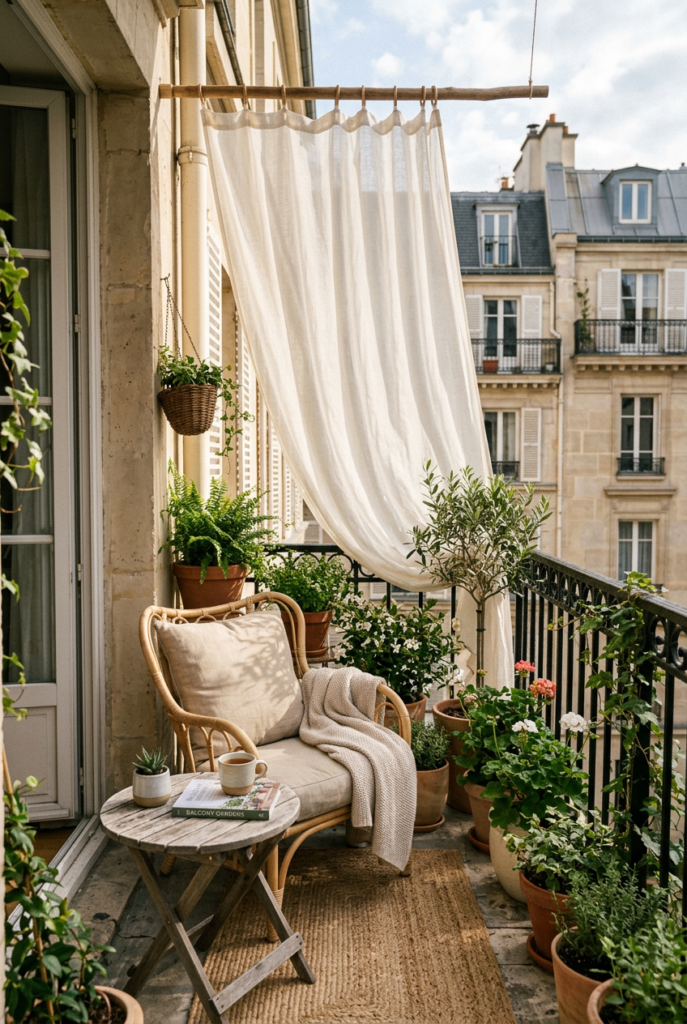
Plants alone do a lot, but combining them with fabric creates a more layered effect.
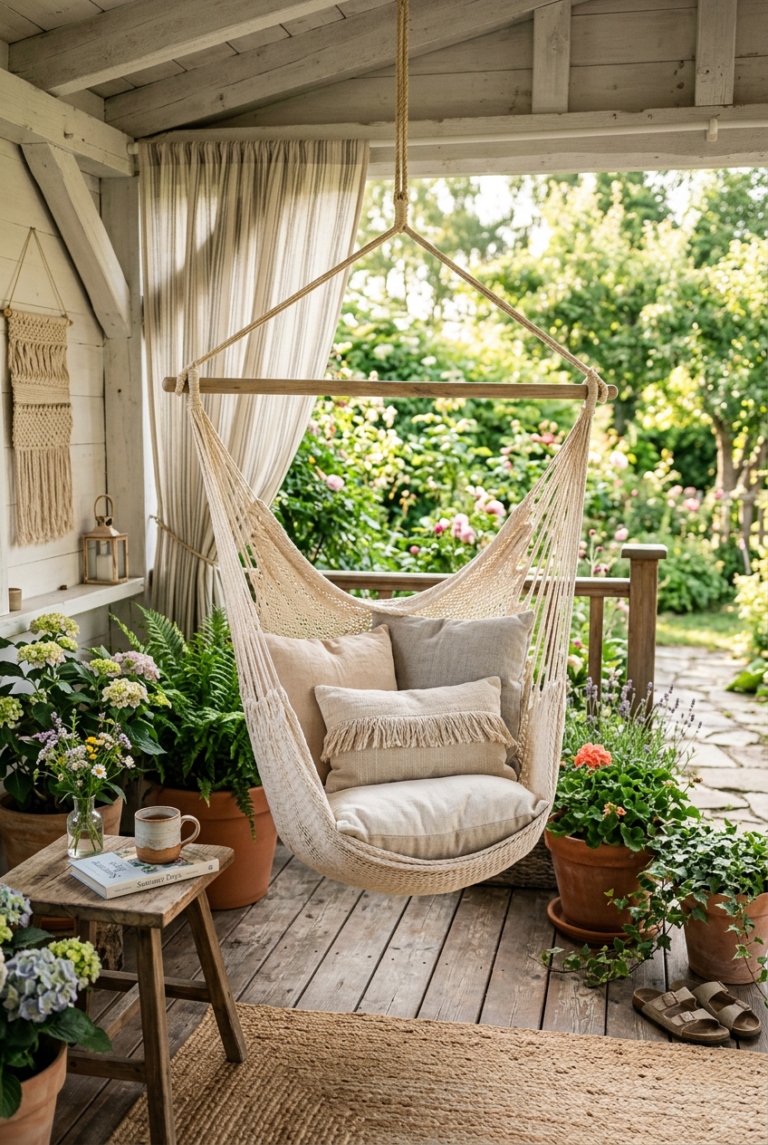
Add a light outdoor curtain or a simple fabric panel behind or beside your plants. Choose soft materials like cotton or linen in neutral tones.
The plants break up the view, while the fabric gently filters light and adds movement.
Together, they create a space that feels more enclosed, but still airy and relaxed.
10. Pay Attention to Gaps at Eye Level
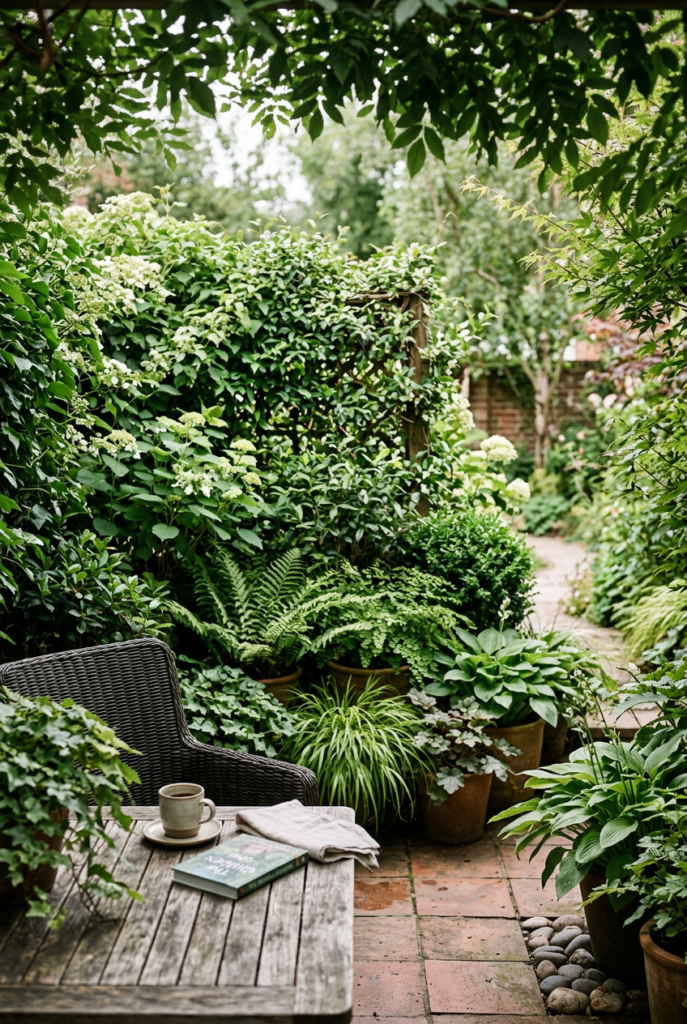
One detail that made a big difference for me was noticing where the gaps actually were.
Sometimes plants look full from a distance, but when you sit down, there are clear openings right at eye level.
Sit in your outdoor space and look around from that perspective.
Adjust plant height or add a second layer where needed. Even a small plant placed at the right height can close that visual gap.
This makes the space feel noticeably more private without adding bulk.
Common Mistakes to Avoid
Using too many plants too quickly.
It is easy to overfill a small space. Start with a few key pieces and build gradually.
Choosing plants that grow too wide.
In small areas, width matters. Tall and narrow plants are often a better fit.
Ignoring light conditions.
Some plants need full sun, others prefer shade. Choosing the wrong type can lead to frustration and unhealthy plants.
Mixing too many styles of planters.
This can make the space feel cluttered instead of calm.
Trying to block everything completely.
A fully closed space can feel heavy. Partial privacy often feels more natural and comfortable.
A Private Small Outdoor Space that Feels Like a Retreat
Creating privacy in a small outdoor space does not require major changes.
With the right plants, you can shape how the space feels in a gentle, natural way.
Start with one area that feels exposed. Add a few layers of greenery. Pay attention to height, texture, and placement.
Over time, the space will begin to feel quieter, softer, and more your own.
And once that sense of privacy is there, the space becomes somewhere you truly want to stay.

Hi, I’m Livia. A mom who believes that a house becomes a home through the little things.
Over time, I started to understand what truly makes a space feel cozy, comfortable, and safe. Little by little, I transformed my own home into a place where my family and I genuinely love to be, a space that feels calm, warm, and ours.
Here, I share simple ideas and thoughtful inspiration to help you turn your home into your favorite place in the world too.