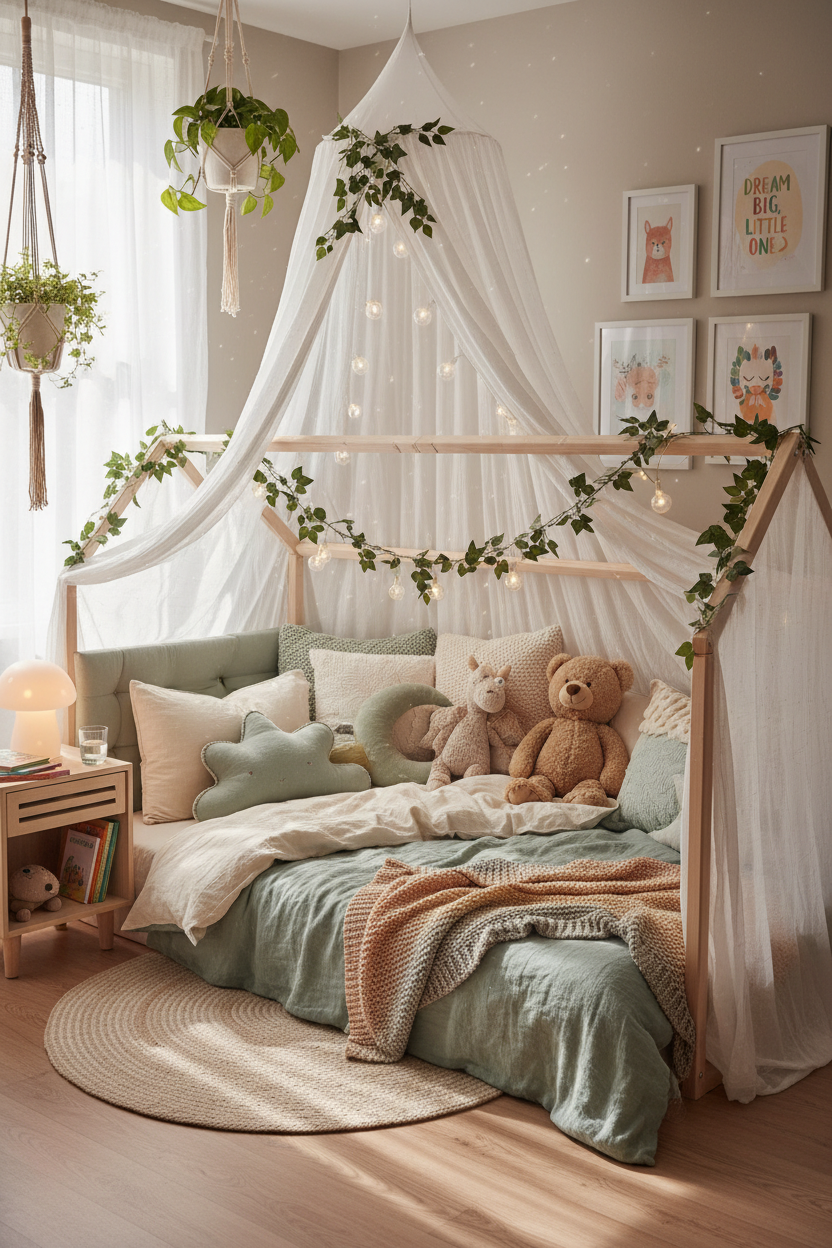
How to Create a Cozy Bedroom for Kids
This post may contain affiliate links, which means we may earn a small commission at no extra cost to you. We may also display third-party ads and include links to partner brands or shops. Some images may be created or enhanced using AI or sourced from licensed platforms. All opinions are our own.
A child’s bedroom is more than just a place to sleep. It is where they rest, play, imagine, and feel safe. When we think about creating a cozy bedroom for kids, the goal is not to design a picture-perfect space, but to build an environment that feels calm, comforting, and supportive of their everyday rhythm.
Many children’s rooms are filled with bright colors, busy patterns, and constant stimulation. While playful elements have their place, too much visual noise can make it harder for kids to slow down, especially at night. A cozy bedroom, on the other hand, helps children feel grounded and relaxed.
Creating a cozy space for kids does not require a full makeover. With a few thoughtful choices, it is possible to design a bedroom that feels warm, inviting, and flexible enough to grow with your child.
1. Start With a Calm and Neutral Base
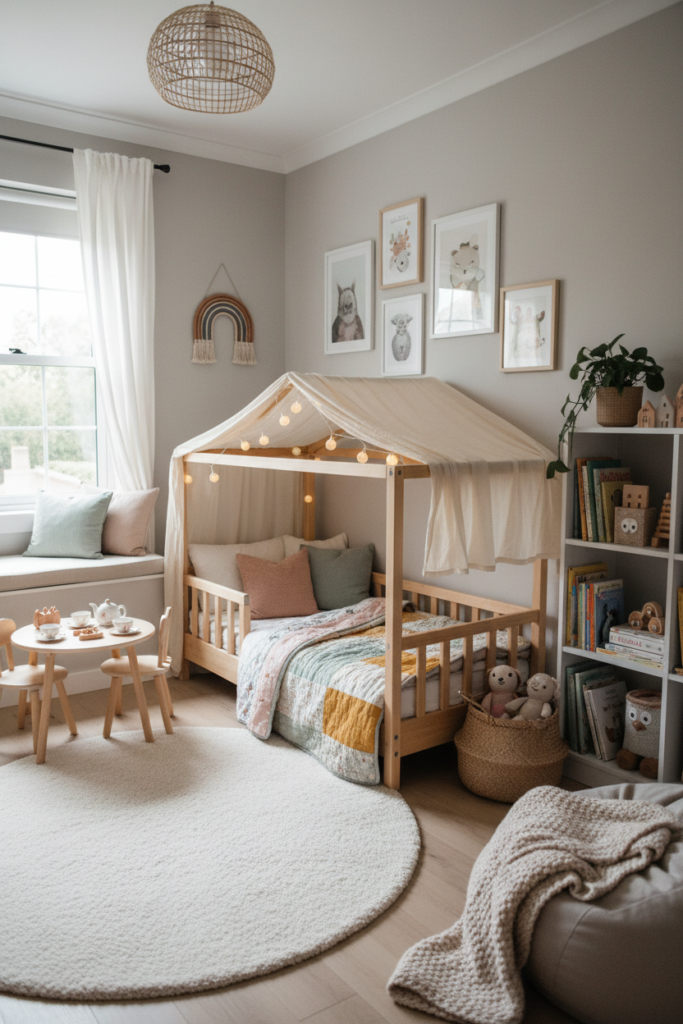
A cozy kids’ bedroom begins with a soft and calming foundation. Neutral and earthy tones help create a sense of balance and calm, making the room feel less overwhelming and more restful.
Colors like warm beige, soft cream, muted taupe, gentle sage, and light clay tones work beautifully as a base. These shades reflect light softly and create a peaceful atmosphere without feeling cold or boring. They also make it easier to layer in personality through textures, artwork, or small decorative details.
Starting with a neutral base does not mean removing all color. It means choosing a background that supports rest and comfort. When the walls, bedding, or larger furniture pieces feel calm, everything else in the room naturally feels more cohesive.
A simple foundation also allows the bedroom to evolve as your child grows. Toys, interests, and preferences change, but a calm base remains timeless and adaptable, making the space feel cozy for years to come.
2. Choose Warm and Gentle Lighting
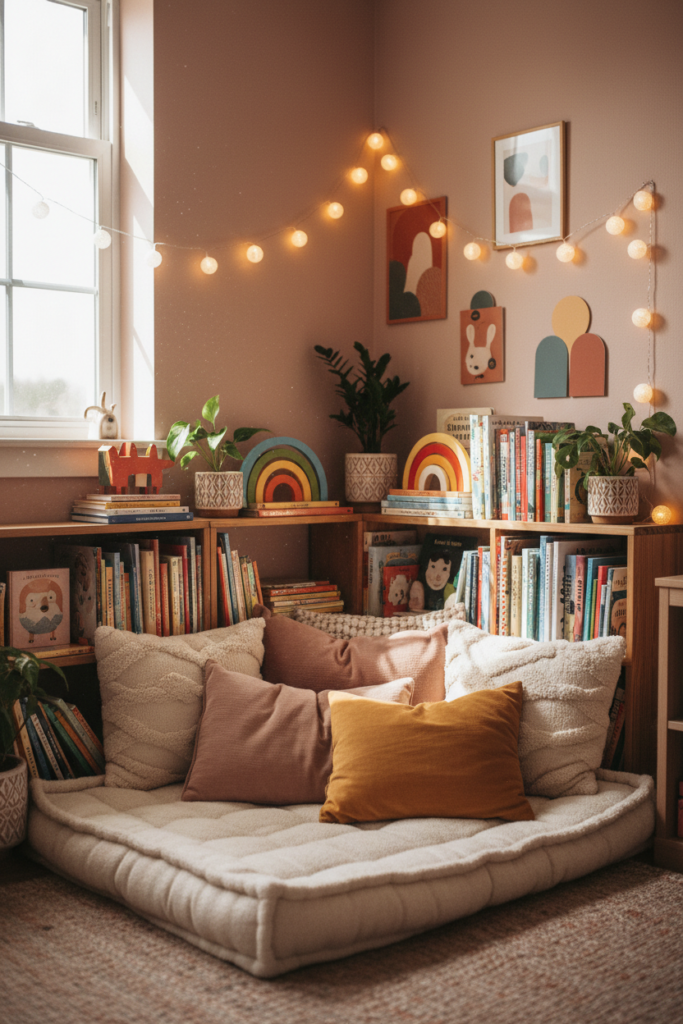
Lighting plays a key role in how a child’s bedroom feels, especially in the evening. Bright, cool lights can feel harsh and overstimulating, making it harder for kids to relax and settle down. A cozy bedroom benefits from warm, gentle lighting that supports rest and comfort.
During the day, natural light is ideal. In the evening, shifting to softer light helps signal that it is time to slow down. Bedside lamps, wall lights, or small night lights with a warm glow create a calm atmosphere without flooding the room with brightness.
Indirect lighting works especially well in kids’ bedrooms. Light that bounces off walls or is positioned lower in the room feels safer and more comforting than overhead lighting. It reduces shadows that can feel unsettling and helps the space feel more enclosed and protected.
Keeping lighting simple and consistent also supports bedtime routines. When the same warm lights are used every night, children begin to associate that atmosphere with rest, making the transition to sleep feel easier and more natural.
3. Make the Bed the Coziest Spot in the Room
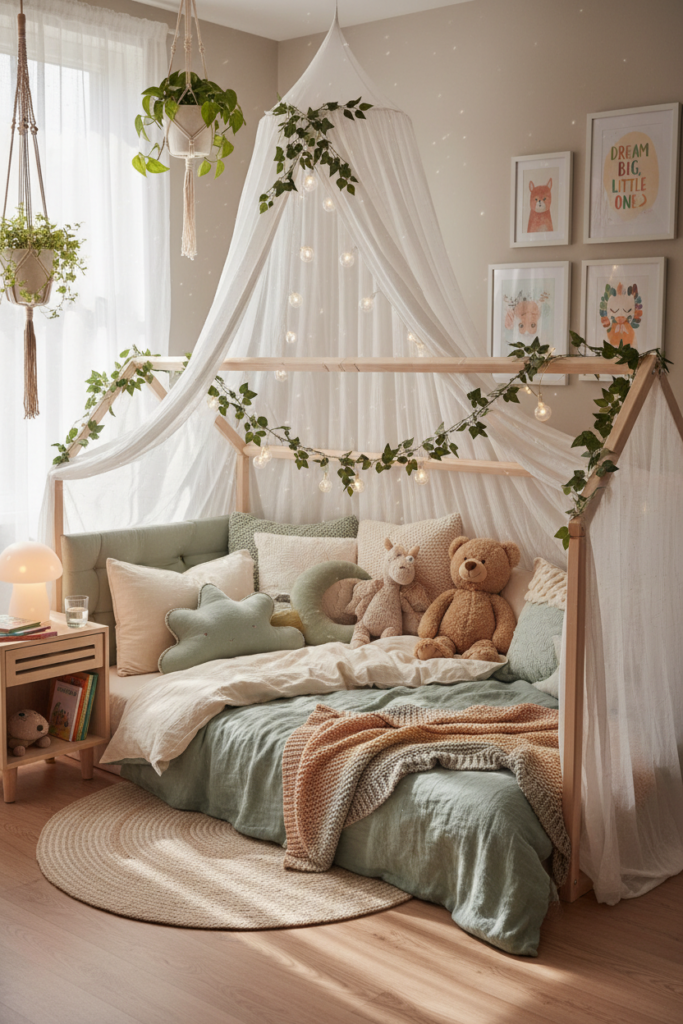
The bed should be the most inviting place in a child’s bedroom. Comfort matters more than styling, especially when it comes to helping kids feel safe and relaxed at night.
Soft, breathable fabrics make a big difference. Natural materials like cotton or linen feel gentle on the skin and help regulate temperature throughout the night. Layering bedding in a simple way, such as a fitted sheet, a comfortable duvet, and a light blanket, adds both warmth and flexibility.
A few soft pillows or a favorite stuffed toy can make the bed feel familiar and reassuring. These small touches help create a sense of security without adding visual clutter. The goal is to make the bed a place your child naturally wants to return to at the end of the day.
When the bed feels cozy, the entire room feels calmer. It becomes a place of rest rather than stimulation, supporting better sleep and more peaceful evenings.
4. Add Soft Textures and Natural Materials
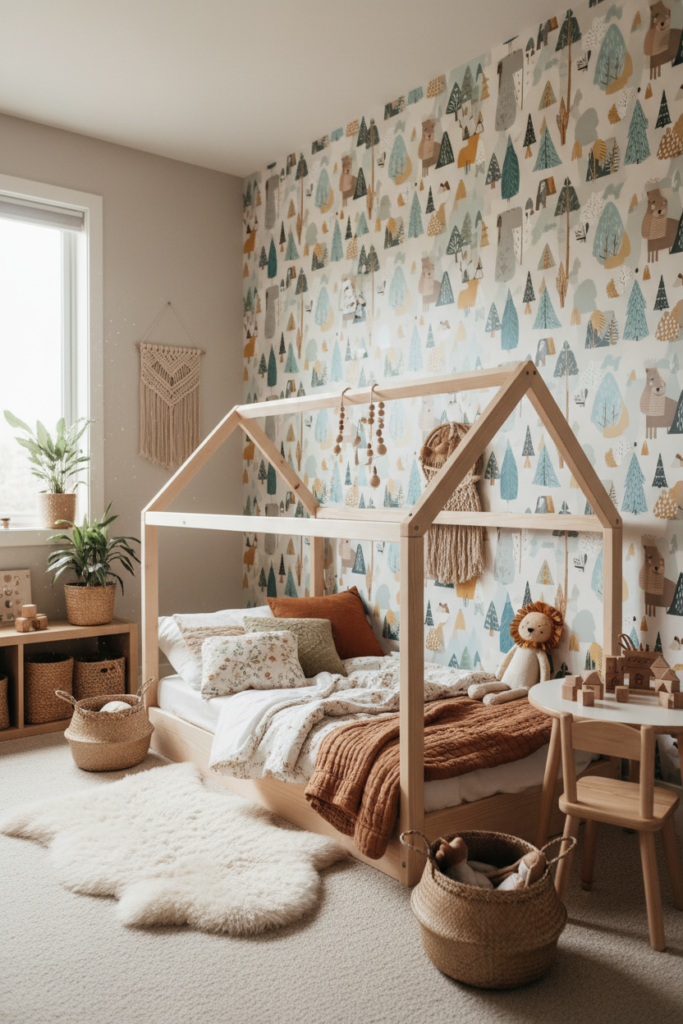
Cozy is something children can feel, not just see. Soft textures and natural materials help create a bedroom that feels warm, comforting, and safe, especially during quiet moments and bedtime.
Rugs, curtains, and fabric wall elements soften the room and reduce echo, making the space feel calmer. A soft rug underfoot, even a simple one, adds warmth and helps the bedroom feel more grounded. Curtains in light, natural fabrics gently filter light and create a sense of enclosure that many children find comforting.
Natural materials like wood, cotton, wool, and linen bring warmth and balance to a kids’ bedroom. These materials feel familiar and soothing, and they age well as your child grows. They also tend to feel less visually busy than synthetic or overly patterned alternatives.
The goal is not to layer everything at once, but to introduce softness where it matters most. When a room feels gentle to the touch, it naturally feels more inviting and restful.
5. Create a Calm Bedtime Corner
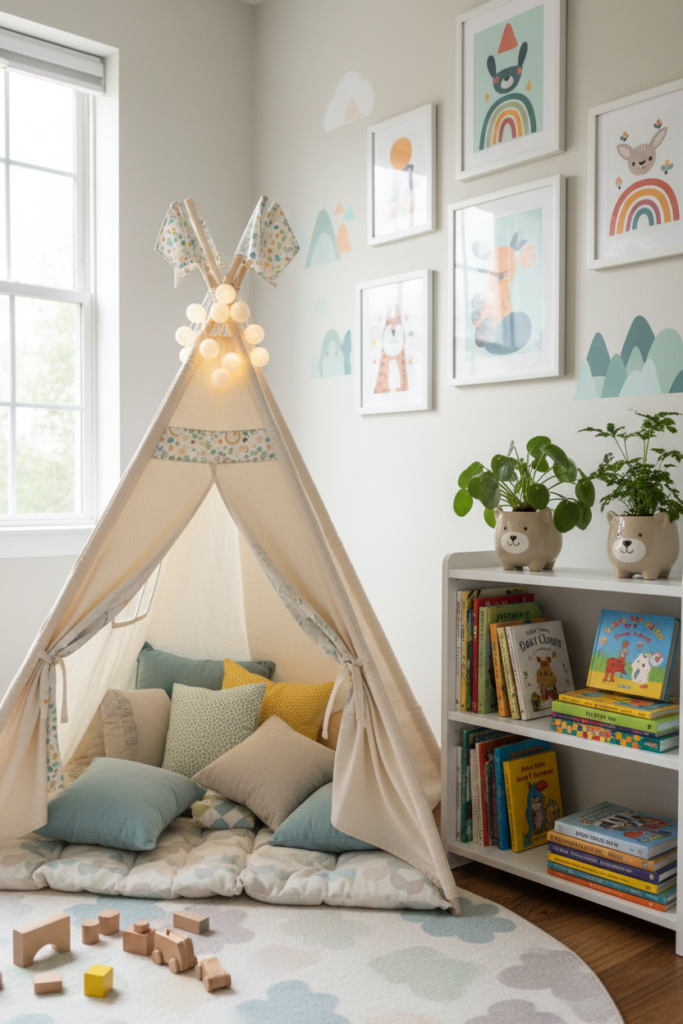
A small cozy corner can make a big difference in how a child experiences their bedroom, especially in the evening. This does not need to be a large or elaborate setup. A simple, quiet space dedicated to winding down is often enough.
A bedtime corner might include a comfortable chair, a soft cushion on the floor, or a small reading nook with a warm lamp and a few favorite books. This area becomes a gentle signal that it is time to slow down, separate from play and stimulation.
Keeping this corner visually calm helps reinforce its purpose. Soft lighting, neutral colors, and minimal decor allow the space to feel peaceful rather than distracting. Over time, children begin to associate this spot with comfort, stories, and quiet moments.
By creating a calm bedtime corner, you give your child a place to transition from the day into rest. It supports bedtime routines and helps the bedroom feel like a safe and soothing nest.
6. Keep Visual Noise Low
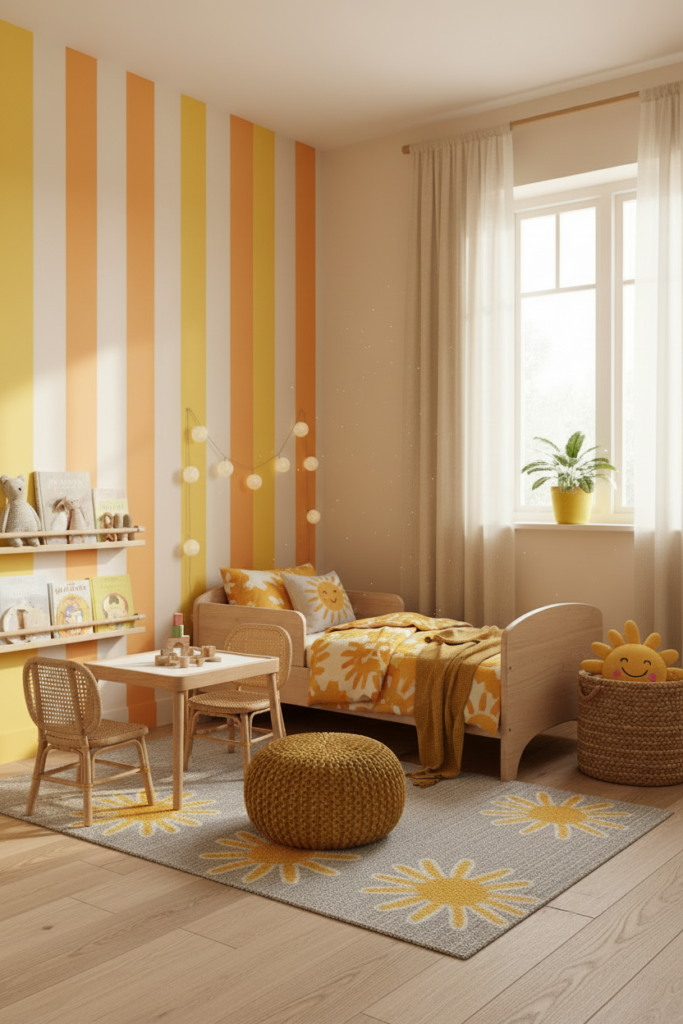
A cozy bedroom for kids feels calm, not crowded. Too many toys, colors, or decorative elements can make a space feel busy and overwhelming, especially at night when children are more sensitive to their surroundings.
This does not mean removing playfulness from the room. It simply means being intentional about what stays visible. Storing toys out of sight in the evening and keeping surfaces clear helps the bedroom feel quieter and more restful.
Simple organization solutions that are easy for children to use make a big difference. When kids can help put things away, the room naturally returns to a calmer state before bedtime. Fewer visible items allow the space to feel more open and soothing.
Reducing visual noise supports better rest. A simpler environment helps children relax, settle down, and feel more at ease in their own space.
7. Add Personal and Meaningful Touches
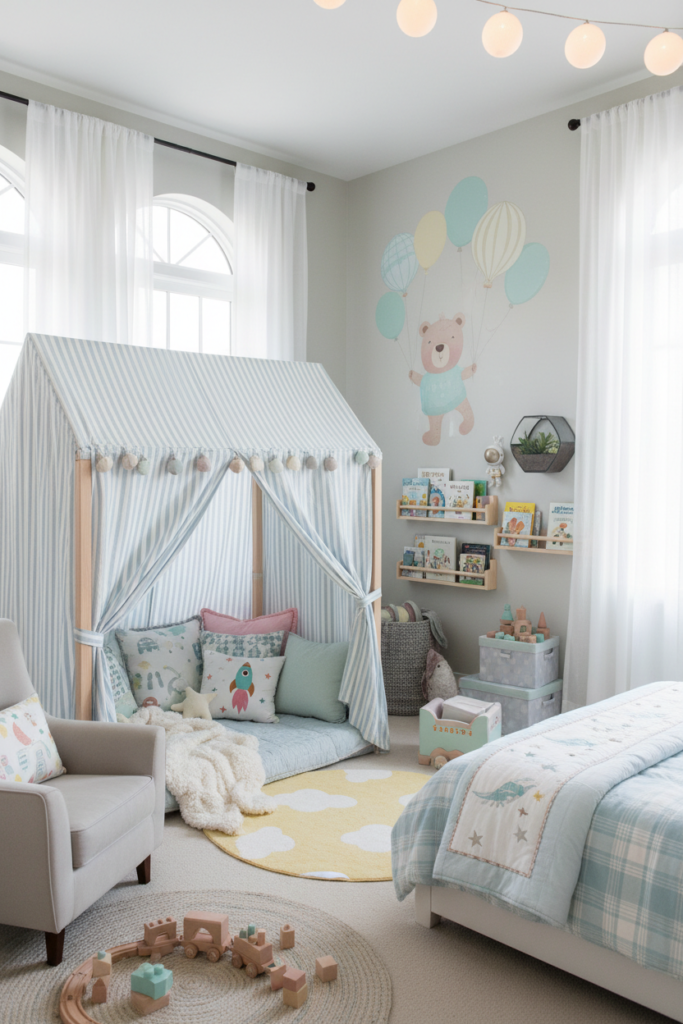
A cozy kids’ bedroom should feel loved and personal, not overly styled. Meaningful details help children feel emotionally connected to their space and reinforce a sense of safety.
Personal touches can be simple. A favorite book, a piece of artwork, family photos, or a handmade item often carries more comfort than decorative trends. These elements make the room feel familiar and reassuring.
Keeping these touches minimal helps maintain a calm atmosphere. The goal is to add warmth and personality without creating visual clutter. When chosen intentionally, personal items blend naturally into the space and enhance the cozy feeling.
A bedroom that reflects care and attention becomes a place where children feel secure and supported.
8. Let the Bedroom Grow With Your Child
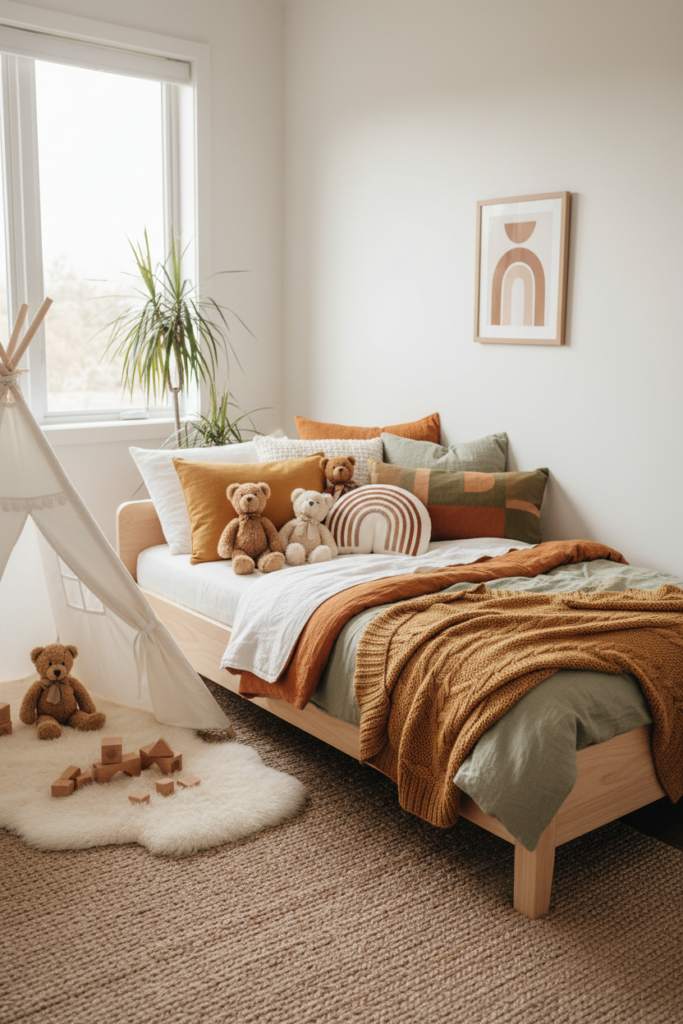
Children grow quickly, and their needs and interests change over time. A cozy bedroom works best when it is flexible and able to evolve without needing constant redesigns.
Avoiding overly specific themes or age-limited decor makes it easier to adapt the room as your child grows. Neutral foundations, natural materials, and simple furniture create a timeless base that can shift with small updates.
Allowing the room to change gradually helps maintain a sense of continuity. While toys, books, and interests may come and go, the feeling of comfort remains.
A bedroom that grows with your child supports both independence and emotional security, making it a space they can return to with ease.
Cozy Kids Bedroom Finds on Amazon
If you want to bring these ideas to life more easily, I’ve gathered a small collection of cozy kids bedroom finds on Amazon. It includes soft rugs, gentle lighting, playful decor, and simple pieces that help create a warm, comforting space for everyday moments. You can explore the full list and see the items I recommend here.
Conclusion
Creating a cozy bedroom for kids goes beyond decoration. It is about shaping an environment that supports calm evenings, restful sleep, and a sense of safety.
Small, thoughtful choices like warm lighting, soft textures, and intentional organization can completely change how a room feels at the end of the day. When combined with simple routines and a clutter-free environment, the bedroom becomes a place where children can naturally slow down and relax.
If you are looking for more ways to bring comfort into your home, you may also enjoy exploring ideas for creating a relaxing evening routine or learning how to make any room feel cozy at night. Simple adjustments in lighting, organization, and atmosphere can transform not only a bedroom, but your entire home.
A cozy kids’ bedroom does not need to follow trends or feel perfectly styled. It simply needs to feel warm, familiar, and full of care, a space where your child feels truly at home.

Hi, I’m Livia. A mom who believes that a house becomes a home through the little things.
Over time, I started to understand what truly makes a space feel cozy, comfortable, and safe. Little by little, I transformed my own home into a place where my family and I genuinely love to be, a space that feels calm, warm, and ours.
Here, I share simple ideas and thoughtful inspiration to help you turn your home into your favorite place in the world too.