How to Create a Relaxing Evening Routine
This post may contain affiliate links, which means we may earn a small commission at no extra cost to you. We may also display third-party ads and include links to partner brands or shops. Some images may be created or enhanced using AI or sourced from licensed platforms. All opinions are our own.
Evenings are meant to help us slow down, but for many of us they often feel rushed, noisy, or mentally crowded. The transition between a busy day and a restful night is not always smooth, especially when home still feels full of tasks, screens, and unfinished thoughts.
Creating a relaxing evening routine is not about strict schedules or perfectly optimized habits. It is about giving your body and mind a gentle signal that the day is ending. When evenings have a rhythm, your home starts to feel more supportive, and rest becomes easier and more natural.
A good evening routine does not need to look impressive. It needs to feel comforting and realistic. The goal is not to do more, but to move through the evening with intention, calm, and simplicity.
1. Start With a Gentle Transition
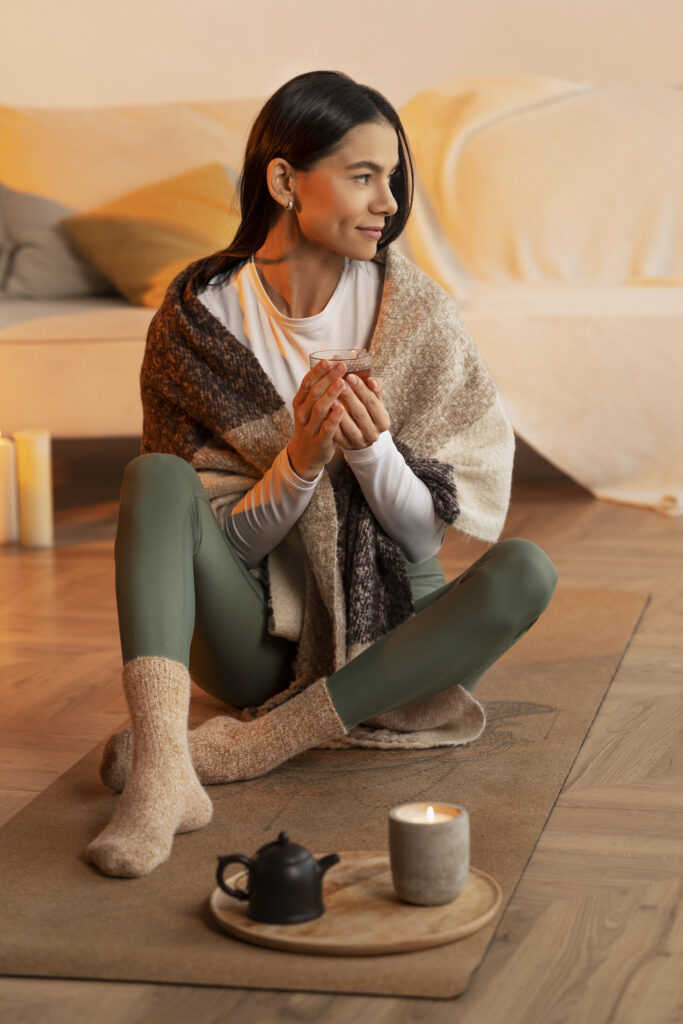
A relaxing evening routine begins with a clear but soft transition from day to night. This shift helps your mind let go of productivity mode and prepares your body for rest. Instead of stopping everything at once, think of this moment as gradually slowing the pace.
Step 1. Choose a natural starting point
Decide when your evening routine begins. It might be after dinner, once work ends, or when the house becomes quieter. The exact time matters less than consistency.
Step 2. Pause before moving on
Take a brief pause before jumping into the next activity. This can be as simple as sitting down for a minute, taking a deep breath, or looking around your space. This pause creates awareness and marks the end of the day.
Step 3. Reduce stimulation little by little
Begin lowering mental and visual noise. Turn off unnecessary lights, silence notifications, or switch off the television. Small changes at this stage make the rest of the evening feel calmer.
Step 4. Shift your environment
Let your home reflect the slower rhythm. Soft lighting, quieter sounds, and a more relaxed atmosphere help reinforce the transition. When your space changes, your body naturally follows.
This gentle transition sets the tone for the entire evening. Once it becomes familiar, your routine starts to feel comforting rather than forced.
2. Reset the Space You’ll Use at Night
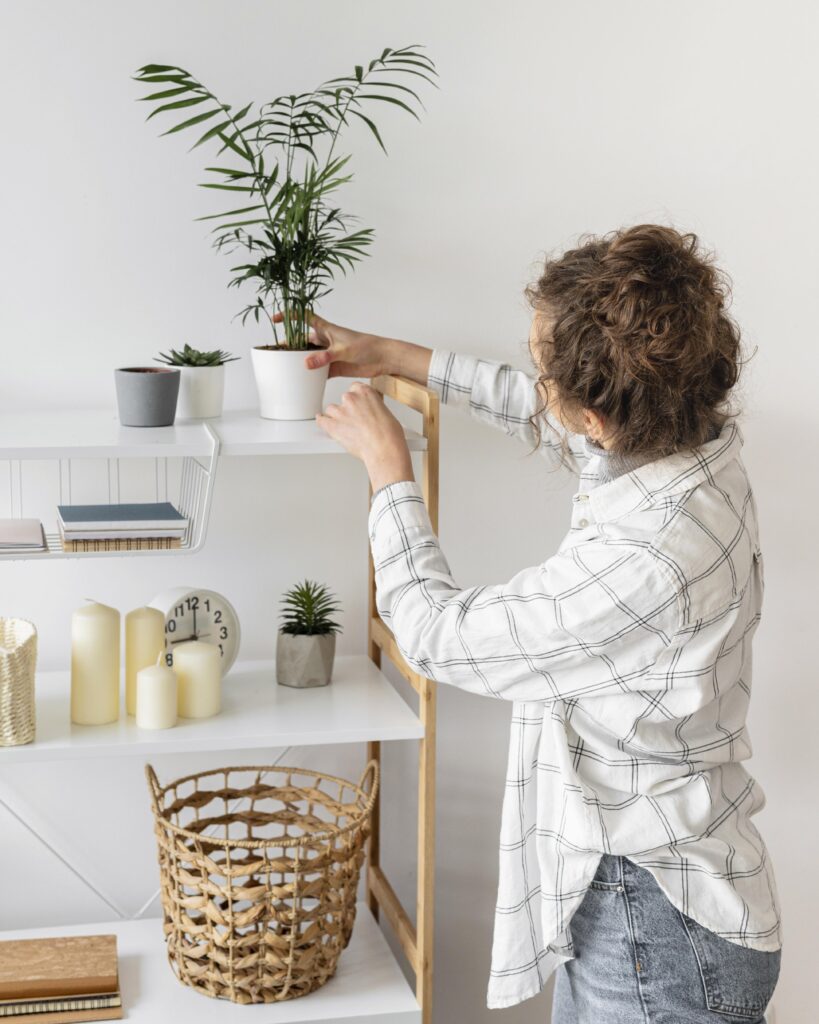
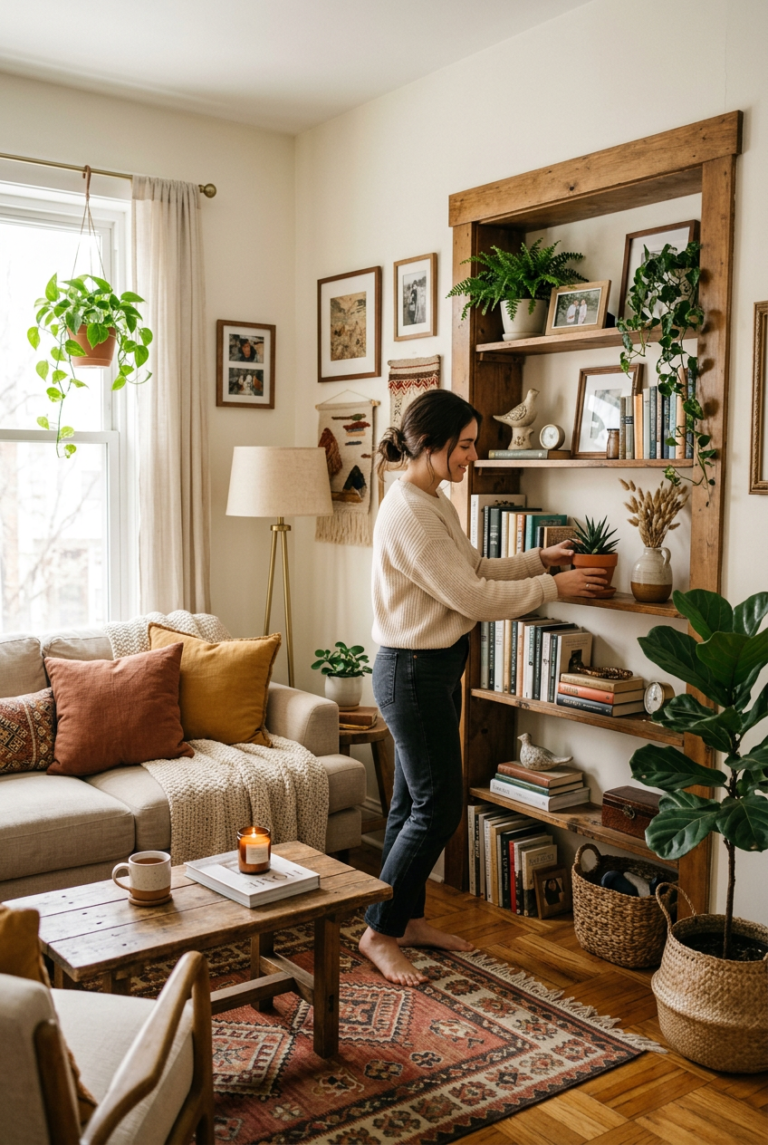
A relaxing evening routine becomes much easier when your space feels calm. This does not mean cleaning the entire house or starting a long organizing session. A simple reset of the areas you use at night is often enough.
Focus on the rooms where you actually spend your evenings. This might be the living room, the bedroom, or a small corner of the home. Clearing just a few surfaces can instantly reduce mental clutter and help you feel more at ease.
Put away items that belong to the day. Work materials, bags, or random objects tend to keep your mind in an active state. When these things are out of sight, the space naturally feels quieter.
Think of this reset as a way of caring for your future self. You are not organizing for perfection, but for comfort. When your environment feels settled, your evening routine flows more naturally.
3. Lower the Lights and the Noise
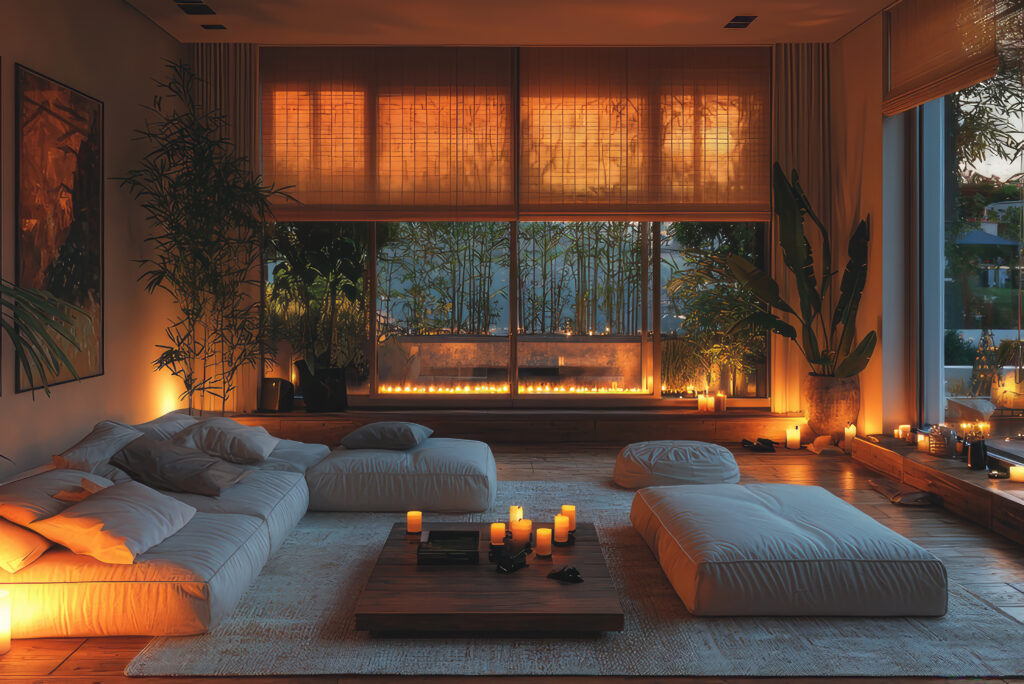
One of the most effective ways to slow down in the evening is by changing the atmosphere of your home. Lighting and sound have a direct impact on how your body feels, especially at the end of the day.
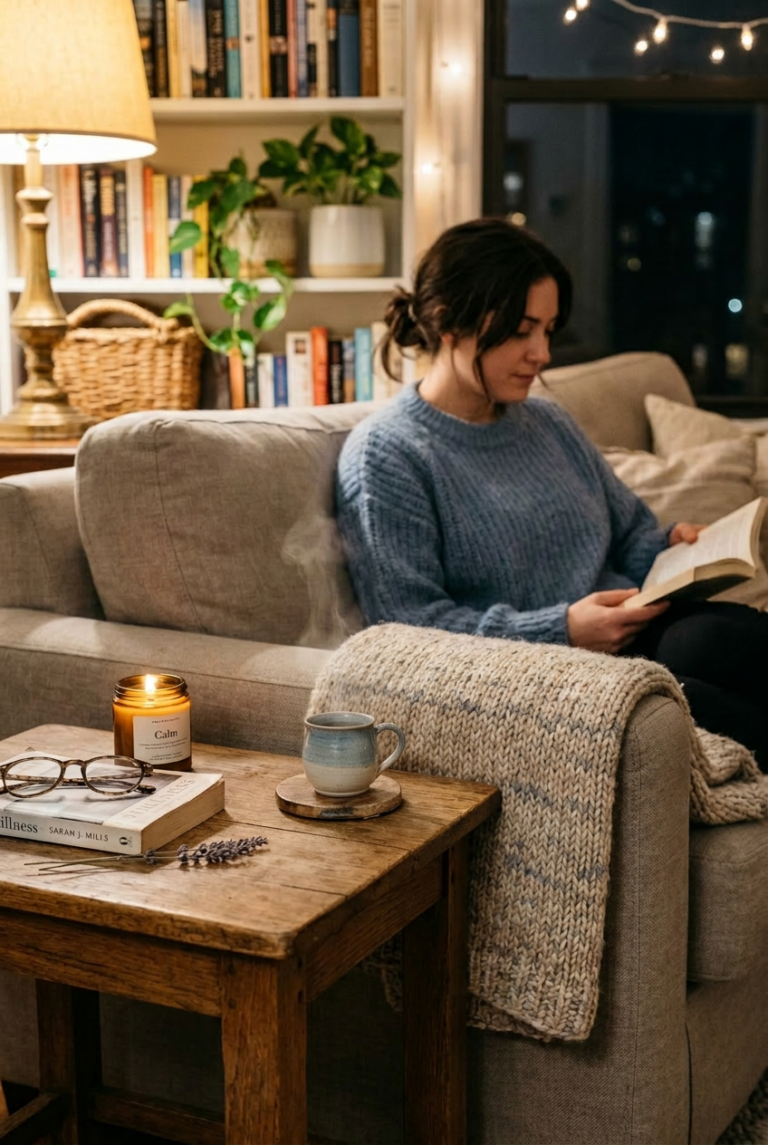
As night approaches, begin turning off overhead lights and rely on softer, warmer sources of light. Lamps, indirect lighting, or candles create a sense of intimacy and help your home feel less stimulating. The goal is not darkness, but gentleness.
Sound matters just as much. Loud television, constant notifications, or background noise can keep your mind alert. Lowering the volume, choosing soft music, or embracing quiet moments allows your nervous system to relax.
When your home becomes quieter and more softly lit, it naturally supports a slower pace. You do not need to force relaxation. The environment does the work for you.
If you need any help, read our article on How to Make a Room Feel Cozy at Night.
4. Choose One Comforting Activity
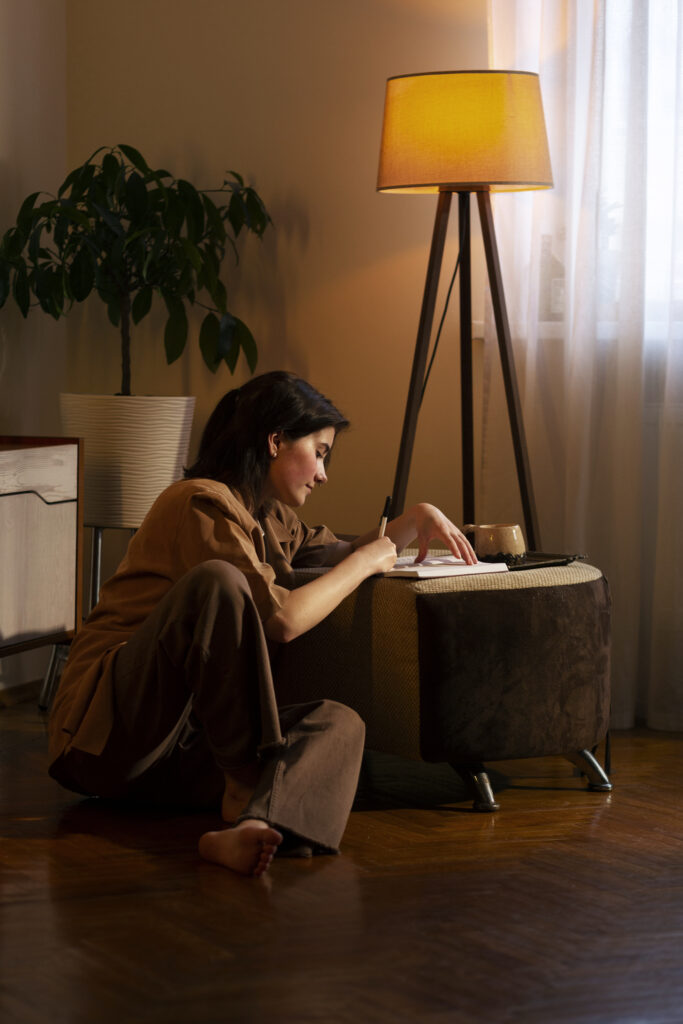
A common mistake when creating an evening routine is trying to include too many activities. A relaxing routine works best when it is simple and easy to repeat.
Choose one comforting activity that helps you unwind. This could be reading a few pages of a book, making a warm drink, doing a gentle skincare routine, or writing briefly in a journal. What matters is that the activity feels calming and familiar.
Repeating the same activity each evening creates a sense of rhythm. Over time, your mind begins to associate that moment with rest. This repetition turns a simple habit into a comforting ritual.
Your evening routine does not need to look productive. It needs to feel supportive. When you choose one activity you genuinely enjoy, your evenings become something to look forward to rather than something to get through.
5. Make Scent Part of Your Evening Routine
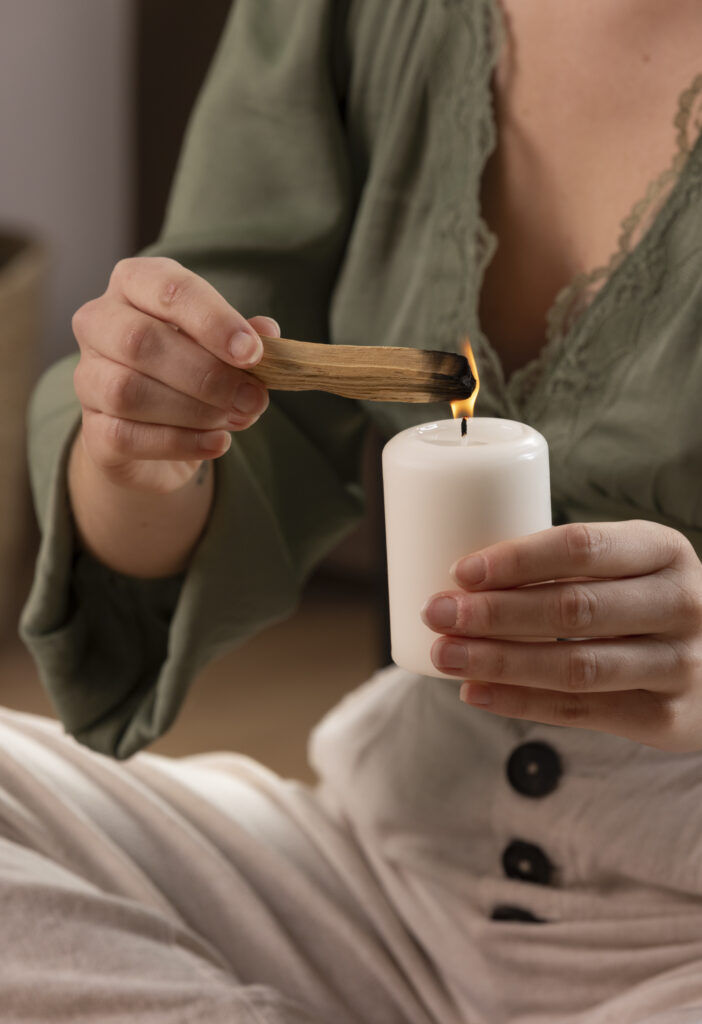
Scent is one of the most powerful tools for creating a relaxing evening routine. Even subtle fragrances can shift the mood of a space and help your body recognize that it is time to slow down.
In the evening, comforting scents work best when they feel warm and familiar. Soft notes like vanilla, amber, sandalwood, lavender, and gentle woody blends tend to feel calming rather than energizing. These scents create an emotional layer in your home, making the space feel safe and soothing.
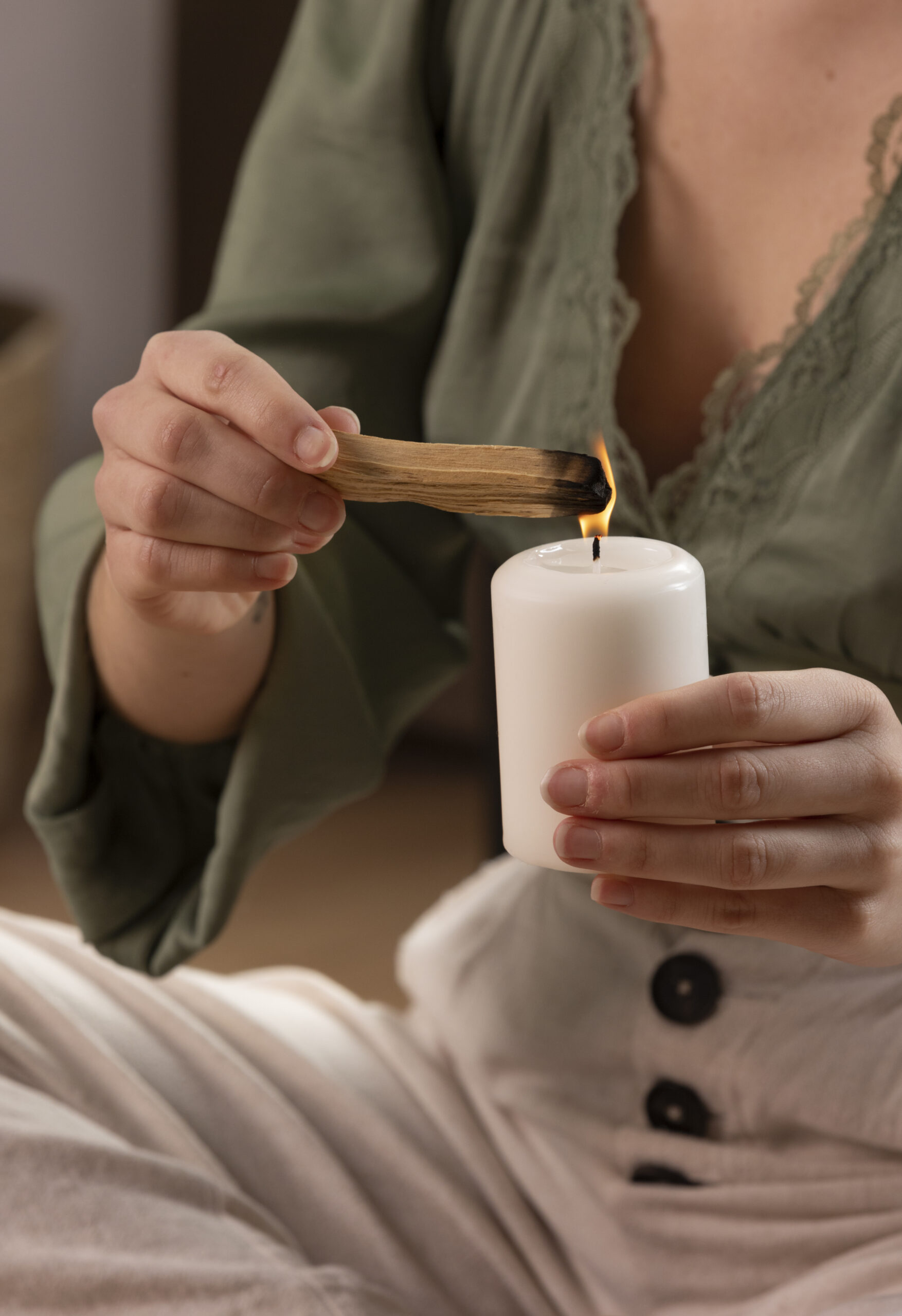
Incorporating scent into your routine can be very simple. Lighting a candle, using a light room fragrance, or even brewing a naturally aromatic tea can become part of your nightly rhythm. Over time, your senses begin to associate that specific scent with rest and comfort.
When used intentionally, scent becomes a quiet signal that the day is ending. It helps your evening routine feel more grounded and consistent without adding extra effort.
6. Prepare for Tomorrow Without Overthinking

A relaxing evening routine should help you let go of the day, not add more tasks to your list. Still, a few small preparations for the next day can significantly reduce nighttime anxiety.
This is not about planning everything in detail. Simple actions like setting out clothes, tidying a bag, or resetting the kitchen can bring a sense of closure to the day. These small gestures act as a gift to your future self.
Doing just one or two of these tasks is often enough. The goal is to create a feeling of readiness, not control. When you know that tomorrow is partially taken care of, it becomes easier to rest in the present moment.
Keeping this step minimal ensures that your evening routine remains calming rather than overwhelming.
7. Release the Need for a Perfect Routine

One of the most important parts of a relaxing evening routine is letting go of the idea that it needs to be perfect. Life changes, energy levels shift, and routines naturally evolve.
Some evenings will feel calm and slow, while others may be shorter or more chaotic. That does not mean your routine is failing. It means it is flexible enough to support you in different seasons of life.
Instead of focusing on consistency at all costs, focus on intention. Even one familiar element, such as dimming the lights or sitting quietly for a few minutes, can be enough to create a sense of calm.
Your evening routine should feel like support, not pressure. When it adapts to you, it becomes something you can return to again and again.
A Simple Checklist for a Relaxing Evening Routine
Use this checklist as a gentle guide. You do not need to do everything every night. Choose what feels supportive and let the rest go.
☐ Choose a clear moment to transition from day to night
☐ Pause for a minute before moving into your evening routine
☐ Reduce stimulation by lowering lights and limiting noise
☐ Reset the main spaces you use in the evening
☐ Put away items that belong to the day
☐ Turn off overhead lights and use warm, soft lighting
☐ Lower background noise or choose calming sounds
☐ Pick one comforting activity to repeat each evening
☐ Add scent to signal rest and relaxation
☐ Prepare one small thing for the next day
☐ Release the need for a perfect routine
☐ Allow your evening to move at a slower pace
Conclusion
Creating a relaxing evening routine is less about structure and more about care. It is about choosing small moments that help you slow down and allowing your home to support that process.
When evenings have a gentle rhythm, rest feels more natural. Your space becomes quieter, your mind feels lighter, and the transition into night becomes something you welcome rather than rush through.
Start small, keep it simple, and let your routine grow with you. A calm evening is not something you achieve. It is something you allow.
Related Cozy Ideas to Explore Next
For more inspiration and deeper guidance, you may enjoy exploring these cozy home topics next:
- Terracota Aesthetic: 5 cozy bedroom decor ideas
- 20 simple ideas for a simple and sophisticated minimalist bedroom
- Aesthetic living room: styling tips for a picture-perfect space
- 5 small cozy home office ideas for ultimate productivity
- 15 simple ways to create a cozy bedroom

Hi, I’m Livia. A mom who believes that a house becomes a home through the little things.
Over time, I started to understand what truly makes a space feel cozy, comfortable, and safe. Little by little, I transformed my own home into a place where my family and I genuinely love to be, a space that feels calm, warm, and ours.
Here, I share simple ideas and thoughtful inspiration to help you turn your home into your favorite place in the world too.